Rattan Wood Furniture: Price Dynamics in Singapore
Solid wood furniture can look simple from across a showroom, yet two dining tables with similar dimensions may differ by SGD 1,500. The reason is rarely the name on the label. It is the timber species, moisture control, joinery, finish, hardware, and the amount of skilled work required before the piece reaches a Singapore home.
This guide explains those price drivers without treating solid wood as an automatic synonym for good furniture. It also considers the constraints of HDB flats and condos in Tampines, Bedok, and Punggol, where lift doors, corridor turns, stairwells, and compact living rooms affect both selection and delivery.
One useful comparison is light luxury sofa vs Japandi sofa: a French-inspired sofa may gain its price from curved timber, upholstered arms, decorative detailing, and a layered finish, while a Japandi sofa usually places more value on clean lines, balanced proportions, tactile upholstery, and visual restraint. Both can be light-luxury products, but they spend the budget differently.

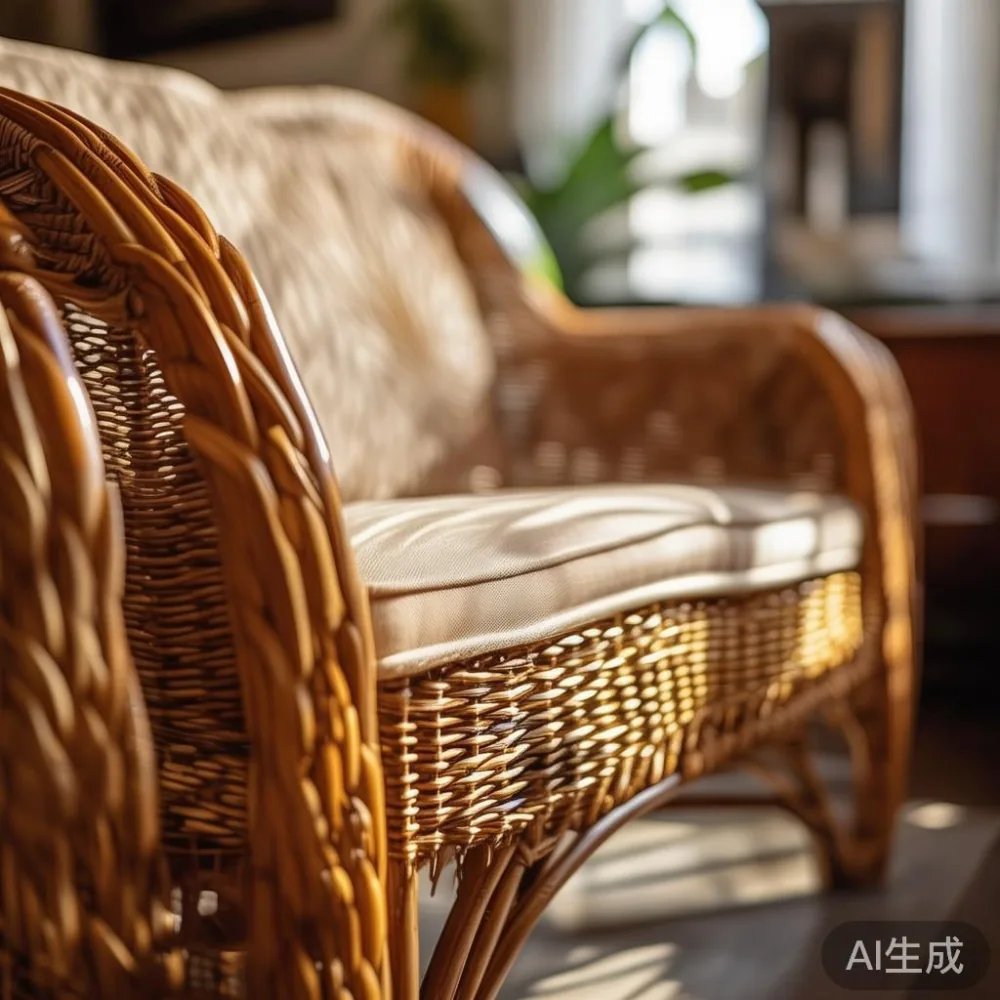
Rattan furniture deserves a related distinction. A piece labelled “rattan furniture” may use genuine rattan frames, woven panels, or rattan-look trim. The material is light, visually warm, and useful in Singapore’s humid climate, but it should not be confused with solid hardwood construction. Many of the same cost rules still apply to timber, joinery, finish, and production quality.
Is timber species really the biggest price driver?
Timber species is a major driver, but it is only one part of the total. A dining table in rubberwood may retail around SGD 899, while a comparable design in kiln-dried oak or ash may sit near SGD 1,699. The premium can cover longer drying times, tighter grading, machining accuracy, and the market value of the timber—not merely a darker or more decorative grain.
Price comparisons should use the same dimensions. A 180 cm dining table with six seats needs at least 75–80 cm of usable width per place setting, plus enough clearance for chairs to be pulled back. A 200 cm table may command SGD 200–500 more because it offers better circulation and can accommodate six diners without crowding a 120–140 cm wall.
Wood density also affects construction. A dense hardwood tabletop weighing roughly 45–65 kg needs substantial support and careful handling. Softer or lighter timber may weigh only 28–40 kg. Density alone does not determine quality, but heavier material can increase drilling time, finishing work, shipping weight, and installation requirements.
Solid wood also varies by grade. “Solid wood” can describe the frame, while a tabletop may combine solid boards with a veneer core or another engineered component. Ask for a material map showing which sections are solid timber, which are plywood, and which are veneer. The answer should include board thickness: a 20–25 mm tabletop is substantial, while an 18 mm top is common for lighter duties.
For a bed frame, component choice is equally revealing. A queen bed may use solid oak side rails, plywood support panels, dowelled joints, and centre supports at 300–400 mm intervals. Slats spaced no more than 50–80 mm apart can limit sagging, depending on the mattress and slat profile. The visual timber is not always the part doing the structural work.
Last month I visited a supplier’s finishing room and watched two tables made from the same oak batch receive very different prices. One had broad open grain, filled pinholes, and a low-sheen oil finish. The other had tightly selected boards, square-cut edges, cleaner joinery, and six coats of sprayed finish. The material was similar; the labour and tolerance were not.
What does joinery and structural design cost?
Joinery is where solid wood furniture earns—or loses—its premium. Mortise-and-tenon joints, dowelled shoulders, bridle joints, and well-fitted dovetails take more time than simple screws and brackets hidden beneath particleboard. They can also make repair and refinishing more practical over decades.
A proper chair may require tenons that fit within fractions of a millimetre. A drawer should run on solid wood runners or quality slides without twisting. A wardrobe needs uprights that resist racking, adjustable shelves, and doors that remain aligned after humidity changes. Those requirements add labour before any decorative feature is considered.
This is also why a wardrobe can range from about SGD 1,290 to SGD 3,800 for broadly similar exteriors. A basic freestanding unit may use 15–18 mm engineered panels, flat-pack connectors, and a standard hinged door. A premium fitted wardrobe may have 18–22 mm lacquered or veneered boards, inset handles, soft-close hinges, internal drawers, LED channels, and installation included. Storage capacity matters too: a 180 cm wardrobe with six hanging sections can cost more than a 150 cm model with fewer fittings.
Try the stability test before paying. Press the top of a nightstand lightly, pull gently on the drawer, and check whether the carcass moves. The nightstand should feel substantial without twisting, the drawer should travel evenly, and doors should not bounce. Hardware should support the design rather than substitute for weak construction.
MIDHILL’s 10-year structural warranty provides a useful benchmark because structural failure is different from a change in appearance. It signals confidence in frames, joints, and load-bearing parts, although buyers should still confirm what the warranty covers and how claims are assessed.
Why do finishes and veneers change the price so much?
Finishing protects timber, but a complicated finish can cost more than the raw boards. A natural oil treatment may add only SGD 80–150 to a small table or nightstand. Multi-layer lacquer, hand-rubbed wax, fumed colour, wire brushing, or a high-gloss piano finish can add SGD 250–800 or more because each cycle adds preparation, sanding, drying, masking, and inspection time.
Colour matching across a dining table, chairs, sideboard, and bed frame also takes planning. Sloped grain absorbs pigment differently from flat grain, so a “match” achieved by eye can still vary under daylight. Finished samples should be viewed beside actual wood, not represented only by a printed swatch.
Veneer is not automatically inferior. A high-grade walnut or oak veneer can give a 22 mm table a continuous appearance that solid boards struggle to reproduce. Its price may reflect the veneer grade, backing material, precision slicing, edge treatment, and finish system. In a wardrobe or dining table, a stable engineered core can also resist movement better than an incorrectly installed solid panel.
Solid wood does, however, offer repair options that many laminated surfaces cannot match. Scratches can be spot-treated, edges can be eased, and the surface can be refinished. MIDHILL offers lifetime refinishing for eligible products, which changes the long-term economics: buyers should compare a higher initial price against the likelihood of replacing a cheaper piece after 8–12 years.
Singapore’s humidity makes coating quality especially relevant. Finished wood should be acclimatised before installation, with expansion gaps designed into long components. Ask whether the product is for indoor use only. Outdoor or balcony furniture needs different sealing, drainage, and corrosion-resistant hardware, and may not qualify for the same indoor warranty terms.
For rounded coffee and side tables, marble is another material decision. A marble table may add SGD 400–1,500 because the slab must be selected, cut, polished, supported correctly, and often installed with removable sections. Stone is cool and visually precise, but it is heavy: a 100 cm round marble coffee table may weigh 45–70 kg. That matters in a lift lobby and for upper-floor delivery.
How much should hinges, slides, and mechanisms influence the price?
Hardware is measurable. Soft-close drawer runners, concealed hinges, adjustable bed supports, lift-up mechanisms, and reclining mechanisms each add cost. A drawer with full-extension ball-bearing slides may cost SGD 25–70 per pair in components; premium imported slides can cost more. Those figures are not retail markups, but they show why a drawer wall can materially increase a wardrobe or desk price.
Mechanisms should match the use. Dining chairs benefit from replaceable glides and well-fitted joints. A lift-up storage bed needs tested gas struts, locking points, and safe access to the storage cavity. A marble table needs a base that prevents edge stress. A solid wood sofa needs a frame that supports the upholstery rather than relying on the timber shell alone.
This is where the phrase light luxury with storage becomes useful. Storage can be concealed in a bed frame, a lift coffee table, a sideboard, or a modular sofa. It is not merely about adding a compartment; it requires hinges, runners, bracing, ventilation where needed, and tolerances that prevent doors from colliding when the room moves or doors are opened.
A 160 cm solid wood sofa may retail from SGD 1,800 to SGD 4,500 depending on frame timber, suspension, cushion density, cover, and detailing. A compact 145 cm sofa for a Punggol studio may offer more clearance while costing SGD 300–700 less than a 190–210 cm model. Measure the room before comparing products by price.
How should Singapore homes account for delivery and access?
Delivery is often the hidden price driver. A flat-pack wardrobe may be inexpensive but require 2–3 hours of assembly, wall fixing, and disposal of packaging. A fully assembled bed frame may arrive in 2–4 boxes and still need two people, 45–60 minutes of assembly, and careful movement through corridors.
Before ordering, obtain the packed dimensions, not only the assembled dimensions. A bed frame boxed at 190 × 28 × 20 cm may fit a standard HDB lift, but diagonal turns and corridor clearances can still create problems. A dining table with a 210 cm top should not be forced through a 90 cm door without checking the route. Some delivery teams can disassemble a table, carry components upstairs, and reassemble it on site, but this service may add SGD 120–300.
Useful measurements include the lift door width, lift car depth, corridor width, staircase turns, and the narrowest point between the lift and the home entrance. Measure door handles and skirting boards too; they can reduce clearance by 5–15 cm. For a condo, confirm loading bays, parking restrictions, and the need for a booking slot.
Timing should also be explicit. In-stock pieces may be delivered in 5–10 working days, while made-to-order furniture commonly needs 4–8 weeks. Some complex wardrobes or sofas can take 8–12 weeks. A low price does not help if a family needs the bed before a tenancy starts.
Compare the complete landed cost. A dining set advertised at SGD 1,499 may add SGD 150 for delivery, SGD 80 for upstairs handling, and SGD 7.37 for 10% GST on taxable supplies. MIDHILL offers free shipping over US$350 for qualifying orders, though international freight terms should be checked against the final Singapore destination, as local GST and access charges may still apply.
Returns are another practical component of the price. A 14-day return window can make a more expensive online purchase less risky, but check whether custom sizes, tailored upholstery, and made-to-order items are excluded. Photograph the furniture on arrival and retain packaging until the pieces have been checked.
How do design, scale, and light-luxury details affect solid wood furniture?
Design affects labour through its geometry. Straight parts are faster to produce than curves, repeated profiles, carved details, or tapered legs. A French-inspired bed frame may use shaped headboards, moulded edges, and layered finishes; these details can add 20–40% over a restrained construction with the same timber and dimensions.
French light luxury often balances ornament with proportion. For a bedroom, Italian light luxury for bedroom points toward composed materials, polished edges, coordinated case goods, and storage integrated into the room rather than scattered as separate objects. The aim is restraint with visible material quality, not simply more decoration.
Post-modern light luxury can use unexpected combinations: solid timber with curved upholstery, warm oak with a stone table, or traditional joinery with simplified hardware. American light luxury, by comparison, often emphasises generous comfort, deeper seating, substantial proportions, and tactile upholstery. These references help buyers discuss style, but they should not substitute for construction specifications.
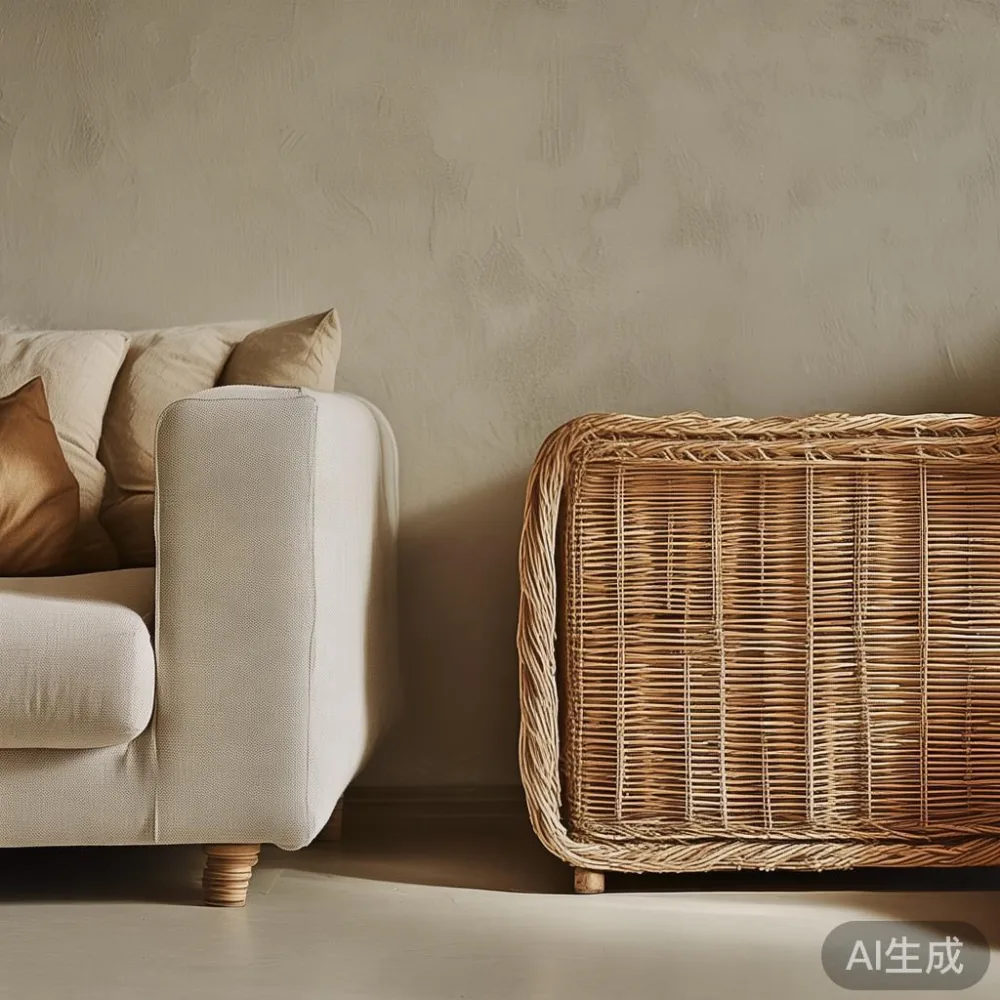
For practical guidance, how to style Japanese sofa in apartment involves low visual weight, a calm palette, compact depth, and control of floor space. A sofa with a 90–95 cm depth can leave too little passage space in a narrow HDB living room; 82–88 cm may be easier to arrange. A Japanese-inspired solid wood sofa with visible oak framing and light oatmeal fabric can suit the approach without filling the room with bulky cushions.
Scale also protects the investment. A dining table with 75 cm usable sides fits a 120 cm room for everyday use, while 90 cm sides suit a 140–150 cm room with more elbow room. Bed frame choices affect mattress support and the width needed to walk around the bed. The largest piece should not merely fit; it should leave 75–90 cm of circulation in main routes where possible.
For inspiration, searches for top 10 French furniture often reveal the details that influence pricing: shaped arms, tapered legs, carved rails, antique-style finishes, and carefully upholstered panels. Genuine French provincial work may use solid walnut, oak, or beech, but regional names alone do not prove origin. Ask for species, board thickness, joinery, finish, and manufacturing details.
MIDHILL French provincial sofa is one example of how a named style can be translated into a light-luxury piece, but buyers should still inspect the frame, cushion construction, and finish. A relevant contact point is +86 188 2788 2512 for product or project enquiries.
What should a fair solid wood price include?
A fair price should include more than timber and appearance. Look for documented material grades, accurate dimensions, stable joints, hardware suited to the load, controlled finishing, protective packaging, and a clear warranty. It should also include realistic expectations: natural grain, small tonal variations, seasonal movement, and light marks are normal in solid timber.
Here is a practical framework for comparing products:
1. Establish the material. Confirm the solid wood species, core construction, veneer use, board thickness, and whether the back, frame, or drawer parts differ from the visible surfaces.
2. Test the structure. Check drawer alignment, door action, seat stability, bed-frame support, and resistance to racking. A 10-year structural warranty is more useful when the supplier defines the covered components.
3. Review the finish. Ask how many coats were applied, whether the colour can be repaired, and what maintenance is required. Request a sample if possible.
4. Price the service. Compare delivery days, assembly, upstairs carrying, installation, GST, and return terms. The lowest listed price may not be the lowest cost over 10 years.
5. Match the room. Use the lift and corridor measurements, maintain circulation space, and choose dimensions that suit the actual household. A 200 cm dining table is not more valuable than a 160 cm one if it makes the flat awkward to use.
These principles apply across a solid wood sofa, bed frame, dining table, wardrobe, nightstand, and marble table. They also apply to rattan furniture, where buyers should ask whether the frame is hardwood, rattan cane, or a synthetic imitation, and how the weave is supported. Genuine rattan furniture may weigh only 15–30 kg for a chair and 35–55 kg for a lounge chair, making it easier to move than a comparable solid timber piece, but material naming still needs clarity.
The price of solid wood furniture is built from verifiable inputs: the timber, its preparation, the design, the joints, the finish, the hardware, the packaging, and the service behind it. For Singapore buyers, delivery access and long-term repairability belong in that calculation. The strongest value is not the smallest invoice; it is a piece whose materials and construction remain visible, understandable, and serviceable for many years.