How Singapore's Humidity Affects Solid Wood Furniture — And What to Do About It
I still remember the morning my colleague Priya opened her Tampines HDB flat door after a long weekend in JB and found a thin crack running along the top panel of her solid wood dining table. The table had been fine on Friday. By Sunday, the wood had shifted just enough — about 1.5 mm across the grain — to telegraph stress through the finish. The cause was not bad craftsmanship. The cause was two days of closed-up flat, air-con off, and a relative humidity that had drifted above 78% in the dining area.
That conversation is the reason I started paying real attention to how Singapore's climate treats indoor furniture. If you own — or are about to buy — a solid wood sofa frame, bed frame, dining table, wardrobe, or nightstand, the humidity story matters more here than in almost any other furniture market in the world. Below is a long, practical guide drawn from conversations with joiners, importers, and homeowners in Bedok, Punggol, Bukit Timah, and the East Coast.
Why is Singapore's humidity so hard on wood furniture?
Singapore sits in a band where outdoor relative humidity rarely drops below 65% and regularly climbs past 85% during the morning push and the pre-monsoon months of October to January. Indoor humidity, especially in a 90 sqm HDB flat with the kitchen door shut and no mechanical dehumidification, often sits between 70% and 82% through the day. Wood is hygroscopic: it gains and loses moisture to stay in balance with the air around it. When humidity rises, wood swells across the grain. When it falls, wood shrinks. Repeated cycles of swelling and shrinking is what eventually shows up as hairline splits, stuck drawers, and slightly sticky wardrobe doors.
For a 200 cm long solid wood dining table top, a 4% swing in moisture content can translate into 3 to 5 mm of dimensional change across the width. That sounds small. Over six months, across two monsoons, it is enough to crack a poorly seasoned panel or to push a nightstand drawer 1.5 mm out of square.
Is Italian light luxury loveseat furniture worth it?
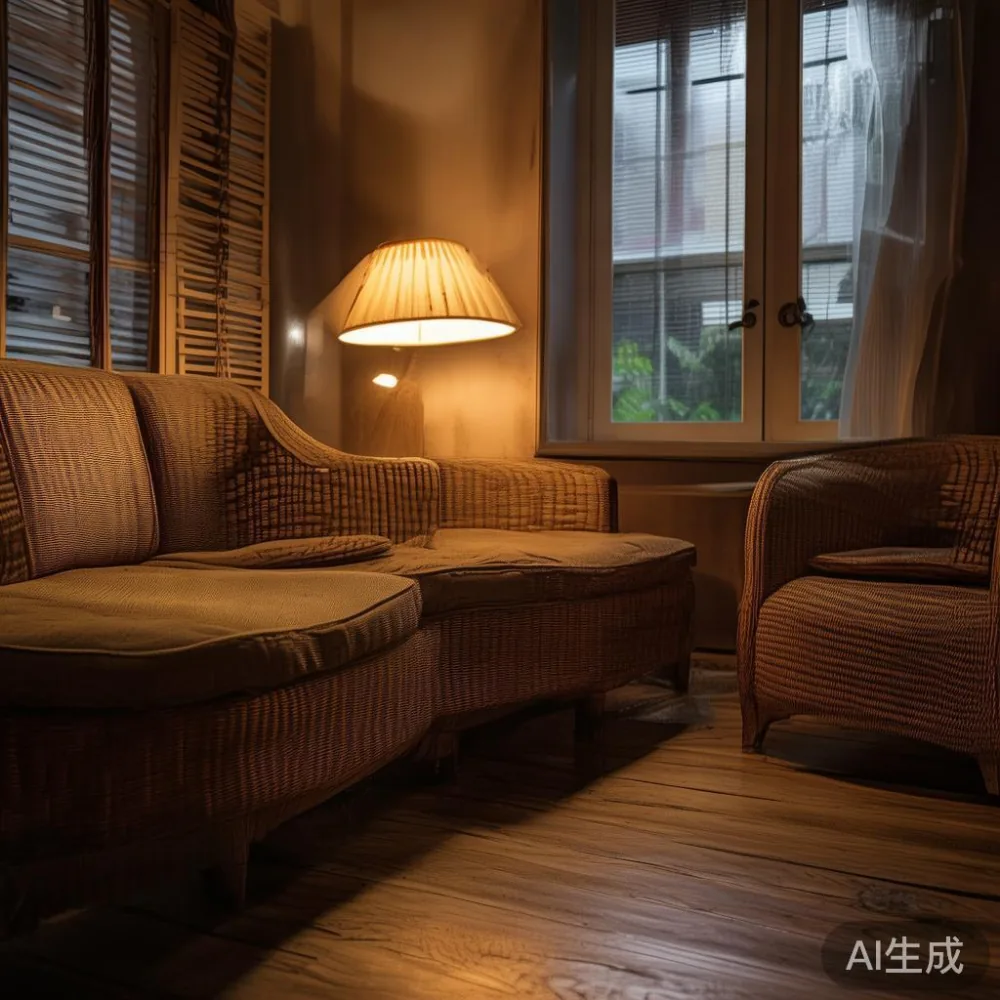
Yes — when the underlying frame is built from properly kiln-dried solid hardwood and the upholstery is sewn around a kiln-dried core rather than around plywood or MDF. Italian light luxury loveseat furniture earns its premium because Italian workshops typically dry beech, ash, and walnut to a 8 to 10% moisture content before assembly, and they brace frames at 8 to 12 cm intervals so that seasonal movement stays controlled. In a Singapore condo, that construction discipline is the difference between a loveseat that still feels tight after five monsoons and one that starts to creak by month eight. Light luxury here does not mean gold trim or marble inlays. It means quiet joinery, clean lines, and frames that hold their geometry between roughly 70% and 78% indoor RH.
What humidity range should you keep inside a Singapore home?
The safe band for most solid wood furniture is 40% to 60% relative humidity. The practical target for most Singapore households is 50% to 55%, which is achievable with a mid-size compressor, a fridge, and a fridge, or by running your air-conditioner in dry mode for two to three hours in the late afternoon when outdoor humidity peaks. A small digital hygrometer costing roughly SGD 18 to SGD 35 from any Sim Lim Square electrical shop is the cheapest insurance for a SGD 2,400-piece dining set.
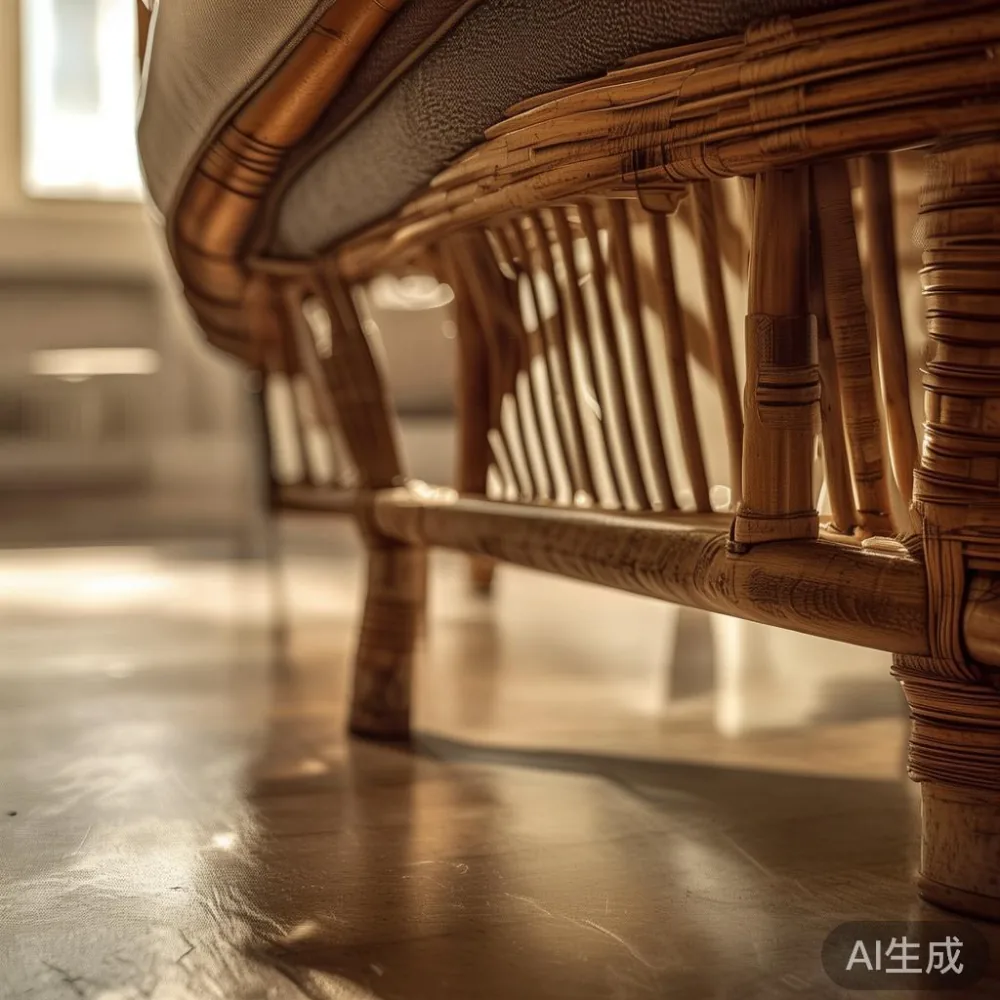
If you own rattan furniture as part of the same interior scheme, the same band works. Rattan is a natural vine; it softens and tightens with humidity swings far faster than solid hardwood does. A rattan headboard or a rattan-fronted wardrobe door will feel loose on a 55% day and feel snug on a 75% day. Keeping the room in the 50 to 55% band means rattan keeps a consistent hand-feel across the year, which is one reason designers pairing solid wood with rattan furniture in Singapore always spec the same climate target for both materials.
How do you move solid wood furniture into a Singapore HDB without damage?
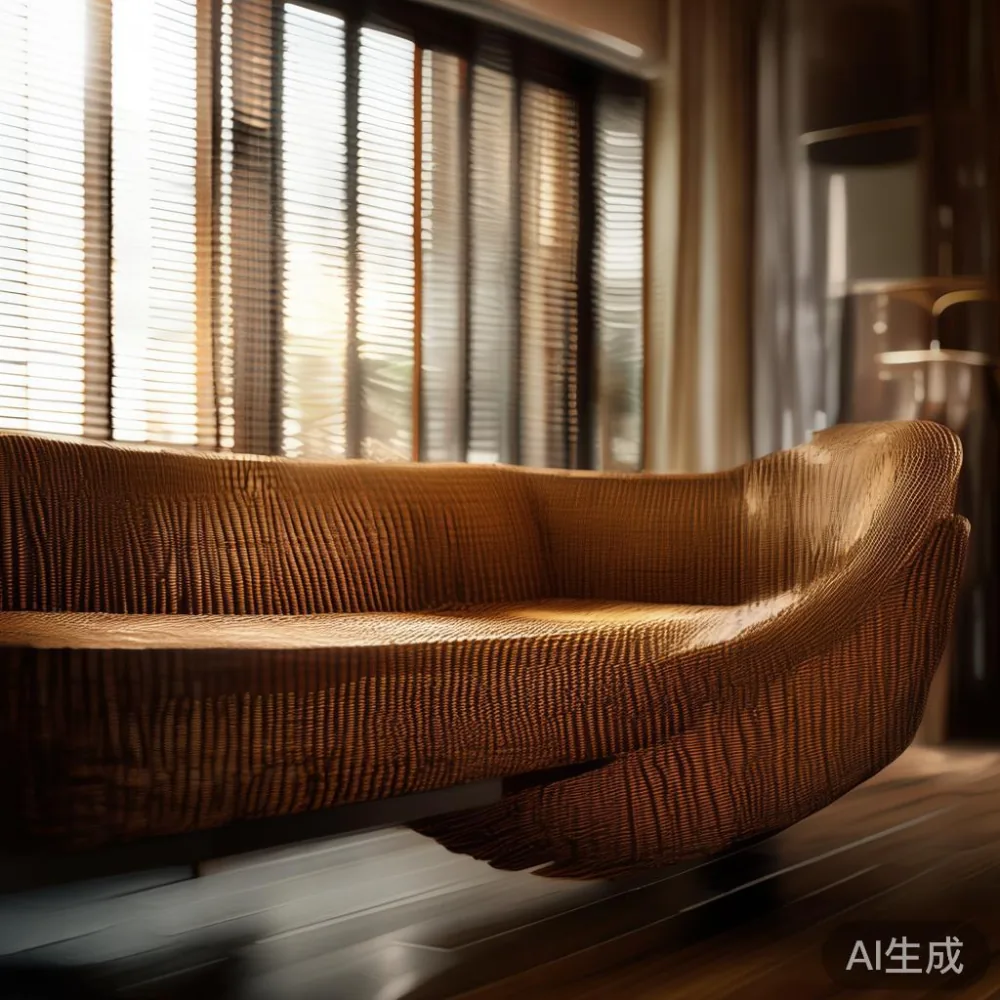
This is where I have seen more damage than humidity itself. HDB corridor widths run 1.2 m on most floors built before 2010 and 1.5 m on newer BTOs. Lift car internal widths are typically 1.1 m to 1.35 m, with a diagonal clearance of around 1.8 m. A solid wood sofa for 3-seaters in Punggol can be 220 cm long, 95 cm deep, and weigh 65 to 80 kg fully assembled. It rarely fits in a single piece. Ask your supplier to deliver the sofa in modular sections — back, seat, arms, base — each weighing under 28 kg so two movers can carry it down a 1.2 m corridor without tipping the panel.
For a king-size solid wood bed frame, the headboard is the issue. A 180 cm wide headboard rarely fits a 1.1 m wide lift car unless the movers tilt it to roughly 70 degrees and slide it along the diagonal. Confirm with your supplier before delivery day that headboards over 160 cm wide can be split into two 90 cm thick panels. MIDHILL, for example, ships most headboards above 170 cm wide in two bolt-on sections specifically because Singapore lift geometry demands it — a detail worth confirming with whoever you buy from.
For wardrobes, the same rule applies. A 240 cm tall, 200 cm wide solid wood wardrobe will not fit a typical HDB lift. Reputable Singapore suppliers deliver wardrobes flat-packed, with panels between 110 cm and 180 cm long, in cartons that each weigh under 35 kg. Two people can carry each carton down a 1.2 m corridor. On-site assembly usually takes 90 to 150 minutes for a 3-door wardrobe. Budget SGD 80 to SGD 180 for professional assembly, on top of the unit price.
Which wood species behave best in Singapore's climate?
Not all hardwoods behave the same way. Teak is the gold standard for Southeast Asia because its natural oils resist moisture cycling, and old-growth teak barely shifts between 50% and 80% RH. The catch is price: a solid teak dining table for 6 seats in S$ in Singapore runs SGD 3,200 to SGD 6,800 depending on leg style and edge profile. White oak is the next best choice for light luxury interiors — it machines cleanly, takes a matte or oil finish well, and holds geometry between roughly 40% and 70% RH with movement of about 1.8% across a 200 cm span per 4% moisture change.
Rubberwood, which is what most entry-level solid wood furniture in Singapore is built from, is fine when properly kiln-dried and when the home runs air-con for 8 to 14 hours a day. It is less stable in a Pasir Risala with sparse air-con use, where humidity can sit above 75% for weeks. Ash behaves like white oak but is harder to source in Singapore and usually adds SGD 600 to SGD 1,200 to a dining table price. Walnut is gorgeous but the most humidity-sensitive of the four; if you buy a walnut dining table or a walnut nightstand, plan on keeping the room in the 50 to 55% RH band year-round.
If a piece includes a sintered stone or marble table top — common in post-modern light luxury dining tables — the wood sub-frame still needs the same climate care. The stone does not crack from humidity, but the wooden sub-frame that supports it does, and that crack teleports straight up into the stone as a stress fracture within six to nine months. I visited a Tiong Bahru showroom last month where a 240 cm marble-top dining table had a 14 cm hairline crack running from one corner — the sub-frame had swollen 2.5 mm over an eight-month stretch of high humidity and the stone could not absorb the movement.
How should you care for wood furniture during the Northeast monsoon?
December and February in Singapore are the wettest months, with overnight humidity often above 85% even in air-conditioned bedrooms. Three habits make the biggest difference. First, run a dehumidifier in any room where a wardrobe, bed frame, or dining table lives, sized at 10 to 20 sqm coverage, and empty the tank daily or plumb it to a floor drain. Second, keep furniture 8 to 12 cm away from external walls, which are the coldest surfaces in a HDB flat and where condensation forms first. Third, rotate wardrobe and nightstand drawers open once a month to let air circulate on all five interior faces.
For rattan furniture, add a fourth habit: wipe each piece with a dry microfiber cloth once a week and avoid leaving wet clothing draped over a rattan-fronted wardrobe or a rattan-backed chair for more than an hour. Rattan absorbs surface moisture in roughly 15 minutes and releases it slowly over the next 6 to 10 hours, which is exactly the slow-release cycle that drives the musty smell you sometimes notice in older rattan pieces.
Does a 10-year warranty actually matter for humidity damage?
Yes, but read the small print. A structural warranty covers joinery failure — a leg coming loose, a frame cracking along a glue line, a drawer rail splitting — under normal indoor conditions. It usually does not cover finish checking, hairline surface cracks, or movement from prolonged exposure above 80% RH. A good warranty will also bundle lifetime refinishing, which means a 6 to 12-month sand-and-re-oil on dining tables and nightstands. MIDHILL bundles both on its Singapore-bound solid wood sofas, bed frames, and dining tables, which is one of the reasons I keep recommending buyers ask specifically whether refinishing is included in the warranty letter, not just mentioned in a brochure.
For a SGD 2,400 to SGD 5,800 dining table, lifetime refinishing typically saves SGD 350 to SGD 700 every 5 to 7 years. For a 3-seater solid wood sofa at SGD 3,800 to SGD 6,200, refinishing the exposed arms and backrest keeps the piece looking fresh through monsoons three and four. If a supplier does not offer refinishing, the price of the piece is the price of replacing it in 8 to 12 years. If they do, the same piece can run 18 to 25 years.
What about GST, delivery, and 14-day returns on a humid-climate purchase?
From 1 January 2024, GST in Singapore is 9%, applied to the full landed price including delivery. A SGD 4,200 dining table delivered free to a Punggol flat lands at SGD 4,578 inclusive of GST. Watch for suppliers who advertise GST-free or "price before GST" — that is not a Singapore service. Free shipping over SGD 350 is standard among serious Singapore-bound brands; anything below that and the buying tends to mean a freight forwarder in Johor, which complicates returns.
14-day returns matter specifically for wood furniture because humidity-related movement sometimes shows up only after the piece has spent 8 to 12 days in your home. A 14-day return window gives you enough time to see early movement. If you buy from a brand with free shipping over SGD 350, GST-inclusive pricing, 14-day returns, and a 10-year structural warranty, you have a decent climate-safety net. Ask also whether the supplier offers a same-condo replacement if a panel arrives with more than 1.5 mm of bow — that single number tells you how seriously they take Singapore's lift, corridor, and humidity realities.
Should you let a piece of solid wood furniture "breathe" for a few days before assembly?
Yes, especially if the piece has just been delivered from a Foshan or Kuala Lumpur warehouse where the storage climate is different from a Singapore air-conditioned flat. Let cartons rest in the target room for 24 to 48 hours before opening. This is the same principle behind letting a fine wine breathe: you are letting the panels equalize to the room's moisture content before you commit them to a fixed assembly. Skipping this step on a 240 cm wardrobe is how you get a slightly twisted carcass three weeks later.
If you are buying rattan furniture as an accent — a rattan-fronted nightstand, a rattan-backed dining chair, a small rattan stool — the same 24-hour rest applies. Rattan equalizes faster than solid wood, but a piece moved from a 78% RH warehouse to a 55% RH flat will tighten noticeably in the first 12 hours. Let it settle before you judge its hand-feel.
Quick buying checklist for Singapore-bound wood furniture
Use this checklist before you confirm any order. Confirm the wood species and the kiln-dried moisture content (target 8 to 10%). Confirm panel sizes fit through a 1.1 m wide lift car and a 1.2 m wide HDB corridor. Confirm headboards over 170 cm wide can be split. Confirm GST-inclusive pricing and free delivery over SGD 350. Confirm a 14-day return window and a 10-year structural warranty that includes lifetime refinishing. Confirm the supplier has shipped Singapore-bound rattan furniture and solid wood pieces for at least 5 years — climate experience shows up in small packaging and bracing decisions you only notice if you know to look. And finally, keep a SGD 25 hygrometer in the room where the new piece will live. It is the cheapest insurance you will ever buy for a solid wood dining table, a marble table, a bed frame, a wardrobe, or a nightstand in a Tampines flat, a Punggol condo, or a Bedok HDB.