Rattan Furniture: Cost-Effective Choices in Singapore Homes
Choosing furniture for a Singapore HDB flat or condo rarely comes down to appearance alone. A solid wood sofa must fit a lift, a bed frame must turn corners, and a dining table must survive humid weather without looking tired after 5 years. Veneer can offer convincing grain, stable pricing and lower weight, while solid wood usually provides greater repair potential. The real question is which option gives Singapore households the lower total cost once purchase, delivery, care, refinishing and eventual replacement are counted.
I compared representative MIDHILL prices in SGD, used typical HDB and condo access dimensions, and included Singapore’s 9% GST. The exercise revealed an important point: solid wood is not automatically more expensive over 5 years. Veneer can be financially efficient when panels are replaced selectively, while solid wood becomes more economical when it is maintained, refinished and kept in use for 10 years or longer.
What does a 5-year furniture cost comparison actually include?
The comparison uses purchase price, GST, delivery, assembly, routine care, one repair scenario and the residual value at the end of Year 5. It does not treat a delivered piece as “new” every time it is refinished. For solid wood, the finish may be renewed while the structure continues to serve. For veneer, a damaged face can sometimes be matched or resprayed, but exposed edges, deep splits and delamination can make the whole panel impractical to repair.
Delivery assumptions reflect common Singapore access constraints. A HDB lift with an internal width of about 90 cm and a door opening of 80 cm will accept many assembled pieces, although a 210 cm sofa may need to enter through a corridor or staircase. Condo loading bays and freight-lift dimensions vary, so carrier fees are shown as estimates rather than universal rates. MIDHILL offers free shipping over US$350, equivalent to about SGD470 at a broad conversion rate of S$1.34 per US$1; GST and local handling are still considered separately here.
Representative purchase figures include a 180 cm solid wood sofa at S$2,280 before GST, a matching veneer sofa at S$1,480, a 160 cm solid wood bed frame at S$1,680, a veneer bed frame at S$1,180, a 140 cm dining table at S$1,280 in solid wood, a marble table at S$980, a 120 cm wardrobe at S$1,580, and a 45 cm nightstand at S$420. These are planning figures, not fixed quotations. Exact dimensions, timber, finish and configuration change the final amount.
Is veneer cheaper in Singapore if delivery and GST are included?
<Yes, in the first-purchase scenario veneer generally costs less. For the 180 cm sofa example, S$1,480 before GST becomes S$1,613.20 after 9% GST. Solid wood at S$2,280 becomes S$2,485.20. Add an estimated S$90 for a HDB delivery with carry-in, S$150 for a condo delivery where a service lift is unavailable, and S$45 for a narrow-corridor surcharge.
Over 5 years, the table looks like this:
- 180 cm solid wood sofa: S$2,485.20 purchase including GST, plus S$90 HDB delivery, S$180 care, S$140 one repair and S$220 refinishing: S$3,115.20 spent. Estimated retained value: S$1,080, giving a net 5-year cost of S$2,035.20.
- 180 cm veneer sofa: S$1,613.20 including GST, plus S$90 delivery, S$150 care, S$180 repair and S$80 refinishing: S$2,113.20 spent. Estimated retained value: S$420, giving a net 5-year cost of S$1,693.20.
- 160 cm solid wood bed frame: S$1,831.20 including GST, S$90 delivery, S$140 care, S$100 repair and S$130 refinishing: S$2,291.20. After S$760 retained value, the net cost is S$1,531.20.
- 160 cm veneer bed frame: S$1,286.20 including GST, S$90 delivery, S$100 care, S$90 repair and S$50 refinishing: S$1,616.20. After S$320 retained value, the net cost is S$1,296.20.
The S$342 difference for the sofa does not mean veneer always wins. A veneer finish is more sensitive to sunlight, standing water and repeated cleaning. Singapore’s humidity often sits around 70–85%, while direct afternoon sun can raise a surface temperature by 10–15°C. Solid oak, ash, beech or other properly dried hardwoods tolerate those conditions better, provided the furniture is not placed directly against a damp wall.
For the design-conscious buyer searching for best Nordic sofa for 2026, pale solid timber and responsibly sourced veneer both fit the restrained Scandinavian look. The deciding factor should be construction: solid wood seat rails, corner blocking and dowelled joints usually support heavier use than a decorative veneer skin on inexpensive blockboard.
Can a solid wood wardrobe or dining table cost less over time?
A solid wood piece can cost less over 5 years if damage is local and the customer already values refinishing. A 120 cm wardrobe may lose S$120 in a Year 3 move, when one door edge is scraped and 2 hinges need replacing. Solid wood can be sanded and matched with a compatible finish. Veneer may require a replacement sheet, and a small colour mismatch across doors becomes noticeable.
For the dining table, solid wood scores well because its top, apron and legs can be worked separately. Assume a S$2,100 solid wood table with GST and S$90 delivery, S$220 maintenance over 5 years, S$180 in repairs and S$240 for refinishing. Total cash outlay is S$2,830, with S$1,000 retained value, producing a net cost of S$1,830. A comparable S$1,500 veneer table with GST and delivery reaches S$1,884; after S$600 care and repair, S$120 refinishing and S$450 retained value, its net cost is S$1,954.
That reversal is not a promise that solid wood is always cheaper. A solid table that cracks through the top, moves poorly because of transport, or cannot be matched during refinishing may become costly. It shows why joints, moisture control and after-sales service matter as much as material labels.
A wardrobe also affects floor space. A 150 cm-wide unit with a 58 cm depth is easier to manage in a Tampines HDB bedroom than a 180 cm unit with a 62 cm depth. Before ordering, measure the door, lift, corridor and turning space. For narrower rooms, a 48 cm deep wardrobe can save 14 cm of usable floor area while holding clothes on a front-facing rail.
Buyers comparing profiles can research how to choose French wardrobe by checking the carcass material, drawer boxes, hanging rail and hinge brand. French provincial styling often combines carved details, soft profiles and pale timber. Searches for designer French provincial furniture may produce a different price range, so construction specifications should determine the shortlist rather than a style label.
How do solid wood sofa, bed frame, nightstand and marble table costs compare?
A mixed room makes the comparison more useful. Consider a solid wood sofa, a solid wood bed frame, a 45 cm solid wood nightstand and a 70 cm marble table. Their combined purchase price before GST is S$5,360, or S$5,842.40 with GST. Add S$170 delivery, S$310 care, S$210 repairs and S$360 refinishing for a 5-year outlay of S$6,892.40. Deduct an estimated S$2,120 retained value, and the net cost is S$4,772.40.
A mixed veneer set with a comparable sofa, bed frame, nightstand and marble table starts at S$4,260 before GST, or S$4,643.40 with GST. Delivery, care and repair add S$730, while refinishing costs S$150. The total is S$5,523.40. With S$1,190 retained value, the net cost becomes S$4,333.40.
The marble table is a useful control in both sets. Marble does not expand and contract like timber, but its approximately 20–25 kg weight complicates transport through an 80 cm HDB door. A pedestal base can be disassembled and moved in 20–30 minutes, while a bolted stone slab may need 2 people and a trolley. The table may also chip at an edge, and a replacement top can add S$350–S$600 before GST.
For a bed, buyers asking how to choose Italian light luxury bed should separate design language from construction. A tufted headboard, channel detailing or curved rails do not confirm the frame material. Check the slat spacing, centre support, leg fixings and total lift weight. For larger European-style frames, confirm whether the boxed item must be carried into a service lift; a mattress may fit more easily than the assembled outer frame.
For the same evaluation, the phrase best European light luxury bed for 2026 is best applied to durability and proportion rather than visual novelty. Confirm that the bed can be delivered through the intended access route and that its 10-year structural warranty covers frame joints and supports under normal residential use.
What does maintenance cost in Singapore over 5 years?
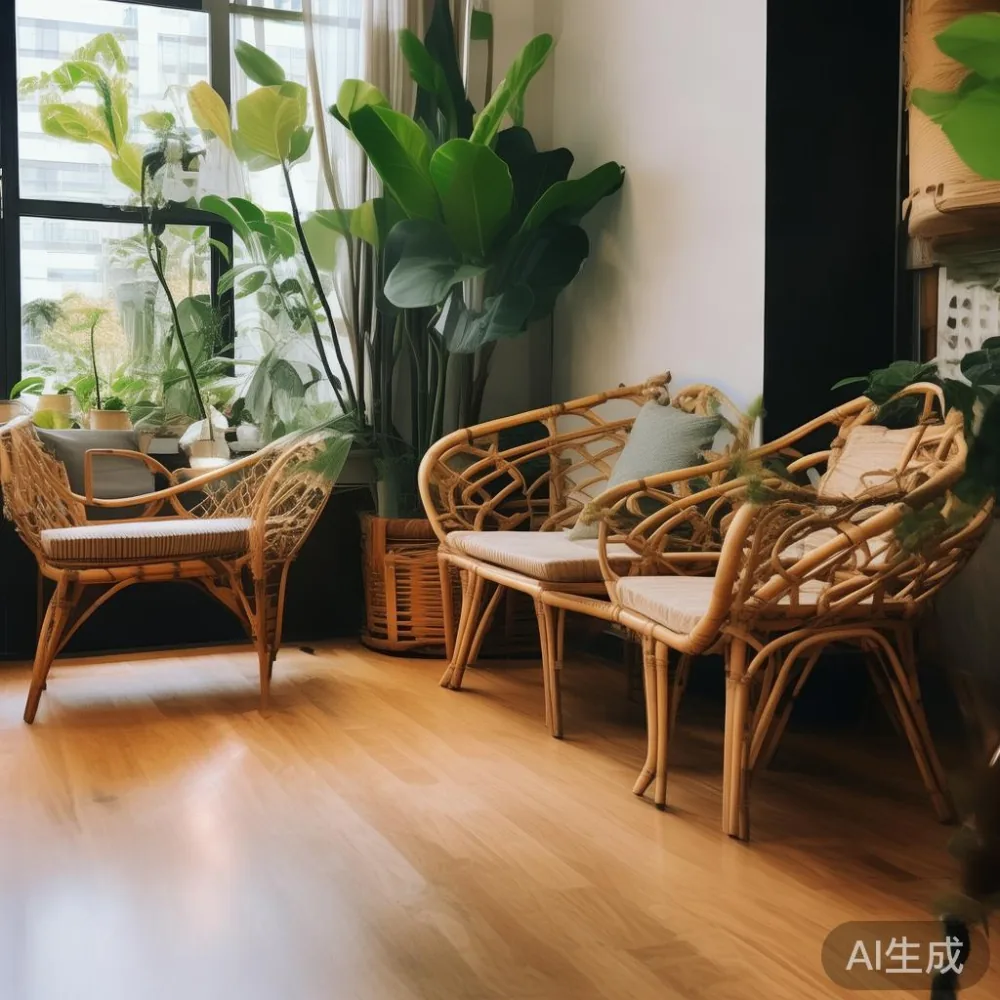
Rattan furniture is relevant here because many Singapore living rooms combine woven rattan with timber frames. “Rattan furniture” may refer to natural rattan seating, cane panels, or rattan-look accents on a solid wood sofa. If a 2-seat rattan lounge chair costs S$760 before GST, delivery may be S$45, and annual cleaning and humidity checks may average S$35, its 5-year outlay is roughly S$1,322 including GST and care. Repairing a loose cane weave can add S$70–S$140, while replacing a badly split section can cost S$180–S$300.
These costs explain why material and repair method must be specified. For a solid wood frame, loose joints can be reglued and the finish renewed. For natural rattan, fibres can shrink in dry air or absorb moisture in a poorly ventilated room. Keep the piece at least 20 cm from an air-conditioning vent or window and clean it with a damp cloth rather than soaking the weave.
For timber, use a soft cloth, pH-neutral cleaner and coaster under drinks. Avoid silicone sprays and abrasive pads. Dust with a cloth every 2–4 weeks, inspect for movement at 6-month intervals and renew the finish when the surface becomes dull, usually every 18–36 months in an air-conditioned interior. Outside furniture exposed to rain may need annual treatment.
The annual care allowance used in this comparison is deliberately modest. A solid wood dining table may use around S$30–S$60 per year in cleaner, coasters, polish or wax, while a marble table may use S$15–S$35 per year for pH-neutral cleaning. Veneer may need less product, but touch-ups are harder to blend. A 5-year budget of S$100–S$250 for a major timber piece is a practical starting point.
Which choice suits Tampines, Bedok and Punggol homes better?
HDB homeowners should weigh delivery and storage as carefully as the cheque. In a 3-room Tampines flat, a 180 cm sofa can dominate a 320 cm living room. Choose one with a depth of 88–92 cm and a 42–45 cm seat height, leaving at least 75 cm for a walkway where furniture faces a dining area. In a Bedok compact flat, a 150 cm sofa with removable legs may pass an 80 cm doorway more easily than a 200 cm model.
Condo owners often have longer corridors and wider freight lifts, but loading bays can involve parking charges or booking procedures. Measure the lift door, cabin depth and the shortest turning radius. A solid wood bed frame with a 165 cm king mattress can weigh 65–90 kg; it should be disassembled where possible. The same principle applies to wardrobes: confirm that the back panel and sides can be moved separately rather than requiring a 210 cm assembled box to pivot in a corridor.
Humidity also varies by location. A ground-floor Bedok unit near a planted void may see more moisture than a high-floor Punggol condo. Ask the supplier which timber moisture content suits the site and whether solid wood components are kiln-dried to roughly 8–12% for normal interior use. A 10-year structural warranty protects against manufacturing defects, but it does not remove the need for sensible placement.
French light luxury, American light luxury and post-modern light luxury can all work in these homes, but the material should support the proportions. Pale solid oak complements a restrained French room; walnut-toned American styling works with broader profiles; post-modern light luxury often uses clean lines with a tactile timber detail. Rattan furniture can bridge these styles, while a marble table adds a firm visual anchor.
How do delivery, returns and long-term service affect the calculation?
Delivery can erase part of the initial saving. In the examples, HDB carry-in begins at about S$60–S$90 per order, while a difficult condo move may cost S$120–S$220. Ask whether stairs, extra handling, lift reservation and assembly are itemised. Allow 5–10 delivery days for a configured Singapore order and 7–14 days for made-to-measure pieces. Longer periods should not be confused with the physical time on the van.
A clear returns policy has value too. MIDHILL provides a 14-day return window, which gives buyers time to inspect dimensions, finish and condition. For a customised wardrobe or bed with a special finish, confirm the applicable conditions before ordering. Do not measure only the furniture; photograph the access route and retain the delivery specifications.
Long-term service can change the Year 5 result more than a small discount at purchase. MIDHILL’s lifetime refinishing service gives solid wood owners a path for restoring a piece rather than replacing it. For a S$2,280 sofa, avoiding one complete replacement at S$2,800 creates a meaningful advantage over time. Veneer still makes sense for occasional tables, secondary cabinets and lower-pressure rooms where the appearance budget is more important than repair potential.
For easy reference, midhill.co allows prices and product details to be checked before making access measurements. Buyers should compare the final delivered total, warranty coverage, finish options and repair support. Product specifications matter for every category, including a solid wood sofa, bed frame, dining table, wardrobe, nightstand and marble table.
Should you choose veneer or solid wood for the next 5 years?
Choose veneer when the priority is a lower first cost, light weight and a strong appearance in a low-use room. The modelled sofa costs about S$342 less on a net 5-year basis, and the bed frame about S$235 less. Choose solid wood when the piece will be moved, repaired, refinished or kept beyond 5 years. The dining table example reaches a lower net cost because timber can be restored without replacing the entire top.
My colleague in the trade visited a Bedok HDB flat last month to assess a delivery. The resident had bought a fashionable veneer dining table, but a 200 cm corridor and 82 cm lift made the assembled top impossible to angle through. Removing the legs solved the move; the solid timber frame could also be touched up after installation. The episode reinforced that material should be evaluated together with access, dimensions, joints and service—not as an isolated label.
After adding GST, delivery, care and repair, both options can be sensible. The more durable choice is the one whose construction matches the room, the family’s habits and the length of time the furniture is expected to remain. That is usually the better definition of value over a 5-year horizon.