Humidity in Southeast Asia and the Solid Wood Furniture You Actually Own
I keep a small digital hygrometer on my office desk in Tampines, and for most mornings in February it sits somewhere between 76% and 82% relative humidity. My colleague in Bedok has one taped to the inside of his wardrobe door, and his reads even higher in September, often above 85% after a thunderstorm rolls off the Strait of Malacca. If you live in an HDB flat in Punggol, a condo in Simei, or a walk-up near Geylang, you have probably seen the same fingerprints the climate leaves on wood: a drawer that no longer slides the way it did in the showroom, a hairline crack along a tabletop, a faint milky ring on a marble surface that nobody can explain. None of this is bad craftsmanship. It is the physics of a tropical island acting on a material that, no matter how it is finished, still wants to exchange moisture with the air around it.
Wood is hygroscopic. It absorbs water vapour when humidity rises and releases it when humidity falls. The cells in an oak board or a teak plank swell in the wet months and shrink in the dry months, and they do this across every surface, joint, and panel of the piece. Solid wood furniture responds to that movement more honestly than engineered panels do, which is one reason people pay a premium for it, and one reason it also asks for a little more attention. The goal of this guide is to give Singapore buyers a working understanding of how humidity behaves across a typical year, how it shows up on a solid wood sofa frame, a bed frame, a dining table, a wardrobe, a nightstand, or a marble table, and what realistic habits and product choices keep things quiet and stable for the next decade.
What humidity actually looks like in a Singapore home
Outdoor relative humidity on the island averages 78% to 88% across the year, with morning peaks and late-afternoon dips. Indoors, air-conditioning pulls that figure down. A bedroom running at 23°C usually sits between 55% and 65% RH, while a corridor or storage area without AC can climb back to 80% within hours of the door being closed. Every time you open your HDB main door to the lift lobby, you let a small slice of tropical air in. Every time you run the dryer, the bathroom fan, or the cooker hood, you shift the moisture balance again. The wood in your home is tracking that pattern all day, even when you are not.
The trouble is not any single number. The trouble is the swing. A piece that lives at 58% RH through a working week and then sits at 82% RH over a weekend while the family is away, or during a Chinese New Year visit when the air-conditioning is off for two days, can move enough across its width to open a joint or crack a finish. This is true of every category we work with, from a rattan furniture dining set in an open balcony to a teak bed frame in a master bedroom. The material is not failing. It is doing what wood does.
How humidity shows up on the furniture you actually own
On a solid wood sofa, the most common complaint in this region is a creak at the arm or a slight looseness where the back meets the seat. Frames in this category are usually mortise-and-tenon or dowelled, both of which depend on a snug mechanical fit. When the surrounding air gets very wet, the tenon swells inside the mortise and the joint feels tight for a week or two; when the air gets very dry, the tenon shrinks and the joint gains a millimetre of play. Over a few cycles, that play becomes a creak. The cushions on top, whether they are foam, fibre, or a mix, do their own slow dance with humidity, and they tend to feel softer and slightly heavier during the wet season.
A bed frame tells a similar story. Slats expand, side rails cup slightly, and a headboard panel can develop a faint bow at its centre. A wardrobe, especially a three-door unit over 180 cm tall, is the most exposed piece in the house because it usually sits against an exterior wall and runs floor to ceiling, which means its full surface area is breathing with the room. Drawer fronts may rub in August and gap in February. A nightstand, being small and often placed near a window or bathroom door, responds fastest of all. Within an hour of a hot shower with the door open, the small panel that faces the bathroom can register a measurable shift.
Marble behaves differently but is still affected. A marble table in a dining room rarely cracks from humidity alone, but the wooden base beneath it can. The stone is dimensionally stable; the sub-frame is not. Polished marble also develops a dull patch, sometimes called a watermark, when moisture sits under a glass or a coaster for several hours. It is not a stain in the permanent sense, but it is a visible reminder that moisture is present.
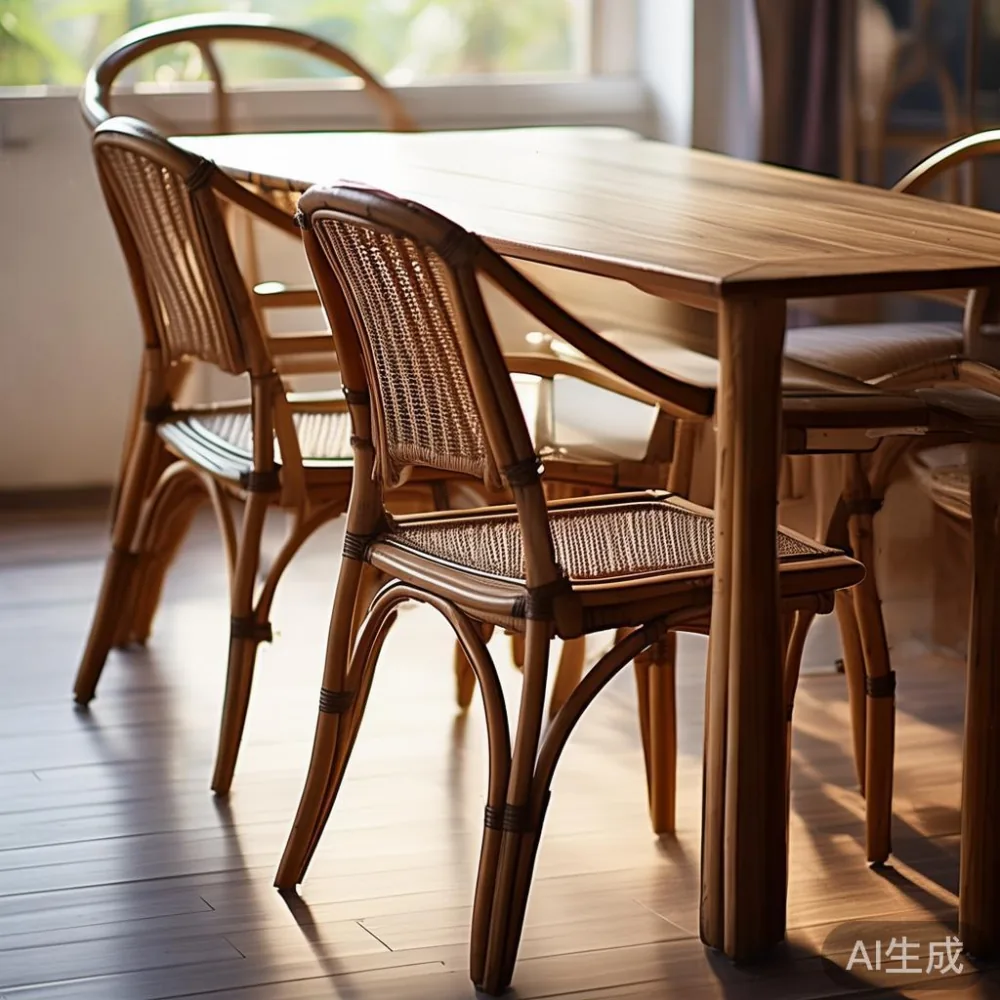
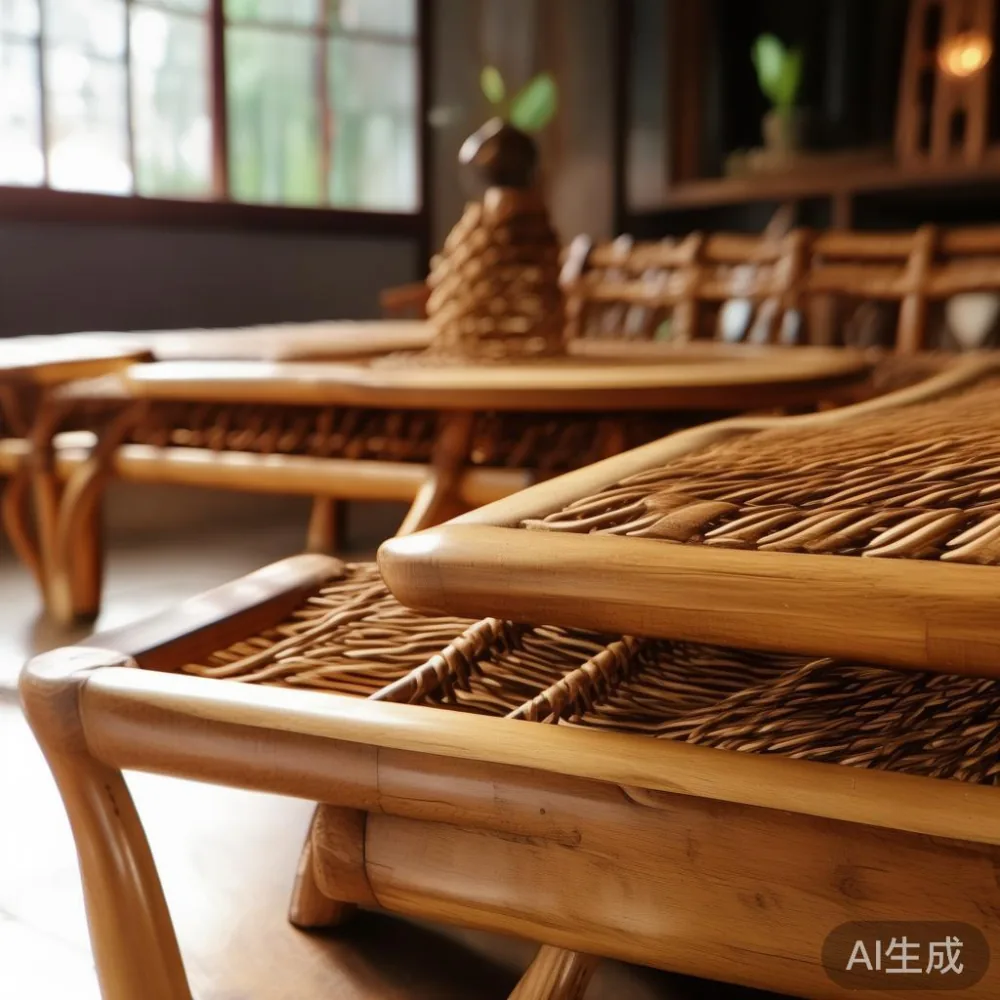
Rattan furniture deserves its own paragraph because it is one of the most responsive categories we sell. Rattan is a natural vine, and it is more hygroscopic than teak or oak by a noticeable margin. In a fully air-conditioned condo, a rattan headboard or chair will keep its shape for years. On a semi-outdoor balcony that faces afternoon sun and a sea breeze, the same piece will tighten in the dry months and soften in the wet months, which is the source of the small surface checks that owners sometimes mistake for damage. They are not damage. They are the material settling into its environment.
What a realistic care routine looks like for a HDB or condo
I tested this routine in a 92 sqm HDB flat in Punggol over the last wet season, and the results were clear enough to share. A hygrometer costs about SGD 18 at a local electronics shop, and it pays for itself the first time it tells you the wardrobe room is at 84% RH on a Sunday morning. Keep indoor RH between 45% and 65% if you can. A dehumidifier in the wardrobe room, sized for about 10 to 15 sqm, pulls that figure down by 10 to 20 percentage points over a six-hour cycle and uses roughly 0.4 kWh per hour. Running it twice a week during the November to January monsoon window keeps the wardrobe, the bed frame, and the marble-topped nightstand stable without drying the air enough to crack finishes.
Direct sunlight is the second quiet enemy. A dining table placed 1.5 metres from a west-facing window will fade on the sun-facing edge within six months. Pull the table 60 cm back, or run a sheer curtain during the 1 pm to 4 pm window. Avoid placing a solid wood sofa or a rattan chair directly under a ceiling air-conditioning vent, because cold dry air falling in a steady stream will dry one edge of the frame faster than the other and can open a seasonal crack along a rail. Rotate cushions and small items every two to four weeks so the wear pattern stays even, especially on pieces near a balcony door.
For daily cleaning, a soft microfibre cloth, slightly damp and well wrung, is enough. Avoid silicone polishes, which seal the surface and trap moisture underneath, and avoid any product labelled for kitchen counters, because those often contain solvents that dull wood finishes. For a marble table, use a pH-neutral stone cleaner and reseal the surface every 12 to 18 months. For rattan furniture, a soft brush once a week clears the dust that holds moisture against the fibres.
How MIDHILL builds for the Singapore climate
MIDHILL has been making solid wood pieces in Foshan since 2008, and a meaningful share of what leaves the factory floor is headed for tropical homes, from Jakarta and Bangkok to Singapore and Kuala Lumpur. Three construction choices matter for buyers here. First, kiln-drying is taken to a target of 8% to 10% moisture content, which is closer to the equilibrium moisture content of an air-conditioned Singapore room than the 12% to 14% typical of pieces aimed at northern Europe. Second, frames are joined with a combination of mortise-and-tenon, dowel, and a small amount of flexible adhesive, which lets the joint breathe rather than fight the wood. Third, finishes are usually a hand-applied oil or a low-build lacquer, both of which let the surface exchange moisture slowly instead of sealing it in.
The brand's offer to Singapore buyers is also practical. Free shipping applies to orders over US$350, which clears most single-piece purchases including a dining table, a bed frame, or a wardrobe. Delivery into HDB flats is coordinated with the lift dimensions, which on most newer blocks are around 1.2 m wide and 2.1 m tall, so a king-size bed frame ships in two sub-assemblies that fit through the lift and along a 1.5 m corridor. Returns are accepted within 14 days for pieces that have not been assembled. A 10-year structural warranty covers frame integrity, and lifetime refinishing is available for customers who want the piece refreshed after a decade of use. For a buyer in Tampines who wants a French light luxury look in the bedroom without worrying about climate drift, that package removes most of the usual friction.
How do I choose a return policy for a bedroom?
Pick the policy that gives you 14 calendar days from the day of delivery, allows the piece to be returned in its original packaging without a restocking fee, and lets you inspect the assembled bed frame, nightstand, or wardrobe in your actual bedroom before you commit. A bedroom-specific return should also cover hidden damage discovered after unboxing, such as a cracked marble panel on a dresser top or a chipped corner on a rattan furniture headboard, and it should include the cost of the courier picking the piece back up from your HDB corridor, since most lift lobbies are too narrow for a private lorry and a regular MPV needs to be booked.
In Singapore, the most common bedroom return window from regional brands is 7 days, which is too short to see how a solid wood bed frame responds to your air-conditioning cycle or how a wardrobe door aligns after a week of use. A 14-day window lets you live with the piece through at least one full humidity swing, which matters here because a Saturday delivery and a Sunday unboxing will look very different from the same piece on Friday of the following week. Check whether the policy excludes assembled items; many do, because the courier cannot repack a bed frame once the slats and side rails are joined. MIDHILL's terms allow returns within 14 days for pieces that have not been assembled, so the practical move is to dry-fit the bed frame, check all panels and slats, and only then tighten the final fixings.
Seasonal patterns Singapore buyers actually notice
December to early March is the wet season window, and it is when a wardrobe door will most often start to catch at the top corner. A small lift on the bottom hinge, around 1 to 2 mm, will bring the door back into alignment without calling a carpenter. June to September is the drier inter-monsoon period, and it is when small cracks along the grain of a dining tabletop are most likely to appear. These cracks, called checks, are usually cosmetic and close back up as humidity rises, but a light coat of hard wax oil applied in late September will slow the next cycle. The Northeast Monsoon from November to March brings higher indoor humidity even with air-conditioning running, because the outdoor air is so saturated that the AC unit cannot dehumidify it down to 50% without running almost continuously.
For condo buyers, lift and corridor dimensions matter more than they do for landed property. A standard HDB passenger lift in a block like those in Bedok or Punggol offers a door opening of about 0.9 m wide and an internal depth of 1.4 m, which is enough for a disassembled wardrobe but tight for a fully assembled one. A dining table over 200 cm long should be checked against the lift diagonal before delivery day, and a king-size bed frame should always be ordered with the sub-assembly option. These are unglamorous details, but they are the difference between a smooth Saturday morning and a SGD 120 redelivery fee.
Matching design language to a tropical home
American light luxury tends to pair pale oak with brushed brass and a touch of boucle on a solid wood sofa, which reads well against the white walls of a typical Punggol BTO. French light luxury leans darker, with walnut, cane panels, and a marble table that anchors the dining room. Post-modern light luxury plays with curves and mixed materials, which suits a Japandi marble small space layout where the dining area is shared with the living room and the furniture has to do visual work in a compact footprint. Each of these directions works with the same care routine, but the darker finishes show dust less and the marble tops need a slightly more disciplined coaster habit.
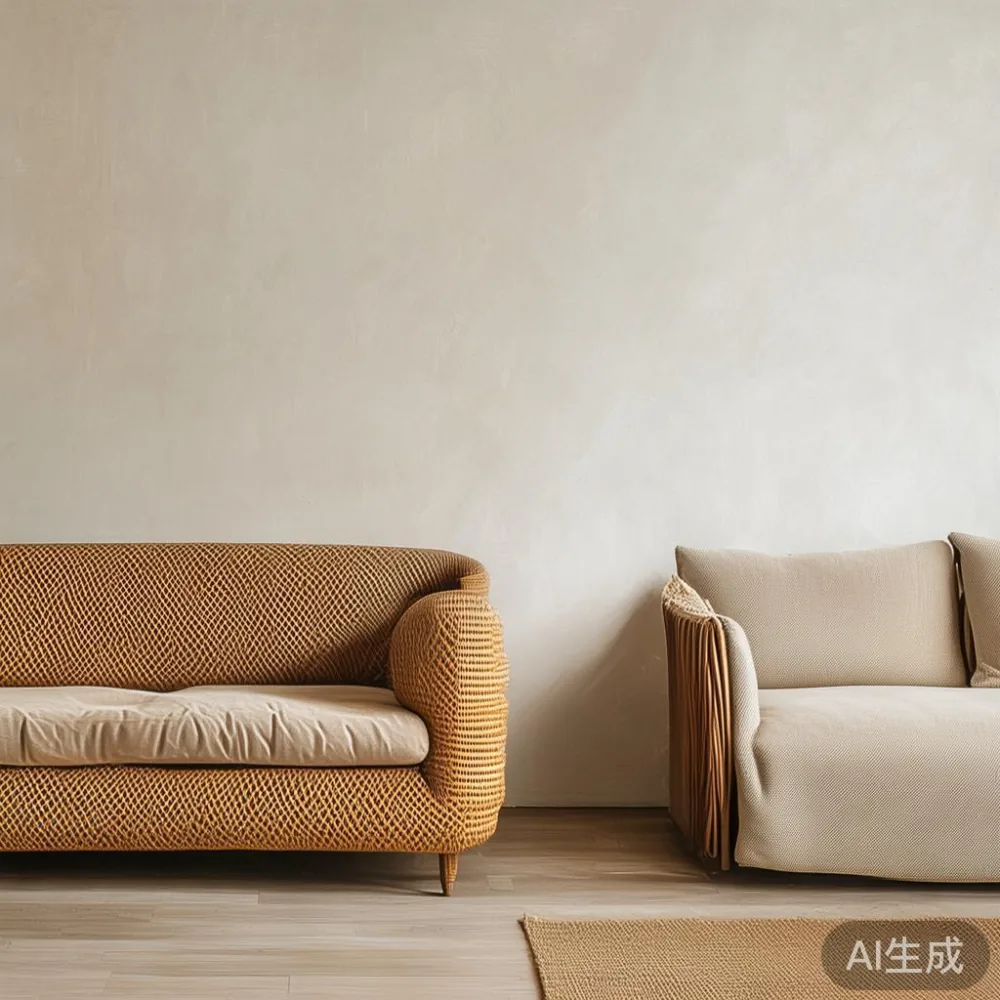
Rattan furniture fits naturally into any of the three directions when it is used as a headboard panel, a chair back, or a wardrobe door insert, because it warms up the cooler tones of solid wood and breaks up the flat planes of a small bedroom. In a Japandi marble small space, a single rattan chair beside a marble side table often does more for the room than another piece of storage would. The fibre is also forgiving in our climate, provided it is not asked to live fully outdoors in the afternoon sun.
What to budget and what to expect over ten years
A solid wood dining table for four in teak or oak sits in the SGD 1,400 to SGD 3,200 range delivered, depending on size and finish. A king-size bed frame in the same materials sits between SGD 1,600 and SGD 3,800. A three-door wardrobe runs SGD 2,400 to SGD 5,200, and a marble-topped nightstand pair comes in around SGD 700 to SGD 1,400. Add roughly 8% GST on the final invoice, and you have the realistic all-in figure for a Singapore address. Delivery inside the island is typically five to nine working days from the Foshan warehouse, and assembly on site adds another 60 to 90 minutes per major piece.
Over ten years, the cost of looking after a small set of solid wood pieces, including a SGD 70 dehumidifier, a SGD 30 hygrometer, two bottles of hard wax oil per year, and one professional refinish at year eight, works out to roughly SGD 60 to SGD 90 per piece per year. That is the kind of number that makes the warranty and the lifetime refinishing terms on a brand like MIDHILL worth reading carefully. Climate is not a problem to be solved once. It is a relationship to be managed, and the right furniture, built for it and backed by a real warranty, makes that relationship a quiet one.