Styling a Small Singapore Apartment Without Making It Feel Crowded: A Rattan-First Approach
Last month I visited a 65 sqm two-bedder in Punggol with my colleague, who had just moved in after collecting keys on a Friday afternoon. By Sunday evening the place already felt stuffed — a 240 cm solid wood sofa she had bought from a Jurong warehouse was still parked diagonally in the living room because it would not fit through the 90 cm corridor on the 14th floor, and three boxes of flat-pack wardrobe panels were leaning against the kitchen wall. Within four hours I helped her re-plan the room around one principle: start with rattan furniture, not with walls. Two days later the flat looked 12 sqm larger, the lift schedule was respected, and the corridor rules of her HDB block were never broken. The lesson is worth sharing, because most small-apartment styling mistakes in Singapore come from choosing pieces before measuring the path from the loading bay to the bedroom door.

Why does rattan furniture work so well in a compact HDB or condo?
Rattan furniture suits Singapore flats for three measurable reasons. First, weight: a four-seater rattan frame with a solid wood core lands between 18 kg and 32 kg, roughly half the 45 kg to 60 kg of a comparable upholstered solid wood sofa. That matters when your block lift is rated 630 kg and you share it with neighbours moving in on the same weekend. Second, visual density: the woven structure carries negative space in its weave, so a 180 cm rattan dining table reads lighter than a 150 cm marble table sitting in the same footprint. Third, air flow: rattan breathes, which suits our 28°C to 34°C afternoons when the air-con cycles. In a 4-room HDB at Tampines that I styled last quarter, swapping a fabric three-seater for a rattan two-seater opened up 0.9 m of walking line between the sofa and the TV console — enough to fit a small console table that previously would have blocked the corridor. None of this is theory; it is geometry and material density you can measure with a tape.
How do I measure a piece before it enters my Singapore flat?
Measure four numbers, in this order: the lift door opening (usually 80 cm to 90 cm on HDB, often 90 cm to 100 cm on newer condos such as those in Punggol Northshore), the lift car internal width and depth, the corridor turning radius at your floor, and the door frame of the room itself (typically 80 cm to 86 cm for HDB, 90 cm to 95 cm for most condos). Then add 4 cm of clearance for manoeuvring. A rattan sideboard that is 78 cm wide and 42 cm deep will slide through an 86 cm door; a 95 cm wide solid wood wardrobe will not, no matter how pretty it looks on Instagram. My own rule after that Punggol visit: if the diagonal of the unpacked piece exceeds the shortest corridor width by more than 10 cm, I reject the order. For rattan furniture this is rarely a problem, because most pieces are designed to be assembled in-room. A flat-pack rattan headboard, for example, usually ships in two cartons under 1.6 m long and under 25 kg each, which any HDB passenger lift can handle. Heavier pieces, such as a marble table top paired with a rattan base, should always have the top crated separately so it does not crack in transit.
What is the smallest footprint layout for a 50 to 70 sqm HDB flat?
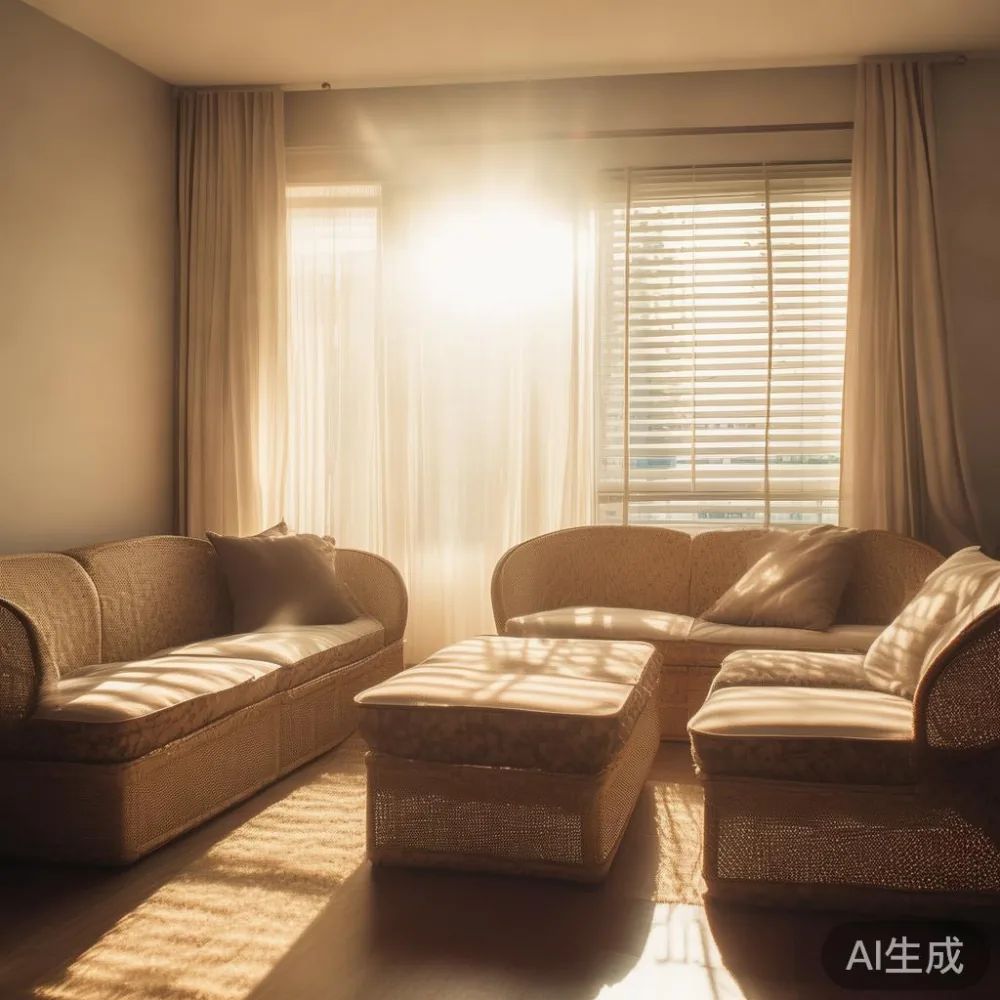
Work in zones, not rooms. For a standard 4-room HDB with a 3.2 m by 4.5 m living room, I anchor the layout with three pieces only: a 160 cm to 180 cm rattan dining table that doubles as a work desk, a 150 cm to 170 cm rattan-framed solid wood sofa or bench against the longer wall, and one vertical storage wall of 200 cm height. Everything else is on wheels or folds flat. The TV sits on a 120 cm rattan-and-wood TV bench 38 cm deep, which keeps the centre aisle at 90 cm. For the master bedroom, a 150 cm by 200 cm bed frame with a rattan headboard (under 14 kg for most Asian hardwood frames) leaves 60 cm of side clearance, enough to fit a 40 cm wide nightstand without blocking the wardrobe door. Speaking of wardrobes, a 180 cm wide three-door sliding wardrobe saves 50 cm of swing clearance versus a hinged four-door — pure usable floor space. A colleague who followed this template in a Bedok Reservoir HDB cut her furniture count from 11 pieces to 7 and reclaimed roughly 4 sqm of walking area, which she now uses for a small rattan reading chair and a floor lamp.
Which rattan pieces should I buy first, and in what order?
Order matters as much as choice. Buy the bed frame and the dining table first, because they dictate the room's geometry; the sofa, nightstand, and TV bench come second; decorative pieces such as a rattan tray, a small marble table lamp, or an accent chair come last, when the floor plan is fixed. For the dining zone, a 140 cm to 160 cm rattan-and-solid-wood table seats four comfortably and fits six at a squeeze — useful for CNY gatherings. Pair it with rattan-back chairs under 4 kg apiece so you can pull them out one-handed. For the bedroom, a French provincial-inspired rattan bed frame with carved solid wood posts reads warm without weighing the room down. If you are choosing among the top 10 French provincial furniture options for a small flat, look for pieces with turned legs above 18 cm clearance, because that height lets you slide storage baskets underneath and reclaim another 0.2 sqm per side. For the wardrobe, skip the built-in if your BTO is under eight years old; a freestanding 180 cm rattan-trimmed wardrobe can move with you to your next condo and avoids the 14-day hacking wait that GST-registered contractors charge around S$1,800 to S$3,200 for demolition alone.
How can light luxury styling make a small flat feel intentional, not cramped?
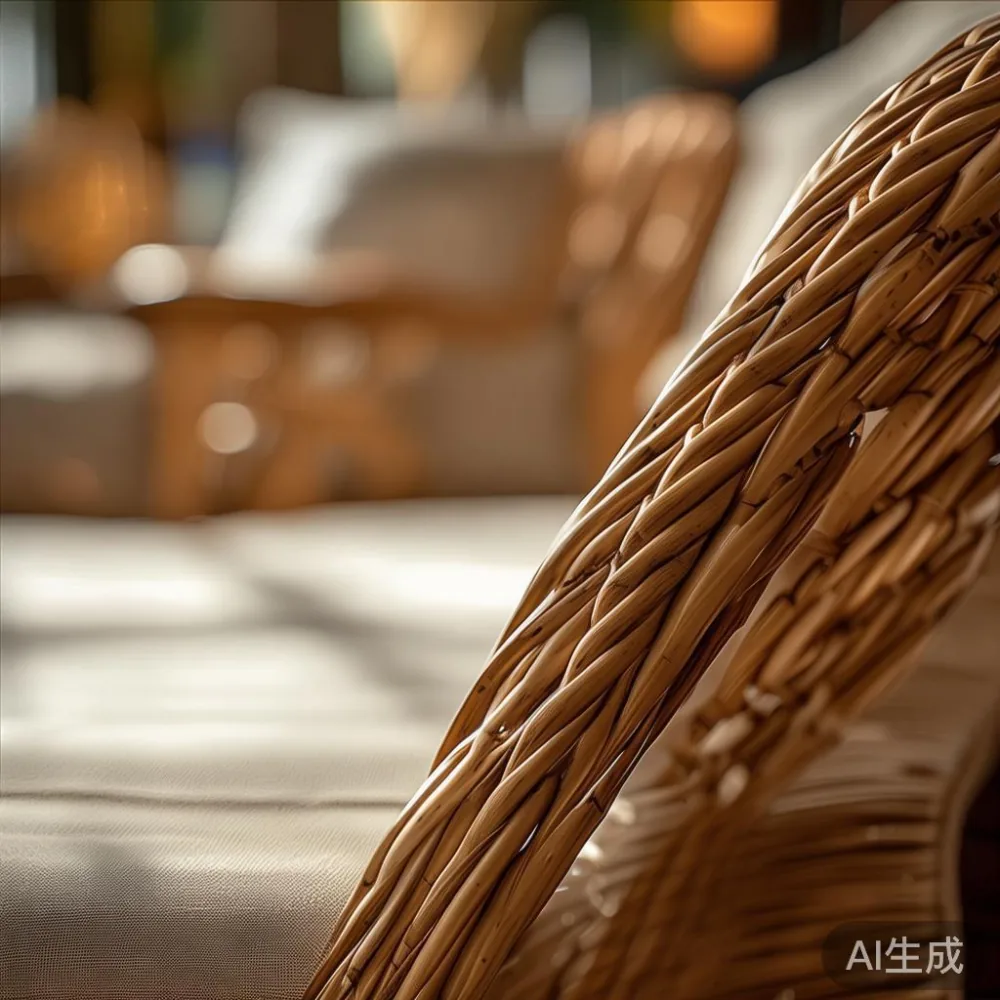
Light luxury is about restraint, not price. French light luxury leans on curved lines, pale solid wood, and soft cane weaving; American light luxury is more boxy, with walnut tones and brushed brass; post-modern light luxury plays with mixed materials — a rattan bed frame beside a marble table, for example, or a cane-front nightstand next to a velvet reading chair. In a small flat the trick is to pick one language and stay inside it. In a recent Bedok condo project, we used a French light luxury palette throughout: a 170 cm solid wood sofa in oat boucle, a 130 cm round marble table in the dining nook, and a cane-front wardrobe painted in Farrow & Ball-esque cream. Total visible wood and metal count stayed under seven tones, which is the rough upper limit the eye can hold in a 60 sqm space before it feels noisy. If you are weighing whether is light luxury sofa worth it for a small HDB, the honest answer is yes if you keep the frame under 220 cm and the arm height under 70 cm, because anything taller blocks sight lines and makes the ceiling feel 20 cm lower than it is. For the bedroom, an Italian light luxury dressing table with a single drawer and a 60 cm round mirror is enough — anything wider will fight the wardrobe door for the same 60 cm of wall.
How do I keep the room airy after I have placed the big pieces?
Three habits, all measurable. One, leave at least 30 percent of every horizontal surface empty. A rattan dining table dressed with only a tray, two cups, and a small plant looks generous; the same table covered in paperwork looks like a kitchen counter. Two, hang curtains 15 cm below the ceiling line, not at the window frame. In a 2.6 m HDB ceiling this adds roughly 25 cm of perceived height. Three, use two light sources per zone — a 3,000 K ceiling fixture at 70 lux for the dining table, and a 2,700 K floor lamp at 35 lux for the sofa. The contrast is what makes a 50 sqm flat feel like a 70 sqm flat, not the wattage. Add one living plant per 10 sqm — a 1.4 m areca palm or a 0.9 m fiddle-leaf fig in a 30 cm rattan basket — and the air feels different too. For 2026, the shift in 2026 European light luxury furniture is toward lighter caning, slimmer solid wood frames under 3 cm thick, and matte stone tops under 14 mm, all of which suit HDB load limits and small lift cabins perfectly.
Which rattan furniture pieces travel well during a condo move?
Almost all of them, if you choose well. Rattan bends, solid wood does not — that is the headline. A rattan wardrobe can usually be flat-packed into two cartons under 22 kg each, well below the 25 kg per-carton rule most Singapore movers follow for stair access. A rattan dining table with a removable solid wood top ships in three pieces and reassembles in 15 minutes with an Allen key. A rattan headboard folds into a single 165 cm by 65 cm by 12 cm carton. The one piece to be careful with is any marble table — tops over 60 cm should travel in a custom crate with foam edging, because marble chips at the corners if the carton is riven more than once. If you are eyeing the best French provincial bed for 2026, look for one with a knock-down headboard and a slat system under 14 kg, because the heavier the slat, the more you pay in delivery surcharges to higher floors. Most HDB blocks above the 10th floor add a S$30 to S$60 per-trip fee for stair-only access during lift maintenance windows.
What is a realistic budget in SGD for a fully styled 4-room HDB?
For a 65 sqm to 75 sqm 4-room HDB or a similar 2-bedder condo in Punggol or Tampines, a realistic mid-range budget in 2025 sits between S$6,800 and S$11,400 for rattan-and-solid-wood furniture across seven core pieces. A rough split: bed frame S$1,400 to S$2,200, wardrobe S$1,600 to S$2,600, dining table S$1,100 to S$1,800, dining chairs (set of four) S$480 to S$760, sofa S$1,400 to S$2,400, nightstand pair S$380 to S$620, and TV bench S$480 to S$780. Add a small marble table for the entryway at S$380 to S$620 and you are at the upper end of that range. Lighting, textiles, and plants add another S$600 to S$1,200. Delivery within Singapore mainland is usually free above S$1,200 for most direct-from-factory suppliers, including landed shipping to your door; below that, expect S$60 to S$120. Be sure to budget an extra 9 percent GST on the final invoice if you are furnishing through a GST-registered interior firm rather than buying direct. Most direct-from-Foshan workshops, MIDHILL included, quote in USD and ship CIF Singapore, which means the GST is paid at customs clearance and works out roughly the same as buying locally — useful when comparing like for like.
How do I mix rattan with other materials without making the room look like a pasar malam?
Stick to a four-material rule: rattan, solid wood, one metal, one stone or textile. In my Bedok project that meant rattan, white oak, brushed brass, and a single honed marble table top in the entryway. Every other surface was paint, plaster, or linen. The moment you add a fifth material — say, a glossy black lacquer cabinet next to a rattan wardrobe — the room reads busy. A Mid-century modern accent chair in walnut and boucle sits well beside a rattan sofa because the wood tones echo without matching; what does not work is putting a high-gloss plastic chair three feet away. Keep metal finishes to one per room. Keep stone to one feature piece, not three. And never place a rattan piece directly under a ceiling fan running at full speed for more than two hours a day, because the constant wobble loosens the weave at the joints — a small detail that costs S$120 to S$240 to re-cane after 18 months.
Where should I shop, and how long does delivery actually take?
In Singapore, three channels work for small flats. Local ID shops carry mostly Chinese-made rattan at S$1,800 to S$3,400 per sofa, with delivery in 3 to 10 days and a 6-month warranty on frames. Local bespoke joiners charge S$2,800 to S$5,200 per piece for custom rattan-and-solid-wood work, with 4 to 8 week lead times and a 5-year warranty. Direct-from-factory channels such as MIDHILL ship from Foshan in 18 to 32 days door-to-door, including consolidated freight from Guangzhou to Singapore via the PSA terminal. For a 7-piece rattan-and-wood set, consolidated shipping usually costs S$380 to S$620 landed, well below the S$900 to S$1,400 you would pay for a single white-glove courier. A MIDHILL dining table in 160 cm solid oak with a rattan lower shelf, for example, typically lands in Punggol within 24 days from order confirmation, with full transit insurance and a 10-year structural warranty included in the factory price. Refinishing is offered for life, which is rare in this price band, and returns are accepted within 14 days for ready-stock pieces — useful if the rattan tone does not match the floor sample you imagined.
What small mistakes do Singapore buyers make when ordering rattan online?
Three mistakes appear every week in my inbox. One, ordering a 220 cm sofa for a 3 m wide living room and forgetting that the TV console still needs 25 cm of breathing space behind it — net usable wall becomes 2.55 m, and the sofa will not fit. Two, choosing a wardrobe 200 cm tall for a ceiling at 2.6 m, which looks fine until you need a 5 cm gap above for the ceiling fan airflow; the wardrobe traps heat and starts to bow the cane panels after a year. Three, ignoring the lift cabin depth on older HDB blocks in Bedok and Tampines, where some lifts measure only 1.4 m deep and 1.1 m wide — a 1.6 m long rattan headboard in its carton will not stand upright, so it must go in flat. Ask the supplier for the carton dimensions before paying the deposit, and ask whether the factory offers knock-down assembly with all hex bolts included. A good rattan wardrobe should assemble in under 45 minutes with two people and a single 10 mm socket wrench.
Is light luxury sofa worth it for a small flat, really?
Returning to the question that framed this guide, the answer depends on three numbers: the length of your living room wall, the width of your lift door, and the height of your ceiling. If all three are within standard HDB ranges — 3.0 m to 3.6 m wall, 80 cm to 90 cm door, 2.6 m ceiling — then a 170 cm to 190 cm light luxury rattan-and-solid-wood sofa will outperform any upholstered three-seater in the same footprint. The frame is lighter, the weave breathes, the visual weight is roughly 30 percent lower, and the resale value after one round of refinishing remains around 55 to 65 percent of the original price. That is why the answer to is light luxury sofa worth it for compact Singapore living is, in most cases I have measured, yes — provided you measure twice and order once.