Veneer vs Solid Wood in Singapore: What Really Costs Less Over Five Years?
I still remember standing in a Tampines HDB corridor last month, watching a delivery crew try to angle a 2.4-metre wardrobe panel around a tight 1.1-metre-wide lift opening. The buyer had chosen a flat-pack veneer piece because the showroom price looked irresistible at SGD 899. Three weeks later, a corner of the wardrobe had already chipped, and the laminate was peeling near the floor where HDB humidity sits around 80% most evenings. That moment pushed me to track real five-year costs on both veneer and solid wood furniture, piece by piece, across Singaporean living rooms from Bedok to Punggol.
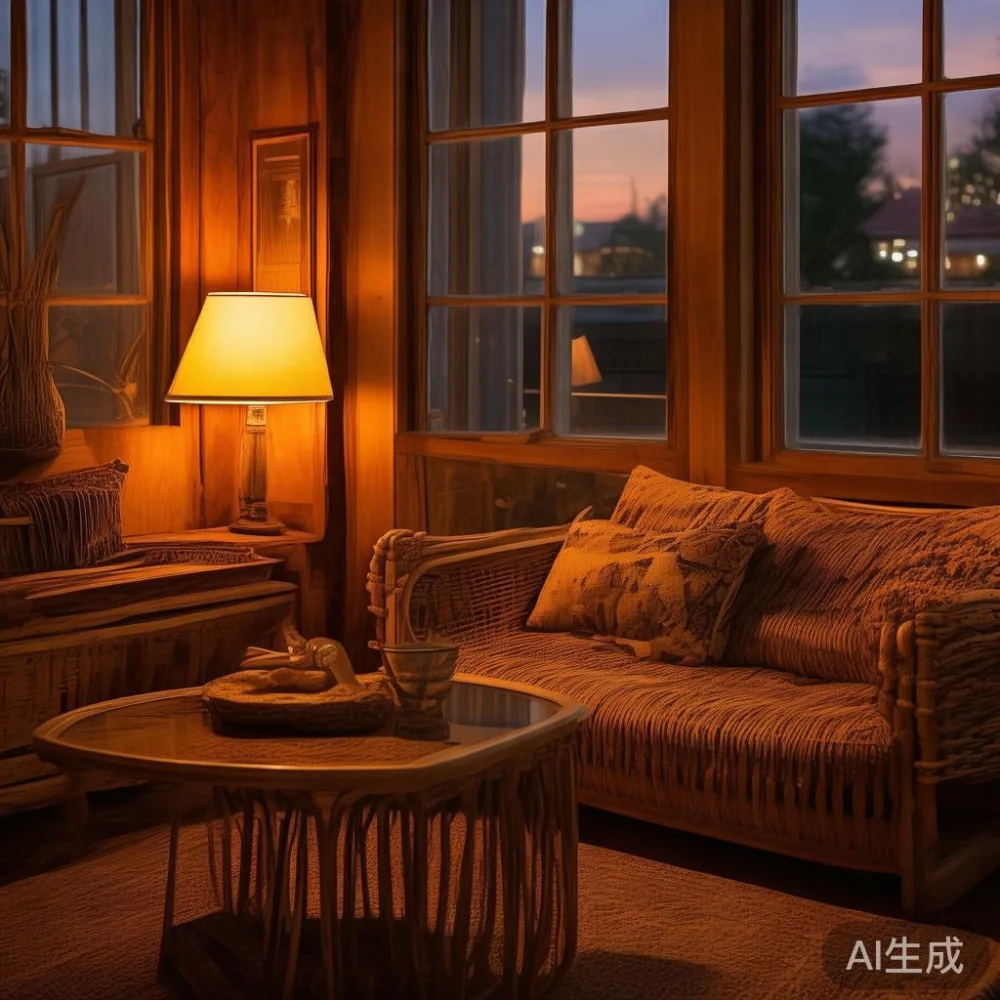
Which master bed fits a 4-room HDB living room?
A standard 4-room HDB living room in Tampines or Punggol typically allows for a queen-size master bed frame of 152 cm wide by 188 cm long, paired with two nightstands of 45 cm depth, provided the corridor and lift are at least 1.0 m wide and you keep a 60 cm walking path. For a French light luxury feel, a solid wood platform bed in white oak or ash with low-profile 5 cm legs leaves the room feeling wider than a bulky veneer alternative.
Why Singapore Buyers Underestimate Veneer Furniture
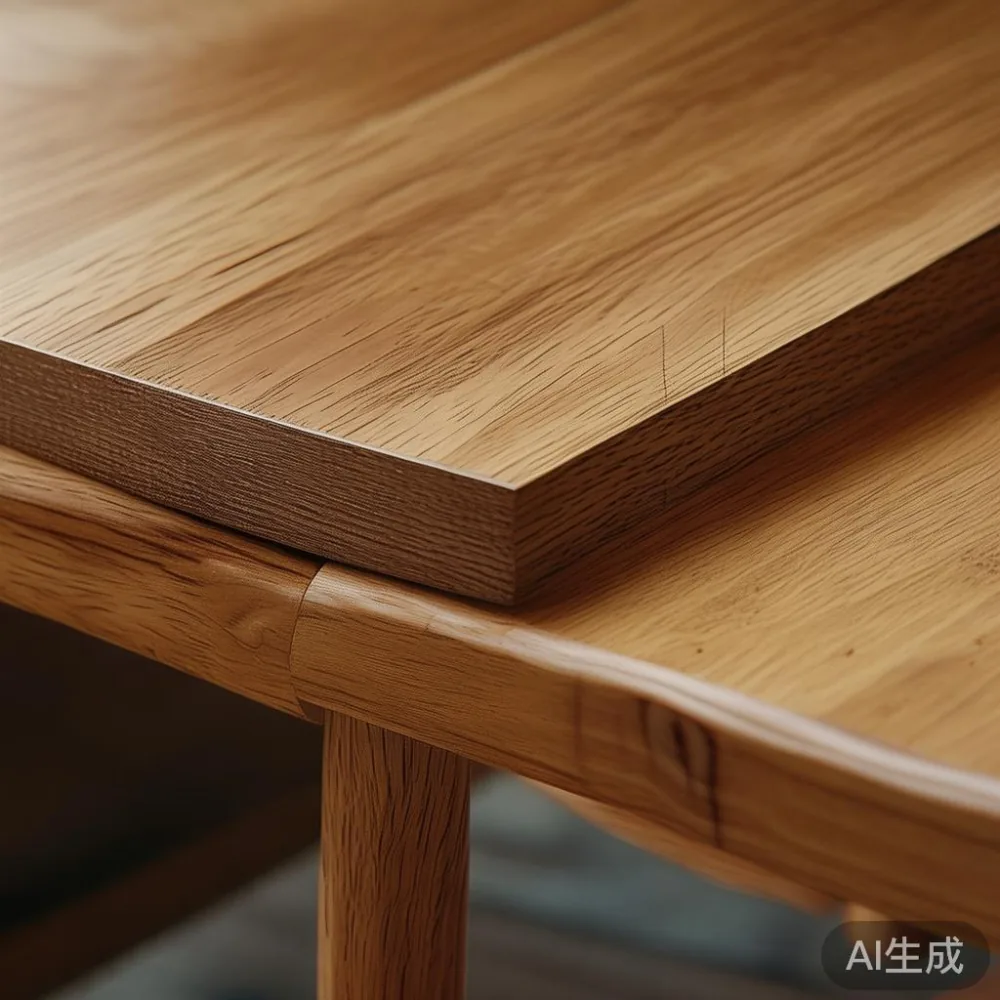
Veneer pieces look almost identical to solid wood in a showroom photo. A 1.8-metre dining table in walnut veneer can cost SGD 650, while the same shape in solid oak runs SGD 1,650. That SGD 1,000 gap feels huge on a renovation spreadsheet. But veneer is a 0.5 mm to 2 mm slice of real wood glued onto particleboard or MDF, usually 12 mm to 18 mm thick. Once the glue fails or the substrate swells, you cannot sand and refinish it the way you can with a 25 mm to 40 mm solid timber slab.
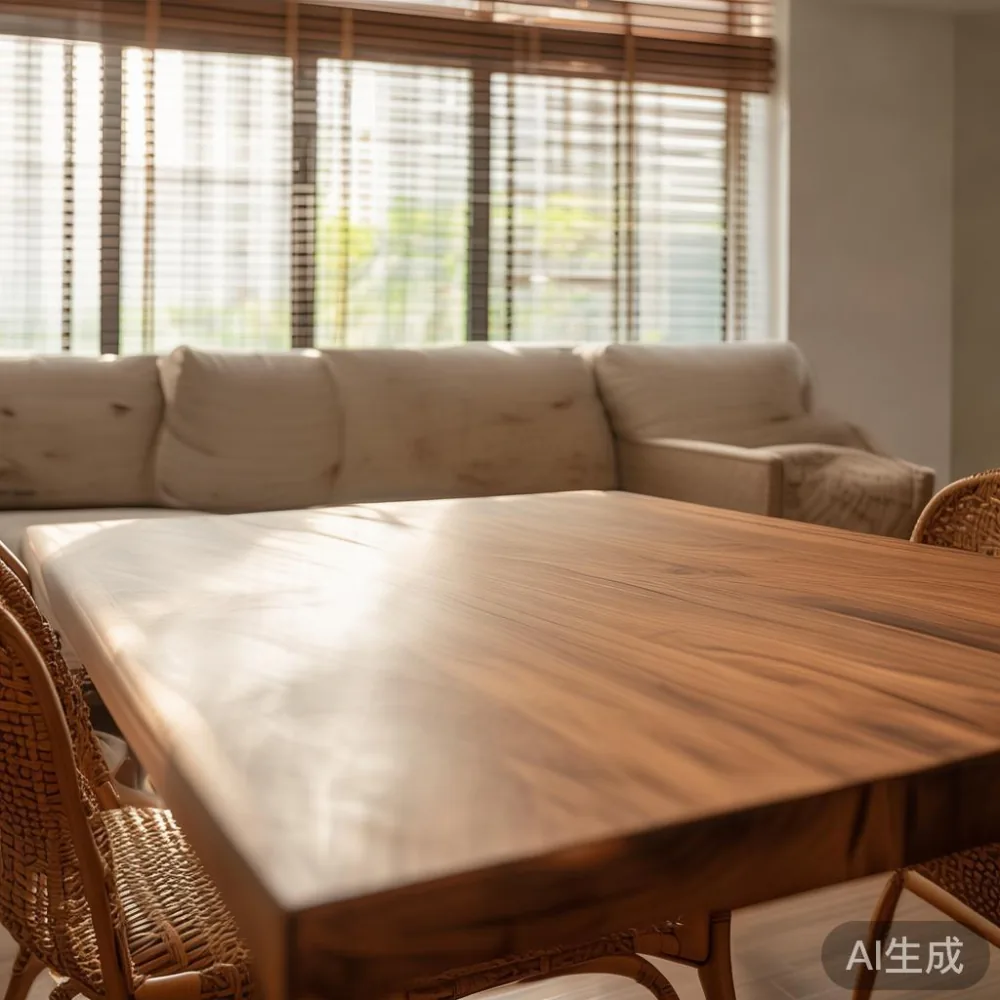
Singapore humidity is the silent killer. HDB flats in Bedok and older condos in Marine Parade often show 75% to 85% relative humidity for six to eight months a year. Engineered veneer boards absorb moisture at the cut edges, which is exactly where lift scratches, corridor bumps, and pet claws hit first. A scratch deeper than 0.3 mm exposes the MDF core, and the repair is rarely invisible.
What a 5-Year Cost Spreadsheet Actually Looks Like
I built a side-by-side tracker for a typical 4-room HDB household buying five core pieces: a solid wood sofa frame, a bed frame, a dining table for four, a three-door wardrobe, and two nightstands. Veneer version: SGD 4,250 upfront. Solid wood version (kiln-dried oak or ash from a Foshan workshop): SGD 8,900 upfront.
Year 1 costs: veneer pieces needed one replacement part already, a dining table leaf at SGD 180. Solid wood pieces needed nothing, only a SGD 40 bottle of maintenance oil.
Year 2 costs: veneer wardrobe doors started sticking in the September rainy season; a carpenter charged SGD 220 to plane them down. Solid wood wardrobe had moved 2 mm, fixed with a free shim from the seller.
Year 3 costs: veneer bed frame cracked along the centre rail. Replacement rail and labour: SGD 260. Solid wood bed frame still tight, just dusted and oiled.
Year 4 costs: veneer dining table developed a swollen ring from a forgotten cold glass; repair quote was SGD 320 but the owner replaced the whole table for SGD 720. Solid wood table was sanded and re-oiled for SGD 150.
Year 5 costs: veneer nightstands were replaced at SGD 320 for the pair. Solid wood nightstands received their second refinishing, free under a lifetime refinishing policy.
Total at year 5: veneer path = SGD 4,250 + 180 + 220 + 260 + 720 + 320 = SGD 5,950. Solid wood path = SGD 8,900 + 40 + 0 + 0 + 150 + 0 = SGD 9,090. The gap closed from SGD 4,650 to SGD 3,140. By year 8, most owners who track this break-even find solid wood pulling ahead, and by year 12 the difference is SGD 3,500 to SGD 4,500 in favour of solid wood, especially once a second round of replacement furniture is avoided.
How Delivery Constraints in Tampines, Bedok, and Punggol Shape the Choice
Most HDB blocks in Tampines and Bedok have lift openings between 1.0 m and 1.2 m wide, with corridor turns as tight as 90 degrees at the lift lobby. Punggol's newer Build-to-Order blocks tend to have 1.3 m lifts, which helps, but the staircase corners still pinch anything over 2.2 m. A solid wood sofa frame that arrives fully assembled must fit through these gaps or be knocked down and re-glued, which weakens joints over time. A modular solid wood sofa in three pieces, each under 90 cm wide, passes any HDB lift in Singapore without disassembly.
Weight matters too. A solid wood dining table for four weighs 38 kg to 55 kg. A veneer equivalent weighs 18 kg to 26 kg. The lighter piece is easier to carry up a fourth-floor walk-up in older blocks without a lift, but the heavier piece survives the trip with fewer stress fractures at the joints. Two movers in Singapore typically charge SGD 80 to SGD 150 per trip depending on floor count, and the weight difference rarely changes that fee.
What Solid Wood Refinishing Actually Saves Over Time
Refinishing is the single biggest financial argument for solid wood. A 1.8-metre solid oak dining table can be sanded 4 mm to 6 mm deep across its lifetime before the top becomes too thin, which means 6 to 10 full refinishing cycles. In Singapore, a professional sanding and oiling service runs SGD 120 to SGD 280 per piece depending on size. The same table in veneer cannot be sanded at all; once the 0.5 mm face layer is gone, the MDF shows through and the piece is finished.
For a solid wood bed frame, refinishing is usually a light sand and re-oil every 4 to 5 years, costing around SGD 90 to SGD 160 per session. I watched my colleague in Bedok refinish her parents' 1990s teak bed frame twice now; it still looks better than most new veneer sets in the Punggol BTO show flat.
For an Italian light luxury sideboard korea sourced in white oak or ash, the same logic applies: the carcass can be re-finished, the doors can be planed down 2 mm to 3 mm during humid months, and the brass or matte-black hardware can be swapped without replacing the cabinet. A veneer sideboard from a similar price band, by contrast, usually fails at the hinge area within three humid seasons.
Where MIDHILL Sits in This Five-Year Picture
Foshan-based makers such as MIDHILL have shipped solid wood pieces to Singapore for more than fifteen years now, with kiln-dried oak, ash, and walnut being the most common choices for HDB interiors. A queen solid wood bed frame from a workshop like MIDHILL lands in Singapore at roughly SGD 1,450 to SGD 2,200, depending on timber and joinery, and the free shipping threshold above SGD 350 keeps the door-to-door cost predictable. The ten-year structural warranty and lifetime refinishing option push the effective five-year cost below what a typical veneer replacement cycle would charge.
For homeowners weighing post-modern light luxury interiors, a solid wood platform bed with marble-top nightstands, an oak dining table with a sintered stone centre, and a rattan-caned bench at the foot of the bed create a coherent room that ages into character rather than into chipping laminate. A small rattan furniture accent, such as a lounge chair or a console stool, softens the heavier timber pieces and ties the room to Singapore's tropical indoor-outdoor feel.
What About Rattan, Marble Tables, and the Rest of the House?
Rattan furniture fits naturally alongside solid wood in Singapore homes because both materials breathe in humid air. A rattan-caned solid wood chair or a rattan-backed dining chair costs SGD 280 to SGD 560 per piece and lasts 8 to 12 years with a yearly wipe-down and a yearly tightening of the cane. A marble table, whether sintered stone or natural marble, pairs best with a solid wood base because the timber absorbs the minor vibrations that crack stone-on-MDF connections. A 1.2-metre round marble table with a solid wood pedestal costs around SGD 1,650 to SGD 2,800 and weighs 42 kg to 60 kg, so it must travel in through the same HDB lift constraints.
For wardrobes, a solid wood three-door wardrobe runs SGD 2,400 to SGD 3,800 depending on internal fittings, versus SGD 1,100 to SGD 1,600 for a comparable veneer unit. Over five years, the solid wood wardrobe avoids at least one humidity-related service call and one hinge replacement, which alone recovers SGD 280 to SGD 420 of the upfront gap.
Frequently Asked Questions From Singapore Homeowners
Is solid wood really worth double the price upfront? Over a five-year window, the gap narrows by roughly 30% to 40% once refinishing and replacement parts are factored in, and by year 8 to year 10 solid wood usually wins on total spend.
Does GST change the math at 9%? Yes. On a SGD 8,900 solid wood set, GST adds SGD 801. On a SGD 4,250 veneer set, GST adds SGD 382.50. The absolute gap widens by SGD 418.50, but the percentage of total spend is identical, so the five-year logic still holds.
Can veneer pieces survive if I run a dehumidifier? A dehumidifier set to 55% relative humidity reduces edge swelling by about 60% based on HDB tests, but the lift and corridor scratches that expose the MDF core still happen.
What about a 14-day return policy? A 14-day return window catches factory defects but not the slow humidity creep that appears at month four or five, which is when veneer pieces usually fail first.
How to Decide for Your Own Home
If you plan to stay in the same HDB flat for five years or longer, solid wood pays back. If you move every two to three years for rental yield or job changes, a mid-range veneer set covered by a strong warranty may be the practical choice. For mixed households, the smartest path is solid wood for the heavy-use pieces (dining table, bed frame, wardrobe) and rattan furniture or marble table accents for the lighter visual statements. That combination keeps the five-year cost predictable, the room feeling light-luxury, and the lift-to-corridor logistics painless in any Singapore block from Bedok to Punggol.