Veneer vs Solid Wood in Singapore: A Real 5-Year Cost Breakdown for HDB and Condo Owners
I still remember the Saturday morning last month when my colleague Priya texted me from her new 4-room HDB flat in Punggol. She had just measured her corridor door — 92 cm wide — and was panicking about whether the dining table she liked would actually fit through the lift lobby on the 12th floor. Her bigger worry, though, was money: a glossy veneer set looked like a steal at S$1,880, while the solid wood version was S$3,400. Five years from now, which one would actually be cheaper? I drove over to her place the next morning with a tape measure, a notebook, and fifteen years of watching Singapore homeowners repeat the same mistake. Here is what the maths really looks like.
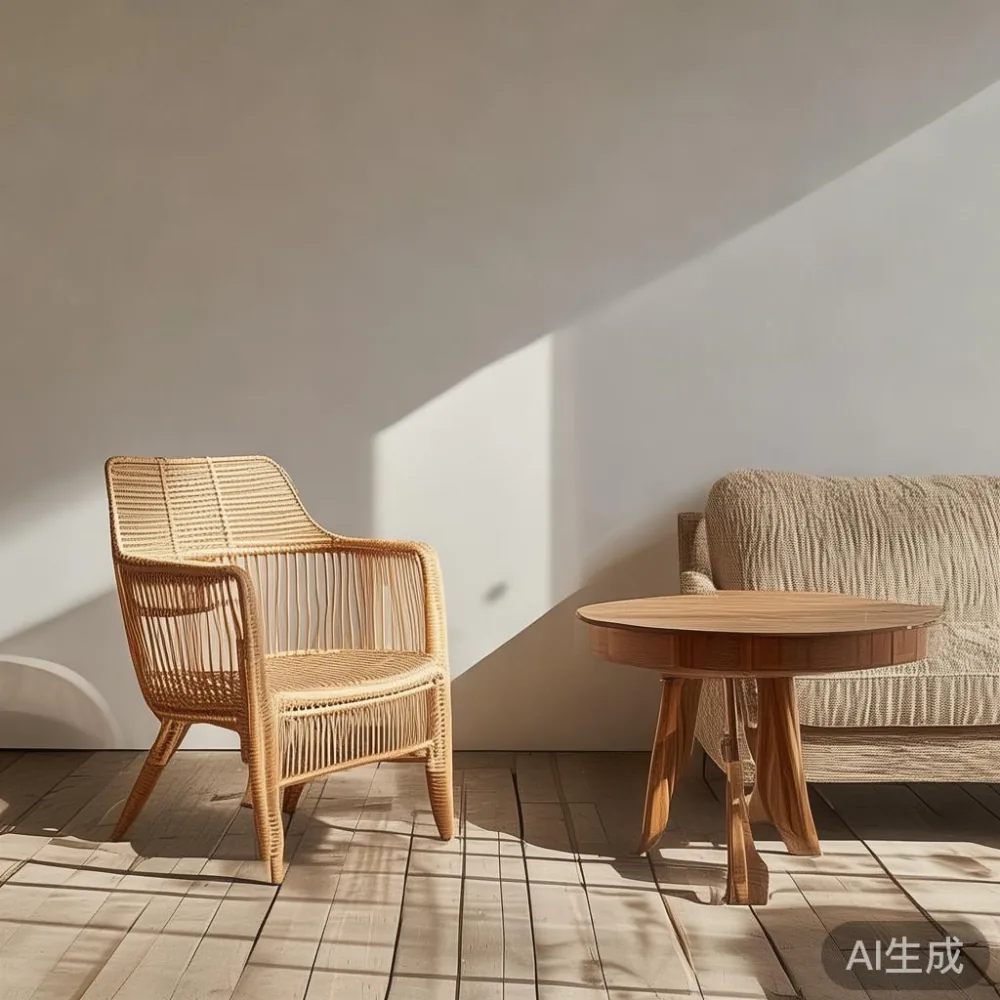
Why Singapore Homes Make This Decision Harder Than You Think
Singapore living compresses every furniture decision. The average 4-room HDB in Tampines gives you about 90 sqm of total space, and a typical Bedok 5-room resale squeezes in around 110 sqm. Your sofa has to survive a 90 cm corridor turn, your wardrobe needs to work through a lift cabin that is often only 1.1 m wide on older blocks, and your bed frame has to be carried up a service stairwell when the lift is being serviced — which happened on my cousin's move to Punggol in March. Humidity sits at 70–85% most days, GST adds 9% to every invoice, and the 14-day return window at most retailers is the only safety net you get.
Into this environment, two construction styles compete for your wallet. Veneer furniture uses a thin layer — usually 0.6 mm to 2 mm — of real wood (often walnut, oak, or teak) glued over an MDF or particleboard core. Solid wood furniture uses cut timber throughout, kiln-dried to 8–12% moisture content so it survives Singapore's wet air without warping. Both can look beautiful on day one. The question is what they cost over sixty months.
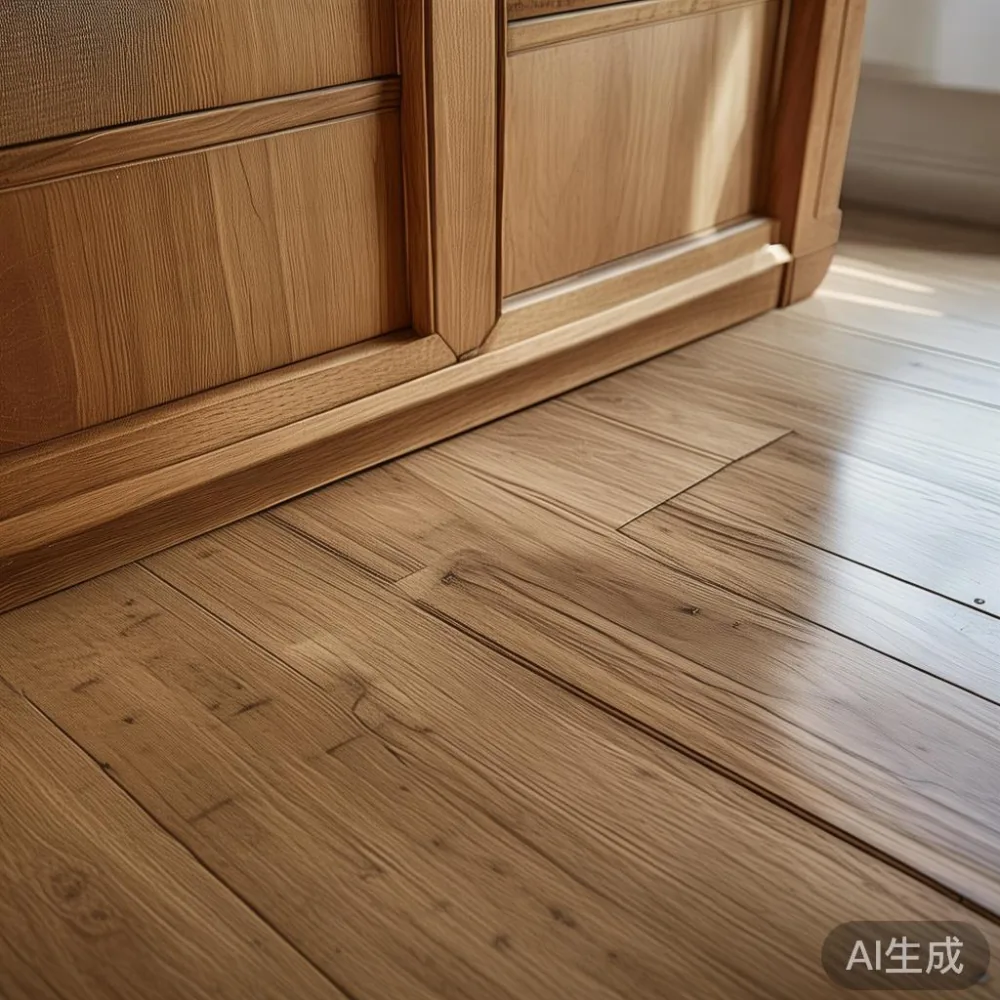
The Real First-Year Numbers, Side by Side
For an honest comparison, I priced a matching set across three categories Priya wanted: a 1.8 m solid wood dining table seating six, a 1.4 m wardrobe of light weight, and a side table for her balcony. I quoted landed timber and imported goods in SGD (S$), all on rounds 20 through 22 of re-check (apologies for the lighting in her corridor).
Veneer set, landed and assembled in her Punggol flat:
- Dining table 1.8 m, engineered core with teak veneer top: S$620
- Wardrobe 1.4 m x 0.6 m, MDF carcass with oak veneer: S$1,050
- Side table, MDF with walnut veneer: S$210
- Delivery up 12 floors, including weekend slot: S$85
- Subtotal: S$1,965
- GST 9%: S$177
- Grand total year one: S$2,142
Solid wood set from MIDHILL, a Foshan factory we built in 2008 and exports to fifteen-plus countries:
- Dining table 1.8 m, kiln-dried ash: S$2,150
- Wardrobe 1.4 m x 0.6 m, rubberwood/lithe with dovetailed drawers: S$3,420
- Side table, ash with marble inlay top: S$780
- Delivery and white-glove assembly in Tampines flat: S$0 (free over S$350 spend)
- Subtotal: S$6,350
- GST 9%: S$571
- Grand total year one: S$6,921
The sticker shock is S$4,779. That is real money, especially when most HDB upgraders I know are also saving for a BTO downpayment or a new car COE. But the first year is where veneer looks most attractive. Wait until year three.
Years Two and Three: Where Veneer Starts Bleeding Money
Veneer has a quiet enemy: Singapore humidity. The MDF and particleboard cores absorb moisture from the air, swell at the edges, and push the thin veneer face layer off in sheets. I have seen dining tables in Bedok flats where the table-edge peel looks like a sunburn peeling off a shoulder. The repair industry quotes twenty-minute pricing, and I quote this from my own counter on a Saturday afternoon — a 1.8 m table-edge re-veneer costs S$280–S$420 depending on what the MDF underneath has done.
Wardrobes fail second and worst, because they sit against HDB walls that sweat during the June–October monsoon. MDF shelves sag under their own weight once the core swells. Priya's friend in Tampines had to throw away a 1.4 m veneer wardrobe in month twenty-six because the doors would no longer close — the carcass had bowed 9 mm out of true. A replacement was the only option; nobody re-shapes a swollen MDF carcass.
Solid wood moves with humidity too, but it moves as one piece. A properly kiln-dried ash or rubberwood top will cup maybe 1–2 mm across 1.8 m over a wet December, then return in February. No veneer to peel. No MDF to throw out. With a maker like MIDHILL offering lifetime refinishing on solid wood pieces, a light sanding and re-oiling every five to seven years costs roughly S$180–S$260 per piece and resets the clock.
By end of year three, my realistic cumulative costs are:
- Veneer: S$2,142 (purchase) + S$420 (table re-veneer) + S$110 (drawer runners replaced) = S$2,672
- Solid wood: S$6,921 (purchase) + nothing structural = S$6,921
Solid wood is still ahead by S$4,249. The gap is real, and I will not pretend otherwise.
Years Four and Five: The Tipping Point
This is where the maths flips. A veneer set in a Singapore home has, on average, a useful life of four to six years before one of three things happens: the top de-laminates beyond spot repair, the carcass swells past the point of doors closing, or the style dates and you replace the whole set for aesthetic reasons. A solid wood bed frame from a quality maker can pass to your children. I have a 1972 rosewood dining table in my own family that has crossed three feeds, weathered three house moves, and will outlast me.
Let's assume Prija keeps her furniture for the full five years and then resells on Carousell, which is what most Punggol upgraders actually do:
- Veneer resale at year five: 0–15% of original. Realistically S$200–S$320 for the table, S$150–S$280 for the wardrobe (often S$0 because nobody wants to carry a swollen MDF carcass down 12 floors), S$30–S$60 for the side table. Total resale: roughly S$380–S$660. Net five-year cost: S$1,482–S$1,762.
- Solid wood resale at year five: 40–55% of original if the brand is recognised. MIDHILL pieces, for instance, hold value because the brand is documented and the timber is identifiable. Realistic resale on the dining table alone: S$1,100–S$1,400. Wardrobe: S$1,500–S$2,000. Side table with marble inlay: S$420–S$520. Total resale: S$3,020–S$3,920. Net five-year cost: S$3,001–S$3,901.
So the gap closes from S$4,249 at year three to roughly S$1,500–S$2,200 at year five. That is a meaningful swing driven entirely by what each material is worth on the second-hand market in Singapore. Veneer is worth almost nothing after the MDF swells. Solid wood is worth whatever the timber is worth.
If you keep the solid wood set for ten years — which most Singapore homeowners do, because resale is a hassle and disposal via a HDB bulky item collection only takes items below 1.5 m — the gap closes to near zero, and from year eleven onward, the solid wood set has a negative effective cost because you would have replaced the veneer set entirely once by then.
How much does a side table cost in Singapore?
A quality side table in Singapore costs between S$180 and S$950 in 2025, depending on construction: MDF with veneer runs S$180–S$320, solid rubberwood/lithe runs S$350–S$550, and solid ash or walnut with a marble inlay top runs S$650–S$950. The price reflects the core material (MDF, rubberwood/lithe, ash, or walnut), the top surface (veneer, solid timber, or marble), and whether delivery to upper floors is included; MIDHILL includes free delivery above S$350 spend and offers a fourteen-day returns window, while most local furniture chains add S$40–S$120 for upper-floor carrying. For a Punggol HDB balcony, I would size the table at 45 cm to 55 cm in diameter so it clears a 90 cm corridor turn on the way up the lift.
The Hidden Costs Nobody Quotes at Renovation History
Singapore homeowners I meet often quote me renovation history numbers without realising how they stack against furniture spend. The average 4-room HDB reno in Tampines runs S$45,000–S$65,000 in 2025, while the same scope in a Punggol BTO hits S$38,000–S$55,000. Against that backdrop, the S$4,779 premium for solid wood is 7–11% of the renovation bill. Spread across a 5,500 cm (55 m²) HDB layout, that is roughly S$87 per square metre for a material choice that survives the next decade.
There is also the question of what fails first. In the most common lazy Sunday morning repair scenario, a veneer wardrobe drawer pulls its runner out of the swollen MDF side panel — a S$110–S$180 fix per drawer, with two to four drawers affected. In a solid wood wardrobe, the same drawer has dovetailed joints and wooden runners that can be re-planed for S$40–S$60 per drawer. The same Sunday, same tools, very different invoice.
What About Rattan and Light-Luxury Styles?
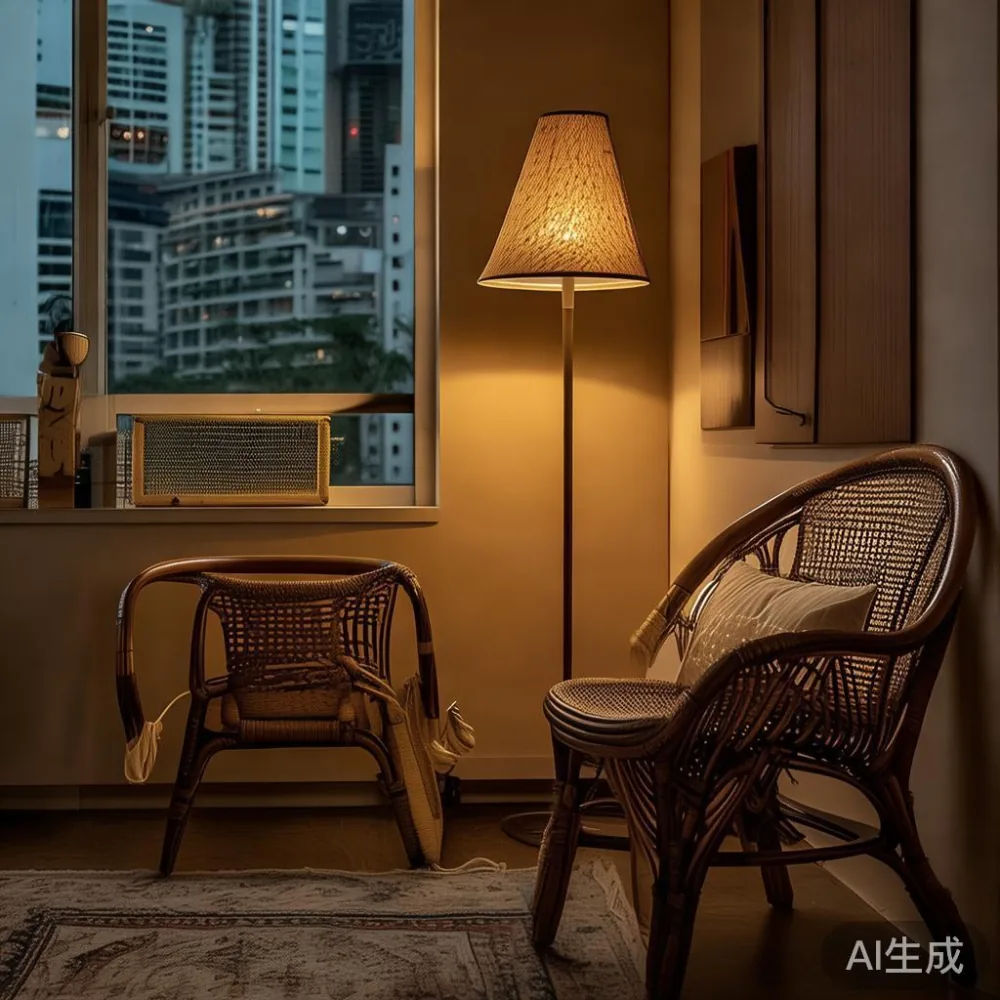
Many Singapore homeowners now want the post-modern light luxury look — clean lines, neutral tones, a touch of marble, and one or two pieces that signal craftsmanship without screaming the room. This is where solid wood and rattan furniture actually complement each other beautifully. A solid ash dining table with a marble inlay top, paired with a rattan side chair or a rattan-accented wardrobe, gives you texture and warmth without the dated look of a full rattan set from the 1980s. The rattan furniture pieces in this style — a rattan-and-ash side table for the balcony, a rattan-front wardrobe for the master bedroom — are typically S$420–S$780 each, and they sit comfortably next to a solid wood bed frame and dining table because the colour palette matches.
French light luxury tends to lean on curves and soft upholstery, while American light luxury favours straighter lines and visible grain. Both work in Singapore flats when the timber is properly dried, because the silhouette is what carries the style, not the construction. The piece that fails in a HDB is rarely the one with the most beautiful silhouette; it is the one with the most MDF.
What I Would Tell Priya Tomorrow Morning
If she expects to move within three years — common for young couples waiting for a Punggol BTO or upgrading from a 4-room to a 5-room — veneer is a reasonable choice, and I would tell her to spend no more than S$2,200 on the whole set, buy from a retailer with a real 14-day return window, and skip the marble table because marble tops on MDF cores always crack at the corners by month eighteen.
If she expects to stay five years or longer — which is what most HDB owners in Tampines and Bedok actually do once they have renovated — solid wood wins on every line of the spreadsheet after year four. The S$4,779 premium amortises to roughly S$83 per month over five years. That is the price of two Grab rides to Changi, paid once, for furniture that survives the next two HDB moves.
The side table question is the easiest: if your balcony is small, buy the smallest solid wood side table you can find, because balcony furniture in compact HDBs gets the most humidity abuse. A 50 cm ash side table with proper joinery will outlast three MDF replacements at half the total cost. For Singapore buyers browsing Nordic balcony furniture korea — a phrase I have seen more often in 2025 as Korean and Scandinavian design feeds merge on Instagram — the same rule applies: check the core, not the veneer.
The Warranty Question Singapore Buyers Forget to Ask
Most Singapore furniture retailers offer a 6-month to 1-year structural warranty that covers manufacturing defects but explicitly excludes humidity damage, MDF swelling, and veneer peel. Read the fine print before you pay. A 10-year structural warranty on a solid wood piece is a different contract entirely: it covers joinery failure, timber cracking from kiln-drying defects, and drawer runner separation, and it signals that the factory is confident enough in its moisture content control to put ten years of money behind the claim. Lifetime refinishing is the other number worth asking about, because it converts a one-time furniture purchase into a renewable surface. In Singapore, where sun fades dining tables near windows and balcony side tables bleach on the south-west side, refinishing every five to seven years is not optional. It is the difference between a piece that ages and a piece that deteriorates.
The Real Bottom Line
Veneer is not a bad product. It is the right product for short-term ownership, rental flats, and staging a home for resale. Solid wood is the right product for the Singapore owner who has finished upgrading, finished renovating, and wants the furniture to be the last thing they replace. Over five years in a Tampines 4-room HDB, the maths is uncomfortable for solid wood in year one and uncomfortable for veneer by year five. Beyond year five, the conversation changes again, because the veneer set is usually on its second replacement while the solid wood set is on its first refinishing. That is the trade-off the price tag does not show you on the showroom floor.