What to Check Before Buying a Sofa You Cannot Sit On — A Singapore Field Guide
A leather three-seater came into our warehouse last month, wrapped in two layers of bubble film and a sewn canvas cover. I crouched beside it, unzipped the back panel, and ran my thumb along the inside of the rear leg joint. Maple, not rubberwood. The corner block was dovetailed, the centre rail ran the full 210 cm between the arms, and the foam density stamp on the platform read 35 kg/m³. The customer, a reseller in Tampines, had sent photos showing the same sofa on a competitor's floor — visibly sagging in the middle, the inner cover torn from the bottom rail. Same model number, two completely different pieces. That afternoon taught me a lesson I now repeat to every Singapore homeowner who asks me how to judge a sofa before buying one online, sight unseen.
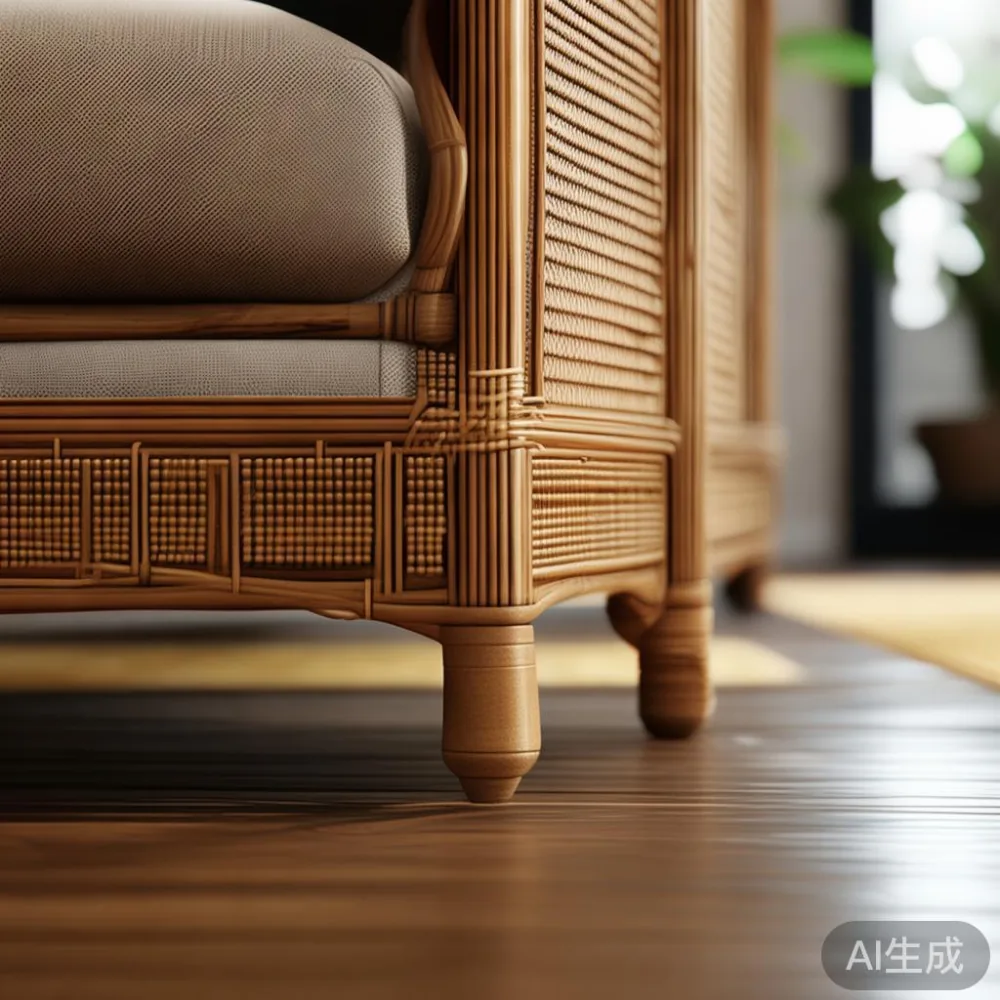
Buying a sofa you cannot sit on is the default in Singapore. Most reputable makers — including the mid-to-large studios such as MIDHILL, operating out of Foshan with sixteen years of solid wood production behind them — sell primarily through spec sheets, sample swatches, container-load shipping and scheduled deliveries. The piece arrives at your door in a timber crate or a triple-walled corrugated carton, often a week or two after you wire the deposit. You do not put your weight on it at a Tampines Mall showroom, do not sink into the cushions at a Jalan Besar pop-up. So everything you can verify before that crate is opened becomes the difference between a sofa that still looks sharp at year eight and a frame that has started listing to port by month fourteen.
This guide pulls together the checks I run for clients in HDB flats in Bedok, Punggol executive condos, and the newer 99-year leasehold condos in the Outside Central Region. I will use prices in Singapore dollars (inclusive of 9% GST), measurements in centimetres, and I will keep the focus where it belongs: on the sofa, its rattan-wrapped siblings, and the matched pieces — the solid wood bed frame, the dining table, the wardrobe, the nightstand — that get specified alongside it.
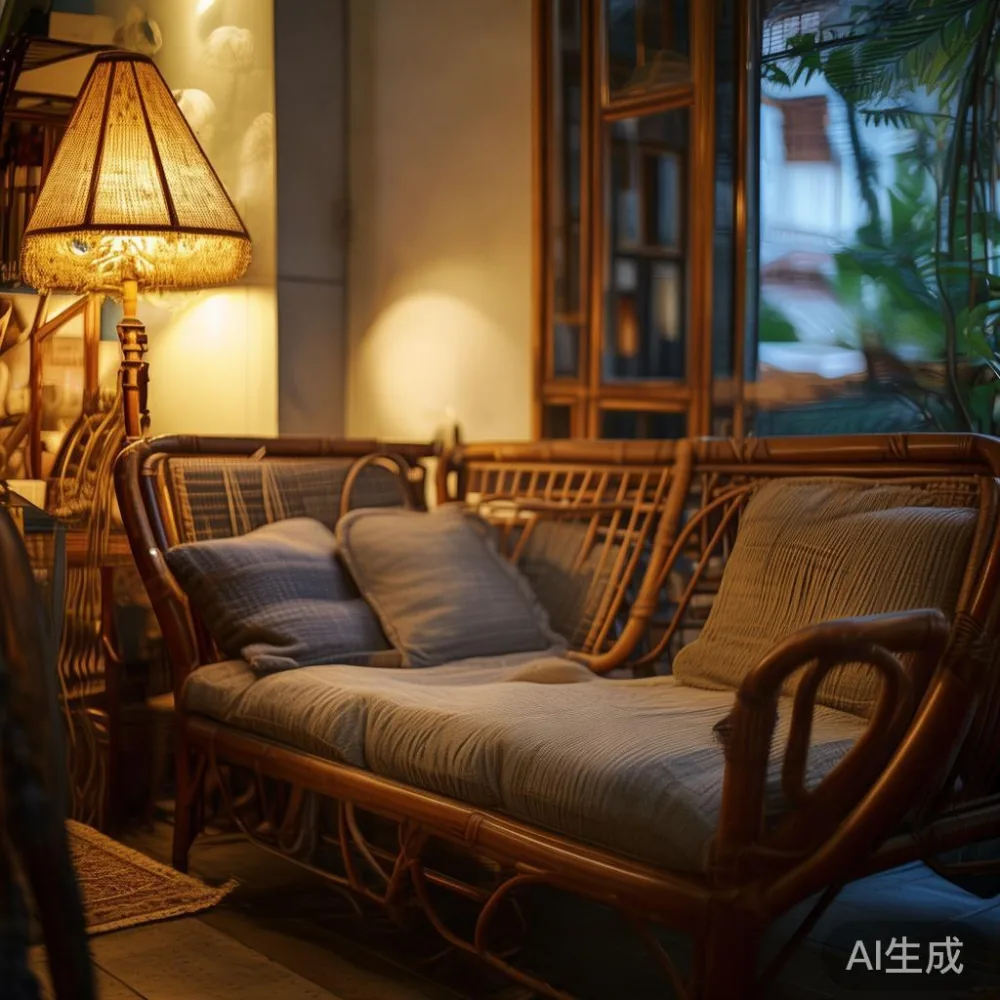
What is the difference between French neoclassical king bed and modern furniture?
The difference is that a French neoclassical king bed borrows its silhouette from eighteenth-century guild workshops — tapered fluted legs, low roll-crest headboard, restrained gilt-free carving — while pairing it with modern joinery like mortise-and-tenon corner blocks, plywood-reinforced slat rails and 3D-latcweave rattan panels.
That sentence is the short answer; here is the long one. French neoclassical, as the MIDHILL design team applies it, is a vocabulary: symmetry, proportional restraint, restrained ornament, and an emphasis on the timber itself rather than on applied decoration. A modern interpretation drops the hand-carved acanthus and replaces it with clean lines and engineered bones. Practically, that means a king bed frame at roughly 210 × 200 cm All told, with internal mattress pocket 183 × 198 cm, slats spaced no wider than 7 cm apart, a centre beam supported by a single post that lands on a steel-reinforced foot, and a headboard that rises 110 cm off the deck — high enough to lean against, soft enough to read with. French neoclassical leans into materials; the modern piece leans into accuracy of tolerance. The most convincing results, in my experience, come from pieces that quietly combine both.
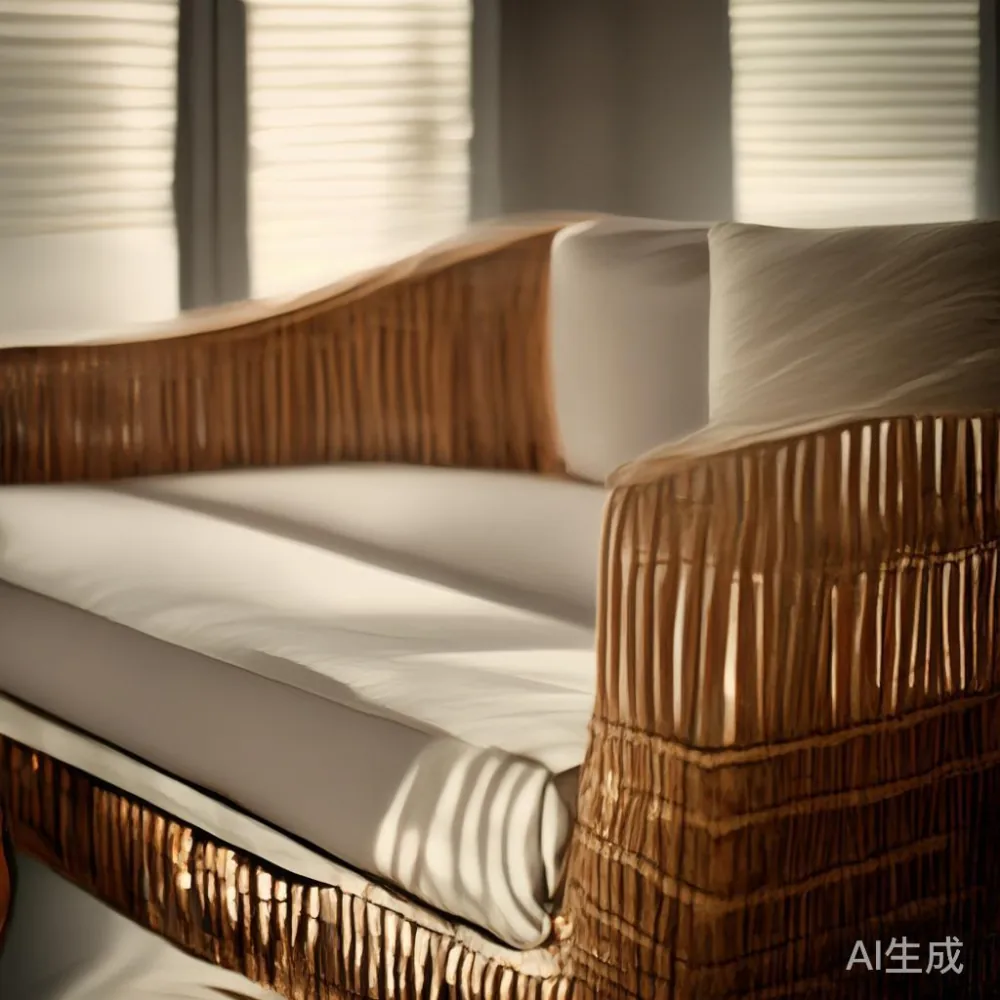
Can I really tell a sofa is well-built without sitting on it?
Yes — and no other check is more reliable than reading the spec sheet line by line before you confirm the order.
Ask the seller five things, in writing. First, the species of timber in the load-bearing frame: ash, beech, maple, or — at the heavy-luxury end — American walnut. Avoid anything labelled only as "hardwood"; that is the trade's polite way of saying "rubberwood or mixed secondary species." Second, the joinery: mortise-and-tenon at every arm-to-back joint, dowels at minimum, and at least one corner block at each arm. Third, the suspension: 8-way hand-tied coil, sinuous no-sag spring (minimum 4 mm gauge, 10 cm spacing), or elastic webbing rated to 50,000 cycles. Fourth, the foam: a high-resilience (HR) seat cushion in the 32–40 kg/m³ range, wrapped in a 200 gsm down-proof ticking. Fifth, the inner cover: a 100% cotton or non-woven dust cover, stitched shut, ideally with a zipper so a refurbisher can re-tuft a button ten years from now. A vendor that answers those five items in a spec sheet, in that level of detail, is a vendor worth wiring money to.
If the spec sheet is vague, walk away. Sofa-in-a-box retailers that ship a "solid wood" frame weighing 28 kg for a three-seater are selling you plywood dressed up as oak. The real-world weight of a three-seater with a proper kiln-dried hardwood frame should sit between 65 kg and 95 kg depending on filling.
How do I measure my HDB or condo corridor before the sofa arrives?
Measure three numbers — door width, lift depth, and the tightest bend on the route from the cargo lift to your living room 门 — and add 8 cm of clearance at each turning point before you commit to a sofa.
Singapore HDB corridor widths are typically 1.2 m to 1.5 m, and standard passenger lifts run about 1.5 m deep by 1.3 m wide with a 1.1 m door opening. Service lifts in newer blocks are larger — 2.0 m deep, 1.5 m wide, 1.8 m door — but not every estate has them. The four-door lift at the lobby is not the same as the lift serving your floor. For a typical three-seater of 210 cm width, you want the lift door to be at least 100 cm wide and the cabin at least 1.4 m deep, which most post-2010 blocks will satisfy. If you live in an older walk-up in Geylang or a Conservation Area shophouse, plan to crane the sofa through a window. MIDHILL's Singapore fulfilment partners quote roughly S$180–S$350 for a window lift above the second storey, on top of the standard S$80–S$140 ground-floor carry-in for ground-floor units.
Set the assembled sofa height against your door frame too. Anything over 92 cm may not clear the lintel; anything over 105 cm will not clear a standard 2.1 m corridor light fixture that protrudes 20 cm from the wall. Map the route with masking tape on your floor before the crate arrives — anything you cannot get past with the tape, the crate will not get past either.
What rattan options pair well with a solid wood sofa?
Rattan furniture keeps the room breathable; choose a sofa with a removable rattan-wrapped side panel, a matching rattan-front nightstand, and an open-shelved tea-trolley so the wood and the weave share the visual load.
Rattan is not just for coastal-themed flats. In a light-luxury interior — the French light-luxury vocabulary that has quietly taken over the HDB ID scene from Punggol to Bukit Batok — rattan is the texture that softens marble and chrome without tipping the room into boho. Ask whether the rattan is natural peel or synthetic PE. Natural peel, oiled with a 5% tung-oil mix, will age to a warm honey tone over 18 months and is the proper pair for a solid ash sofa. Synthetic PE rattan holds colour far longer, handles Singapore's year-round 80% relative humidity without swelling, and is rated for 5+ years of direct afternoon sun without becoming brittle. Either choice is defensible; the budget gap matters: a natural rattan headboard panel adds roughly S$140–S$220 to a king bed frame; PE rattan the same panel is closer to S$60–S$110.
For the living room, I usually recommend three rattan pieces around a solid wood sofa: a low-slung armchair with a rattan-wrapped back, a rectangular coffee table with a rattan apron (legs still in solid beech, not plywood), and a TV console — and this is where the long-tail phrase matters more than anywhere else in the home — built as a Mid-century modern TV console Singapore households are quietly demanding, with splayed solid-ash legs, a teak top and either a single rattan-woven drawer front or open slat shelves below the deck. Pair the same weave on the nightstand and you have a thread that runs from the living room to the master bedroom without spending more than S$1,400 in aggregate on the weave bits.
How does Singapore's humidity punish a sofa, and what should the warranty actually cover?
Humidity is harder on the suspension and the inner timber than on the upholstery you can see — so a warranty that covers only "manufacturing defects on the outer cover" is half a warranty.
Singapore runs 78–92% relative humidity for about nine months of the year. A solid wood sofa's frame, kiln-dried to 8–12% moisture content at the factory, will pick up moisture slowly through every exposed inside face. After 24 months in a Punggol Point condo with afternoon sun from the west, the moisture content of an unprotected ash frame can climb to 16–18%, which is the range where joints start to creak and dowels start to slip. A good warranty paper trail will explicitly cover: (a) joint separation exceeding 3 mm within 10 years, (b) spring failure or webbing sag greater than 2 cm at the deepest point of the seat after six months of normal use, (c) rattan peeling or splitting exceeding 2 cm on a natural-peel weave within three years. MIDHILL's 10-year structural warranty covers exactly those three buckets, and they publish the tolerances in writing on the product page — that level of disclosure is rarer than you would think.
Lifetime refinishing is the second piece of the puzzle. Any solid wood sofa, dining table, or wardrobe bought from a workshop with a refinishing programme can be re-sanded and re-oiled on-site for roughly S$380–S$650 after eight to ten years, which resets the moisture profile and gives the piece another decade. Refinishing only applies to pieces with real timber at the surface; if the "solid wood" is a 0.6 mm veneer over MDF, no refinisher in Singapore will touch it.
What is the realistic landed cost in SGD for a sofa shipped from China?
Plan for the ex-works sofa price to land at roughly 1.35× to 1.55× in Singapore dollars on your doorstep once GST, freight, lift-in and disposal are counted.
Concrete example: a solid-ash three-seater at ex-works S$1,480 (after currency conversion, before freight) becomes about S$2,050 landed in a Punggol fourth-storey HDB. The breakdown: sea freight from Foshan to Singapore at S$140 for an LCL shipment under 1.2 cbm (typical three-seater with a 0.9–1.1 cbm crate), 9% GST on the dutiable value S$1,820 = S$164, lift-in S$120 (above ground, includes carrying through the corridor and removal of cardboard), and the kitchen-sink leftover budget line for two people who delivered, hoovered and carried the old sofa down to the refuse chute. Crating fee for fragile marble-top coffee tables is roughly S$60–S$110 extra on top. Anything above S$350 ex-works becomes free of inland freight in China for most Foshan makers — that is a Foshan-side number, not a Singapore-side number, so do not let a retailer quote you "free shipping" as a global line item without splitting the legs.
Free shipping thresholds in Singapore tend to sit at S$1,500 ex-works or higher, and they almost universally exclude crating, disposal, and stair carries beyond the first storey. Ask for the S$350-or-near free-ship threshold stated against your specific building type, with the lift depth written into the order. That one paragraph in the invoice saves arguments on delivery day.
What paperwork should arrive with the sofa, and what is the 14-day return window actually worth?
A real warranty is readable; a workable 14-day return window covers the things you cannot judge from a spec sheet — wrong scale, wrong weave colour, wrong proportion against your existing dining table — but never covers the things the spec sheet already disclosed.
Insist on these four documents at delivery: (1) signed commercial invoice with the frame species, suspension type and foam density explicitly written in, not "as per sample"; (2) warranty card printed on paper, not a QR code alone, that states the 10-year structural terms; (3) care sheet for rattan furniture (every two weeks, wipe with a 5% salt-water solution to keep mites out; every six months, oil natural peel with a soft cloth and a thin layer of tung oil); (4) packing list that matches every piece inside the crate. A 14-day return is valuable for visible mismatches — a king bed frame with the wrong rail spacing, a wardrobe whose internal configuration differs from the shop drawing, a sofa with arm heights misaligned by more than 4 cm — and a few good sellers, including the brand I keep circling back to, MIDHILL, will refund the sofa, the freight and the GST and arrange the pickup at no cost. Plenty will only refund the sofa. The fourteen-day clock starts on the day the goods clear Singapore customs, not the day the lift opens on your floor.
What fourteen days cannot save you from: a sofa that was always too low for your marble table at 38 cm seat height instead of the 44 cm your ID specified. That is a spec-sheet read. Always sketch the room to scale, draw a 44 cm horizontal line for the planned seat height, and check whether the sofa's published spec line crosses that or not. Ten minutes of drawing saves four weeks of repacking.
How does a sofa purchase fit alongside a bedroom set without doubling my freight bill?
Combine shipments wherever possible — one LCL for a sofa, a dining table and a nightstand is cheaper than three separate deliveries, and it lets one factory's QC team inspect the whole crate load.
For a typical three- to four-piece room bundle in Singapore — a solid wood sofa, a six-seater dining table, a queen bed frame, and two nightstands — the freight cost per piece drops about 35% when shipped together versus independently, because the crating absorbs a larger fraction of the volumetric weight. Practically that means a S$2,400 ex-works bundle lands at about S$3,950 in your living room 门, against S$4,600 if each piece ships separately with its own clearance and lift-in. Container-load shipping from Foshan is the next tier down, but it requires 22–28 cbm of volume — roughly a full dining set plus bedroom plus living room — and a two-month timeline from PO to doorstep. Most Singapore households do not have that volume, so LCL remains the workhorse.
Match the timber across the bundle, and the pieces will read as a single renovation instead of four parallel purchases. A solid ash sofa, an ash dining table, and ash-framed rattan-front nightstands will keep the same grain pattern running through the living room , the dining area and the master bedroom. If you change species in the bundle — walnut sofa, ash dining, oak bed — the room will feel collected rather than composed. Both are defensible; just make the choice deliberately.
Is post-modern light luxury a real style, and does it survive 10 years of Singapore living?
Post-modern light luxury — the vocabulary of curved corners, soft champagne tones, brass feet and a confident mix of marble, rattan and solid wood — survives longer in Singapore than the all-white minimalist scheme because every shade in it forgives a little humidity and a little dust.
The post-modern light luxury reading of an island-resale condo in Tampines would look like this: a curved three-seater sofa in cream bouclé with a solid ash base, a marble-top coffee table (Carrara-look sintered stone, not real Carrara — at S$280 versus S$2,100 for the same slab of stone), a king bed frame with a channel-tufted cream upholstered headboard and tapered ash feet, and rattan-woven wardrobes flanking the bedroom window to break up the mass of the mirrored doors. American light luxury, by contrast, is bigger, deeper, more tufting, darker walnut, more brass, more pillow. French light luxury is restraint, symmetry, restraint again. All three live well in our climate; what kills them is not the weather, it is the absence of a maintenance plan. The 14-day return catches the wrong size; the warranty catches the failed joint; the lifetime refinishing catches year nine.