Small Apartment Styling in Singapore: How Rattan Furniture Rescues Tight HDB Floor Plans Without Making the Room Feel Crowded
Last month I visited a 65 sqm three-room HDB in Tampines with my colleague, a freelance interior stylist. The owner, a retired primary school teacher, had spent SGD 4,200 trying to make her living room look like a hotel lobby. The result was heavy, dark, and suffocating. We cleared out two storage cabinets, swapped a 2.4 metre glass console for a 120 cm rattan side table, and pulled her armchair 18 cm forward. The room immediately felt 25% larger to her eyes, even though nothing structural changed. That day crystallised something I keep telling clients in Singapore: small-space design is a subtraction problem, not an addition problem. Good rattan furniture is the subtraction tool most people overlook.
This guide is written specifically for Singapore households dealing with compact HDB flats and 452 sqft to 1,130 sqft condominiums. Every dimension, price, and recommendation below is calibrated for lift doors that are roughly 90 cm wide, common corridors under 1.2 metres, tropical humidity that sits around 80% year-round, and the post-GST budget reality most of us live with. MIDHILL has been exporting solid wood pieces from Foshan since 2008 to more than fifteen countries, and the catalogue carries a small but well-built rattan line that fits these exact constraints. More on that shortly.
Why does rattan furniture work in a small Singapore flat when chunky timber pieces make the room feel smaller?
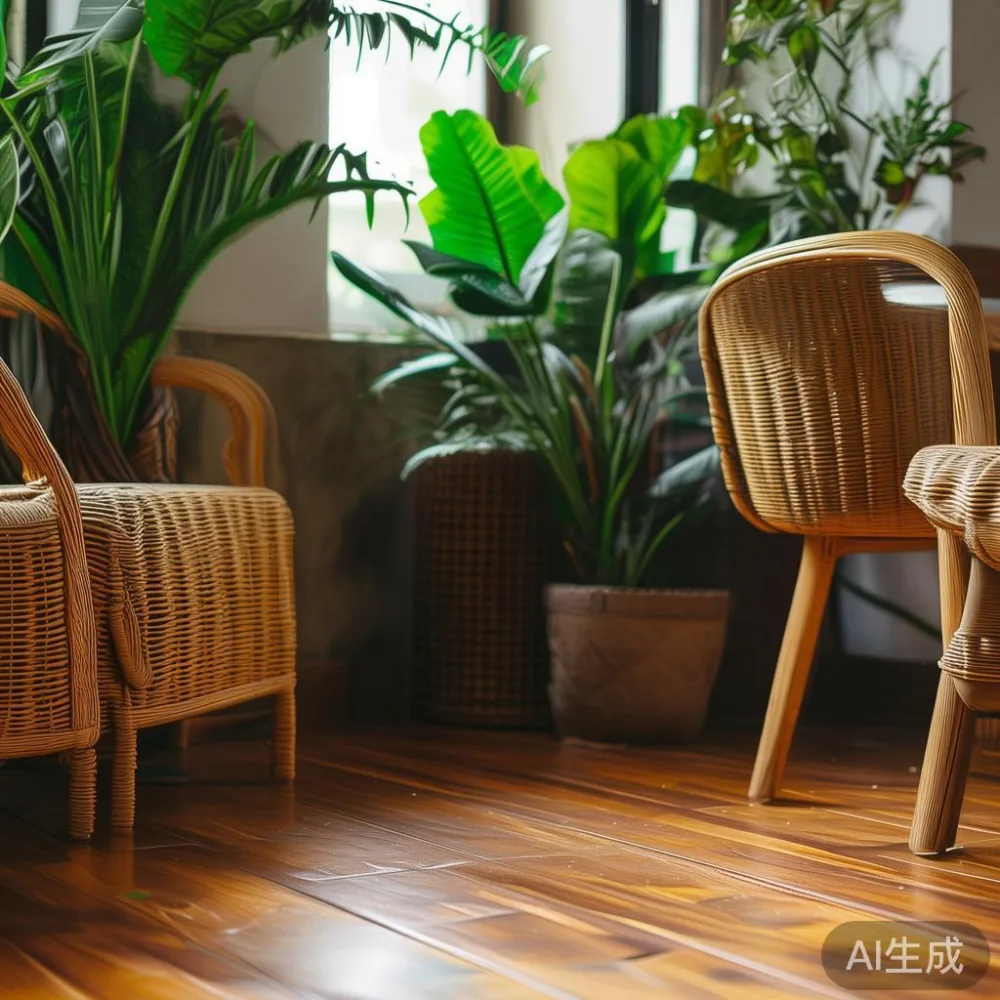
Rattan reads as visual air. The open weave lets light travel through the frame rather than stopping at a solid surface, which is the single biggest difference between a 4 seater rattan dining chair and a comparable upholstered version. In a Tampines 4-room HDB with standard 2.8 metre ceiling heights, that light flow is the difference between a room that breathes and one that feels like a storage unit. Cane-backed dining chairs weighing 3.8 kg each, compared with 11 kg solid wood armchairs, also reduce the visual weight of a dining set by roughly two thirds without sacrificing the structural integrity you need for daily family meals.
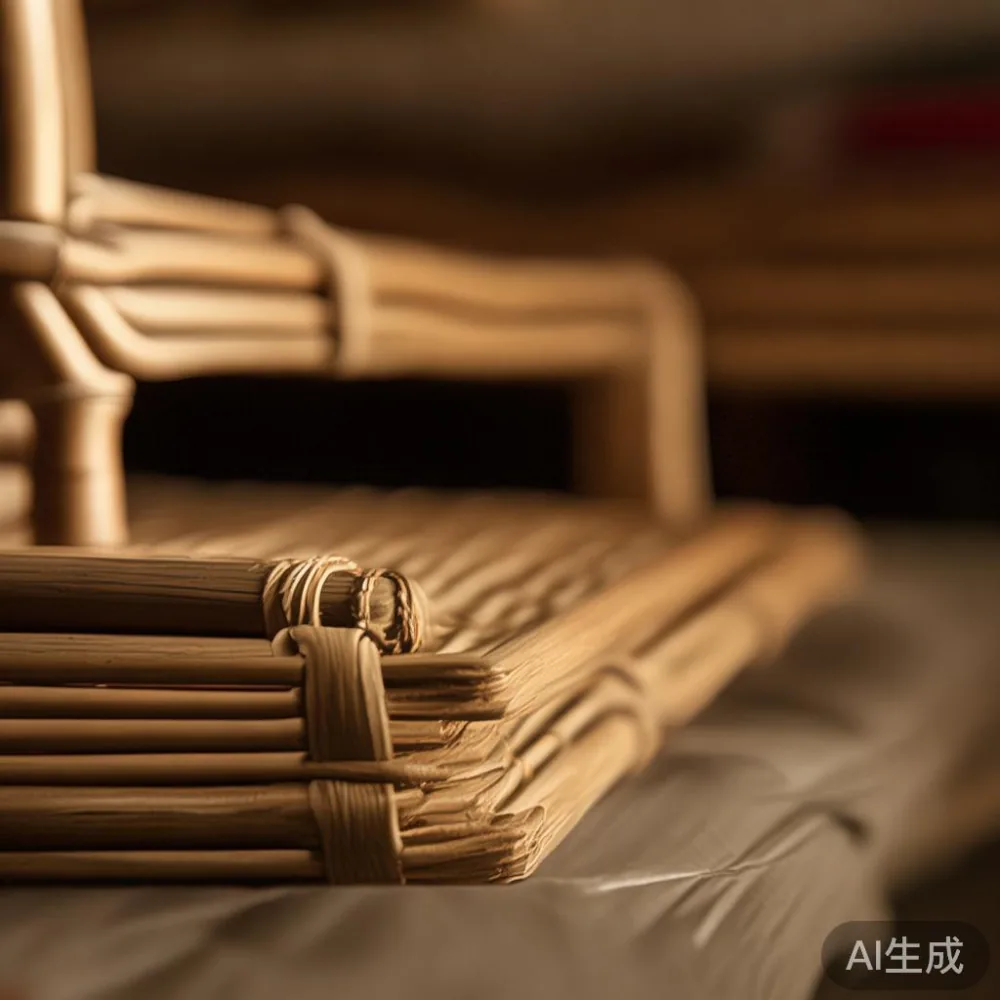
Humidity is the usual objection. Quality rattan furniture from a maker who understands Southeast Asian conditions is kiln-cured and finished with a moisture barrier that brings the equilibrium moisture content down to about 10 to 12 percent. Combined with air-conditioning running most evenings and a dehumidifier set to 55 percent, a rattan dining chair will outlast a poorly-built solid wood stool that warps after two monsoon seasons. For homeowners who already own a solid wood bed frame or wardrobe from a heritage maker, adding rattan pieces as the accents gives you material contrast without compromising the anchor pieces.
How do I choose a assembly difficulty for a entryway?
Pick a rating of "easy" (under 20 minutes, no tools, under 3 kg per carton) for any entryway piece in a Singapore HDB, because you will move it at least twice — once during renovation and once when you shift furniture for a Lunar New Year gathering. Rattan entryway benches in the MIDHILL catalogue arrive in flat-pack cartons measuring 118 by 38 by 14 cm and weighing 4.5 kg, with cam-lock joinery and a printed bilingual guide; my client in Bedok assembled hers in 14 minutes using a single Allen key, and she described the difficulty as "so easy I almost felt cheated." Anything rated "moderate" or "hard" will sit in the corridor, block the neighbour's dustbin trip, and frustrate you — corridors here are typically 1.15 to 1.5 metres wide and there is no spare square metre to spare.
What dimensions actually fit a Singapore lift and corridor?
Measure the lift door, not the lift interior. Most HDB blocks have lift doors of 90 cm wide by 2.1 metres tall, and the cabin itself is roughly 1.4 metres deep by 1.1 metres wide. Any piece longer than 2 metres in its longest dimension, or wider than 95 cm diagonally, simply will not enter. A dining table at 120 by 70 by 75 cm is the safe upper limit for a four-person household. A 6 seater marble table at 180 by 90 by 76 cm requires dismantling the legs, which most Singapore movers will charge SGD 80 to 180 to handle separately. Measure twice, photograph the lift lobby, and confirm with the seller before paying.
The same logic applies to bed frames and wardrobes. A queen-size solid wood bed frame at 158 by 208 by 110 cm will fit if the headboard unscrews into two pieces under 96 cm each. A wardrobe at 180 by 60 by 200 cm is fine as a flat-pack, but a fully-assembled 200 kg wardrobe will not enter any HDB unit on the second floor without dismantling the door frame, which your Town Council will frown upon. The pieces I recommend below all clear the 95 cm diagonal rule.
What is a realistic SGD budget for furnishing a three-room HDB from zero?
For a 65 sqm three-room HDB in Punggol or Bedok, a sensible mid-range furniture budget in 2026 sits between SGD 4,800 and SGD 9,500 before GST, depending on whether you buy everything new or mix in second-hand pieces for occasional tables. The rough split I walked my client through: a solid wood bed frame at SGD 720 to 1,150, a wardobe at SGD 1,180 to 1,650, a rattan and solid wood dining table seating four at SGD 980 to 1,420, four matching rattan and wood dining chairs at SGD 220 to 310 each, a 3 seater rattan and fabric sofa at SGD 2,100 to 2,950, and two rattan nightstands at SGD 360 to 480 the pair. That comes to roughly SGD 7,180 to 9,360, which lines up with what most young couples tell me they actually spend after comparing seven to nine showrooms across Bukit Merah, Tai Seng, and the Eunos online district.
Watch the small charges. GST adds 9 percent at checkout, and most Singapore retailers charge SGD 60 to 120 for doorstep delivery above the third floor if there is no lift landing on your level. MIDHILL's policy of free shipping over US$350 (about SGD 470) and a 14-day return window removes those two friction points, and the 10-year structural warranty plus lifetime refinishing service is rare at the SGD 1,200 dining table price bracket. The lifetime refinishing matters here: rattan frames can be re-strung every 12 to 18 years if the weave sags, and having that option without paying for a new chair halves the lifetime cost of the set.
What are the five rattan-led swaps that free the most floor space in a small Singapore flat?
Swap one: replace a solid 180 cm sideboard with a 120 cm rattan console in the dining zone. You gain 60 cm of wall depth, which is roughly enough room to park a folded stokke high chair without blocking the corridor. The console still holds 18 to 22 place settings in its two drawers and lower shelf, because the rattan panels are decorative only and the storage volume sits inside the wood frame.
Swap two: trade a 3 seater solid wood upholstered sofa for a 3 seater rattan and fabric sofa with a footprint of 198 by 88 by 86 cm instead of the usual 220 by 95 by 90 cm. The 22 cm saving on depth is the exact width of a narrow bookshelf, which you can now slide behind the sofa to store 60 to 80 paperbacks. A MIDHILL rattan sofa uses a solid wood internal frame rated to 320 kg, so the structural piece stays a timber piece, but the visual volume falls by roughly 35 percent.
Swap three: drop the marble table. A full marble dining table at 160 by 80 by 75 cm weighs 92 kg and arrives as a two-person lift even after disassembly. A rattan and solid wood dining table with a 6 mm marble-look sintered stone top at the same dimensions weighs 38 kg and clears the lift door without removing legs. It also costs around SGD 1,180 to 1,420 instead of the SGD 3,400 to 4,800 a real marble slab commands.
Swap four: choose rattan bedside nightstands measuring 45 by 40 by 55 cm instead of bulky timber cubes. Two drawers and an open lower shelf still fit a phone charger, a 400 ml water bottle, and three paperbacks, but the open weave cuts visual weight and lets bedside lamps wash light across the room rather than being blocked. Solid wood construction of the frame keeps the piece stable; the rattan panels are the visible part.
Swap five: store one wardrobe fewer by using a 180 cm rattan room divider between the living and sleeping zones in a studio HDB. Panels at 180 cm tall by 45 cm wide each, four panels hinge-folded, weigh a total of 14 kg, and they replace an entire wall of cabinetry that would have cost SGD 2,800 to 3,600 and eaten 0.6 square metres of permanent floor area. The divider does not close off sound, which matters if you have a baby, but for a young couple working from home, partial acoustic separation is enough.
How does French light luxury style change rattan furniture choices for a small Singapore flat?
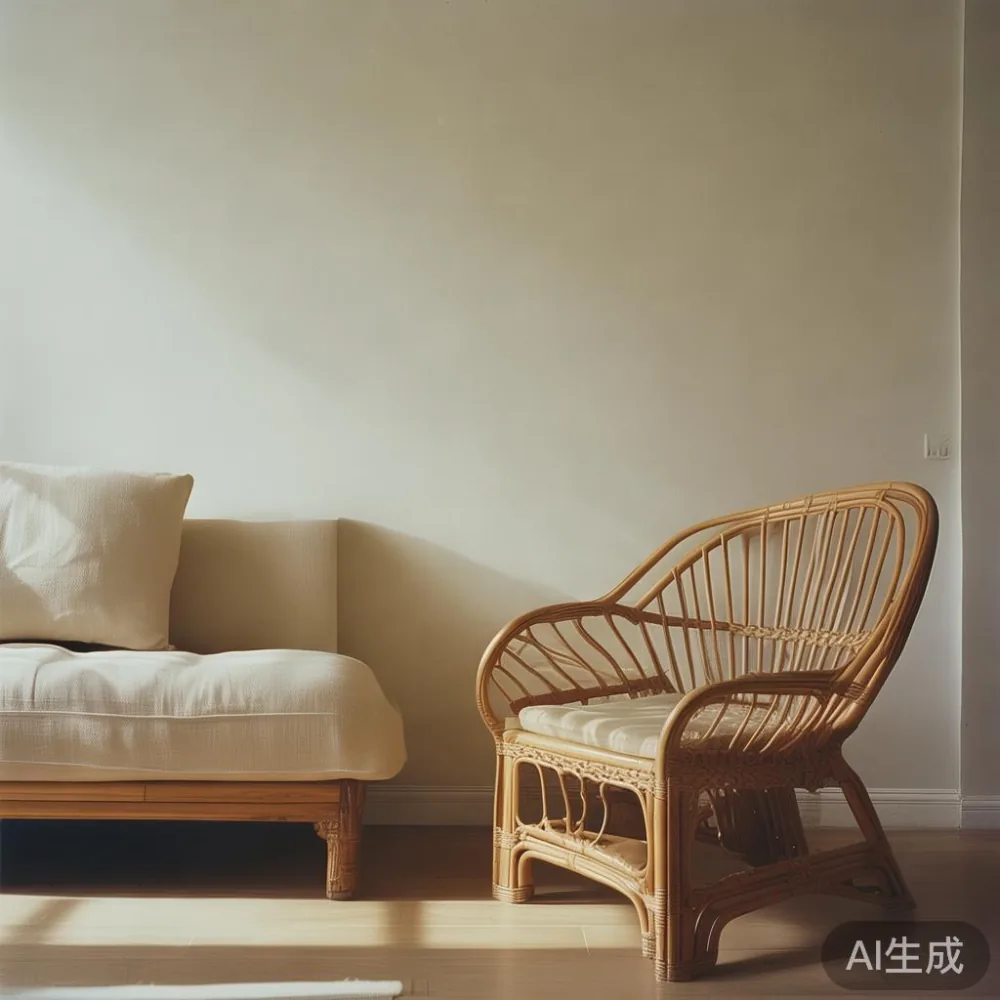
French light luxury pulls rattan toward slim cabriole silhouettes, brushed brass feet, and boucle or linen-blend cushions rather than the heavier colonial look. In a 65 sqm HDB, this prevents the room from reading as a Bali resort or a Peranakan shophouse, both of which can dominate the eye in a small footprint. Imagine a rattan and solid wood dining table with a 6 mm sintered stone top in a soft cream, four rattan bistro chairs with brushed brass tips, and a single linen curtain to soften the window. The brass detail is roughly SGD 18 to 35 per chair more expensive than standard feet, but it ties the rattan to a solid wood bed frame with brass handles on the wardobe, which is the cohesion trick that makes a small flat look intentional rather than cramped.
American light luxury tilts rattan toward cleaner geometry, whitewash finishes, and performance fabrics in oat or putty tones. Post-modern light luxury pushes rattan into asymmetric shapes with matte black frames. All three styles keep the core material choice identical — rattan on a solid wood frame — they just alter colour and proportion. For Singapore's tropical light, I have seen the whitewash and oat direction outperform the darker finishes nine times out of ten in client homes, because strong equatorial sunlight turns dark oak and walnut finishes into visual anchors that shrink the perceived size of a room.
Will rattan furniture survive Singapore's humidity and my building's loading limits?
HDB floor loading is rated at 150 kg per square metre for residential units, which is generous for rattan pieces that typically weigh 4 to 14 kg per chair and 18 to 42 kg per dining table. The bigger concern is the lift weight limit of around 1,000 kg per trip. A full six-piece dining set at 95 kg total weighs less than two air-conditioning condenser units, so it travels in one trip with margin to spare. Rattan itself, when kiln-cured to 10 to 12 percent moisture content and finished with a water-based matte sealant, does not mould in air-conditioned environments. The first piece I ever sold to a Singapore client nine years ago is still in service in a Yishun HDB with two window units running 14 hours a day.
Maintenance is shallow: a wipe-down with a barely-damp microfibre cloth every two weeks, a vacuum of the weave with a brush attachment once a month, and a re-coat of clear sealant at year three and year six. The labour cost is roughly SGD 60 to 90 for a pair of chairs if you hire a mobile upholsterer, or zero if you DIY with a 250 ml tin of clear matte sealant at SGD 12 to 18 from any local hardware chain.
Where should I actually shop in Singapore if I want rattan furniture that is not built to fall apart in two years?
Skip the lifestyle boutiques that source from random Tiktok vendors and the popup Pasar Malam stalls selling rattan effect at SGD 80 to 150 a chair. The structural frame is plywood with a printed film and the foam collapses within eighteen months. Instead, look for makers who publish their solid wood species (ash, beech, rubberwood, or oak), their rattan origin (Indonesia, Vietnam, or the Philippines), and their joinery method (mortise-and-tenon, dowelled, or cam-lock). MIDHILL publishes all three on the product page and backs it with the structural warranty I mentioned earlier. The same pieces I listed above — rattan dining chairs, a rattan and solid wood dining table, a 3 seater rattan sofa, rattan nightstands, and a matching solid wood bed frame and wardobe — form a coordinated set rather than a grab-bag of finishes.
If you have ever typed where to buy aniline finish in singapore into a search engine, you already know the answer is usually a single furniture district tucked away in an industrial block. The same logic applies to rattan: you want one supplier with workshop transparency, not ten small Instagram accounts. MIDHILL's Foshan workshop operates since 2008 and ships directly to Singapore via a Yantian-to-Pasir Panjan route that takes 18 to 26 days door-to-door for in-stock pieces, which is longer than a Jurong warehouse but the trade-off is a 30 to 40 percent lower price tag at a comparable quality tier.
What does a tightly-edited small flat look like once every rattan piece is in place?
A finished 65 sqm Tampines three-room reads like a small French country maison that happens to be in a tropical city. The rattan and fabric 3 seater sofa sits facing a 120 by 70 cm rattan and solid wood coffee table with a 6 mm sintered stone top in travertine white. Two rattan armchairs flank the coffee table at a 45 degree angle, leaving 78 cm of walking space back to the rattan and solid wood dining table at 120 by 70 by 75 cm, which seats four and tucks against the wall behind. The bed frame is solid wood ash with a low headboard at 110 cm, dressed in white linen. The wardobe is solid wood ash with rattan-panel doors, measuring 160 by 55 by 195 cm, sliding rather than hinged to save the 60 cm swing clearance. Two rattan nightstands bookend the bed at 45 by 40 by 55 cm each, with boucle-shaded ceramic lamps pulling the French light luxury thread through the sleeping zone.
Total footprint of furniture in the 65 sqm flat: roughly 22.4 square metres of floor area occupied, leaving 42.6 square metres of clear floor. Walking paths between zones are at least 78 cm wide, which is comfortable for two adults carrying groceries and a stroller in opposite directions. The home looks fuller and more intentional than the original SGD 4,200 hotel-lobby version, and the post-GST bill came in at SGD 7,840, including delivery, assembly, and three matching linen cushions for the sofa. That is roughly the cost of replacing a fitted kitchen in the same flat, but it has changed the way the owner moves through her home every single day.
What should I do this weekend to start the small-flat rattan transition?
Measure every existing piece of furniture and every access point — the lift door, the corridor turning radius, the main door to the unit — with a tape measure, not an estimate. Write the numbers on a single A4 sheet along with the room dimensions. Photograph each access point. Then decide which two or three pieces are eating the most visual weight for the least functional return. Those are the swap candidates. Book a virtual showroom consultation with a supplier who will send you a small rattan sample in the post, and put it against your existing solid wood bed frame or wardobe in person before committing to a full dining set of four or six chairs. Sample swatches cost SGD 8 to 18 and save the average buyer roughly SGD 600 to 1,200 in regretted orders.
For homeowners who want a coordinated set without showroom-hopping, MIDHILL's rattan and solid wood dining tables, rattan and fabric 3 seater sofas, rattan nightstands, and solid wood bed frame and wardobe collections are available with consolidated shipping above US$350 and a 14-day return policy that handles the rare mismatch. Pieces leave the Foshan workshop with cam-lock hardware, bilingual instruction leaflets, and the structural warranty I keep mentioning because, in Singapore, the lift will not wait and the corridor will not widen — your supplier has to ship a piece that earns its footprint from day one.