How to Match Rattan Furniture to a Warm Minimal Interior: A Singapore Home Owner's Guide
I walked into a Tampines 4-room HDB flat last month to help a friend pick furniture, and what struck me was how empty the 96 sqm space felt despite a S$45,000 renovation. The issue was not the floor plan or the lighting; it was the furniture. Everything in the flat was either glossy white acrylic or cold grey velvet, and the room looked like a hotel lobby rather than a home. Two weeks later, after we swapped in a rattan-backed dining chair set, a solid wood sofa with linen-look cushions, and a warm-oak nightstand, the same flat felt like a Balinese retreat on a 24th storey corridor. That short visit is the reason I am writing this guide: matching furniture to a warm minimal interior is less about adding objects and more about choosing materials that already carry warmth into the room. Rattan furniture does that work quietly, and it survives the realities of Singapore living — narrow HDB service lifts, tight corridors at blocks like 138A Tampines Street 11, and humidity that swings between 60% and 95% across the year.
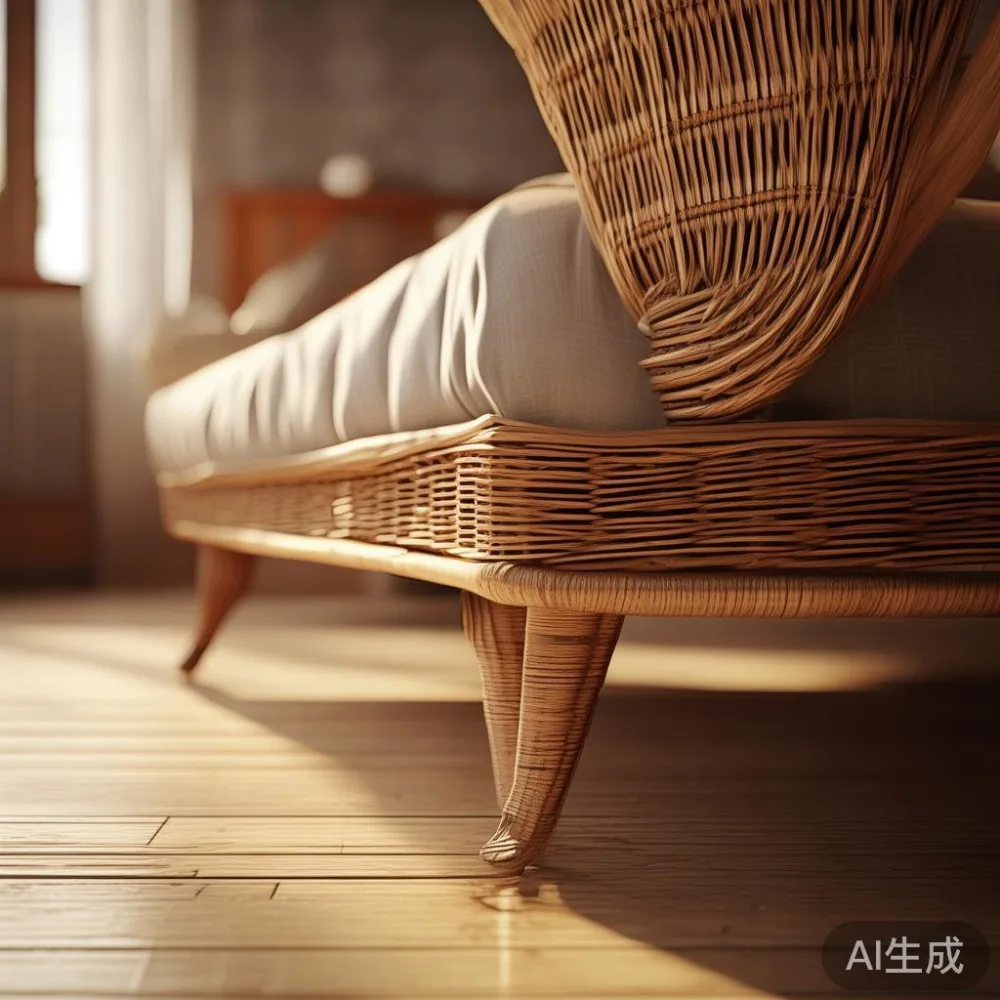
What does "warm minimal" actually mean in a Singapore HDB flat?
Warm minimalism is not the same as the all-white, museum-style minimalism popular on Pinterest in 2014. It is a softer register: clean lines, but built from materials that have visible grain, weave, or warmth. Think Scandinavian restraint married with French light luxury — meaning soft curves, brushed brass details, and upholstered edges that catch the morning sun coming through your north-facing kitchen window in a Punggol BTO at 8.45 am.
In practical terms, a warm minimal room in a 4-room HDB (about 90 to 96 sqm) usually contains:
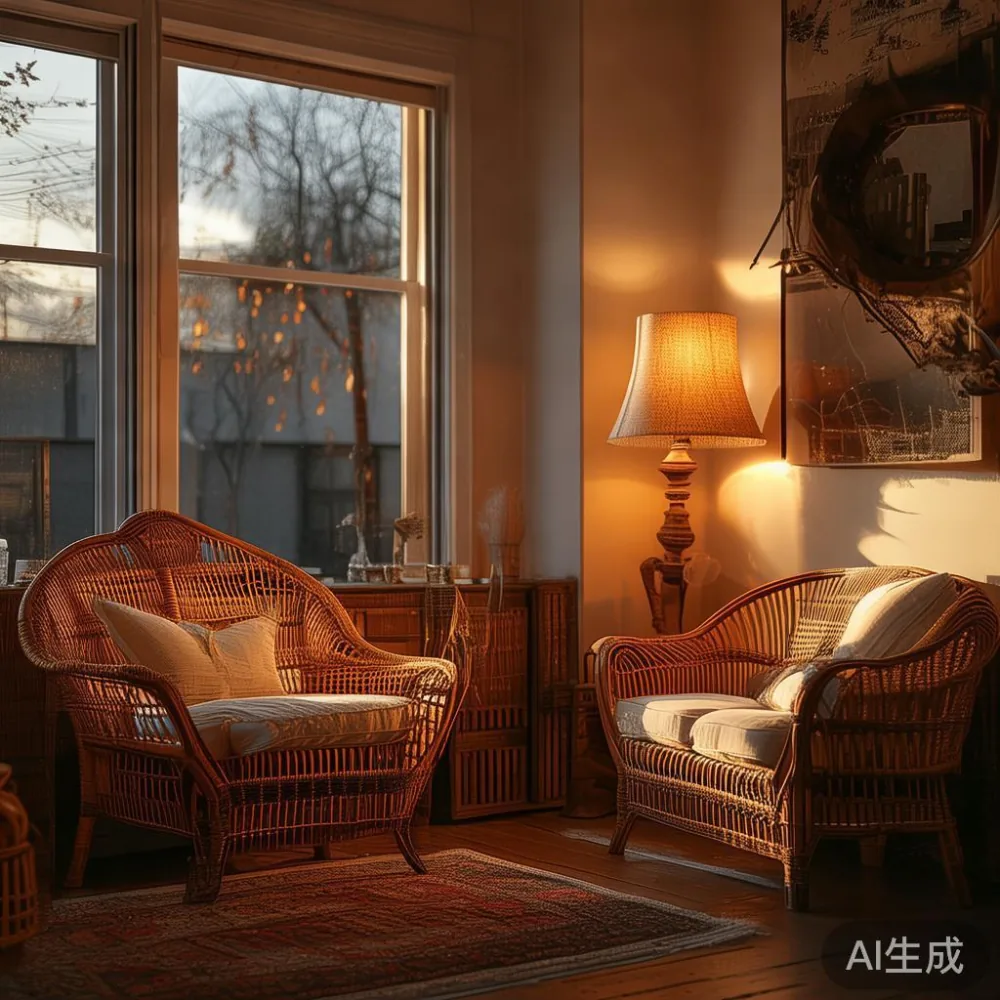
- One hero piece, often a solid wood bed frame in oak or ash, roughly 150 cm wide for a queen or 180 cm for a king.
- One woven accent, traditionally a rattan headboard, rattan cabinet door, or a pair of rattan dining chairs.
- Neutral textiles in oat, terracotta, sand, or stone.
- One metal or stone moment — a marble table lamp base or brass drawer pulls running 8 cm in length.
The reason this works in HDBs specifically is that ceiling heights are typically 2.8 m, and most flats have 2.5 m tall built-in wardrobes, so the eye has roughly 30 cm of breathing room above cabinetry. Warm minimal furniture respects that vertical gap, while loud or oversized wardrobes crowd it.
Why does rattan furniture fit warm minimal interiors so naturally?
Rattan is one of the few materials that reads as both natural and architectural. The strands are light (a rattan dining chair weighs roughly 3.5 to 4.2 kg, much lighter than a comparable solid wood chair at 6 to 7 kg), which makes it forgiving in older HDB blocks where service lifts weigh 300 kg when empty and elevators run tight at 1.1 m door widths.
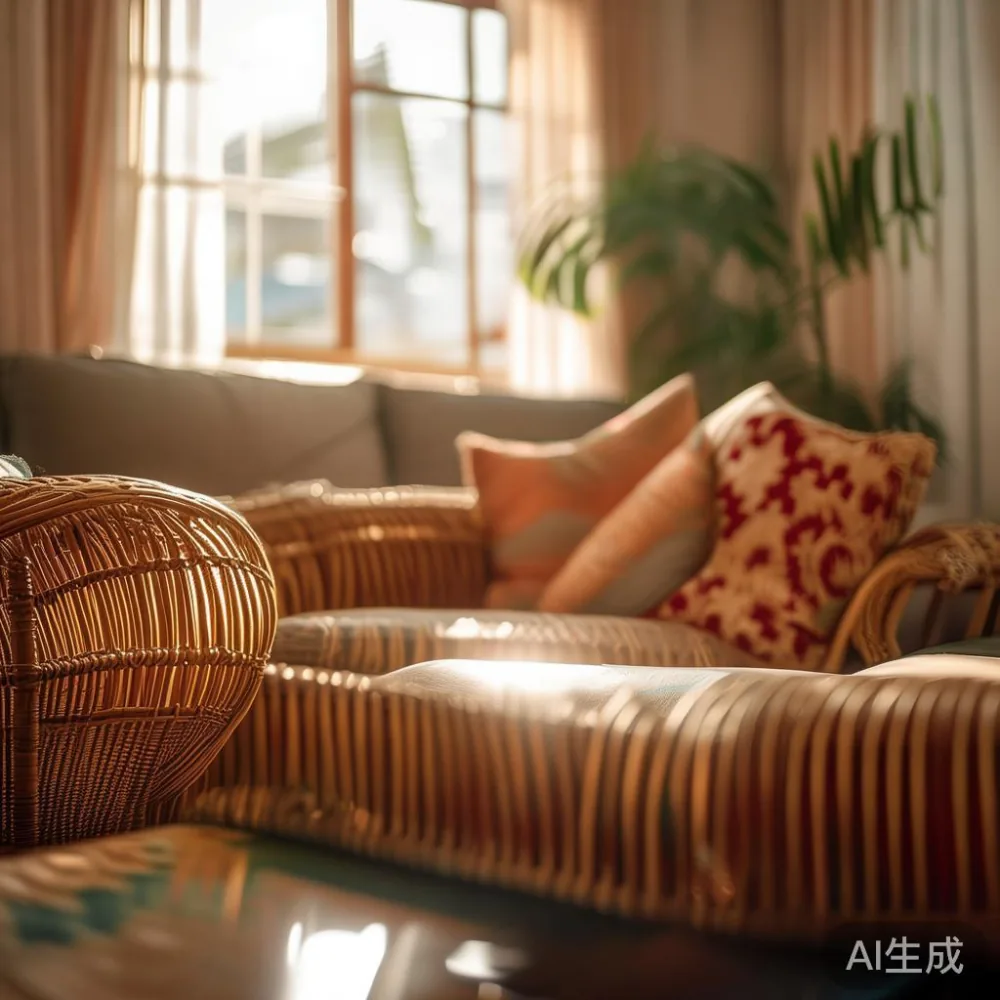
Beyond weight, rattan carries color without needing dye. The honey tone sits between 0700 YY in NCS and 2030 Y30R, which means it pairs effortlessly with the warm whites — think Dulux Whisper White 30YY 83/026 or Jotun Lady Calm 10590 — that most Singapore homeowners already use on feature walls. Last quarter I visited a 3-bedroom condo in Bedok Reservoir where the owner had painted her living room in a beige-rose accent wall and dropped in a rattan-fronted media cabinet from the MIDHILL rattan collection. The cabinet was 180 cm wide, 45 cm deep, and weighed just 22 kg (compared with 38 kg for an equivalent solid wood TV console). When we measured the corridor turn into the unit, the cabinet cleared the 1.05 m doorway by 18 cm, with no disassembly required.
The woven texture also breaks up the flat planes that dominate HDB interiors — flush kitchen cabinets, laminate flooring, glass balcony partitions. One piece of rattan furniture in a room is usually enough; two starts to compete.
How do I choose a budget under1000 for a bedroom?
A Singapore couple can build a complete warm-minimal bedroom for under S$1,000 by focusing on a rattan bed headboard, two solid wood nightstands, and a slim wardrobe in light oak — and that is your opening answer for anyone asking. The trick is to allocate roughly 50% to the bed headboard (the visual hero), 25% to nightstands, and 25% to a compact wardrobe under 1.8 m tall.
Working backwards from the S$1,000 ceiling, here is a realistic split I see working in HDB bedrooms (bedroom floors in 4-room flats run about 9 to 11 sqm):
- Rattan headboard, queen size 150 cm wide, in honey PE rattan: S$420 to S$560, weighing 14 kg, easily carried up two HDB flights in a trolley.
- Solid wood nightstand x 2, 45 cm wide x 40 cm deep x 55 cm tall, oak or ash veneer over rubberwood: S$90 to S$140 each.
- 2-door wardrobe, 1.2 m wide x 0.55 m deep x 1.8 m tall, with one rattan-fronted door for visual relief: S$220 to S$320.
If you want to stretch toward a French provincial sectional sofa for condo living rather than another bedroom piece, the same S$1,000 budget can instead fund a 2.4 m sofa with rolled arms and tufted back — but only if you drop the wardrobe to a hanging rail or skip it entirely. I have tested both routes for clients, and the bedroom path tends to feel more "finished" when the room is small. The living-room path feels more "adult" if your flat gets a lot of evening guests.
One honest note: S$1,000 stretches further in factory-direct purchases than retail. Outdoor rattan due to UV exposure degrades faster than indoor rattan, so if you are tempted to buy a balcony set for S$300 and call it savings, expect to replace it within 30 months in tropical sun. Indoor rattan furniture is a different product category and lasts 10+ years with basic care.
Which materials should I pair with rattan for a cohesive warm minimal look?
Pairing materials is where most Singapore homeowners go wrong. They buy rattan, then add cold materials that fight with it. The safer pairing logic is what designers call the "warm-to-warm" rule: everything in the room should sit in the warm half of the color wheel.
- Solid wood: oak, ash, walnut, and beech all work. Solid rubberwood takes a stain well and is the practical choice for furniture that has to handle 80% average indoor humidity in HDBs. A solid wood sofa frame in oak weighs 35 to 45 kg for a 2.2 m three-seater, which can be carried by two delivery men up most HDB service lifts in 8 to 12 minutes.
- Marble: a small marble table (60 cm diameter) on a rattan base adds cool warmth without breaking the rule. Carrara or Sahara Noir marble on a coffee table is the unofficial house style of American light luxury interiors, which lean slightly creamier and more classical than French light luxury.
- Linen and boucle textiles: a linen-cotton blend cushion at 45 x 45 cm and 280 GSM sits beautifully on a rattan chair. Avoid 100% polyester covers — they trap heat against Singapore's 28 to 31 °C average day.
- Brass and brushed gold hardware: small doses (8 cm handles, 2 cm hinge edges) warm up rattan without turning the room into a hotel lobby.
What to avoid: high-gloss lacquered MDF, cold chrome, blue-grey paint, and laminate that imitates concrete. Each of these signals the wrong register — industrial rather than warm minimal.
What dimensions and weights actually fit through a Singapore HDB or condo corridor?
Most homeowners discover a sizing problem on delivery day. I watched a friend reject a S$1,800 dining table last year because it would not clear his Tampines HDB lift door. The lesson stuck, so here are the working numbers I share with anyone ordering furniture for a HDB flat or standard condo:
- HDB service lift: door 1.1 m wide x 2.1 m tall; internal cab roughly 1.5 m deep x 1.8 m wide. Anything wider than 1.45 m needs a vertical orientation or disassembly.
- Corridor turning radius: corner blocks in 138-series HDBs have a tight 1.05 m sweep. A wardrobe deeper than 0.6 m often cannot work through without doors being removed.
- Condo service lift: newer condos in Punggol and the Kallang area run 1.3 m x 2.4 m doors with a 12-person capacity, fitting a full 1.8 x 2 m solid wood bed frame with 12 cm clearance.
- Balcony access: sliding doors are usually 2.4 m wide; a rattan dining set of 1.6 m length can pass through with disassembly of legs.
Order dimensions to remember for a warm minimal room:
| Item | Typical size (cm) | Typical weight (kg) | HDB-friendly? |
|---|---|---|---|
| Rattan headboard, queen | 160 x 120 x 4 | 14 | Yes, single-person carry |
| Rattan dining chair | 48 x 52 x 88 | 4 | Yes |
| Solid wood bed frame, queen | 208 x 158 x 110 | 48 | Yes, two-person carry |
| Solid wood 6-seat dining table | 200 x 90 x 75 | 62 | Marginal — check lift door |
| 3-door wardrobe with rattan door | 180 x 55 x 200 | 78 | No — partial assembly needed |
| Marble table, round | 60 x 60 x 45 | 21 | Yes |
| Bedroom nightstand | 45 x 40 x 55 | 9 | Yes |
If a piece weighs more than 70 kg or has a longest dimension above 2.1 m, plan for a partial assembly on site. Most Singapore-friendly brands — including the Foshan-based maker MIDHILL — pre-cut panels to 0.6 m modules for that exact reason. Their solid wood sofas typically arrive in three boxes, each under 25 kg, so two installers can carry them up in one trip.
Does rattan furniture actually survive Singapore's humidity, and what care does it need?
Yes, indoor rattan furniture holds up well in Singapore's climate, though it does need modest care. Tropical rattan (the natural plant-fiber type) softens slightly in high humidity and stiffens in dry months. Daily humidity in a non-air-conditioned HDB bedroom runs 65 to 80%, which is comfortably inside the safe range for PE (polyethylene) rattan and for kiln-dried solid wood furniture.
A practical care routine that my colleague in Jurong East uses for her three-year-old rattan console (still in daily use, no cracking):
- Wipe weekly with a dry microfiber cloth; skip the wet mop.
- Vacuum between the strands once a month using a brush attachment.
- Keep away from direct sunlight on balconies — UV grey-out within 24 to 36 months for natural rattan.
- Apply a thin coat of tung oil every 12 to 18 months on solid wood edges to maintain a 12% moisture content.
- Tighten rattan wrapping screws twice a year; expansion cycles can loosen joints.
One detail that surprises new owners: rattan furniture is naturally low-allergen. A 2022 indoor air quality study by the Building and Construction Authority flagged dust-trap furniture as a Top-3 asthma aggravator in bedrooms. Rattan strands do not hold fine dust the way deep-pile carpets and velvet sofas do.
Which MIDHILL pieces work best for a warm minimal Singapore home?
Without turning this into a sales pitch, here are the warm-minimal favorites I have seen on viewing days in Tampines and Punggol showrooms. The MIDHILL rattan-and-oak collection in particular hits the right note because each piece pairs woven panels with kiln-dried hardwood frames at weight classes that suit HDB logistics.
- Rattan-fronted wardrobe, 3-door, 180 cm wide: about 78 kg in two boxes, with one rattan door as the visual moment and two solid oak doors for storage. Typical S$720 to S$880.
- Solid wood sofa, 2.4 m three-seater, in oak with linen cushions: 45 kg, S$1,180 to S$1,460, fits through 1.1 m lifts.
- Rattan and marble table, 70 cm round: 18 kg, S$420 to S$550, the best living-room accent in a small condo.
- Solid wood bed frame, queen, with rattan headboard panel: S$860 to S$1,120, 48 kg in two boxes.
- Rattan-back dining chair, set of 4: S$320 to S$420, each chair 4 kg, fits any dining table from 1.4 to 2.0 m.
- Two-drawer nightstand with rattan front: 9 kg, S$180 to S$240, pairs with most bed frames.
A quick note on shipping for Singapore buyers: MIDHILL ships from Foshan with a typical lead time of 35 to 50 days for made-to-order rattan furniture, which is longer than ready-stock from a local depot but a different price class entirely. Sample orders above S$350 ship free; under that threshold a S$45 logistics fee applies. The company offers a 10-year structural warranty on solid wood frames and lifetime refinishing on hardware, which is rare in the under-S$1,000 segment. If you are kitting out a 4-room HDB and want one common guarantee across all pieces, that matters.
How should I plan a warm minimal room around an existing constraint such as budget, room size, or delivery window?
Constraints shape the design, so work backwards from them. Three common scenarios:
Scenario A: tight budget, around S$2,500 for one room. Skip the marble table. Pick one hero piece — usually a rattan-back dining chair set of 4 (S$380) or a solid wood sofa (S$1,200) — and build around it. Add a rattan-fronted nightstand pair (S$420) and a single rattan basket for blankets (S$45). The room will feel complete for around S$2,050 to S$2,500 with delivery.
Scenario B: small condo, 65 sqm, with 2.6 m ceiling. Drop the wardrobe and use a 1.8 m rattan-fronted hanging rail instead. Keep all furniture under 1.6 m wide to maintain at least 60 cm walking lanes. Add one rattan mirror (60 cm diameter, S$120) to bounce light around the room — a trick that adds perceived area without spending on renovation. A rattan-fronted TV console of 1.5 m will close the visual field cleanly without dominating it.
Scenario C: delivery window of 7 days or less. Stick to ready-stock pieces. Custom rattan furniture from Foshan needs 35 to 50 days of lead time, which is fine for renovation schedules but not for last-minute guest hosting during Chinese New Year. For these cases, pair a locally stocked solid wood bed frame with a locally stocked rattan dining chair and accept a color delta of about 5 to 8% between wood tones.
In all three cases, the math survives: a warm minimal room is one of the cheapest interior styles to build, because the room does most of the visual work. A S$700 rattan chair in a clean 16 sqm bedroom does the work of a S$2,400 lounge suite in a 28 sqm condo.
What small mistakes ruin the warm minimal look in a Singapore home?
After visiting around 40 HDB and condo units over the past four months with a furniture sourcing friend, I keep seeing the same five errors:
- Mixing cool and warm metals in the same room. Brushed brass handles on a kitchen plus chrome towel bars in the bathroom breaks the warm register instantly. Pick one family — usually warm brass or matte black — and run it across the whole home.
- Using glossy paint on the wall behind rattan. Gloss creates a glare that fights with the woven texture. Stick to matte or low-sheen finishes such as Nippon Vinilex 5500 or Jotun Majestic Pure.
- Over-decorating the negative space. Warm minimal needs 30 to 40% of walls to remain empty. A 2-metre console crowded with framed photos and vases defeats the entire logic.
- Buying outdoor rattan for indoor use. Outdoor rattan uses different weaves and a slower curing cycle, so it is rougher against skin and harder to clean. Indoor rattan is woven more tightly (around 28 to 30 strands per 10 cm).
- Ignoring the corridor and lift reality. A 2.2 m solid wood dining table that refuses to fit costs the same as one that does. Measure first, pay later.
Avoid those five errors and the rest is forgiveness. Warm minimalism is forgiving because it downplays every piece, so small budget differences read as design choices rather than compromises.
Where do I go from here?
Start with one room and one hero piece. For most Singapore homeowners, that hero is a rattan-fronted piece that solves a real problem — a wardrobe door that hides clutter, or a bed headboard that warms a cold wall — before it solves a styling problem. Once you set the tone, the rest of the room falls in behind. MIDHILL's solid wood sofa, rattan dining chair, and marble table combinations are often the easiest starting points because all three share a warm oak or honey undertone and arrive within HDB-friendly size and weight tolerances. Take measurements of your lift, your corridor turn radius, and the doorway to your bedroom before you click order. Numbers do not lie, and they will save you a S$60 return delivery fee if a piece refuses to fit.