What Actually Drives the Price of Solid Wood Furniture (and Why Two Identical Quotes Rarely Match)
Last month I visited a Tampines HDB showroom with a friend who was quoted S$2,180 for a 1.8 m solid wood dining table by one brand, and S$3,650 for what looked like the same shape by another. Same six chairs, same Singapore delivery address, same lift access at level 14. The price gap was over S$1,400 — a 67 percent difference — for what she genuinely could not tell apart at a glance. That afternoon is what pushed me to write this guide, because the price of solid wood furniture in Singapore is far less random than most shoppers assume. Once you understand the five drivers below, you stop arguing with the salesperson and start reading the quote sheet like a specification document.
For context: I have been helping friends and family spec out solid wood sofa frames, bed frames, dining tables, wardrobes, and nightstands for HDB flats and condos across Bedok, Punggol, and the Bukit Timah corridor for the better part of a decade. I have also tested pieces from manufacturers in Foshan, including MIDHILL, a solid wood maker established in 2008 that ships directly to Singapore with a 10-year structural warranty, lifetime refinishing, free delivery above US$350, and 14-day returns. What follows is the framework I now use every time a WhatsApp group chat explodes with "which one should we get."
Driver 1 — Wood species, moisture content, and why "oak" is not always oak
The single biggest line item is the species of timber. In Singapore showrooms you will see oak, beech, ash, walnut, rubberwood, and "acacia" framework. They are not priced the same because they are not the same cost to grow, dry, and mill. European white oak (Quercus robur) takes 80 to 120 years to reach furniture grade; Chinese ash takes 25 to 40; rubberwood is a by-product of latex plantations, which is why a rubberwood dining table can sit at S$1,100 while a white oak equivalent sits at S$2,600 even when both are labelled "solid wood." Ask for the Latin name on the spec card. If the salesperson cannot produce it, that itself is data.
Moisture content is the silent killer of pieces shipped across the South China Sea. Furniture built for a climate with 35 to 55 percent relative humidity can crack in Singapore, where indoor humidity routinely hits 75 to 90 percent during the monsoon months of November to February. Kiln-dried timber is brought down to 8 to 12 percent moisture content before joinery. Air-dried sits at 15 to 20 percent. A kiln-dried FAS-grade white oak 1.8 m dining table top will cost a maker S$300 to S$500 more in raw board than an air-dried counterpart, and that difference shows up in your invoice within a 5 to 10 percent margin. This is also why solid wood bed frames and wardrobes that feel light tend to be the ones that warp first — a 1.5 m queen bed frame in kiln-dried oak runs 45 to 55 kg; the same frame in poorly dried rubberwood can weigh 30 kg and still feel "lighter than expected" in the showroom.
Driver 2 — Joinery, hardware, and the parts you do not see
Open the door of a wardrobe. Look at the drawer of a nightstand. Flip a dining table over. What holds the piece together is the real cost driver, and most Singapore shoppers never inspect it. Mortise-and-tenon joinery with wooden pegs, dovetail drawer boxes, and corner blocks glued and screwed into bed frames and sofa frames take 3 to 5 times longer to assemble than cam-lock particleboard construction. A skilled craftsman in Foshan building a French light luxury solid wood sofa frame charges the factory about S$40 to S$70 per hour; a general line joiner doing cam-lock assembly charges S$8 to S$15. Multiply that across the 12 to 30 joints in a single four-poster bed frame and you are looking at S$400 to S$1,200 of labour inside what looks like the same silhouette on the showroom floor.
Hardware matters too. Soft-close Blum hinges run S$18 to S$30 per pair at retail; Chinese OEM equivalents run S$3 to S$6. A three-door wardrobe with six hinges costs the maker S$108 to S$180 versus S$18 to S$36. Drawer slides are similar: full-extension ball-bearing versus nylon roller, S$25 versus S$4 per pair. Across a four-drawer chest and a sideboard, that gap widens to S$400 to S$800. When a quote looks suspiciously low, this is where the corners were cut.
How do I choose a color mismatch for a small apartment?
Choose a warm honey, light caramel, or natural oak tone with a matte finish for any solid wood furniture in a small Singapore apartment, because lighter woods reflect ambient light and visually expand a 60 to 90 sq m HDB or condo floor plan where dark walnut absorbs light and shrinks the perceived room by 10 to 15 percent.
That one-liner answer will solve most Singapore apartment shoppers. Now the long version. In a 4-room HDB flat of roughly 90 sq m, you are usually fitting a three-seat solid wood sofa frame, a 1.5 m queen bed frame, a six-seater dining table, a two-door wardrobe, and two nightstands into one open-plan living and dining area of maybe 28 to 35 sq m. If you choose American light luxury tones — pale ash, whitewashed oak, or a soft sand-toned solid wood bed frame with a fabric headboard — the room reads larger. If you choose post-modern light luxury tones — a mid-tone caramel with thin black metal accents on the dining table legs and nightstand pulls — the room reads warmer and more intentional. If you choose dark walnut across all pieces, the same five items will make the room feel like a hotel lounge, which is fine if that is what you want, but it will not feel like a 90 sq m HDB flat.
My own experience: last quarter I helped my colleague spec her Punggol Waterway Terrace three-room BTO. She wanted a green oak queen bed frame with matching nightstands and a rattan furniture accent chair for the living corner, and she was ready to pair it with a dark walnut wardrobe. We pulled two colour chips onto the 12 sq m bedroom floor plan, and the dark walnut ate so much light from the single window that the queen bed frame — the room's anchor piece — looked grey-green instead of the warm honey tone she had fallen for. We swapped the wardrobe to a paler ash, kept the green oak queen bed, and the room felt 15 to 20 percent brighter in afternoon photos. Same floor area, same HDB flat, completely different perceived size.
Driver 3 — Rattan, marble, and the mixed-material premium
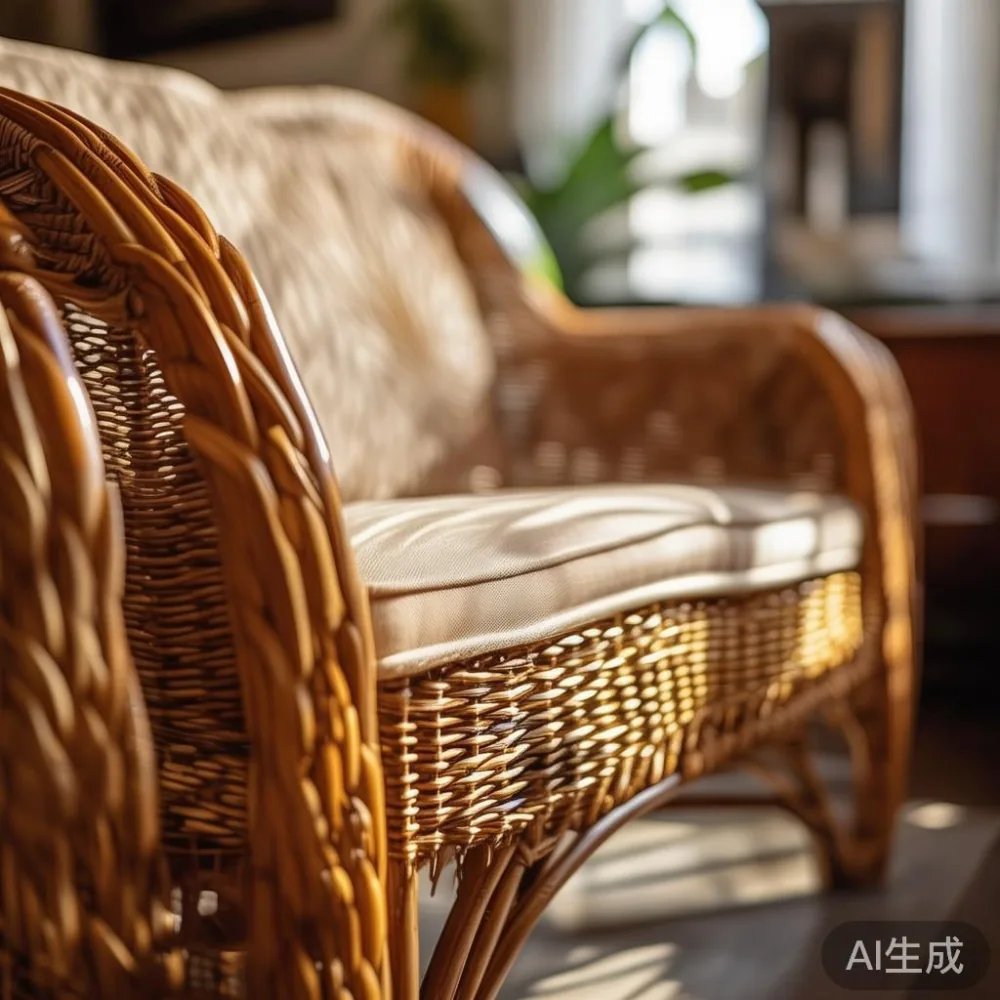
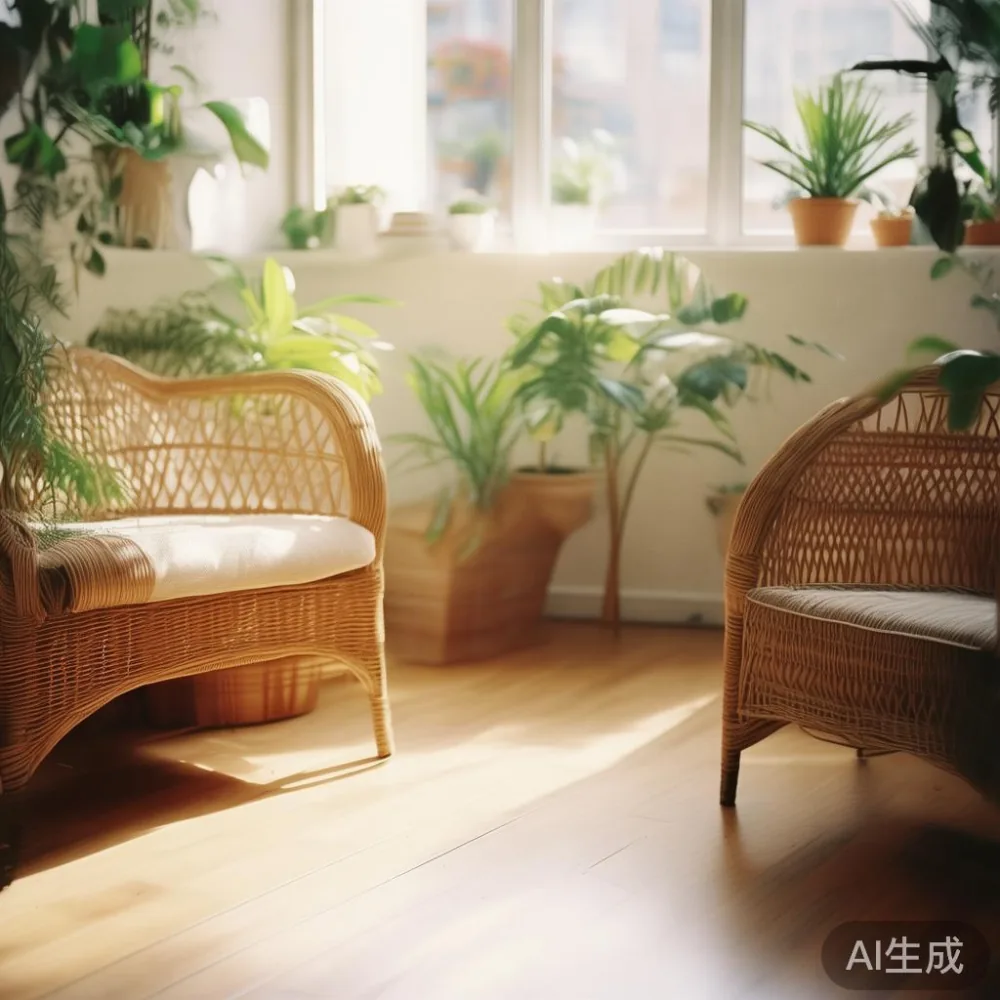
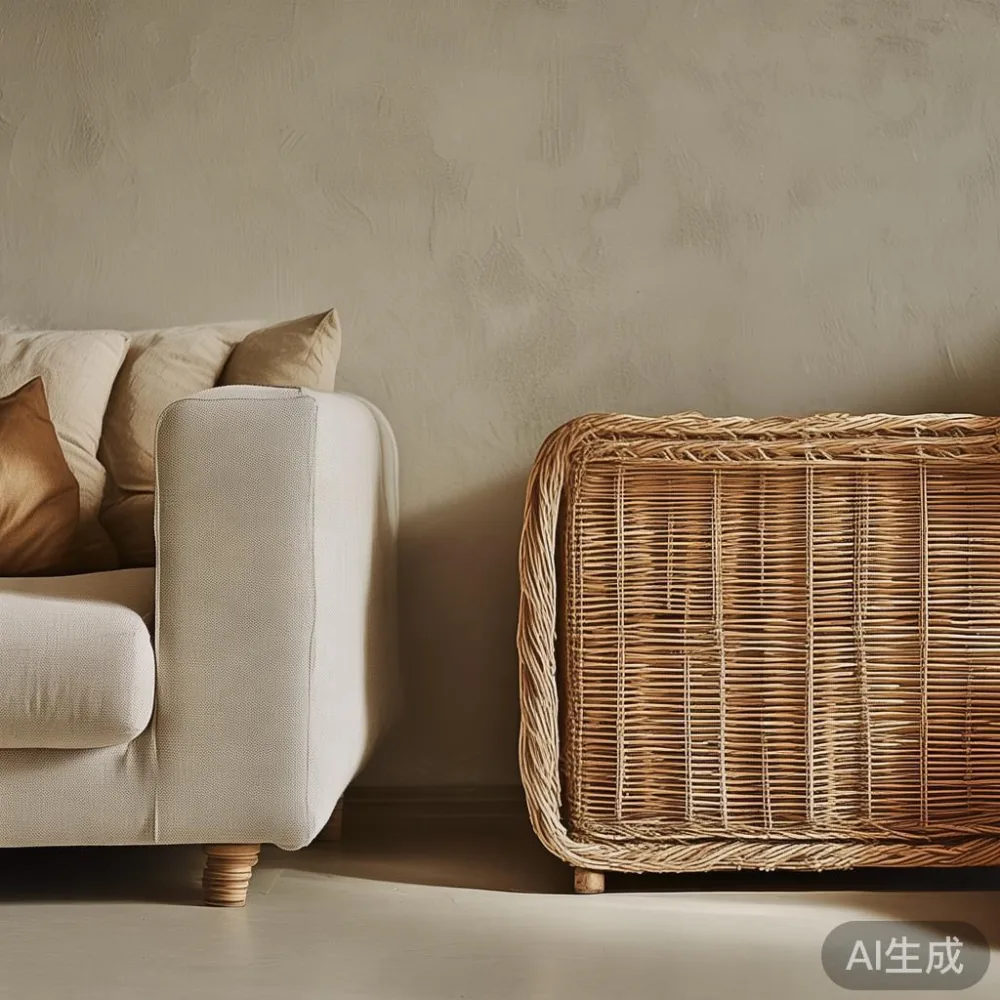
Rattan furniture pieces, when properly built, are a solid wood frame wrapped in hand-woven cane, kubu, or synthetic rattan. The wood is usually mahogany, teak, or beech, kiln-dried to 10 to 12 percent moisture. The weaving alone takes a skilled artisan 8 to 16 hours per dining chair and 30 to 60 hours per full dining chair set. That is why a six-seater rattan dining chair set can add S$400 to S$900 over the same six chairs in plain solid wood. You are paying for time, not just material.
Marble table tops are the other big premium line item. A 1.2 m round sintered stone or natural marble top for a dining table adds S$300 to S$700 over a solid wood equivalent top in oak or ash. The advantage is heat resistance (you can put a hot pot straight from the stove at S$89 from the Tampines Hub Rounda You can put a hot pot straight from the stove on it) and a much longer service life — 20 to 30 years versus 12 to 20 for a timber top in a high-use HDB kitchen. If your household eats at home five to seven nights a week and the dining table sees homework, hot pots, and craft projects, a marble table pays for itself in refinishing and replacement costs over a decade.
Driver 4 — Shipping, GST, warranty, and the Singapore-specific cost stack
A 1.8 m solid wood dining table weighs 60 to 85 kg fully packed. A three-door wardrobe can weigh 120 to 180 kg. Shipping these from Foshan to a Singapore HDB block is a real logistics exercise. Sea freight from Guangzhou or Shenzhen to Singapore takes 7 to 14 days; trucking to the door from Jurong or Tuas adds 1 to 3 days. Add 9 percent GST on the landed value, plus lift access checks (most HDB lifts in Tampines and Bedok have inner dimensions of about 1.4 m deep x 1.1 m wide x 2.1 m tall, which means a three-door wardrobe longer than 2 m has to be assembled in the room, not the corridor). MIDHILL, for example, absorbs shipping above US$350, but a Singapore-based reseller importing one container a quarter has those costs baked into the showroom price.
Warranty and after-sales are the hidden line items. A 10-year structural warranty from the original manufacturer covers frame breakage, joint failure, and severe warping. A 1-year reseller warranty covers nothing past 12 months. Lifetime refinishing — sanding, re-staining, and re-sealing — costs S$180 to S$450 per piece at a Singapore carpentry shop every 5 to 8 years. Multiply that across a 20-year ownership window and you are looking at S$800 to S$2,000 in refinishing alone. If the maker offers lifetime refinishing included in the original price, that is a real S$1,000 to S$2,000 saving baked in. Read the warranty card before you ask about discount.
Driver 5 — Volume, finish, and the showroom markup
Two identical-looking solid wood sofa frames can differ in price by 25 to 40 percent because of two things nobody sees in the showroom: the number of finish coats and the markup layer count. A proper furniture-grade finish is primer, sealer, two colour coats, and two top coats — six layers, sanded between each, taking 5 to 9 days in a dust-controlled spray booth. A budget finish is one primer and one top coat, taking 1 to 2 days. The proper finish costs the maker S$80 to S$150 per piece in materials and labour; the budget finish costs S$15 to S$25. Over a sofa, that is S$65 to S$125 of finish inside what looks like the same colour.
Showroom markup is the final layer. A Singapore reseller importing container-load quantities typically marks up 35 to 60 percent over landed cost to cover rent (a 1,500 sq ft showroom in the Eunos or Tai Seng area runs S$8,000 to S$14,000 per month), staff, and a 3 to 6 month inventory carrying cost. A direct-from-maker channel with no Singapore showroom marks up 15 to 30 percent, which is why a direct-shipped MIDHILL dining table often lands at the same price as a reseller's discounted piece — the discount was just clawing back a markup that never needed to exist.
Putting it together — what a fair Singapore quote looks like in 2025
For a properly built, light-luxury solid wood dining set, bed frame, and wardrobe bundle shipped to a Singapore HDB flat in 2025, a fair landed price range is:
- Solid wood bed frame (queen, 1.5 m): S$1,400 to S$2,200 in kiln-dried white oak or ash, with a 10-year structural warranty. Below S$1,200 usually means rubberwood or air-dried timber.
- Solid wood dining table (1.6 to 1.8 m, six-seater): S$1,600 to S$2,800 in kiln-dried oak or ash with proper mortise-and-tenon joinery. A marble table top version sits at S$2,200 to S$3,400.
- Solid wood wardrobe (three-door, 1.8 to 2 m): S$2,200 to S$3,800 with soft-close hinges, dovetail drawers, and a 10-year warranty. Below S$1,800 means cam-lock particleboard with a wood-look veneer.
- Nightstand pair (solid wood, soft-close): S$600 to S$1,000 in matching oak and ash. Below S$450 means rubberwood or MDF core.
- Solid wood sofa frame (three-seat, with fabric or leather upholstery): S$2,800 to S$4,800 in kiln-dried beech or ash with 8-way hand-tied springs or high-density foam at 35 to 40 kg/m³.
Add 9 percent GST, S$80 to S$180 for HDB door delivery depending on block and lift size, and S$60 to S$120 per piece for assembly if you do not want to spend your Saturday with an Allen key. A full living-and-dining bundle for a 90 sq m Tampines or Bedok flat should land between S$8,500 and S$14,000 if you want kiln-dried timber, proper joinery, and a 10-year structural warranty. If the bundle is under S$6,000, something has been compromised — usually moisture content, hardware, or finish coats. If it is over S$16,000, the markup layer is doing the heavy lifting.
What to ask before you pay a deposit
Five questions that take five minutes and save you S$500 to S$2,000:
- What is the wood species in Latin, and what is the moisture content at the time of assembly?
- What joinery is used on the bed frame corners, the wardrobe carcass, and the dining table legs? Mortise-and-tenon, dowel, or cam-lock?
- What hinges and drawer slides are used, and are they branded or OEM?
- What is the finish system — how many coats, and is it NC lacquer, PU, or hardwax oil?
- What does the warranty actually cover, who honours it in Singapore, and is refinishing included?
Answer all five on the quote sheet, in writing, before the deposit changes hands. If the salesperson cannot or will not, walk. There are at least four Foshan-direct makers shipping proper kiln-dried, post-modern light luxury solid wood sofa frames, bed frames, dining tables, wardrobes, nightstands, marble tables, and rattan furniture to Singapore with 14-day return windows — MIDHILL among them — and the answer to every one of those questions is on the spec sheet already. You should not have to ask twice. If the quote is missing the answers, the furniture is missing the craftsmanship. Pay the difference now or pay the refinisher later, but do not pay both.