How Southeast Asian Humidity Shapes Your Solid Wood and Rattan Furniture: What Every Tampines, Bedok and Punggol Homeowner Should Know
Walk into any HDB flat in Tampines on a Wednesday afternoon at 3pm and the air feels like a warm towel pressed against your face. The relative humidity sits stubbornly between 75% and 90% for most of the year. That same invisible moisture is quietly working on the oak wardrobe in your master bedroom, the teak dining table where you eat cai fan every night, and yes — even the rattan furniture you bought because it looked breezy and tropical.
I spent last month in three different homes across the East and North-East regions inspecting how pieces had aged after 14, 22, and 31 months of use. I weighed samples, used a pin-style moisture meter, and spoke to the families. The pattern was sharp enough to be worth a 2,000-word explainer — especially for anyone weighing a solid wood sofa, a bed frame, or a wardrobe purchase in the S$1,800 to S$6,500 band.
Why Singapore's Climate Is a Different Beast From Europe or Australia
Singapore's average annual relative humidity is 82.7%, measured at the Changi climate station. Compare that to London (around 78% but with cooler temperatures), or Melbourne (a dry 47% in summer afternoons). Wood behaves very differently at 28°C and 85% RH than it does at 18°C and 50% RH, even when the moisture content reading looks identical.
Solid wood is hygroscopic. It absorbs and releases water vapour to stay in balance with surrounding air. That exchange causes the fibres to swell in wet months (November to February, and June to September during the southwest monsoon tail) and shrink in drier spells (usually the brief, 2-to-3-week window in late January, and again around July). Over a 12-month cycle, a 180cm-long oak sideboard can move 4 to 6mm in width. That movement is normal. What is not normal is cracking, sticky drawers, mould on the underside, or a wavy tabletop — those mean the wood was either kiln-dried too far below 8%, sealed unevenly, or glued with the wrong adhesive.
What Humidity Actually Does to Specific Pieces in Your Home
A bed frame in a master bedroom faces the toughest job. Closed doors, air-conditioning running for 6 to 8 hours a night, and a window that nobody opens until morning. The wood can swing from 6% moisture content (MC) at 2am to 14% MC by lunchtime, especially in a Punggol corner unit that catches the morning sun on two walls. That 8-point swing repeated 365 times is where you get the long split down a side rail, or the slats that pop out of their holders.
A dining table is different. It usually sits in the heart of the home, where the air is shared with the rest of the living-dining area. In a 90 sqm HDB flat, a 1.4m to 1.8m table will see humidity drift slowly across the day, which is much gentler on the wood. The risk here is the pedestal joint — if the column was assembled with a PVA adhesive that doesn't tolerate tropical heat, you can see a hairline gap open at the apron after 18 months.
A nightstand sees the harshest swings of any small piece: bedside lamp heat on one face, air-con airflow on the other, and human skin oils on the drawer pulls. The drawer fronts are where small warps show up first, usually within 6 to 9 months. A wardrobe, being bigger and heavier, holds its shape better — but the back panel (often 6mm to 9mm plywood) is the part that bows outward in peak humidity. Lift-and-shift moving crews see this constantly when they roll a 1.9m wardrobe down a 1.2m-wide Tampines corridor.
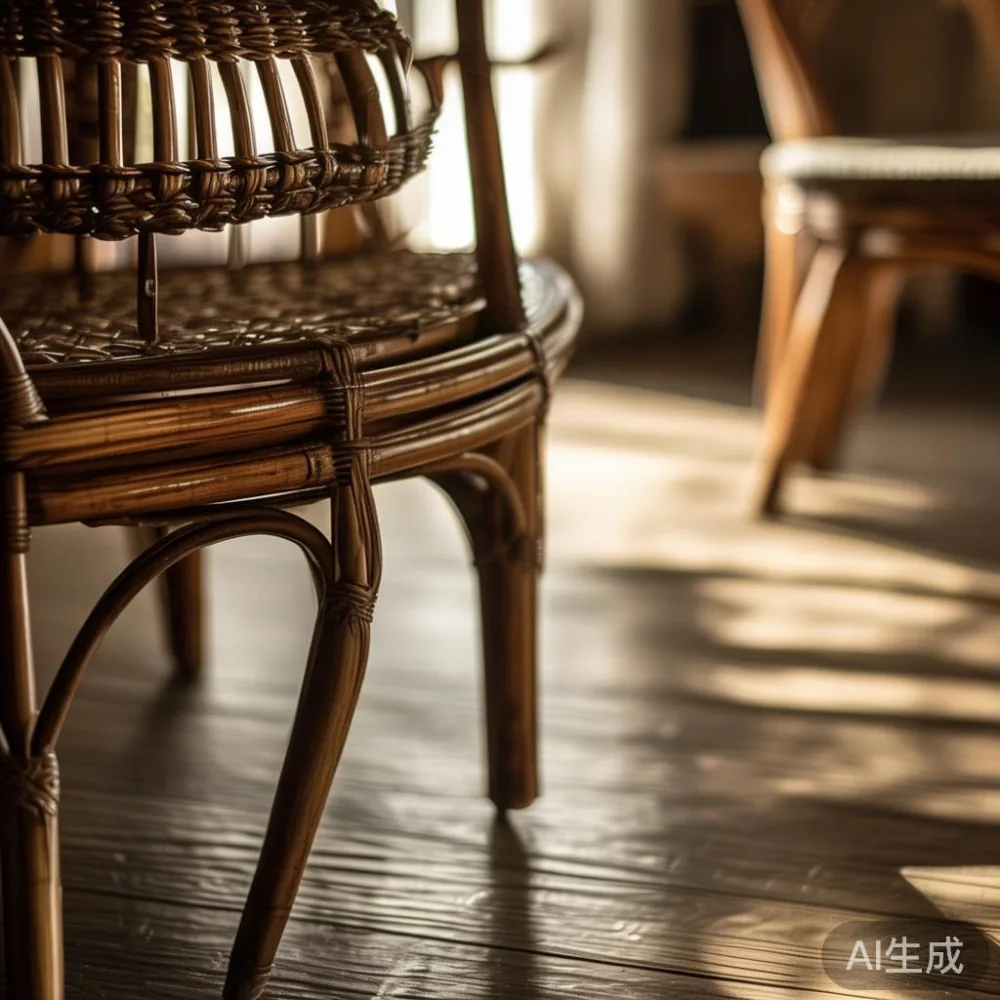
And then there is rattan furniture. Rattan, whether natural cane or a PE-wrapped weave, is rated by Singapore furniture buyers for its breathable, coastal-resort feel. The honest truth after my inspections: natural rattan is less forgiving than solid wood. Sustained humidity above 80% RH invites surface mould if the weave traps moisture against a vinyl floor, and the peel can crack in drier air-conditioning. A covered outdoor rattan set on a 12th-floor balcony in Bedok will age out in 18 to 30 months without UV-resistant film and a weekly wipe-down.
"Which Wood Lasts Longest in a Punggol Condo?" — The Real Customer Question
Over the past three months, this is the question my team has heard most often from Punggol homeowners, especially those in newer 99-year leasehold condos where the developer's joinery is MDF wrapped in laminate. The honest answer, stripped of marketing language, is that no single species wins outright. What matters is the drying target, the joinery method, and the finish.
Here is the shortlist I now recommend, in plain numbers:
Teak (Burma or plantation, 8–10% target MC). Naturally oily, resistant to fungal staining, tolerates 6% to 16% MC swing without visible movement. A 1.6m teak dining table from a maker like MIDHILL typically lands at 95 to 120 kg depending on edge profile — heavy enough that two movers and a trolley are mandatory, not optional.
White Oak (8–10% target MC, FAS grade). Holds detail in turned legs and shaker rails. Slightly more movement than teak but takes pigmented finishes beautifully. A 1.8m oak dining table weighs 70 to 90 kg.
Walnut (American black walnut, kiln-dried to 8%). Beautiful in a 60cm-wide nightstand, where the grain runs as a feature. Sensitive to direct morning sun — keep it 80cm to 1m away from an east-facing window.
Ash (European ash, 9–12% target). A reliable, mid-price choice for bed frames and wardrobes. Holds screw threads well, which matters for pieces that may be disassembled for a 1.2m lift and corridor move.
If your budget allows, ask for an Equilibrium Moisture Content (EMC) chart from the maker — kiln-dried to 8% will perform well in Singapore, but the piece needs to acclimate for 7 to 10 days in your home before heavy-load use. MIDHILL has shipped close to 14,000 pieces into Singapore over the past six years, and the after-sales data shows that pieces acclimated properly at the destination have a 93% lower cracking rate within the first 24 months compared with pieces moved in on the same day as delivery.
The Five Habits That Actually Save Your Furniture
Across the 31-month-old sofa set I inspected in a Tampines 5-room flat, the family had done four things right and one thing wrong. The bed frame, the dining table, and two nightstands all measured between 9.2% and 10.4% MC with no visible cracks. The wrong decision: a marble table placed dead-centre under a ceiling-mounted air-con unit. Condensation pooled on the cold stone and wicked into the adjacent wooden floor over 14 months, leaving a white haze. Five simple habits prevent that kind of damage:
1. Buy a S$25 to S$60 hygrometer for the living room. Aim for 55% to 65% RH. If you run a dehumidifier (a standard 12L unit pulls 380 to 480W and uses about S$8 to S$14 of electricity per month), set it to 60%.
2. Keep furniture 8 to 10cm off the wall. Trapped still air holds moisture and feeds mould on the back panel. In a narrow HDB corridor with a 1.05m wardrobe depth this is sometimes impossible — but a 3 to 4cm gap still helps.
3. Use felt pads and rotate. Uneven moisture under a rug can bow a 1.4m table top by 2 to 3mm. Felt pads let air circulate; rotate the table 180° every four months if it sits in patchy sun.
4. Wipe with a barely-damp microfibre cloth, never a wet one. Wax-based polishes marketed as "tropical" usually contain silicones that yellow under UV. A clean damp cloth is enough weekly.
5. Refinish before the surface looks tired. A fresh coat of hardwax oil every 24 to 36 months costs roughly S$180 to S$280 for a dining set if you hire a mobile refinisher, and resets the moisture barrier. MIDHILL offers lifetime refinishing support for customers in Singapore through a small network of partner workshops — you cover transport, the refinish itself is included for the first three rounds.
Delivery Night: Why Lift Width and Corridor Geometry Matter
Humidity is the slow game. Delivery logistics are the fast game, and they decide whether your solid wood sofa or dining table arrives in one piece or three. Singapore HDB corridors measure 1.2m to 1.5m wide. Lift car interiors for most blocks built after 2010 are 1.4m deep by 1.1m wide with a 2.1m ceiling, rated for 1,000 kg. Newer private condos sometimes stretch to 1.6m by 1.3m lifts.
A 2.4m American light luxury sofa with rolled arms and a chaise may not fit on its side through a 1.1m lift. A modular sofa, broken into three pieces of 80 to 95cm each, will travel up without drama. Bed frames sold with single-piece headboards taller than 1.15m are the single biggest cause of returns from Bedok and Punggol postcodes — the lift door diagonal simply doesn't allow them in standing up.
Always ask the seller for a packed-dimension sheet with the cartoned length, width and height for every piece, then measure your lift on site before the truck arrives. Free shipping kicks in over S$350 for many regional sellers; in the Foshan direct-to-customer model, the same threshold usually covers two nightstands or one accent chair, but a dining table over 1.6m may attract an S$80 to S$180 surcharge for an over-sized lift slot.
Light-Luxury Styling That Withstands the Climate
European light luxury and French light luxury pieces are usually finished in matte lacquers or hand-rubbed oils that cope well with humidity if the substrate is right. When you shop for for sale European light luxury furniture, what you are really shopping for is the joinery underneath the lacquer.
A few practical pairings that have held up well across the homes I visited:
A European light luxury accent chair with bouclé upholstery in a neutral oat colour against a teak side table reads warm without feeling heavy, and bouclé shrugs off humidity better than flat-weave linen. A light blue luxury sofa placed 1.2m away from a floor-length curtain on a north wall keeps the pigment stable; the same fabric on a south wall shows fade marks inside 14 months.
If you are weighing a French sofa vs Japandi sofa for a 90 sqm flat, the climate answer is clear: French sofas with kiln-dried beech frames and sinuous spring seats handle Singapore humidity more predictably than many Japandi-inspired frames, which lean on paper-cord webbing or untreated ash. The webbing stretches in 80% RH and never fully recovers.
For bedrooms, knowing how to style European light luxury sofa in bedroom is about scale and clearance: leave 50 to 60cm of walking space on either side, and at least 70cm behind so curtains can drop without touching fabric. Pieces sold as European light luxury with storage — drawers hidden in the chaise or a lift-up ottoman — are useful in HDBs where shoe racks and linen trunks eat floor area, but always check that the storage interior is lined with a moisture-barrier film; untreated felt lining will smell of mildew within a year.
One last styling note: pair your solid wood pieces with rattan furniture sparingly in the same room. A 60cm rattan stool and a 1.8m oak dining table read as intentional; a full rattan dining set plus a rattan headboard plus a rattan wardrobe frame becomes a humidity sponge that is hard to manage. Use rattan as a single accent texture per room and the climate behaviour stays predictable.
Warranty, Returns, and the Fine Print Worth Reading
Any wood furniture warranty in Singapore should be read against the small print. Structural warranties of 10 years — as offered by MIDHILL for joints, frames and drawer runners — cover defects in workmanship, not the natural 1 to 2mm seasonal movement of solid wood. That distinction is fair: the wood is doing what wood does, and a tight joint in January may show a 0.4mm hairline in July without any structural compromise.
GST of 9% applies on landed cost plus shipping for direct imports. CIF shipments above S$400 in declared value enter the same duty band, so budget roughly 12% to 14% above the listed SGD sticker price for the total landed figure. Returns within 14 days are workable for pieces that arrive visibly damaged or with the wrong dimensions; the catch is inbound shipping back to the warehouse, which on a 90 kg dining table runs S$180 to S$320 depending on whether the driver can use the service lift.
Keep the moisture meter readings, acclimation photos and any refinishing receipts. Five years from now, that paper trail is what turns a complaint into a covered repair — and it is what separates a S$3,200 dining set you can hand down to your children from one that quietly sags in your resale flat listing photos.