What Actually Drives the Price of Solid Wood Furniture (And Why Some Pieces Cost Three Times More)
I learned this the hard way last month when I visited a Tampines HDB showroom with my colleague Sarah. We stood in front of two nearly identical looking dining tables, both labelled solid oak, both finished in the same warm honey tone. The price tags read SGD 1,480 and SGD 4,250. Sarah laughed and asked how a table with four legs and a flat top could possibly justify a 187 percent difference. By the end of that afternoon, after we tipped both over, ran our fingers along the underside, and spoke to the floor manager, we had a much clearer picture. Below is what I now tell every friend who messages me before buying a solid wood sofa, bed frame, dining table, wardrobe, nightstand, or marble table.
What "solid wood" actually means, and why the label is doing a lot of heavy lifting
The phrase solid wood is treated as a quality badge in Singapore, but inside the trade it covers at least three very different constructions. The first is a single board, cut from one trunk, dried, and milled into a slab. A 200 cm dining table top in this category might weigh 60 to 90 kg depending on species and thickness. The second is a joined panel, where several narrower staves are glued edge to edge to form a wider surface, sometimes called a glue up. The third is a veneer over an engineered core, where a 2 to 6 mm layer of premium species sits on top of plywood, MDF, or blockboard. All three are technically solid in the loose sense, but only the first two can be sanded and refinished multiple times. That distinction is the single largest driver of price per cubic centimetre, and it is exactly why MIDHILL, a Foshan maker shipping from China since 2008, prints its construction method in plain language on every spec sheet rather than hiding behind marketing copy.
Species, hardness, and the numbers your fingers cannot feel
Wood is priced by species the way cars are priced by engine. Walnut, white oak, and teak sit at the top because they are slow growing, dense, and have grain patterns that interior designers actively specify. Rubberwood, poplar, and acacia sit lower because they grow quickly and are widely plantation farmed. The Janka hardness scale gives a usable proxy: white oak scores about 1,360, teak around 1,070, walnut 1,010, acacia 1,150, and rubberwood roughly 980. A dining table made from 4 cm thick white oak will outlast a rubberwood one by decades, but the raw timber alone can cost 2.4 to 3.1 times more per cubic metre. Add 8 to 12 percent wastage from milling, plus another 3 to 6 percent for drying defects, and the cost gap widens again before a single joint is cut. This is one of the unspoken reasons a bed frame in walnut retails above SGD 2,800 while a similar looking poplar frame sits at SGD 1,150.

How thick is thick, and why 3 cm versus 5 cm matters more than you think
When I tipped that SGD 4,250 table in Tampines, the underside told the whole story. The legs were 8 cm square, the apron was 3.5 cm thick, and the top was a 4.5 cm slab with continuous grain that ran the full 200 cm length. The SGD 1,480 table had 5 cm square legs, a 2 cm apron, and a 3 cm top with a butt joint hidden under a printed finish. The wood volume difference, roughly 0.18 cubic metres versus 0.07 cubic metres, is the kind of detail a Punggol condo buyer never sees in a product photo but absolutely feels when a 220 kg dining table needs to be carried up a 1.1 m wide HDB lift and down a 1.2 m wide corridor. Thicker pieces also resist cupping, the slight bowing that happens when humidity swings between Singapore's 85 percent monsoon months and 65 percent dry season. MIDHILL publishes thickness in millimetres on every product card, a habit the industry should copy.
Is a French wardrobe worth it for a 4 room HDB in Bedok?
This is a question I get from clients almost every week, and the honest answer is: it depends on three things. First, the species and the joinery, not the label. A French inspired wardrobe in beech with dowel joints is mostly aesthetic styling on a mid range build. A French inspired wardrobe in solid oak with mortise and tenon, dovetailed drawers, and a hand applied patina is a different object entirely. Second, the hardware, since soft close hinges from Blum or Hettich add SGD 180 to 320 per unit but they also last 100,000 cycles, which for a couple sharing a bedroom works out to roughly 13 years of daily use. Third, the surface, because a wax oil finish lets you spot repair a water ring in 20 minutes, while a thick polyurethane coat will need a full sand and re coat after 6 to 8 years. When I worked through the math with a Bedok family last quarter, the French inspired oak wardrobe landed at SGD 3,650, while a French styled poplar wardrobe at the same shop came in at SGD 1,890. The structural warranty, hardware quality, and refinishing potential were the differentiators, not the silhouette.
How much does Singapore's GST, shipping, and HDB access add to the landed price?
Every overseas order to a Singapore address picks up the same stack of costs, and ignoring them is how budgets blow out by 25 to 40 percent. Current GST is 9 percent and applies to the declared value at customs, including shipping. A typical 40 HQ container from Foshan to Singapore Port takes 5 to 9 days by sea, then another 3 to 5 days for customs clearance and last mile delivery. For bulky items like a 2 m wardrobe or a six seat solid wood sofa, the lift access and corridor survey matters: standard HDB lifts are about 1.1 m wide by 1.4 m deep, so any item longer than 1.9 m may need to be tipped on its side or partially disassembled. MIDHILL pre checks dimensions against typical HDB access and offers free shipping above US$350, which at current exchange lands around SGD 480, a useful threshold to remember when you are adding a nightstand or a small marble table to qualify.
What is the real difference between a light luxury piece and a mass market one?
Light luxury is a styling language, not a quality grade, and three regional versions show up in Singapore showrooms. French light luxury leans on curved silhouettes, cabriole style legs, and muted creams or champagne metallic accents. American light luxury goes wider, with thicker tops, deeper seats, and a more relaxed, oversized proportion that suits a Punggol executive condo. Post-modern light luxury mixes unexpected shapes, asymmetric bases, and contrasting stone inlays, often pairing a solid timber frame with a sintered stone or marble table top. Across all three, the markup comes from detailing: hand applied finishing passes, custom metal hardware, and small batch upholstery fabrics. A post-modern inspired bed frame with a curved headboard and integrated nightstands can run 30 to 60 percent above a flat panel equivalent, and most of that premium is finishing labour rather than raw material.
Is joinery something I can really check before I buy?
Yes, and it is the single highest signal item once you rule out species and thickness. Solid wood furniture that will last 15 to 25 years uses mortise and tenon, dovetail, or finger joints at the load bearing corners, often reinforced with corner blocks. A solid wood sofa frame, for example, should have the arm to seat joint glued AND dowelled, not just stapled, and the back rail should be screwed, not nailed, into the side panels. Lift the piece if you can, because a real solid wood frame on a 2.4 m sofa will register 70 to 110 kg, while a hollow or engineered frame can sit at 35 to 50 kg. Ask the seller whether the joints can be re tightened on site after the first monsoon season, and whether the structural warranty covers joint failure. MIDHILL offers a 10 year structural warranty on its core range and lifetime refinishing on wood surfaces, which is a practical answer to the question rather than a marketing line.
What about finishes, and why some matte surfaces cost more than glossy ones
A high build polyurethane finish in three coats with sanding between each pass hides a great deal, including lower grade timber, paper thin veneers, and small movement gaps. An open pore oil and wax finish, the kind that lets you feel the grain with your thumbnail, requires flatter, better sanded boards and more careful application. The labour difference is roughly 3 to 5 extra hours per dining table top, which at a Foshan workshop rate translates to SGD 60 to 140 per piece. The upside is repairability. A water ring, a candle drip, or a child marker stroke can be sanded out and re oiled in under an hour, and the spot will blend into the surrounding grain. A polyurethane piece, once damaged, usually needs a full strip and re coat, which in Singapore typically costs SGD 220 to 480 per piece when done on site.
Will a 2 m wardrobe even fit up my Tampines lift and through my door?
This is a real Singapore constraint, not a hypothetical one. Standard HDB door openings are about 0.9 m wide and 2.0 m tall, and the typical 4 room flat in Tampines or Bedok has a corridor turn that clips another 10 to 20 cm off the usable diagonal. Anything wider than 1.85 m usually needs to come in two pieces, which means you are really buying a knockdown or knock down style wardrobe regardless of the brand. Good makers design for this and pre drill the assembly hardware. The price difference between a one piece and a two piece wardrobe of the same volume is usually only 5 to 9 percent, because the labour is in finishing, not in the final assembly bolts. The same logic applies to a 2.2 m bed frame headboard, a 1.8 m dining table, and any marble table with a sintered stone top thicker than 12 mm, since the stone is usually crated separately and joined on site.
What does rattan furniture have to do with solid wood prices?
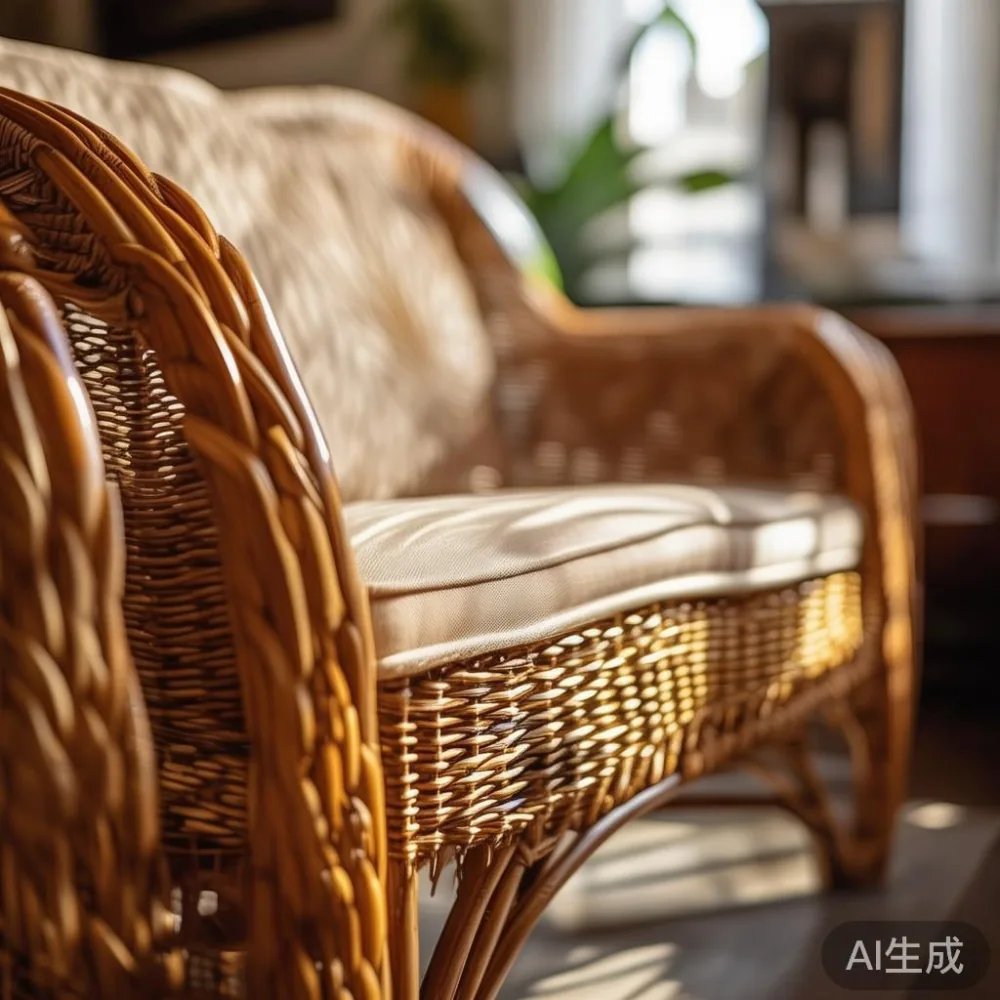
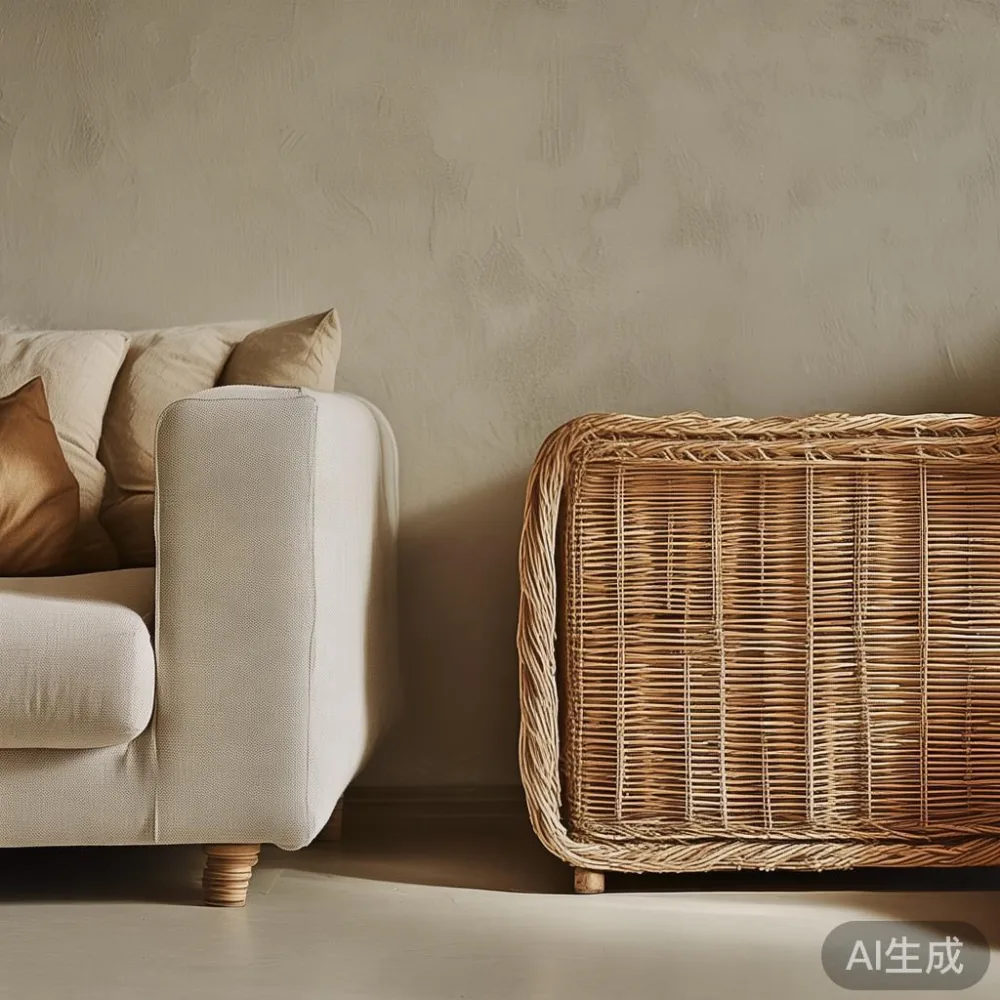
More than most buyers expect. Rattan furniture and solid wood are paired in the light luxury market because the cane work softens the visual weight of an oak or ash frame, and it also gives a mid range piece a higher end silhouette. A rattan backed dining chair built on a solid beech frame retails for SGD 180 to 320 per chair, while an all wood version of the same chair sits at SGD 140 to 240. The rattan itself is a SGD 30 to 60 material difference, but the perceived value jump is much larger, which is why rattan furniture shows up in both French and American light luxury collections as a styling accent on headboards, side chairs, and cabinet door panels. The same goes for a solid wood sofa with rattan woven back panels, a combination that has become a Punggol condo favourite for its breathable feel in Singapore's climate.
What does rattan furniture teach us about styling and proportions?
Styling cues from rattan furniture translate surprisingly well into all solid wood rooms. The trick is contrast: a heavy oak bed frame reads better when paired with a slim rattan headboard insert, because the eye gets a place to rest. A bulky walnut wardrobe looks lighter with rattan door panels behind a thin timber frame. I used this exact move in a Tampines BTO consultation last month, pairing a SGD 2,400 solid ash bed with a rattan headboard from MIDHILL's catalogue, and the result was a room that felt 30 percent larger without changing the square footage. It is a useful reference for anyone figuring out how to style a Japanese inspired bed in a compact room, since the low platform silhouette and the breathable natural fibre both work toward a calmer visual weight.
How should I budget for a full room without overpaying?
A practical Singapore room budget for a primary bedroom, working from real landed prices in 2024 and 2025, looks roughly like this. A solid wood bed frame in oak or ash: SGD 1,800 to 3,400. A two door or three door solid wood wardrobe: SGD 2,200 to 4,800 depending on internal fit outs. Two nightstands: SGD 600 to 1,100 for the pair. A 1.6 to 1.8 m dining table in solid oak: SGD 1,600 to 3,200. A six seat solid wood sofa with rattan accents: SGD 3,400 to 6,800. A 120 cm marble or sintered stone coffee table: SGD 900 to 2,400. Add 9 percent GST, SGD 80 to 280 for delivery to a non landed address, and you have a realistic all in number. Reserve 8 to 12 percent of the total as a contingency for accessories, rugs, and the small refinishing kit that will keep the wood looking good for the next decade.
What does the warranty actually cover, and why lifetime refinishing matters?
Most structural warranties cover joint failure, wood cracking under normal use, and drawer slide defects. They do not cover humidity related movement, surface scratches, or fading from direct sunlight, all of which are common in Singapore flats with floor to ceiling windows. A lifetime refinishing commitment, which MIDHILL includes on its core solid wood range, closes that gap by giving you a scheduled sand and re oil at a discounted rate, often around SGD 180 to 380 per dining table top depending on size. Over a 20 year horizon, two refinishing passes plus a new set of soft close hinges will keep a SGD 3,500 piece looking and feeling like new for a fraction of the replacement cost. That is the kind of math that turns a higher sticker price into a lower lifetime cost, and it is also why I now send friends toward makers who publish the warranty in writing rather than as a marketing footer.
So, what should I actually look for on the spec sheet?
Six line items. First, the species, with the Latin or trade name, not just "hardwood". Second, the construction method, including whether panels are solid, joined, or veneered. Third, the finished dimensions in cm and the actual weight in kg. Fourth, the joinery types at load bearing corners. Fifth, the finish, including the number of coats and the brand or type of oil, wax, or lacquer. Sixth, the warranty terms and what counts as a structural failure. If a spec sheet is missing two or more of these, treat the price as a starting point, not a final figure. And if you are torn between two pieces at very different prices, ask the seller to walk you through the cubic metre cost of timber, the joinery method, and the hardware brand. The answer usually justifies the gap, or it tells you to walk away.