How to Match Rattan Furniture to a Warm Minimal Interior
I learned the hard way last October. I had just finished renovating a 92 sqm four-room HDB in Bedok Reservoir, and I ordered a glossy black modular sofa because the showroom photo looked "clean." It arrived in three boxes, weighed a combined 78 kg, and within a week the resin shell had scratched against the lift door on the 12th floor (lift internal: 1.1 m wide x 1.4 m deep, by the way). I returned it, swallowed the 14-day policy window, and started again. This time I built the room around one warm hero piece — a solid wood sofa frame with a hand-woven rattan back panel — and the entire 28 sqm living-dining area snapped into place. That single swap is what this guide is about.
What does "warm minimal" actually look like in a Singapore HDB?
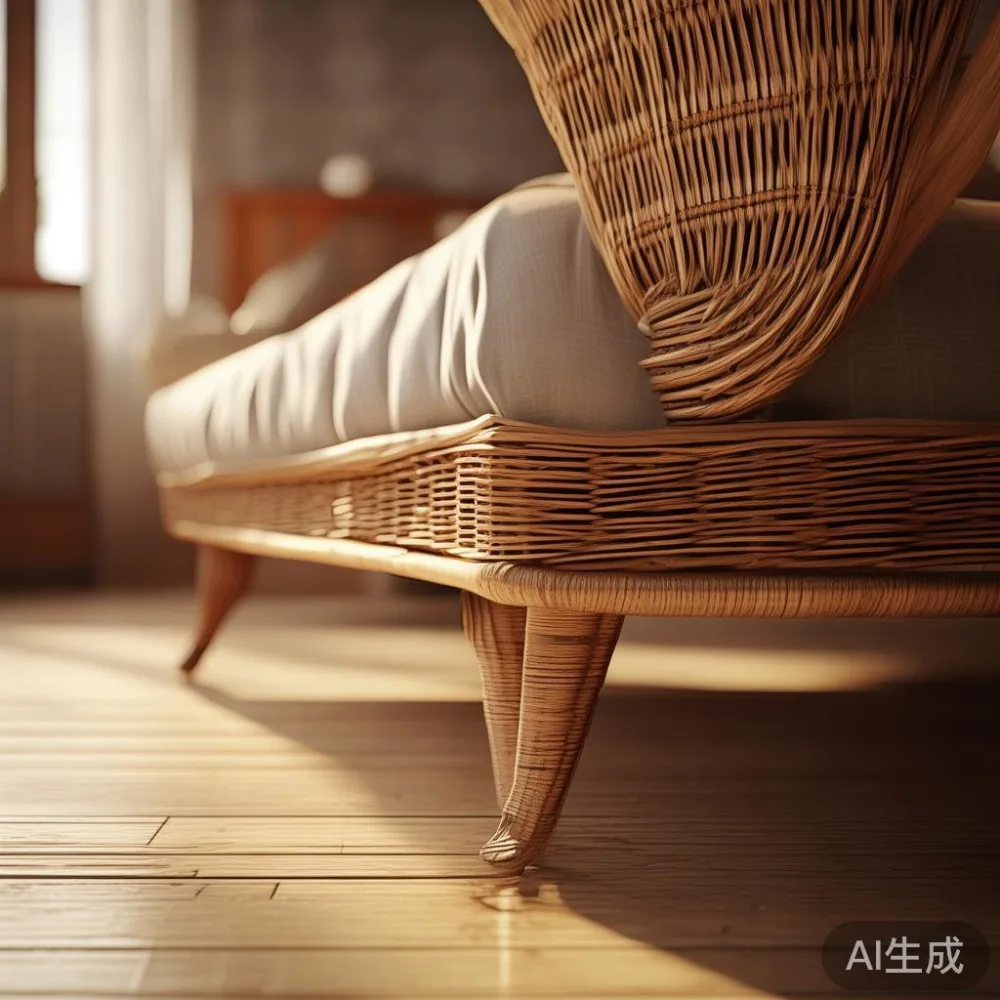
Warm minimal is not the cold, gallery-style minimal you see in magazine shoots of 300 sqm condos. It is the small-space version: a Tampines five-room flat with cream walls (a warm off-white, around 9% yellow undertone, never blue-grey), a light oak or ash floor in 190 mm wide planks, and one piece of furniture per zone that does visual heavy lifting. The colour palette stays narrow — typically three tones: a warm white, a mid-tone timber (oak, ash, or light walnut at around 1,200–1,800 SGD per cubic metre for raw timber), and a single accent. The accent is almost always texture: a hand-woven rattan panel, a brushed brass handle, a bouclé cushion. That is where rattan furniture earns its keep. A woven rattan headboard, for example, casts micro-shadows across a white wall at 7 pm when the downlight hits it, and that single effect makes a 12 sqm bedroom feel curated rather than empty.
You will also want to watch the proportions. HDB corridor widths are typically 1.2 m, and front doors measure 0.9 m wide, so anything you buy has to clear both. A standard king-size bed frame at 183 cm x 198 cm will fit through a HDB door only if the headboard separates from the side rails, which on a MIDHILL bed frame it does — two boxes, the heaviest under 32 kg, and my mover got it up to the 14th storey in about 22 minutes.
Is a dining chair worth the price?
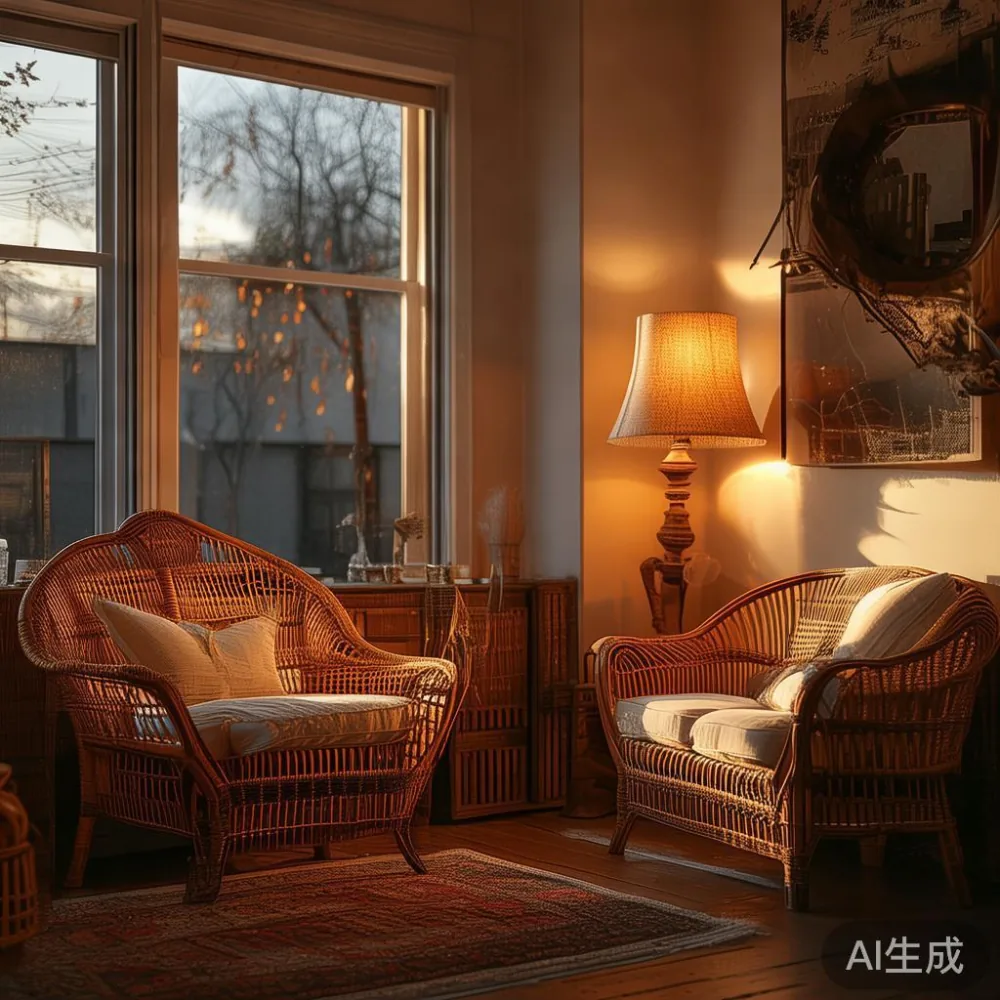
Yes — a solid wood dining chair is worth the price because it is the piece you touch, push in, and sit on 1,000+ times a year, so its tactile quality shows up faster than any other item in the room. A well-made chair, kiln-dried to 8–10% moisture content so it does not crack under Singapore's 80% average humidity, will hold its joint geometry for 10+ years. That is also the typical structural warranty a serious workshop offers, which is one of the quieter indicators of quality: if a maker will warranty chair joints for a decade, the timber inside is properly seasoned.
For a 4-seater dining set in an HDB, expect to budget 1,400–2,200 SGD for a solid ash table (140 cm x 80 cm fits a typical HDB dining zone without crowding the walkway) plus four chairs at 180–260 SGD each. Cheaper chairs use rubberwood with a 3 mm veneer that peels within 18 months in our humidity. The price jump to genuine rattan furniture — a chair with a hand-caned seat panel rather than printed fabric — is usually 220–320 SGD per chair, and the trade is worth it for two reasons: the caning ventilates (no sticky-back syndrome at 32°C) and the surface develops a softer patina over years rather than wearing out.
How do I anchor the living room without making it heavy?
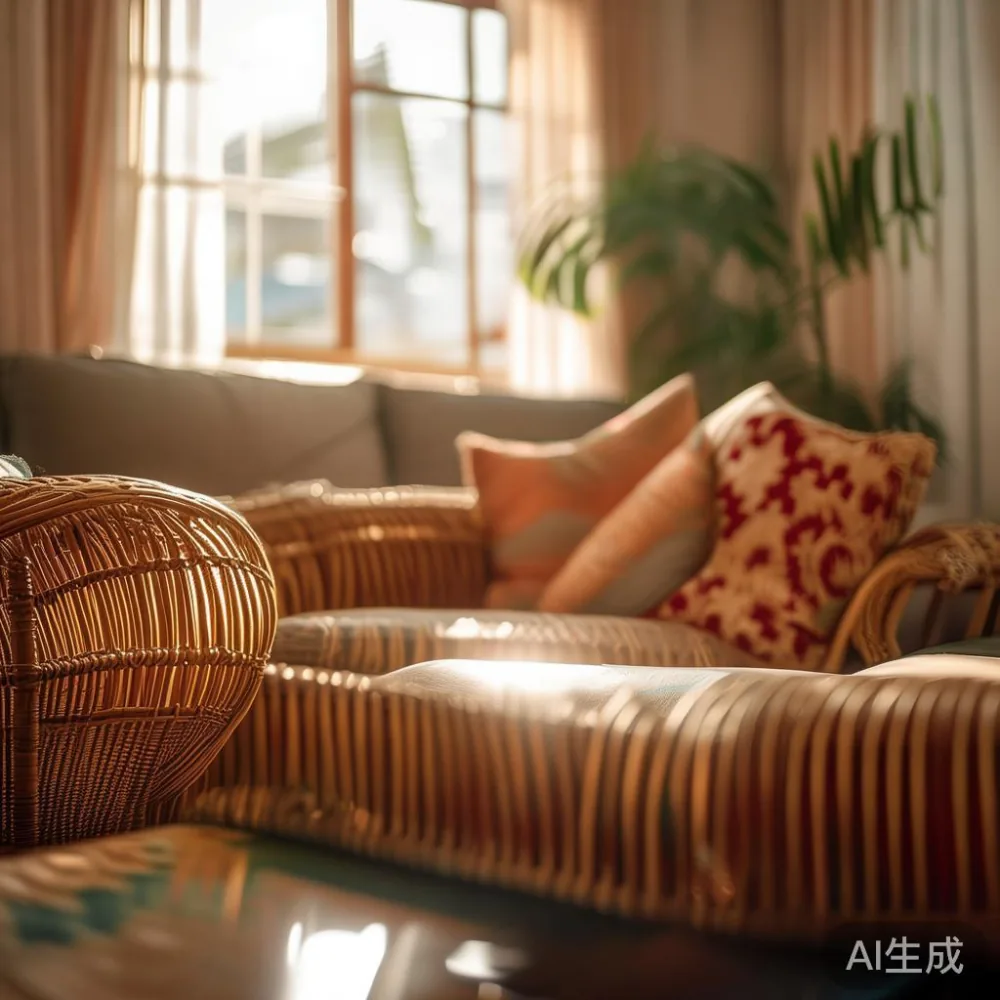
Anchor it with one low-profile solid wood sofa on a 3-2-1 layout, keep the wall above it empty or hold a single piece of art, and let the texture do the work. In a Punggol eco-HDB I visited last month, the owner had placed a 220 cm x 95 cm solid wood sofa in natural ash about 18 cm off the floor, paired with a 120 cm round travertine marble table in front, and the visual weight sat exactly where it should — on the ground plane, not the wall. The room did not feel "busy" or "styled," it felt composed.
The same logic applies to a Nordic corner sofa dubai — a configuration you sometimes see imported here, where the L-shape wraps a low coffee table to define the conversation zone in an open-plan condo. The principle translates: the L-shape replaces the need for a separate console or side table, which is useful in a 45 sqm one-bedder in District 19 where every 30 cm counts. Keep the sofa arms below 12 cm in width so the silhouette reads slim, and choose a fabric within the warm-neutral band — oat, sand, putty, or a quiet sage if you want colour.
How do I match a dining table, wardrobe, and nightstand so the room feels cohesive?
Pick one timber species and stick to it across all five main pieces — sofa frame, dining table, bed frame, wardrobe, and nightstand — and let the rattan or marble accents vary per zone. A consistent ash frame across the dining table (say 160 cm x 80 cm for a six-seater) and the nightstand (45 cm x 40 cm x 55 cm) makes a small bedroom and adjacent dining zone read as one composition. The MIDHILL showroom in Foshan pairs ash frames with woven rattan drawer fronts on nightstands and with caned wardrobe panels, and the rhythm is unusually calm — your eye does not have to re-process the timber grain as it moves through the home.
For the wardrobe, sizing is the real HDB problem. A 3-door sliding wardrobe runs 240–270 cm wide and 60 cm deep, which clears most HDB bedroom walls (typically 3.0–3.6 m long). Allow 5 cm clearance on each side for installation tolerance and for the 18 mm back panel to expand in monsoon season. Internally, plan for two hanging zones (long dresses at 150 cm, shirts at 90 cm), three to four drawers (each 18 cm deep is the sweet spot), and at least one shelf at 35 cm height for folded knitwear. If you go custom through a Foshan direct workshop, expect 2,400–3,800 SGD for a fully fitted 3-door ash wardrobe with rattan panel inserts, versus 5,500+ SGD for the equivalent European brand retail.
The nightstand is the easiest piece to get right. Two of them, flanking the bed, in the same finish as the bed frame, with a single drawer and an open shelf. Anything taller than 60 cm will fight the bed's headboard; anything deeper than 42 cm will crowd the walking path to the door. A 1.2 cm marble top on a nightstand is a small touch of French light luxury — the cool stone against the warm timber is the kind of detail that reads as "expensive" without shouting.
What about a marble table or accent piece — is the upkeep realistic?
Yes, if you accept two ground rules: seal it on delivery and wipe spills within 20 minutes. Marble is porous travertine or honed Carrara, both of which stain from coffee, soy sauce, and — the real Singapore killer — sambal. A 110 cm round marble table costs 1,800–2,600 SGD depending on whether the top is 18 mm or a thicker 25 mm slab, and adds about 55 kg to the room, which is fine on any HDB floor (load capacity is roughly 150 kg per sqm for residential slabs, and a single coffee table is well under that).
Seal it with a penetrating sealer every 12 months — a 250 ml bottle costs about 28 SGD and covers two applications. After that, day-to-day care is a damp microfibre cloth and a pH-neutral stone spray. Acidic cleaners (vinegar, lemon, most bathroom descalers) will etch the surface in under five minutes, which is the one mistake people make. With that routine, a marble top will outlast every sofa fabric you own.
How do I plan delivery, GST, and the lift access without surprises?
Plan delivery for a weekday morning between 9 am and 12 pm, confirm lift dimensions in advance, and budget 9% GST on the landed cost. Singapore HDB lifts typically measure 1.1 m wide x 1.4 m deep x 2.3 m tall, with a 630 kg weight limit. A king bed frame in two boxes (the heaviest box around 32 kg) is comfortable; a 220 cm marble table top in a single crate (around 95 kg, often on a wooden A-frame) is not — it usually has to come up the service lift, which means coordinating with the MCST and booking a 90-minute loading window. Foshan-to-Singapore sea freight averages 18–24 days, air freight 6–9 days, and full container load (FCL) is roughly 1,800–2,400 USD for a 20 ft container from Yantian or Nansha to Tuas.
Free shipping kicks in above US$350 (about SGD 475 at today's 1.36 rate), which any single dining table or bed frame clears easily. The 14-day return window is enough time to inspect every joint and drawer slide before the courier leaves, so do that check on the spot — open every drawer, sit on the chair, swing the wardrobe doors. For pieces shipped direct from Foshan workshops like MIDHILL, the lifetime refinishing offer is the underrated perk: you can sand and re-oil the dining table top in year eight and it comes back looking new, which is something flat-pack furniture simply cannot do.
What are the three mistakes I see most often in warm minimal HDB rooms?
The three mistakes are: matching the floor and furniture timber too closely, ignoring ceiling height, and over-styling the console. Matching everything to the exact same oak tone flattens the room — you want a 20–30% tonal step between floor and main furniture, so a light ash floor pairs with a slightly warmer timber on the bed frame and dining table. Ceiling height in most HDB flats is 2.6 m, and once you add a 12–15 cm recessed light coffer and a 25 cm pendant, you have lost nearly 40 cm of vertical space. A low-profile solid wood sofa at 78 cm back height and a bed frame with a 95 cm headboard keeps the room breathing. Over-styled consoles — five candles, two vases, three art frames — are the fastest way to undo the calm; one object, or none, is the warm minimal rule.
If you keep those three points in mind, the room will hold together regardless of whether you live in a 65 sqm two-bedder in Bedok North or a 110 sqm jumbo flat in Punggol. Build around texture rather than colour, anchor with one warm hero piece, and let the negative space do as much work as the furniture itself.