Solid Wood Furniture Price Drivers
Solid wood furniture can cost several hundred dollars or several thousand dollars, yet the timber name on the sales sheet does not tell the whole price story. Grain pattern, moisture control, joinery, dimensions, hardware, finish, and delivery access all affect the final figure. In Singapore, a piece that looks modest in a showroom may require a rare delivery route, extra protective packaging, or 3 people to carry it into a Tampines HDB lift.
This guide explains those costs without treating price as a measure of quality. It also considers the practical limits of apartments in Tampines, Bedok, and Punggol, where corridors, turning radii, lift doors, and GST affect what a buyer can reasonably spend.
What material should you pay for in solid wood furniture?
The starting point is the wood itself, but “solid wood” is not a single species or construction method. A solid wood dining table may use oak, ash, beech, teak, walnut, or another approved timber. Each has different working properties, availability, yield, and market pricing. A 220 cm table made from well-seasoned hardwood can weigh 65–110 kg, while a large engineered-wood panel of similar visual size may weigh only 45–75 kg.

Grade matters too. Select-grade material with consistent colour and long, clear grain costs more because larger usable sections come from carefully chosen logs. Character-grade timber may include knots, sapwood, or darker grain. Those marks are not automatically defects, but they change appearance and sometimes strength. Ask whether sapwood, knots, filled cracks, and repaired areas are allowed.
Thickness is easier to compare than species. For a dining table, a top around 20–25 mm gives a substantial appearance, while a 30–40 mm top can add mass and visual weight. Check whether “solid” covers the top, rails, legs, frame, and drawer parts, or only the most visible surfaces. Veneered plywood or particleboard used inside drawers and rear panels may be sensible; concealed mixed construction is not the same as a misleading all-solid claim.
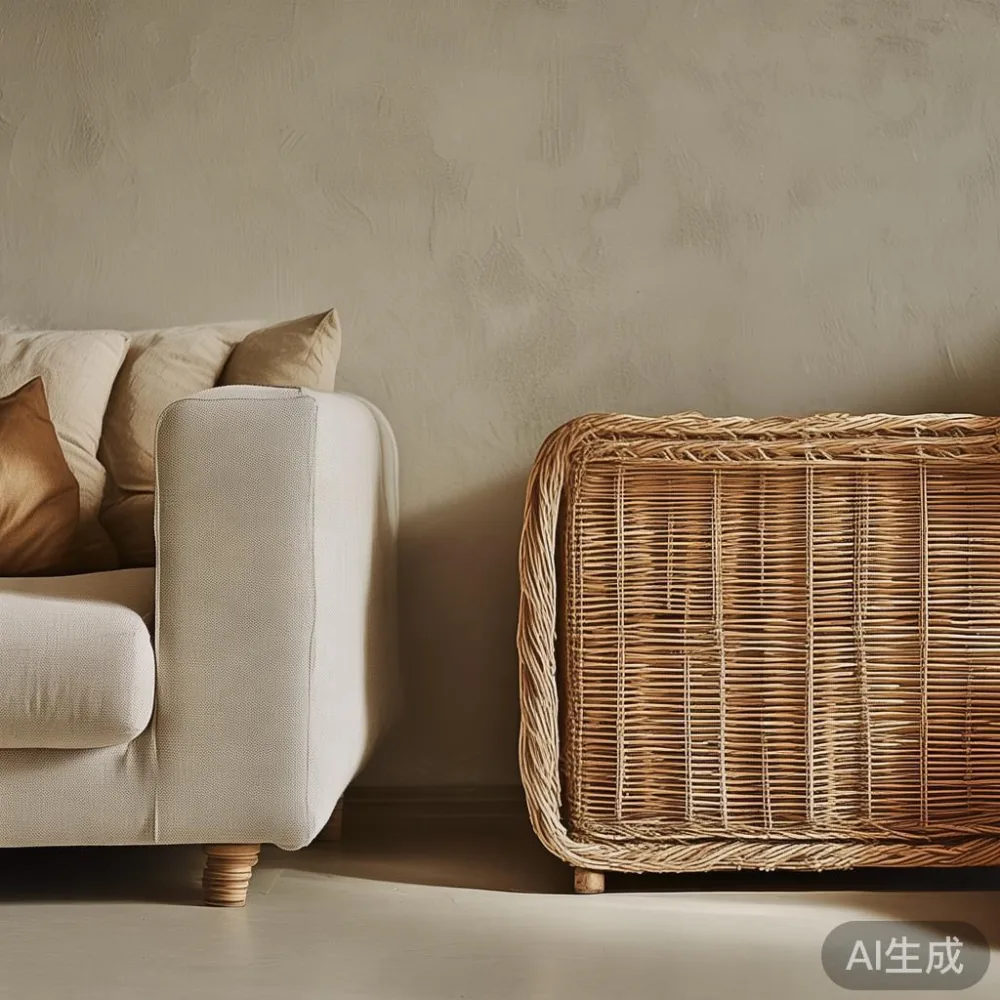
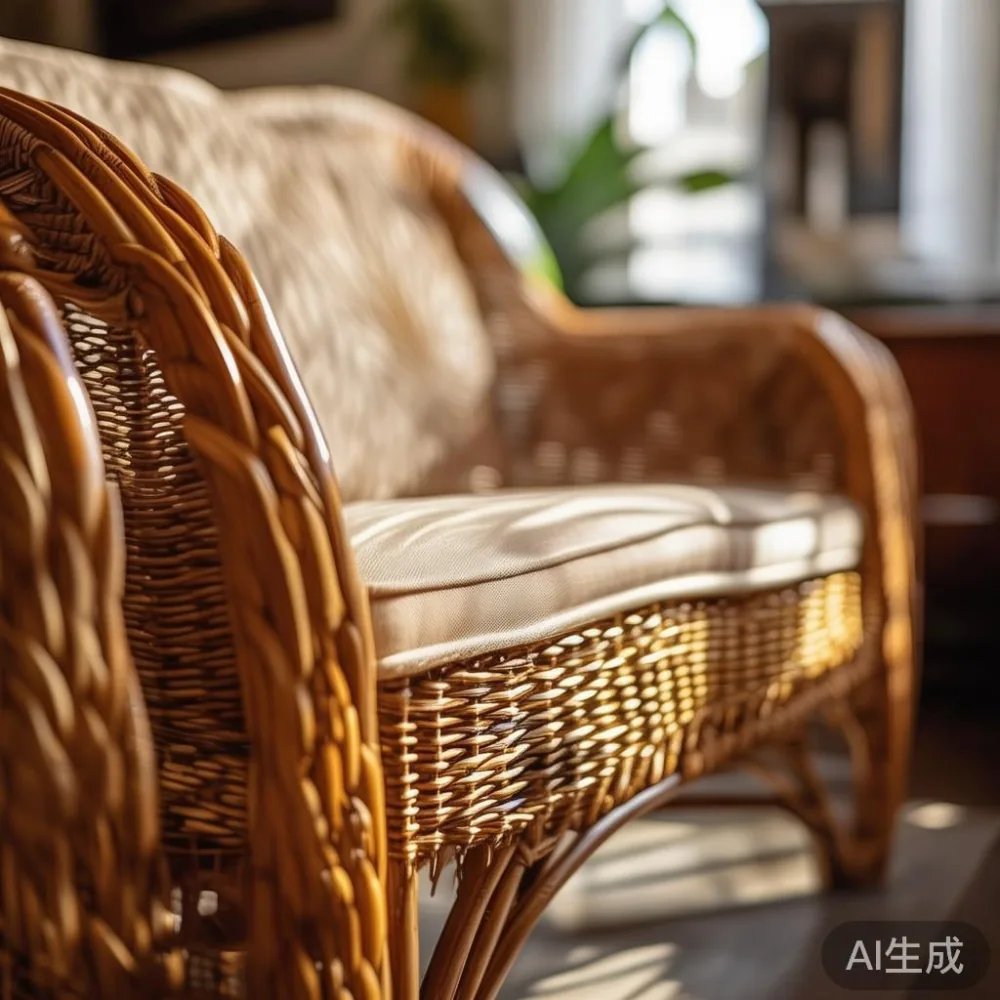
For outdoor or balcony use, teak and other suitable durable species may justify a premium, but indoor furniture should be judged indoors. Untreated rattan furniture can also vary widely because rattan poles differ in diameter, age, moisture content, and weaving consistency. A 65 cm rattan stool using 24–30 mm poles generally looks more substantial than one made with 18–22 mm poles, yet neither figure alone proves durability.
Wood movement is another real material cost. A 180 cm solid wood bed frame may expand or contract by several millimetres as humidity changes. A competent maker will use appropriate joinery and fixing methods rather than trapping the timber too tightly. That engineering may add cost, but it reduces splitting, bowing, and loose joints.
How much should joinery, labour, and finishes add to the price?
Labour is often the largest difference between two furniture pieces that use the same timber. A solid wood sofa can use hardwood in the base, seat frame, arms, and back supports, with foam, fabric, webbing, springs, or a combination for comfort. A 220 cm sofa may contain 45–70 kg of timber depending on its construction. Compare frame coverage, suspension, cushion density, and removable covers instead of looking only at the external wood.
Joinery tells you how parts work together. Mortise-and-tenon joints, dowels, bridle joints, and well-positioned screws can distribute loads effectively. Cheap construction may rely on short screws inserted into thin edges or packets of dowels. Neither method identifies quality by appearance alone; the joint must suit the load and timber movement.
A solid wood bed frame needs secure corner joints, centre support, and sensible spacing between slats. A 160 cm queen frame may use 10–14 slats, with centre support over roughly 70–90 cm. A wardrobe needs aligned hinges, usable internal depth, and partitions that do not twist under load. A nightstand needs full-extension hardware if the drawer must remain stable when open. These functional details require machining accuracy and assembly time.
Finish is easier to hide in marketing than in use. Sealed finishes are generally easier to clean than thick open-pore oils, while hardwax oils can be repaired locally. Colour matching, sanding between coats, and protecting all six faces take time. A hard-wearing finish should have a clear maintenance method and a documented sheen level. For pale woods, whitewashing may reduce small marks; darker walnut stains can make them more visible.
Light-luxury positioning is not simply a gold label. French light luxury often balances pale timber, curved profiles, restrained hardware, and tactile upholstery. American light luxury commonly uses familiar silhouettes, deep seat cushions, and darker stained woods. Post-modern light luxury may combine clean planes with one controlled statement detail. The target should be visible in the proportions and workmanship rather than added decoration.
Why do solid wood dining tables and coffee tables have such different prices?
A dining table has the highest practical demands in most homes. A 200–220 cm solid wood dining table must resist uneven loads, repeated movement, spills, and daily assembly if it is designed to fold. The top may weigh 35–65 kg by itself. Breadboard ends, expansion joints, apron placement, and leg geometry all influence the price.
Shape affects yield and labour. A rectangular top can be cut efficiently from boards, whereas a live-edge or softly irregular top requires visual selection and more machining. Circular tables use different cutting patterns; 4 leaves assembled into a 140 cm round table may cost more than the same timber used for a plain rectangular top.
A light luxury coffee table uses a different cost equation. The top may be timber or marble. Marble tables carry separate costs for slab selection, edge work, support, and weight. A 120 cm marble coffee table can weigh 45–80 kg, and a natural stone base may raise that figure to 90 kg. One 55 kg tabletop may therefore cost more to deliver than a comparable wooden table.
Dimensions must be measured in usable space, not just room width. Leave at least 75–90 cm from the table edge to a wall or major furniture piece for chair movement and service access. Behind a dining chair, allow about 90–120 cm when the route is used frequently. In a compact HDB dining area, a 160–180 cm table may function better than a 220 cm model even if the larger one carries a lower sticker price.
How should Singapore delivery and installation change your comparison?
Delivery is not an afterthought in Singapore. Measure the lift opening, cabin depth, cabin width, doorway, and corridor turning space before ordering. A lift door may measure only 80–90 cm, while the usable cabin depth is around 130–140 cm in some blocks. Furniture that fits the corridor but not the lift can face removal or an unsuccessful second delivery attempt.
Ask for packed dimensions and weight, not only product dimensions. Packing may add 4–10 cm around legs and rails. A 210 cm table might arrive in protective foam within a 224 cm package, while the heaviest part may be the tabletop rather than the base. Stair carries require additional labour and can take longer than lift deliveries.
GST must be treated separately from factory or retail pricing when comparing quotes. At the current standard rate of 9%, a SGD 2,000 before-GST item becomes SGD 2,180 after GST. Delivery, assembly, protection, and installation can also be taxable or quoted as separate services depending on the arrangement, so request an itemised total.
Timing matters because imported components, seasonal timber availability, and project schedules affect lead times. A stock chair may leave in 5–10 working days, while a made-to-measure solid wood dining table or wardrobe may need 30–60 days. Marble may add 7–14 days for slab sourcing and finishing. Delivery days are estimates, and access constraints should be disclosed before dispatch.
What should a solid wood sofa, bed frame, wardrobe, or nightstand cost?
Prices vary with construction and local service, but concrete ranges help buyers spot whether a quotation is being compared like with like.
A 160–180 cm solid wood sofa with hardwood framing, upholstered seats, back cushions, and ordinary fabric may fall around SGD 1,800–3,800. A larger 210–240 cm model with more timber, thicker cushions, removable covers, or upgraded suspension may range from SGD 3,200–6,500. Frame coverage and suspension matter more than an ornamental wooden shell.
A queen-size solid wood bed frame may range from SGD 900–2,200 for a straightforward hardwood design and SGD 2,000–4,200 for a more substantial or tailored version. Slat count, centre support, headboard construction, platform design, and mattress clearance influence the result. Mattress and linen bundles should not be treated as part of the frame price unless the quotation states that clearly.
A 150–180 cm solid wood wardrobe may fall around SGD 1,800–4,500. Tall fitted wardrobes may reach SGD 4,000–7,500 because internal drawers, hanging rails, mirrors, and installation add complexity. Confirm carcass and fronts, usable internal depth, drawer runners, back-panel material, and whether wall fixing is included.
A 45–55 cm solid wood nightstand may cost about SGD 350–900. A marble-topped version may cost SGD 700–1,500. Small dimensions can still command a premium when a maker uses solid timber throughout, tapered legs, detailed drawers, and a finish applied by hand.
These are planning ranges, not guarantees. A search for under 2000 Nordic furniture or under 2000 French furniture can produce visually similar low-price pieces, yet timber species and construction may differ. Comparing reports that appear in top 10 Minimalist furniture round-ups can be useful only when measurements, materials, delivery terms, and warranty conditions are included.
Is a European accent chair worth paying more for?
An accent chair has a smaller frame but more exposed detail. Curved backs, shaped arms, joinery, upholstery, and finish alignment can take substantial time. A European light luxury accent chair in solid ash, oak, or walnut may cost SGD 900–2,200, while hand-finished leather or a marble-look top can move it higher.
One European light luxury accent chair may appear twice in a design brief without indicating two purchases; it can also be one physical chair referenced for two comparison points. More practical terms are seat width, seat depth, arm clearance, and total weight. A room with 75 cm behind the chair may be fine, but 90 cm is better where people pass regularly.
For mixed-material interiors, search terms such as top 10 Italian light luxury furniture or European light luxury accent chair can help identify the intended look. They should not replace inspection. Sit for 10 minutes, check level feet, test the joints, and confirm the fabric composition before paying.
What warranty, returns, and lifetime services actually protect?
Price comparisons should include risk. Check whether structural coverage applies to joints, frames, and approved uses, and whether it excludes accidental damage, incorrect assembly, or movement from unstable buildings. A 10-year structural warranty can be meaningful, but exclusions and claim procedures matter more than the number printed on a brochure.
Wood can change colour under sunlight and humidity. Ask whether refinishing includes labour, transport, and the number of eligible visits. A promise of lifetime refinishing may apply only to original items, documented serial numbers, and normal wear. Find out whether customers supply coatings, how long the process takes, and whether damage is assessed separately.
Return terms should also be practical. A 14-day return period gives time to inspect scale, finish, and condition, but bulky items may require collection, suitable packaging, and return-freight terms. Confirm whether made-to-measure pieces, installed wardrobes, and custom-finished items are returnable.
MIDHILL furniture can be considered through these lifecycle questions: what is covered, who carries it, and for how long? MIDHILL’s stated 10-year structural warranty, lifetime refinishing policy, 14-day returns, and free shipping above US$350 provide useful reference points, although currency conversion, Singapore GST, delivery access, and local charges still need to be checked in the final quotation.
How do you compare two quotations without choosing the wrong bargain?
Ask both sellers for a specification sheet. Record the species, grade, dimensions, weight, timber parts, joinery, finish layers, hardware, upholstery, packed size, assembly, delivery time, and total after GST. A lower quotation that says only “solid wood furniture” is not comparable to one showing every component.
Use a ruler, tape measure, and weight estimate rather than visual scale. A dining table advertised at 180 cm may have a 180 cm top but only 146 cm between legs, reducing chair clearance. A sofa listed at 220 cm may measure 210 cm across the arms. A wardrobe listed at 180 cm may have a 176 cm carcass and a 2 cm plinth. Small differences affect whether a piece fits a Tampines or Punggol room.
Last month I visited my colleague’s Bishan condo project and watched two nearly identical dining tables being unloaded. The timber was the same species and grade, but one had a fitted tenon detail and a hand-sanded matte finish; the other had a painted, filled surface. Their quoted prices differed by SGD 360. Under raking light, filler texture and sheen differences were visible. The lesson was simple: close inspection revealed more than the wood name.
For a mixed home, rattan furniture may sit beside solid wood without feeling disconnected. Match rattan diameter and timber tone, repeat one metal finish, and keep colour families within about two neutral groups. This approach also suits searches for a light luxury coffee table, under 2000 French furniture, or a European light luxury accent chair, provided fit and construction remain the priorities.
A fair solid wood price pays for material, labour, function, delivery, and long-term support. It does not require perfect timber, invisible construction, or imported parts for their own sake. Confirm those details, test the piece in the room, and review the total cost before ordering.