Solid Wood Furniture Pricing in Singapore: What You Are Actually Paying For
Solid wood furniture can cost SGD 680 for a dining table or more than SGD 8,000 for a wardrobe, yet the product pages often describe both as solid wood. The real difference lies in timber grade, moisture control, joinery, hardware, finishing, size, and the number of hands involved before delivery. For Singapore homeowners furnishing HDB flats and condos in Tampines, Bedok, and Punggol, price is also shaped by corridor, lift, and staircase access.
MIDHILL, a Foshan solid wood furniture maker established in 2008 and exporting to more than 15 countries, provides a useful example of how a factory quotation becomes a household purchase. Its 10-year structural warranty and lifetime refinishing service affect long-term value, but they do not replace the need to examine what sits inside the price tag.
This guide explains the measurable cost drivers behind a solid wood sofa, bed frame, dining table, wardrobe, nightstand, and marble table. It also shows why rattan furniture deserves separate consideration when natural material, visual lightness, and humid-climate performance matter.

What determines the price of solid wood furniture?
The first factor is not simply whether a piece says “solid wood.” It is which species is used, where that wood appears, and how much high-grade material the design requires. Solid wood dining tables using kiln-dried oak may command a higher price than pieces using lower-cost hardwoods or mixed solid-wood components. Veneered panels can be perfectly serviceable, yet they offer a different construction profile from a table with a 40 mm solid-wood top.
Wood species carries different figures. Teak is often selected for its stability and resistance to moisture; oak brings pronounced grain and substantial weight; walnut offers a darker, more decorative character. Prices can shift by 20–60% between comparable components because of grade, yield, and preparation. Ask for the exact species rather than accepting “wood” as a complete description.
Thickness matters too. Moving a dining table top from 25 mm to 40 mm can add 12–25% to material and labour costs. Weight can rise from about 45 kg to 75 kg on a six-seat table, which later affects delivery planning in an HDB block. A clear model specification should list top dimensions, frame timber, drawer construction, and the weight of the assembled item.
Joinery is another visible cost driver. Mortise-and-tenon joints, dowelled drawer boxes, and reinforced corners take more time than simple concealed screws and mechanical fittings. The joint may not receive applause, but it determines whether a bed frame stays quiet and stable through repeated use. A 10-year structural warranty is meaningful here because it places accountability on the maker rather than leaving the buyer to infer durability from appearance.
How much do machining, finishing, and quality control add?
After the timber is selected, machining absorbs time, energy, and tooling. Flat surfaces may be sanded through several grits, while curved parts need slower cutting and more careful handling. CNC routing can improve repeatability, but hand fitting, defect inspection, and assembly checks still require labour. A 200 cm dining table with sculpted edges is more expensive to produce than a 160 cm slab-style table with minimal shaping.
Finishing forms a substantial part of the quotation. Hardwax oil, matte lacquer, stains, and sealants have different preparation requirements and material costs. A 180 cm bed frame may need SGD 120–280 for a multi-coat factory finish; an open-grain oak dining table may need periodic maintenance instead. If two products appear similar, ask whether one uses a factory-applied hardwax oil and the other requires on-site finishing.
Quality control should also be treated as a cost rather than a hidden detail. At MIDHILL’s Foshan factory, inspection can include checking dimensions, surface finish, joints, drawer movement, hardware alignment, moisture response, and packaging. Not every uneven grain line is a defect, but warping, splits, loose joints, and finish inconsistencies are. A small scratched bedside table may be easy to replace; a flawed 220 cm wardrobe can obstruct an entire installation schedule.
Hardware provides another measurable difference. Soft-close drawer runners, heavier hinges, reinforced steel brackets, and adjustable legs can add SGD 60–600 per unit depending on the product and quantities used. For a wardrobe, premium drawer and door hardware may account for roughly 8–15% of the item price. That cost is justified when movement is smooth and parts remain serviceable, not merely when a finish looks glossy.
Is a solid wood sofa more expensive than a fabric sofa?
A solid wood sofa combines a timber structure with upholstery, foam, springs or webbing, covers, and assembly labour. Depending on the design, a timber frame may add SGD 450–2,200 before upholstery. A three-seat solid wood sofa can therefore range from about SGD 2,400 to SGD 7,500, while fabric alone may account for 25–40% of the total.
The type of cover changes the result. Removable woven upholstery can support a residential look and simpler replacement, while leather or performance fabric raises input costs and requires pattern matching. Seat density, frame bracing, and the number of independently finished components also influence the figure. A solid wood sofa with a kiln-dried frame, tenon joints, and high-resilience foam can justify a higher price than a lightly built frame with flat-pack fittings.
For a Singapore condo, access should enter the calculation before purchase. A sofa box measuring 210 × 85 × 65 cm may fit a standard HDB lift, while a curved or rigidly packaged frame may require turning at the landing. Corridors of 110–140 cm can be manageable, but 90 cm corridors and stair turns require a site check. Some suppliers offer additional delivery and installation after the initial transport, with charges commonly adding SGD 80–250.
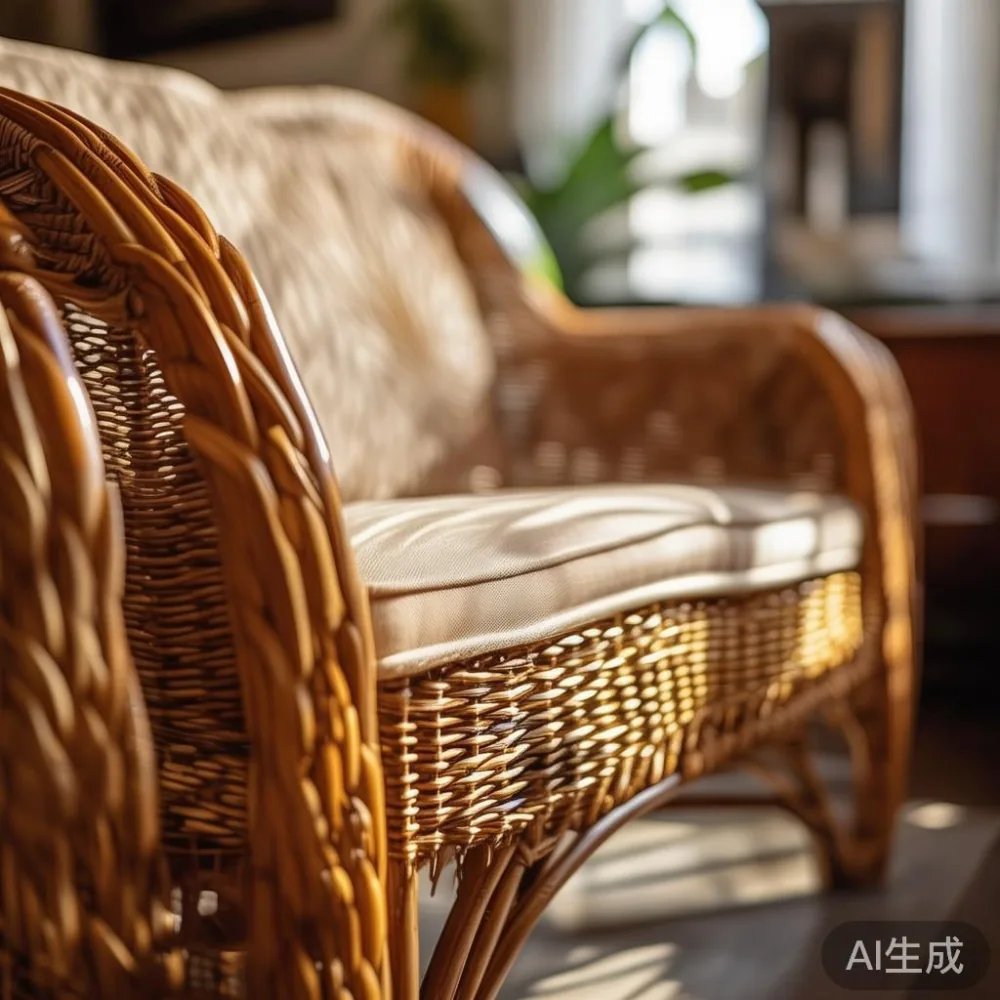
Curved rattan furniture has a related appeal: its open visual form makes a compact room feel less crowded. However, “rattan furniture” does not automatically mean the core structure is solid wood. The frame may use solid wood, rattan cane, woven synthetic fibre, or a combination. The price and care instructions should distinguish the actual material in each structural member, not rely on one broad category label.
How much should a bed frame, dining table, and wardrobe cost?
Regional retail examples provide only a starting point, not a universal price list. A straightforward solid wood bed frame in Singapore may sit around SGD 800–2,800, with wider or thicker designs reaching SGD 3,500. Slatted bases, higher headboards, under-bed storage, and matching side pieces can raise the total considerably.
Dining tables vary according to size and construction. A 140–160 cm table for four people may cost about SGD 1,200–3,200; a 200–220 cm table for six or eight people may range from SGD 2,600–6,500. Chairs sold separately can add another SGD 280–950 each. Natural stone or marble tops introduce another tier: a marble table can move from roughly SGD 2,800 to more than SGD 8,000 depending on slab selection, edge treatment, and support structure.
Wardrobes combine timber, doors, internal fittings, hardware, and installation. A two-door unit may begin near SGD 1,600, while fitted wardrobes with drawers, hanging sections, mirrors, and internal lighting can reach SGD 5,000–10,000 or above. A frequent pricing mistake is comparing the carcass price with the installed price. Delivery, levelling, toe-kick adjustment, and extra shelving can add SGD 250–900 to a Singapore project.
Before asking how to choose European wardrobe, compare the actual configuration rather than the country description alone. Confirm carcass material, back-panel thickness, hinge type, rail dimensions, drawer construction, and warranty coverage. If a design references European proportions, make sure its 220–280 cm height and 55–65 cm depth suit your HDB bedroom and lift.
What should you check before paying a solid wood furniture price?
Request a written quotation that separates the main variables. It should identify the species, dimensions, finish, hardware, delivery terms, and warranty. A statement such as “premium solid wood, SGD 4,280” leaves too much ambiguity. “220 cm oak dining table, 40 mm top, solid oak legs, matte lacquer, delivered to Punggol, SGD 4,280” creates something that can be checked.
Then test the information in the room. A 240 cm wardrobe may look luxurious but exceed a 120 cm lift doorway once packaged. A 45 kg nightstand with thick stone may be difficult to move through a narrow staircase. Ask for the packaged dimensions rather than only the product dimensions. Delivery within Singapore commonly takes 7–14 working days after production, while made-to-order work can require 4–8 weeks; custom pieces should carry a separately stated lead time.
GST treatment also matters to the final figure. Singapore GST is 9%. Consumer-facing prices often include GST, while business quotations may exclude it, so a SGD 3,000 before-GST amount becomes SGD 3,270 after GST. Compare identical tax treatment. MIDHILL’s free shipping threshold of US$350 does not define Singapore delivery, so obtain a local delivery quotation rather than assuming the overseas threshold applies.
Returns and long-term care form part of the value calculation. A 14-day return policy can reduce the risk of purchasing online, though the item should remain unused and in its original packaging. A 10-year structural warranty addresses long-term frame integrity, while lifetime refinishing can reduce future restoration costs. Neither promise removes the need to keep furniture away from prolonged dampness or direct heat.
Which style choices change the price without improving the furniture?
Some price differences come from visual complexity rather than better performance. A post-modern light luxury dining table with a sculptural base, mixed metals, and several finish transitions can cost 15–30% more than a simpler table with the same timber and structural dimensions. That premium may be appropriate for a prominent condo dining area, but it does not automatically mean stronger joinery or better moisture control.
American light luxury often pairs pale woods, neutral upholstery, and restrained ornament. French light luxury leans towards carved edges, curved profiles, and upholstered details. Both approaches require more machining and finishing when genuine ornamental elements are present. The important question is whether those details are integral to the construction or merely applied for appearance.
Keep scale disciplined in compact homes. For the light luxury TV console requirement, a 160–180 cm unit can offer drawers and closed storage while preserving a 90 cm circulation route. For Industrial for small living room, combine visible wood and metal lines with fewer bulky components; a 140 cm console and 30–40 cm depth often work better than an oversized unit that narrows the passage.
Decorative room planning can also affect product selection. Anyone learning how to style Japanese sofa in apartment should account for low-profile proportions, a calm palette, and wall clearance rather than simply choosing the lowest available floor clearance. For a classic bedroom, searching how to style French provincial wardrobe in room can reveal the value of matching cornice, mirror, and bedside details; this may require coordinated pieces rather than one oversized wardrobe purchase.
How does rattan furniture fit into the solid wood price comparison?
Rattan furniture occupies a useful middle ground between visual mass and decorative material cost. A woven rattan dining chair may cost SGD 280–850, and a rattan-backed dining chair or bench may range from SGD 350–1,100. A larger rattan sofa or cabinet can reach SGD 1,800–5,500 depending on the solid-wood frame, weaving method, cushioning, and finishing.
The exact material matters. Natural rattan requires cleaning and protection from moisture, while weather-resistant synthetic rattan can suit balcony or dining use. Neither should be placed directly against a wet bathroom wall. For high-rise living, the timber frame’s moisture treatment and the product’s total weight should be reviewed just as carefully as the weave.
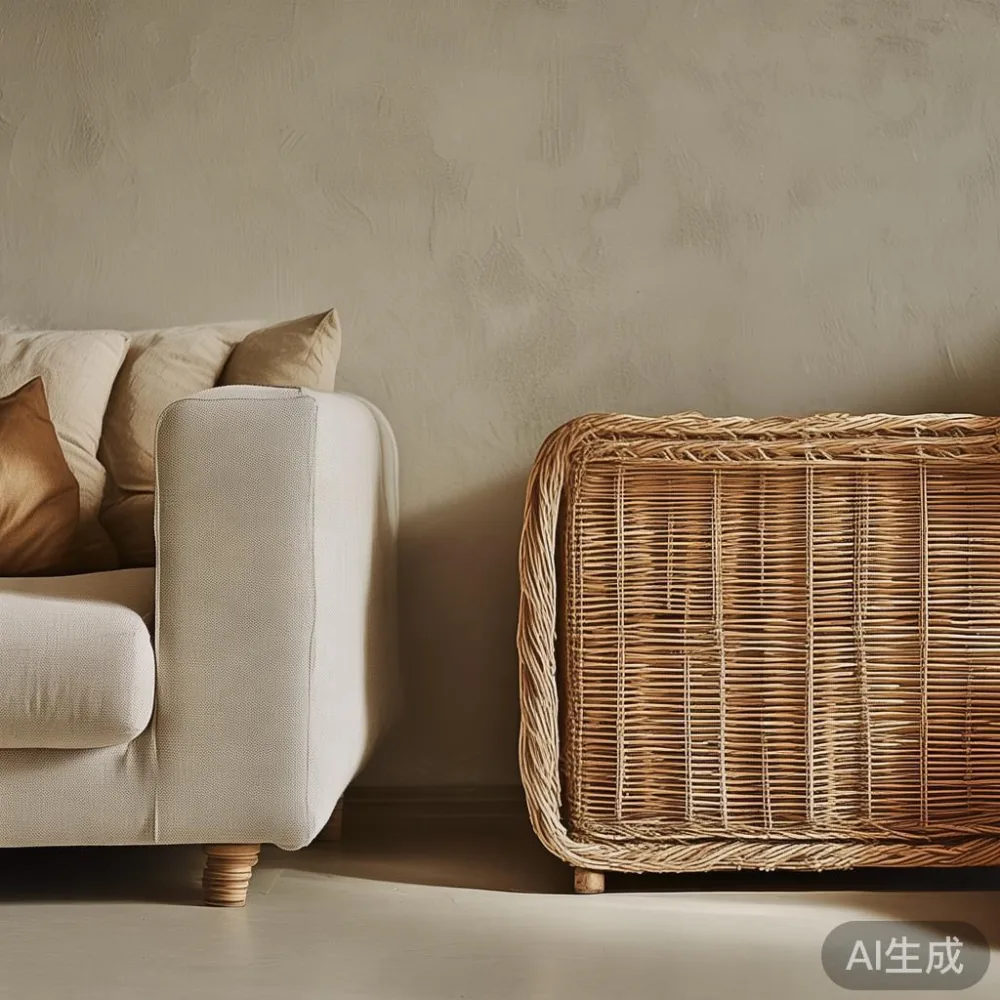
Open weave reduces the visual weight of a dining table or bed frame, but it does not reduce physical dimensions. A rattan dining chair with a 45 cm seat width may still require a lift door wider than 100 cm when assembled. If the chair is knock-down, confirm that the legs and seat separate without damaging the weave.
My colleague visited a Singapore apartment in Bedok last month to assess a rattan dining set before a move from Tampines. The lift door measured 90 cm, and the landing turn was tight. The original set, with fixed woven panels, was difficult to manoeuvre. A supplier confirmed that the legs could detach, reducing the largest package to 72 × 46 × 18 cm, and the installation then took 35 minutes. The practical lesson was simple: removable construction can save money because it reduces delivery labour and damage risk.
How should you compare two quotations fairly?
Compare like with like. Create a specification sheet for each item and record species, dimensions, thickness, joinery, finish, hardware, assembled weight, packaged size, delivery charge, installation charge, GST treatment, return terms, and warranty. If one quotation includes a marble table top and the other uses engineered stone, the difference is not an apples-to-apples timber comparison.
For a dining table, request the top thickness and underside construction. For a bed frame, ask about slat spacing and centre support. For a nightstand, confirm drawer material and runner type. For a wardrobe, check the back panel and adjustable internal fittings. These details affect longevity more than a small variation in stain colour.
Price per centimetre or price per kilogram is rarely enough on its own. A very heavy piece may be solid but badly engineered, while a lighter piece may use efficient joinery and stable timber. Value comes from performance under use: a dining table should remain steady across a 120 cm span; a wardrobe should close without scraping; a bed frame should not develop movement; and a nightstand drawer should open without twisting.
Many buyers also compare appearance before delivery dates, but timing can change the total. Stock items may be available in 7–14 days, whereas custom dimensions can take 4–8 weeks. Building around a condo renovation should allow a 2-week buffer for inspection, touch-ups, and access issues. A quick delivery promise without a clear production schedule can still create delay at the loading bay.
Where does light luxury create meaningful value?
Light luxury is most credible when material, proportion, and workmanship remain aligned. A French-inspired bed frame with carved edges should use suitable hardwood, stable joinery, and a finish that does not collect dust in every groove. A post-modern light luxury wardrobe can be visually restrained while retaining deep drawers, durable hinges, and a strong back panel. The decorative layer should support use rather than mask weak construction.
For bedroom inspiration, those researching how to choose Italian light luxury bed should examine whether the design suits local access and daily maintenance. A curved upholstered headboard may need 14–18 cm of wall clearance and can weigh 45–70 kg. European-style detailing does not require a large room, but it does require accurate measurements and careful delivery planning.
Owners of newer condos may also appreciate pieces that visually connect to rattan furniture and solid wood without making every surface identical. A solid oak dining table can sit beside a rattan chair, while a marble table in a closed dining zone can provide a cooler focal point. Mixed materials should share one scale system: table tops around 74–76 cm high, seats around 44–47 cm high, and clearances of at least 75 cm behind dining chairs where possible.
Ultimately, a transparent solid wood furniture price contains more information than a high or low number. It tells you what timber was used, how it was worked, which parts were protected, what hardware was fitted, and how the piece will be supported after sale. Those measurable elements explain the quotation. Marketing language explains the mood; construction details explain the cost.