How Humidity in Southeast Asia Affects Rattan and Solid Wood Furniture — A Buyer's Guide for Singapore Homes
I keep a small digital hygrometer clipped to the inside of my wardrobe door. On a wet afternoon in Tampines last month, it read 86%. By the next morning, after the air-con had been running for seven hours, it had dropped to 58%. That single 28-point swing is what wears down a poorly finished piece of furniture faster than almost anything else in a Singapore HDB flat. If you have ever wondered why a new oak dining table suddenly feels sticky, or why a rattan cabinet begins to smell a little musty after the monsoon, humidity is almost always the culprit.
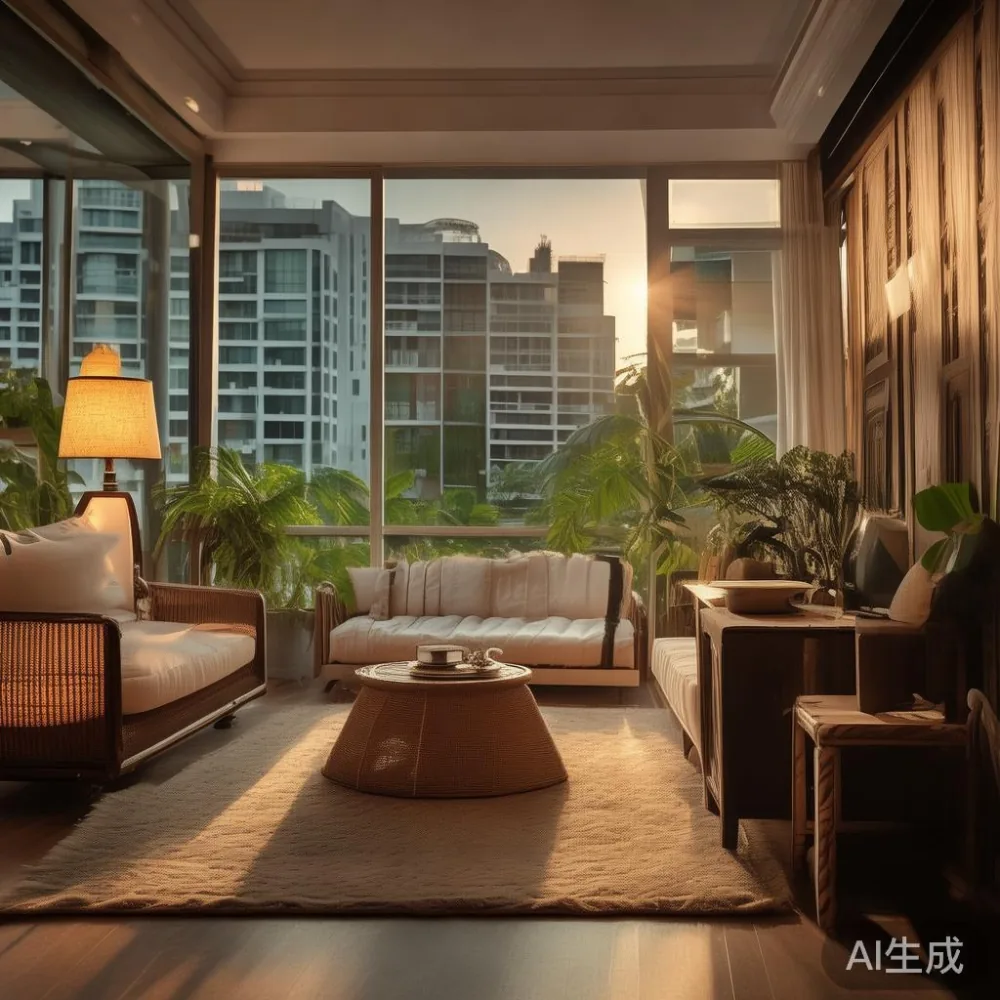
Most Singapore homes live between 60% and 90% relative humidity for at least part of the year. Bedok ground-floor units near the sea can sit above 80% for weeks. Punggol's newer condos are tighter, but the bathroom steam still migrates into the bedroom after every shower. A piece of solid wood furniture is a hygroscopic material — it absorbs moisture when the air is wet, and releases it when the air dries. The cycle of swelling and shrinking is what opens joints, lifts veneers, and loosens the woven strands of rattan furniture over time. None of this is a reason to avoid natural materials. It is a reason to understand them, and to buy pieces built for the climate.
Why does Singapore's humidity damage solid wood and rattan furniture so quickly?
Wood moves. It is not a flaw — it is physics. A 180 cm dining table cut from kiln-dried ash or teak can change width by 3 to 6 mm across a single humid week. When that movement is restrained by a too-tight frame, the stress shows up as a hairline crack along a panel, a bowed shelf, or a sticky drawer. Rattan — the peeled and woven skin of the rattan palm — is even more reactive. It is in effect a bundle of long fibres, and it loves moisture so much that an untreated cabinet door in a Tampines corridor can swell enough to rub against its frame within one monsoon season. The fix is not to ban natural materials; the fix is to buy pieces that were dried, joined, and finished for Southeast Asia, not for a temperate showroom.
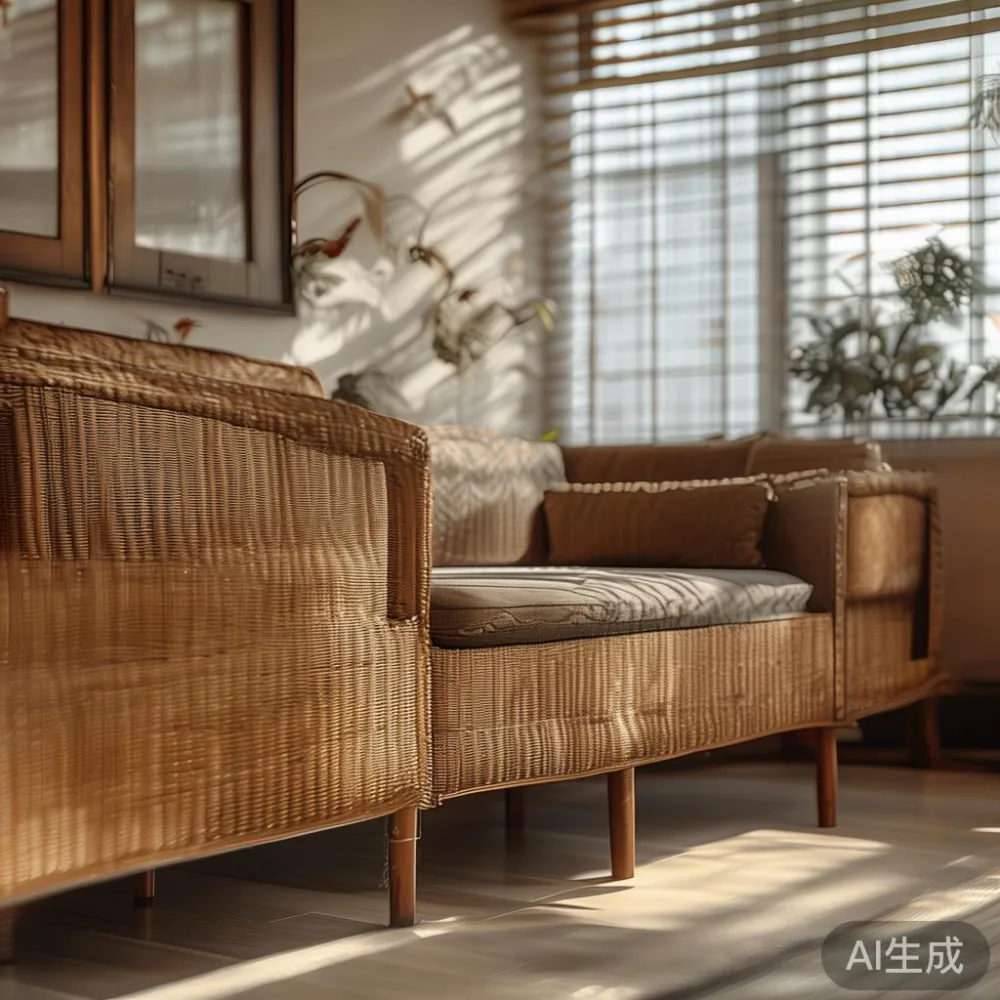
During a visit to a workshop last year, I watched a craftsman condition a 1.9 m solid wood dining table top before assembly. The boards had been stickered and air-dried for 60 days, then kiln-dried to a target 8–10% moisture content — the band that holds steady in an air-conditioned Singapore home. He ran a handheld meter across three sample planks: 8.4%, 9.1%, 8.7%. Anything above 12% in our climate, he told me, will move enough in the first six months to test every glue line in the piece. That single data point changed how I shop. I now ask every seller what moisture content their timber is dried to, and I expect a real number, not a shrug.
Which wood species and rattan grades actually survive a HDB or condo?
Not all solid wood behaves the same way. Dense tropical hardwoods — Burmese teak, Chengal, Merbau — have very low tangential movement (around 1.5–2.5% across a humidity swing of 0% to 100%). They are heavy (a 1.8 m teak dining table typically weighs 65–85 kg), expensive, and they resist the cupping that plagues softer species. Mid-density choices such as white oak, ash, walnut, and rubberwood move more (3–5%) but are still workable if the joinery allows for seasonal expansion. MDF and particleboard, even when veneered, are the worst performers in our climate: a swollen base panel under a marble table in a ground-floor Bedok unit can blow apart within two wet seasons if the edges are unsealed. If you want a long-life piece, insist on solid timber for the structural parts.
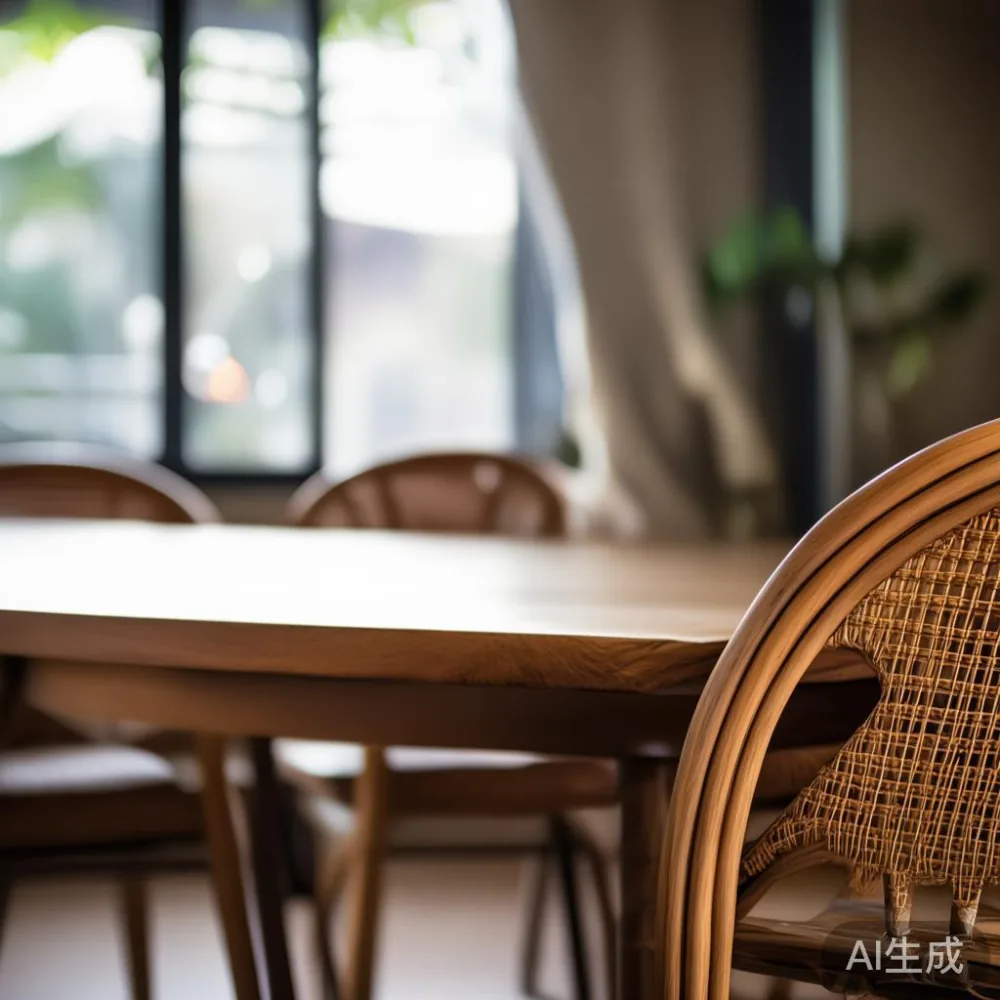
For rattan furniture specifically, the grade matters more than the species. Look for "core rattan" (the dense inner core of the pole) rather than "skin rattan," which is the thin outer peel used for weaving and can stretch under load. A core-rattan frame on a dining chair can carry 120 kg of static load for years; a skin-rattan equivalent may start to sag at the joints within 18 months. At MIDHILL, the rattan frames I have inspected are built on solid wood skeletons — typically ash or rubberwood — with the cane wrapped and pinned through pre-drilled holes, not glued onto a hollow tube. That detail alone adds roughly 3 to 5 years to service life in a non-aircon balcony.
How do I style a Nordic king bed in a small apartment?
A Nordic king bed fits comfortably in a Singapore master bedroom of at least 3.6 m × 3.0 m, with 60 cm of walkway on at least one side and 30 cm on the other — anything tighter and you will bruise your shin every time you make the bed. To style it in a small apartment, keep the bed frame low (under 35 cm from floor to top of side rail), push it against the longest wall, and skip the headboard if your ceiling is under 2.7 m. Layer one washed-linen duvet in stone grey, two pillows in oat, and one slim bolster in ivory. Add a 50 cm wide solid wood nightstand on each side — taller than the mattress top by about 5 cm so a bedside lamp clears the pillows — and a single 90 cm × 160 cm flat-weave rug under the lower two-thirds of the bed. That is the entire recipe; anything more crowds the room and the bed.
What finishes, sealants, and placement habits actually protect the wood?
Three layers of protection matter: the factory finish, the room finish, and your daily habit. A good factory finish on a solid wood sofa frame, bed frame, or wardrobe should be a catalyzed lacquer or a hardwax oil, applied in at least two coats with a light sanding between coats. Open-pored woods such as oak and ash benefit from hardwax oil because it lets the wood breathe — important in our humidity, where a fully sealed plastic film can trap moisture and cause the lacquer to cloud. For marble table tops used as dining or side tables, ask whether the stone was sealed on all six sides; an unsealed underside will wick ground moisture and develop brown stains within a year in a ground-floor unit.
Placement matters as much as finish. Keep solid wood pieces at least 15 cm away from an external wall — the condensation line on a Tampines HDB wall during the northeast monsoon can transfer straight into the back of a wardrobe and create black mould on the panel. Lift furniture 3–5 cm off the floor on felt or rubber pads; do not let rugs sit wet under a dining table for more than 12 hours. Run the air-con or a dehumidifier to keep the bedroom between 45% and 60% RH; a small 12-litre dehumidifier costs around SGD 180–260 and pulls roughly 250–400 W, which is far cheaper than refinishing a wardrobe door. Wipe spills within 10 minutes; never let water pool under a potted plant sitting on a wood nightstand.
How should I measure, deliver, and install a large piece through an HDB or condo?
Singapore delivery is its own puzzle. A standard HDB lift door is about 1.8 m tall and 0.9 m wide; a typical condo service lift is 2.1 m tall and 1.1 m wide. A king bed frame in its packaging is often 2.15 m long and will not fit through a stairwell corner without tilting. Before you buy, ask the seller for the carton dimensions, then measure the lift, the corridor, and the door — including the height of any threshold step. A 1.8 m solid wood dining table usually arrives in two cartons: a 65 kg tabletop and a 25 kg base. Confirm that the delivery team brings a dolly, moving blankets, and at least two people; a single courier carrying a 65 kg tabletop down a Punggol corridor is how furniture legs get snapped.
For pricing, a typical white-glove delivery for a king bed or dining set within mainland Singapore runs SGD 60–120, and many sellers — including MIDHILL — absorb the cost above a USD 350 order threshold (about SGD 470 at current rates), with shipping to Singapore typically taking 25–35 days by sea plus 5–7 days for last-mile scheduling. GST of 9% applies at the border on the CIF value plus duty; most solid wood furniture enters under a 0% duty code, but the 9% GST line item is real and worth budgeting for. Plan for a 14-day return window from the day of receipt, and photograph the unopened carton on arrival — that single step resolves 90% of damage claims.
What is "light luxury" furniture, and does it suit a Singapore home?
The phrase "light luxury" covers a few regional design dialects, and the differences matter when you are matching pieces to a small flat. American light luxury tends toward oversized proportions, wide armrests, and deep seat depths of 60–65 cm — comfortable for a 1.85 m person but visually heavy in a 12 sqm HDB bedroom. French light luxury (sometimes called "French light luxury" or "lite luxe") is the opposite instinct: a solid wood sofa with a 55 cm seat depth, a slender 8 cm arm, and a brushed-brass leg detail; it reads as refined without crowding the room. Post-modern light luxury pulls both threads together with sculptural silhouettes — a curved-back dining chair, a fluted marble table base, a wardrobe door with a 12 mm bronze inlay.
All three styles assume one thing in common: a disciplined material palette. If you are ordering a post-modern light luxury dining table with a marble top, keep the chairs in one tone of solid wood — walnut or white oak — and let the marble do the visual work. The most common mistake I see in Singapore condos is a French light luxury bed frame paired with an American light luxury dresser in a different wood species; the eye reads the mismatch before it reads the room. A note for buyers ordering from overseas: I have heard of clients in Dubai flagging a colour mismatch between showroom samples and delivered pieces under the heading "Italian light luxury color mismatch Dubai" — the cure is the same here as there. Request a current production swatch under 4000K indoor LED before you confirm the order, and approve it in writing.
How do warranties and after-sales care actually work for imported wood furniture?
A 10-year structural warranty on a solid wood bed frame or wardrobe is a serious commitment from a maker — it covers joint failure, wood splitting under normal use, and frame deformation. It usually does not cover surface finish wear, colour change from UV exposure, or movement under 3 mm that is purely cosmetic. Read the warranty PDF before paying; most reputable Foshan workshops, including MIDHILL with its 10-year structural coverage and lifetime refinishing programme, will send replacement dowels or panels rather than a whole new piece, and they cover return shipping on genuine defects. Lifetime refinishing, when offered, typically means one complimentary refinish in the first five years (sanding, re-sealing, topcoat) and a discounted rate after that — usually SGD 180–320 per piece depending on size.
Keep one envelope with the purchase invoice, the warranty card, the swatch sample, and three or four dated photos of the piece from different angles. When a claim is filed, that envelope cuts resolution time from weeks to days. And refinish a piece before it looks tired, not after — a quick hardwax-oil refresh once every 18 months will keep an oak dining table looking new for a decade.
Where can a Singapore buyer actually test the feel and weight before committing?
Singaporean showrooms concentrate in three clusters: Tai Seng / MacPherson for the bulk of mid-range furniture importers, the Lavender / Jalan Besar stretch for boutique French and Italian light luxury, and Dempsey / Tanglin for the higher-end post-modern light luxury galleries. Walk in with a tape measure and a notebook. Sit on every solid wood sofa for at least three minutes; the seat depth should let your lower back touch the cushion back without lifting your feet off the floor. Lift one corner of a dining table — anything under 25 kg for a 1.6 m table is almost certainly hollow-core or veneer over MDF, regardless of the label. Tap the inside of a rattan cabinet with your knuckle; a solid wood frame sounds dull, a hollow tube sounds like a drum.
Once you have shortlisted two or three pieces, ask the showroom for a moisture-meter reading on a fresh cut sample, a written copy of the warranty terms, and the exact shipping weight. A 1.8 m solid wood dining table at 75 kg tells you the maker did not skimp on timber. A 35 kg equivalent at the same size tells you to walk away. With that filter in place, even a humid Singapore home can host natural rattan furniture and solid wood pieces that age into heirlooms rather than landfill.