How to Match Rattan Furniture to a Warm Minimal Interior (the Singapore Way)
I spent the last Saturday of last month at my colleague Priya's new 4-room HDB in Tampines, watching her unpack a 1.8 m solid wood bed frame she'd ordered from a Foshan factory. Her living room is roughly 18 sqm, the corridor outside her unit is the typical 1.2 m wide, and the lift opening at her block measures about 2.1 m across diagonally — she had already measured twice before checking the cart. By the time her flat-pack rattan side chair arrived the following Wednesday, she'd arranged it next to a slim travertine side table and a walnut stool from another brand, and the room suddenly felt like one of those Houzz moodboards she'd been saving for two years. That afternoon is the starting point for this guide: how to combine solid wood pieces, woven rattan, and warm-minimal styling in a Singapore HDB without losing the square metres you already have.
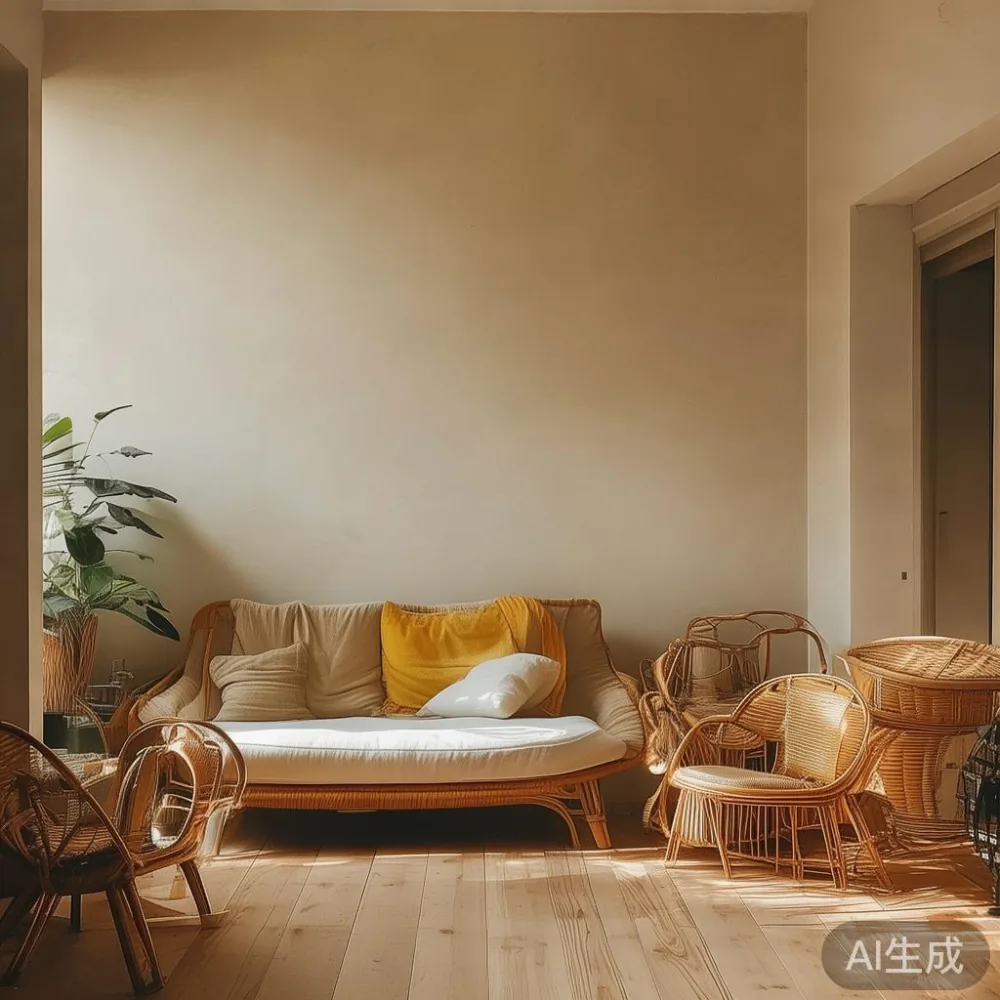
What "warm minimal" actually asks of your furniture (and why rattan fits)
Warm minimalism, as I see it practiced in Punggol and Bedok condos, sits between Scandinavian pale-cool and Japanese restraint. The palette is off-white, oat, taupe, walnut — never black-out contrast. The forms are rectangular, the lines are 3 cm or thinner where they meet the floor, and at least one piece per zone should carry a living, textured material so the room doesn't read as a hotel lobby. Rattan does that job quietly. A rattan back panel on a dining chair throws a soft, fibrous shadow; a rattan-front nightstand absorbs the overhead LED glow that would otherwise bounce off a high-gloss lacquer. The trick is balance: roughly 20 to 30 percent of visible furniture surface should be woven, and 60 to 70 percent should be solid wood, with the remainder left to linen, paper lamps, or a single marble accent.
When I tried this ratio at Priya's, the woven face of her side chair (about 45 cm wide by 55 cm tall) covered almost exactly a quarter of the visual mass in one corner, while the 1.6 m oak sideboard anchored the opposite wall. The floor stayed 70 percent empty, which is what makes the "minimal" half of warm minimal survive in a flat under 90 sqm.
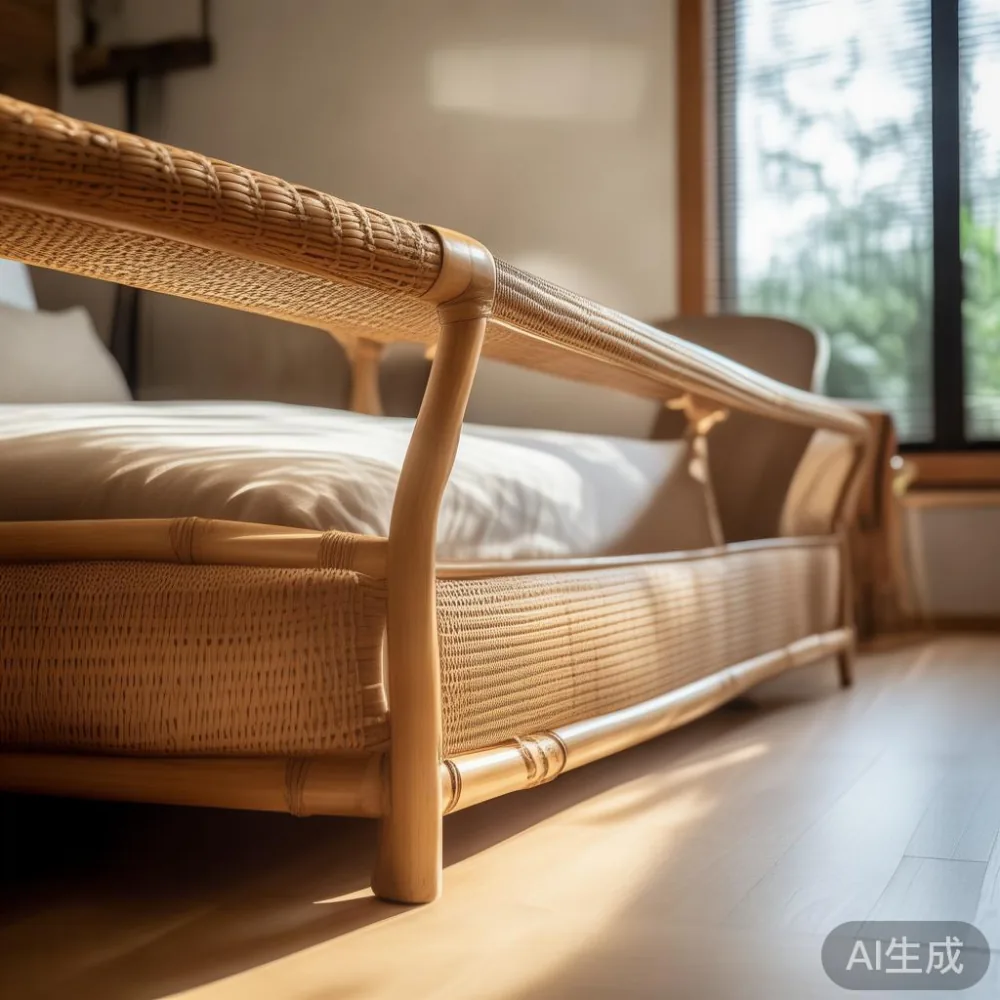
How do I start with one piece if I live in a small HDB?
Start with the largest piece you actually use every day, not the largest piece you can afford. For a 4-room flat that's usually the bed frame, then the dining table, then the sofa. Skip the wardrobe decision until the bed is placed — a 2 m wardrobe pushed against the wrong wall will eat a metre of walkway.
Sizing and clearance: the numbers Singapore homes forget
Three measurements decide whether a layout works in a HDB or small condo:
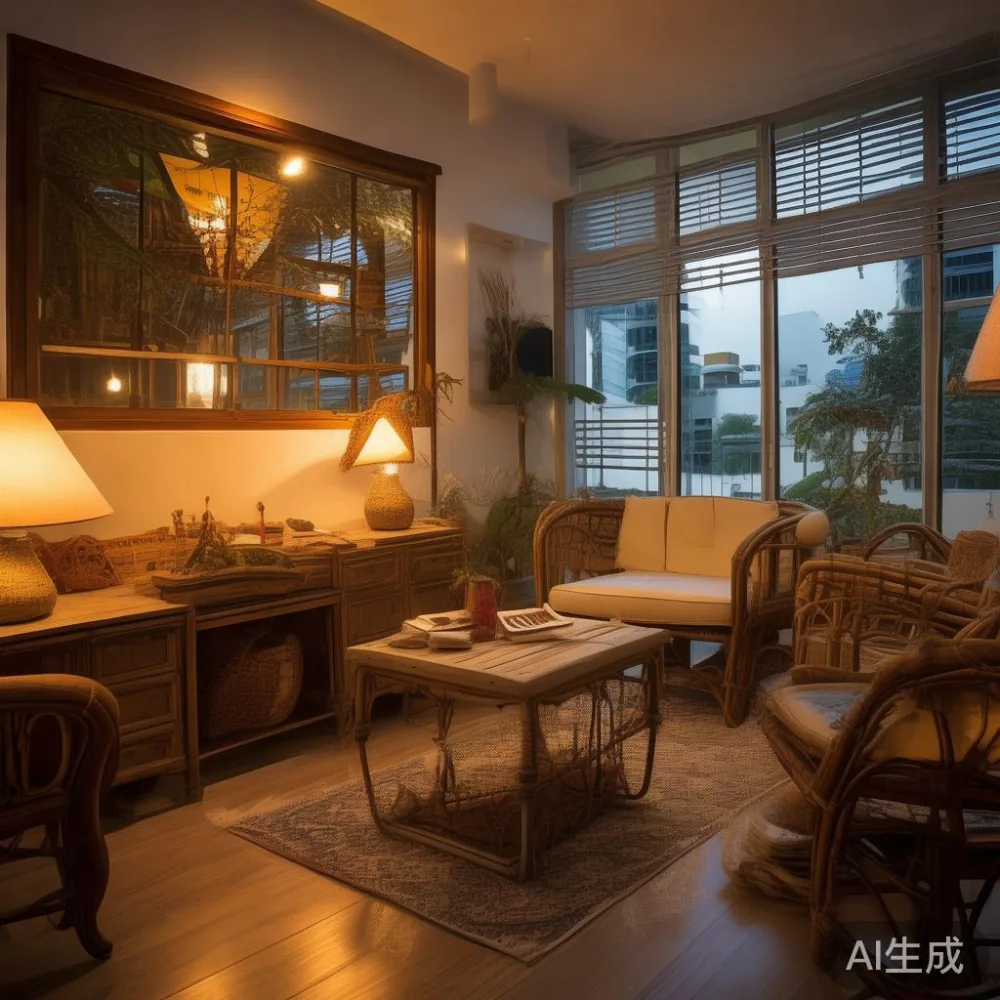
- Sofa to coffee table: 35 to 45 cm gap. Anything tighter and you kneel to put a cup down; any wider and a 1.6 m sofa looks stranded.
- Dining table to wall: minimum 90 cm on at least one side so a person can pull out a chair without scraping plaster.
- Bed frame to side wall: 60 to 70 cm on the open side for a nightstand (a 45 cm deep nightstand plus 20 cm walking room).
Above the bed, leave 90 to 110 cm between the top of a headboard and a ceiling fan so the blades don't kiss the rattan frame.
Choosing the right solid wood sofa and dining table for warm minimal
For a solid wood sofa in an HDB, the issue isn't the wood — it's the depth. Anything over 95 cm seat depth eats your walkway and pushes the chair into the corridor, which lifts past 30 degrees and rattles the lift railing. Stay between 85 to 92 cm on the seat, choose an oak or ash frame in a 5 to 10 percent grey stain rather than a chocolate stain that dates the room, and pair the sofa with a slim marble table in a 60 cm diameter or a 110 × 60 cm rectangle. A round marble table works better than a square one near a lift door because the corners don't catch trolley bags — I learned this carrying Priya's boxes up four flights.
For the dining table, 1.4 m seats four without crowding, 1.6 m seats six, and 1.8 m starts to feel public-restaurant in a 4-room flat. Pair it with rattan-back chairs in a 45 × 50 × 85 cm silhouette; the woven back reduces the visual weight of six solid seats, and the chair weighs roughly 4 to 5 kg each so it's easy to lift upstairs.
Bed frames, wardrobes, and nightstands: building the bedroom
The single biggest decision in the bedroom is the bed height. Warm minimal favours lower beds — top of mattress around 45 to 50 cm from the floor — because lower frames open the ceiling line. If you're choosing between a Japanese bed vs Nordic bed, the Japanese option sits closer to the floor (around 28 to 35 cm platform height) and reads calmer in a small room; the Nordic option lifts to 38 to 45 cm and gives you under-bed drawers. In a HDB bedroom with no built-in storage, those drawers can save you a wardrobe metre.
For the wardrobe, the choice usually comes down to look vs reach. A plain 2 m swing-door wardrobe in oak reads warm; if you'd rather a deeper look, consider the question of how to style French provincial wardrobe in apartment settings — usually it's about softening a traditional carved front with a linen runner on top, a single ceramic vase, and rattan baskets on a low shelf so the carved detail stops shouting. In a 12 sqm HDB bedroom that can look heavy, so scale it down: pick a 1.8 m wardrobe with a 2-panel door rather than a 4-panel door, and keep the handles under 10 cm so they don't catch your shirt sleeves.
If you do want the European bed vs Japandi bed comparison rendered on the floor, do it with the headboard only. A 110 cm tall bouclé headboard on a low oak platform reads European; the same platform with a 70 cm rattan-panel headboard reads Japandi. Both work under a 1.5 m wide flat.
On the nightstand, keep the form at 45 × 40 × 55 cm so it lines up with the mattress edge rather than floating behind it. One drawer, rattan front, oak case — small enough that two of them cost less than a single imported marble version, and light enough (under 12 kg) to lift without a handyman.
Buying from China directly: 14-day delivery, lift access, and how to think about Italian light luxury on a 1-room budget
Singapore buyers often assume cheaper means lower quality. With wood furniture the picture is more interesting, because the wood, the kiln-drying, and the joinery are decided at the factory, not at the boutique. Several Foshan factories — including the one Priya ordered from, which goes by Foshan Lingzhan and exports under the MIDHILL brand — build to the same European oak and ash specs that Italian and American ateliers use, then pass on the showroom and the rental savings. An oak dining chair that retails for S$420 in a Tanglin shop can leave the same factory door for S$140 to S$180 landed, even with the 9 percent GST added at the checkpoint. That's the practical route to cheap Italian light luxury furniture for Singapore buyers who don't want to give up the look.
Three checks before you order:
- Confirm the packed width. A solid wood sofa is usually 1.9 to 2.1 m packed; your lift door at a HDB block is 0.9 m wide and 2.1 m tall. If the box goes height-first, measure diagonally — a 2.05 m sofa in a 2.05 m lift is a 0 mm margin and your movers will refuse.
- Ask for kiln-dried FSC-certified oak or ash, not rubberwood. Rubberwood looks similar but dents within two years; kiln-dried oak lasts thirty.
- Get the structural warranty in writing. MIDHILL, for example, lists a 10-year structural warranty on its frames and a lifetime refinishing programme — that's the kind of paper you want before paying S$2,000 on a bed frame.
What about post-modern light luxury — does it belong in warm minimal?
Post-modern light luxury tends to bring in curved edges, brass accents, and slightly theatrical proportions — picture a rounded bouclé armchair in oat with a 9 cm brass ring handle on a side cabinet. Used at 10 to 15 percent of the room, it stops warm minimal from sliding into pure-Japanese restraint. A single brass-handled marble table, a curved-back accent chair, or a fluted rattan-front sideboard will do it. The risk in a HDB is overdoing the brass: cap it at one piece per zone, otherwise the room tips into hotel-lobby territory.
For the living room, the question of how to style American sofa in room settings usually gets answered by what surrounds the sofa. American silhouettes tend to be deeper and lower than their Italian cousins; pair a 2.1 m American three-seater with a 1.2 × 0.6 m marble coffee table, an off-white wool rug 2.4 × 3 m, and two slim rattan side chairs opposite. The side chairs pull the visual weight off the sofa and let the room breathe.
Common layouts that work in 4-room HDBs and small condos
Three layouts I keep recommending for Tampines, Bedok, and Punggol flats under 90 sqm:
- Living-dining L: place the solid wood sofa against the longest wall, the 1.4 m dining table perpendicular to it, and leave a 90 cm walking channel. A 60 cm round marble table can swap in if the family is two.
- Bedroom stack: a 1.5 m low-profile oak platform centred on the main wall, two rattan-front nightstands at 45 cm depth, and a 1.8 m sliding-door wardrobe on the opposite wall.
- Entry zoning: a 1.2 m rattan-bench console against the entry, with a 35 cm deep shelf above for keys. This keeps shoes off the corridor and adds a woven moment right where guests enter.
Each keeps every major piece under 2.1 m packed, every walkway above 90 cm, and every visual block under one-third of the wall it's against.
Maintenance and lifetime care in Singapore's humidity
Singapore sits at 70 to 90 percent relative humidity for most of the year. Solid wood moves with that humidity, so two habits keep furniture honest:
- Wipe rattan panels weekly with a slightly damp microfibre cloth, then dry. Don't soak — wet rattan stretches and sags.
- Keep oak and ash pieces 20 cm away from aircon vents so the wood doesn't dry on one side and cup. A digital hygrometer costs under S$15 and tells you immediately.
If you buy from a maker with a lifetime refinishing programme, plan on a sand-and-oil refresh every 6 to 8 years. MIDHILL offers this for its oak and ash frames at cost, which is the difference between a S$2,400 bed that lasts 30 years and one that lasts 12.
Where rattan furniture stops being optional and starts carrying the room
Rattan furniture earns its place in warm minimal not as decoration but as a counterweight to solid wood. A 1.8 m solid wood dining table needs three to four rattan-back chairs around it to soften the surface area; a solid wood wardrobe needs a rattan laundry basket in the corner to break the rectangle; a solid wood bed frame needs a rattan-front nightstand so the bedside doesn't read as a wall of oak. Skipping the rattan leaves the room looking like a museum shop; overdoing it — say, more than four rattan pieces in a 18 sqm living room — pushes the room into Bali-resort territory, which is the opposite of minimal.
A short budget to copy if you're starting fresh in 2025
Roughly, in Singapore dollars landed and including 9 percent GST:
- Solid wood sofa, 2 m three-seater in oak: S$1,650 to S$2,200
- 1.4 m oak dining table with four rattan-back chairs: S$1,100 to S$1,450
- 1.5 m oak bed frame with rattan headboard: S$900 to S$1,200
- 1.8 m sliding-door wardrobe in oak: S$1,800 to S$2,300
- Two rattan-front nightstands: S$420 to S$560 the pair
- 60 cm round marble table: S$520 to S$680
- Delivery over S$350: free, typically 14 to 21 working days
14-day returns are standard from factory-direct sellers in Foshan, and a 10-year structural warranty is the floor you should accept on any solid wood frame. Priya's full flat came in around S$6,800 landed — roughly half what a designer quoted her — and the furniture is the same kiln-dried oak, the same rattan weave, the same brass hardware. Layout, not brand, is what makes the room feel like the moodboard you saved at 1 a.m.
One last check before you press order
Measure the lift, measure the corridor, measure the front door. Write the numbers on a piece of paper and tape it next to your cart. Then buy the largest piece first and live with it for a week before adding anything else — that's the discipline warm minimal rewards, and it's why Priya's Tampines living room ended up looking lived-in rather than staged.