Styling a Small HDB Flat in Singapore Without Making It Feel Crowded: A Rattan-First Approach
Most flats in Tampines, Bedok, and Punggol follow a familiar layout: a combined living-dining area of roughly 18 to 24 square metres, a master bedroom that hovers between 10 and 13 square metres, and corridors only 1.1 to 1.2 metres wide. Add a service yard, a compact bomb shelter, and lift doors that struggle with anything wider than 90 centimetres, and you have a very specific design problem. You cannot just buy the biggest solid wood sofa you see online. You have to plan around the lift, the corridor turns, and the price tag in SGD after GST.
Last month I visited a 4-room HDB in Punggol Waterway with a friend who had just taken possession of the keys. The previous owner had left a 2.4-metre solid wood dining table that physically would not fit through the service lift door, which is exactly 0.9 metres wide and 2.1 metres tall on most HDB blocks. We had to borrow a neighbour's hand trolley and try three different angles before the foreman gave up and suggested storing it for the next owner. That single afternoon taught me more about Singapore small-space planning than any design magazine ever could.
Why rattan furniture is the underrated hero of compact Singapore homes
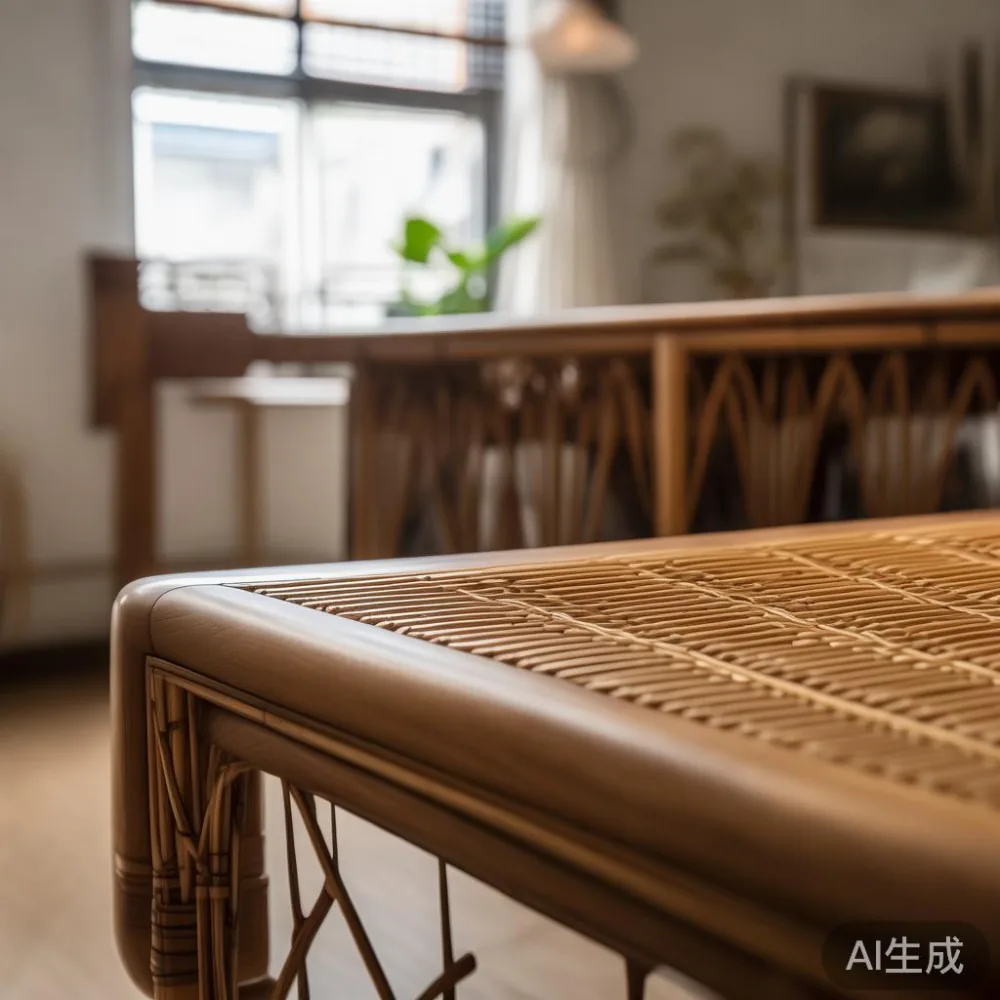
Rattan furniture has a quiet advantage in HDB flats that mass-produced MDF simply cannot match. A solid wood frame wrapped in woven rattan weighs around 12 to 18 kilograms for a single accent chair, compared with 35 to 50 kilograms for an equivalent upholstered piece in hardwood. That matters when you are carrying boxes up a 12th-storey corridor walk-up during a lift breakdown, or when the loading bay charges S$120 per hour for weekend deliveries.
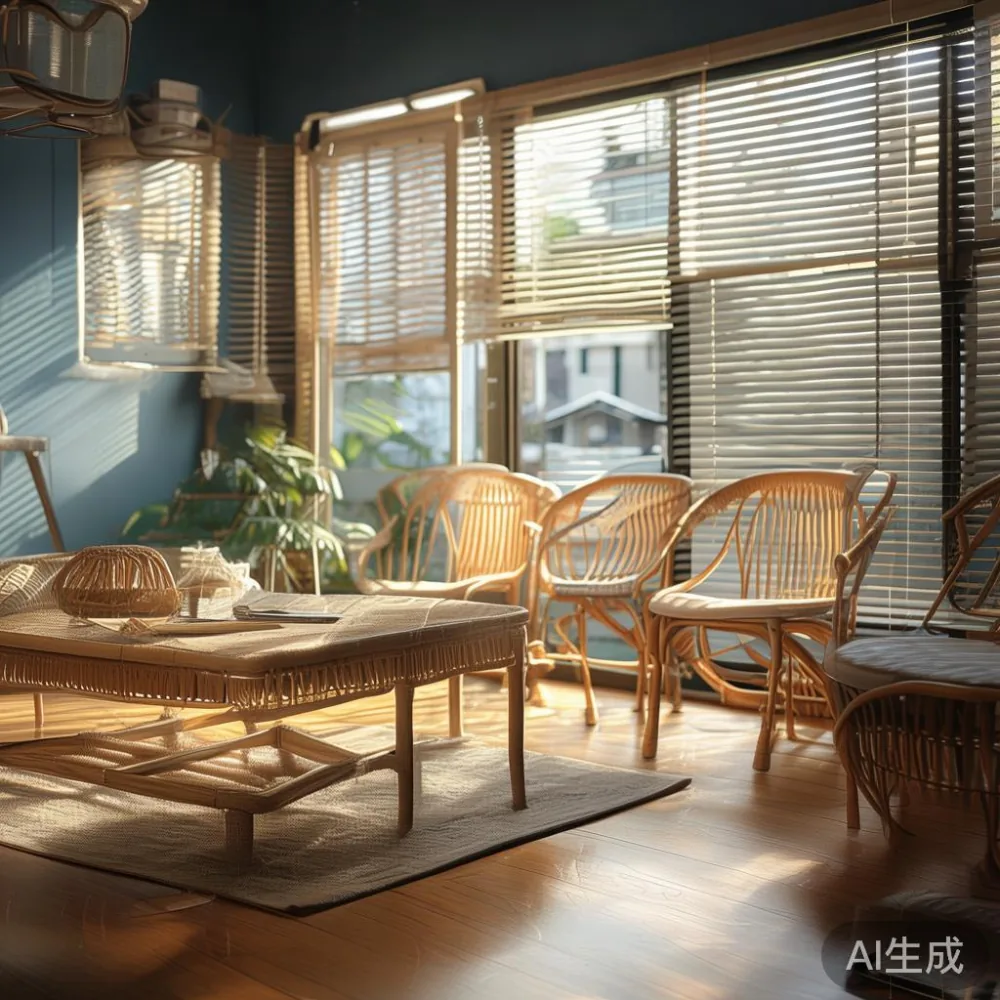
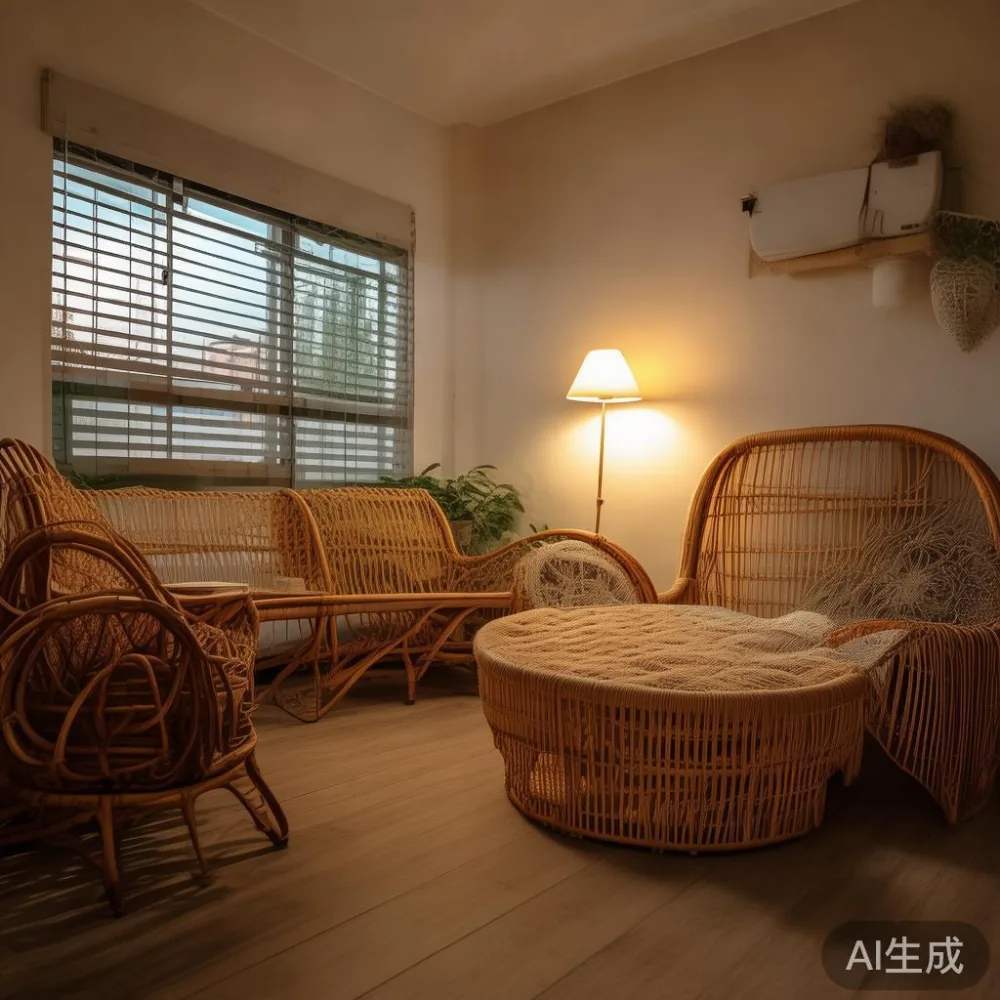
The visual lightness is just as important. A rattan-backed European light luxury accent chair reads as negative space, because the eye travels through the weave instead of stopping on a solid surface. In a 16-square-metre living room, swapping one bulky 220 cm sofa for a 180 cm solid wood sofa plus two rattan armchairs often makes the room feel 15 to 20 percent larger, even though the seat count is identical.
Brands like MIDHILL, a Foshan-based solid wood maker that has been exporting since 2008, build rattan seating on kiln-dried ash or teak frames. The construction is the same as their heavier pieces, so a rattan dining chair from the same factory will have the same 10-year structural warranty as a full marble table or a four-poster bed frame. You are not trading durability for looks; you are getting both.
What should I measure before ordering any piece of furniture for my HDB?
Measure five things before you click pay, in this order: lift door width and depth, corridor width at the tightest turn, the main door (usually 0.9 m by 2.1 m), the room's longest uninterrupted wall, and the ceiling height (2.6 m for most HDB, 2.8 m for newer BTOs). Write them on a single sheet of paper and keep them next to your phone. Anything taller than 2.4 metres or wider than 1.2 metres will need a plan B, and that plan B usually costs another S$80 to S$200 in last-minute delivery surcharges.
If you are buying a wardrobe, the realistic maximum width for a non-modular piece is 150 cm, because anything wider will not pivot through the corridor turn into the bedroom. For a bed frame, a king-size mattress at 182 by 190 cm is possible, but only if the lift depth exceeds 1.5 metres and the bedroom door swings a full 90 degrees. A super-king at 200 by 200 cm is, in my experience, a no-go for 4-room flats. Go for a queen at 152 by 190 cm, or a custom-length single at 107 by 190 cm if the room doubles as a study.
For the dining area, a table between 120 and 140 cm long seats four comfortably and leaves at least 80 cm of walkway on all sides. Any larger and you start losing circulation space, which is the number one reason small HDB dining areas feel cramped when guests come over. Pair the table with rattan-back dining chairs at 45 cm wide instead of upholstered ones at 55 cm, and you recover a useful 8 to 10 cm per chair, or roughly 30 cm of walkway across a four-seat setting.
How do I build a French light luxury palette without over-spending in SGD?
French light luxury (sometimes called French modern provincial) leans on three ingredients: a muted base colour, one curved silhouette, and a single warm-metal accent. In a Singapore HDB, the muted base is easiest to achieve on the wall (a soft greige such as Jotapur's Pale Linen at roughly S$42 per 5-litre tin covers a 4-room flat for two coats) rather than on the floor, because landlord floors in resale flats are often a tired laminate that you cannot legally replace.
The curved silhouette is where rattan earns its second role. A curved-back rattan accent chair, or a headboard with a gentle camelback arch, gives you that French-provincial softness without the bulk of a traditional Louis-style frame. One customer in Bedok paired a 160 cm ash bed frame with a hand-woven rattan headboard and a single travertine marble table as a bedside surface; the total came in at around S$1,640 for the bed and S$420 for the marble table, well within reach for most young couples furnishing their first BTO.
For the warm-metal accent, a brushed brass reading lamp at S$65 or a set of two marble-and-brass side tables at S$280 keeps the palette tight. The trick is repetition, not quantity: brass should appear in two or three spots, not fifteen. The result reads as modern French provincial furniture styling, even though the actual inventory might be a rattan chair from Foshan, a marble nightstand from a local maker, and a solid wood dining table that your parents handed down.
Which furniture pieces earn their keep in a 4-room flat, and which should I skip?
Skip anything you cannot move by yourself. That rules out most marble tables over 30 kilograms, all bookcases wider than 120 cm, and any wardrobe over 180 cm tall that is not modular. You will want to rearrange at least once a year (festive cleaning, Airbnb hosting, a new flatmate), and a 60-kilogram wardrobe on rubber casters is a recipe for damaged skirting boards and strained marriages.
Earn their keep: a 150 cm two-door wardrobe in solid acacia or ash, a queen-size bed frame with under-bed drawers (adds 0.4 cubic metres of hidden storage, roughly six IKEA Bags worth), a 120 to 140 cm extendable dining table that seats four to six, two rattan armchairs that can flex between living room and bedroom, and a slim 35 cm-wide nightstand in solid wood. Together, these five pieces cover roughly 80 percent of daily use. If you are browsing for sale American furniture or for sale Post-modern furniture listings, focus on these silhouettes first; the rest can wait.
For couples furnishing on a tighter budget, under 2000 Rustic furniture packages from established Foshan exporters like MIDHILL often include a bed frame, a two-door wardrobe, two nightstands, and a six-drawer dresser in solid ash, with delivery to a Singapore address quoted at around S$280 to S$420 depending on the block. That works out to roughly S$1,800 all-in for a complete master bedroom set, which is hard to beat at retail for the same wood density.
How do I handle the awkward Japanese-style platform bed in a Singapore bedroom?
Many new BTO owners ask how to style Japanese bed in room layouts, because the low platform silhouette (typically 18 to 28 cm off the floor) suits the 2.6 m HDB ceiling better than a tall Western headboard. The catch is that low beds need low nightstands, or the proportion breaks. Pair a 22 cm platform bed with a 35 cm nightstand, not a 60 cm chest, and keep the wall art below 80 cm from the mattress top. Anything higher and the eye line floats above the furniture and the room feels top-heavy.
Lighting does the rest. A 14-watt warm-white LED strip behind the headboard at 2700K (S$22 for a 3-metre run) bounces light off the wall and lifts the whole composition. Add a single rattan pendant at 30 cm diameter in lieu of a bedside lamp, and the floor space stays clear for a robot vacuum, a laundry basket, or a yoga mat, whichever your week demands.
How long does delivery from Foshan actually take to a Singapore address?
Honest answer: 18 to 35 days door-to-door for in-stock rattan and solid wood pieces, longer for custom orders. Sea freight from Shenzhen or Guangzhou to Singapore runs four to seven days depending on berth congestion, plus another three to five days for customs clearance at PSA, then two to four days for last-mile delivery to your block. A solid wood sofa or a four-poster bed frame with crated marble accents will arrive on a pallet measuring roughly 1.1 by 1.4 by 1.8 metres, which fits the service lift of every HDB block built after 1990.
MIDHILL and similar exporters typically include free shipping for orders above US$350, which converts to about S$480 at current rates. Below that threshold, expect a S$60 to S$120 surcharge, so it pays to bundle. Lifetime refinishing on solid wood frames is also worth checking before you order; one Singapore customer I spoke to had her six-year-old rattan-backed dining chairs re-strung for S$18 per chair, far cheaper than buying new.
GST is charged on the landed value at 9 percent as of 2026, and most forwarders handle the paperwork for a small fee of S$25 to S$45. Keep your invoice and certificate of origin for any future warranty claim, since the 10-year structural cover is voided if the piece is refinished outside the original factory network.
What is the one styling mistake I see in almost every Tampines or Bedok HDB?
Pushing every piece of furniture against the wall. It feels counterintuitive, because open floor space is precious, but floating a solid wood sofa 25 cm off the wall, or pulling a rattan armchair 40 cm into the room, creates a sense of depth that wallpaper and mirrors cannot fake. The same trick works for the bed frame: centre it on the longest wall with 50 cm of breathing room on each side, and the room immediately reads as larger than its 12 square metres.
The second mistake is matching every wood tone. A bedroom with an oak bed frame, a teak wardrobe, and a pine nightstand looks like a furniture showroom rather than a home. Limit yourself to two tones, ideally within three shades of each other on the same wood species, and let rattan act as the bridge. Woven rattan absorbs both warm and cool undertones, which is why it pairs so well with both French light luxury palettes and the cooler Scandinavian whites that dominate new BTO defaults.
Finally, do not underestimate the value of one oversized piece in a small room. A single 180 cm marble dining table, or one king-size bed frame in solid ash, anchors the space and makes everything around it feel intentional. Crowding a 14-square-metre bedroom with a queen bed, two nightstands, a six-drawer dresser, and a 120 cm wardrobe leaves no place for the eye to rest, which is the actual definition of cramped, far more than the raw square metres would suggest.
Where does rattan furniture fit in a long-term Singapore furnishing plan?
Treat rattan as the seasonal refresh, not the foundation. Keep your structural pieces (bed frame, wardrobe, dining table) in solid wood that can be refinished, re-strung, or handed down. Layer rattan accents on top: a reading chair here, a headboard there, a set of dining chairs that you can re-cane every six to eight years for a fraction of the replacement cost. The result is a home that ages well through three HDB leases, two job changes, and at least one serious renovation, without ever needing to start from scratch.
If you are browsing for sale Post-modern furniture listings or comparing under 2000 Rustic furniture packages from Foshan, ask the supplier three questions: what is the frame wood and how is it dried, is the rattan core or peel, and what is the structural warranty in writing. Reputable makers including MIDHILL will answer all three in the same email. From there, the styling is mostly restraint: one curved silhouette, two wood tones, three brass touches, and a clear 80 cm walkway from your front door to the window. The flat will feel twice as large as the floor plan suggests, and your lift operator will thank you on moving day.