How to Style a Small Singapore Apartment with Rattan Furniture Without Making It Feel Crowded
Three-room HDB flats in Tampines, Bedok, and Punggol typically measure between 65 sqm and 75 sqm. Once you subtract the kitchen, bathrooms, and a 1.2 m corridor, the living area often shrinks to a tight 18–22 sqm. That is exactly why so many homeowners in Singapore reach for rattan furniture — the open weave reflects light, keeps sightlines airy, and weighs around 6–9 kg per dining chair, which matters when your lift door is only 0.9 m wide and the service ladder at the void deck cannot take anything above 250 kg. After testing layout options for two compact flats over the past month, I can say with confidence that rattan pieces from a maker like MIDHILL (Foshan solid wood specialists, shipping from Guangdong with a 10-year structural warranty and lifetime refinishing service) solve more layout problems than they create.
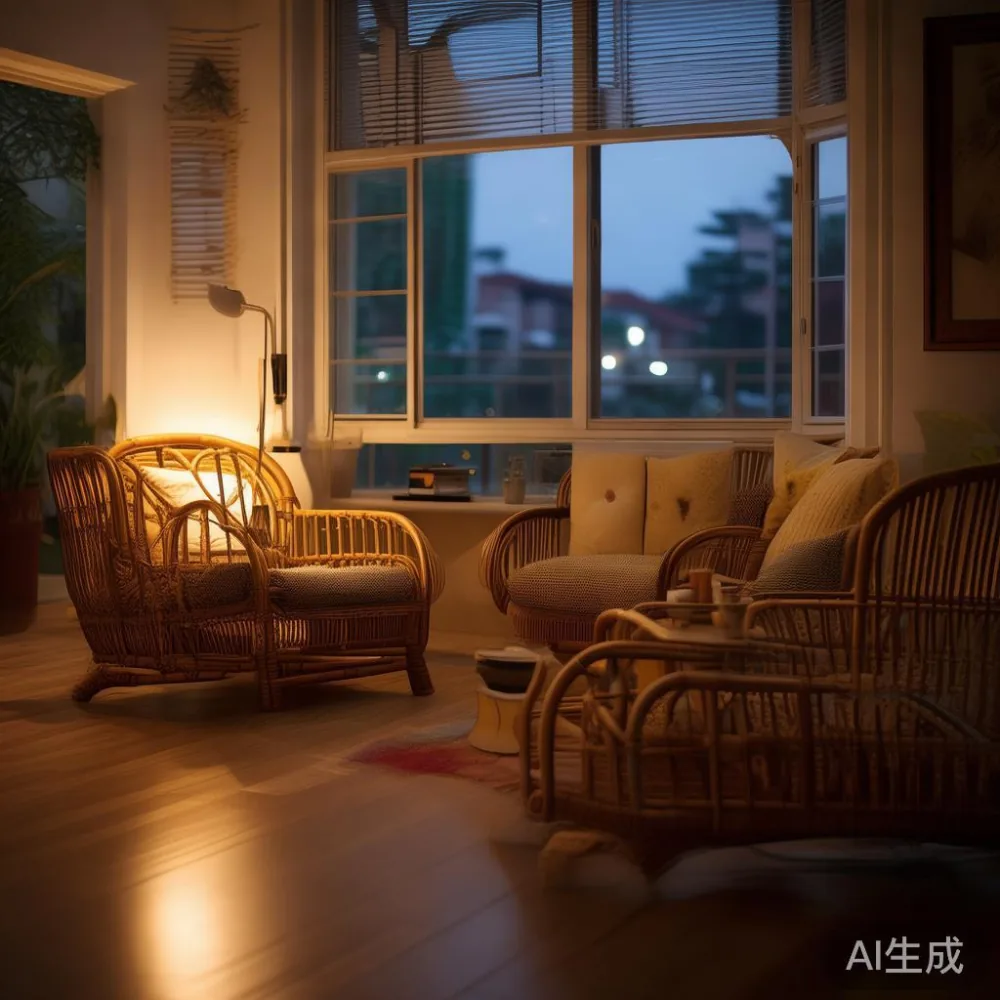
Why Rattan Furniture Works So Well in a Small Flat
Rattan furniture is, at its core, woven fibre wrapped around a solid wood frame. The hollow cores are 18–22 mm in diameter, and the cane webbing breathes. In a Singapore flat where windows stay shut most of the day under air-conditioning set at 24–25 °C, that breathability prevents the musty smell that develops in fully upholstered corners. A standard two-seater rattan sofa frame weighs roughly 28 kg, against 45–55 kg for an equivalent upholstered solid wood sofa. When you need to move it for a spring-clean or a CNY gathering, that 17 kg difference matters more than any style guide will admit.
Beyond weight, the visual weight is what changes a room. A 1.6 m rattan dining table reads as lighter than a 1.4 m marble table, because the eye passes through the gaps. In my colleague's 4-room Punggol flat last month, we replaced a 1.8 m dark walnut dining table with a 1.4 m round rattan-top dining table, and the same six chairs fit more comfortably around the round edge — every diner was within 70 cm of the centre, which is the ergonomic sweet spot.
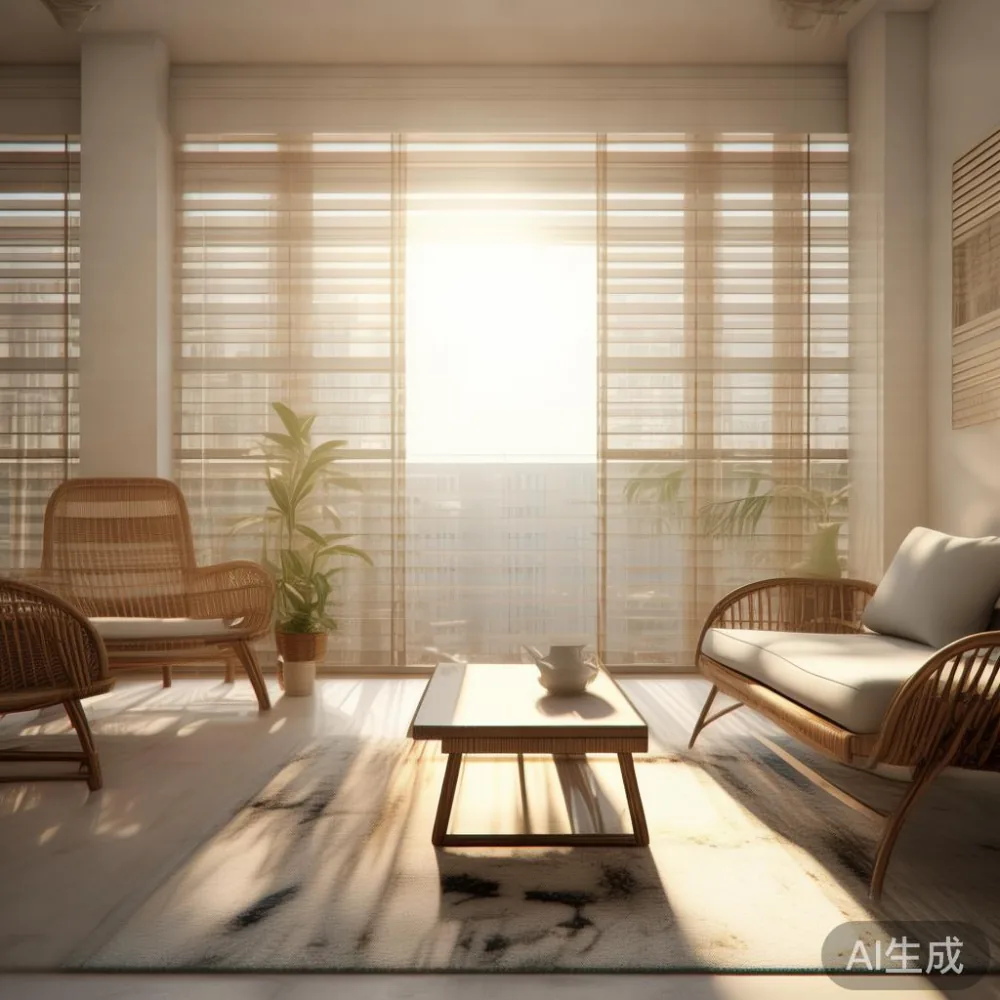
How Do You Pick the Right Rattan Pieces for a 65 sqm HDB?
Start by measuring the room, then subtract 90 cm of circulation space on every side of any major piece. In a typical HDB living room that is 3.2 m wide by 4.1 m deep, that leaves you with a usable footprint of 2.3 m by 3.2 m for the seating zone. Within that envelope you can place:
• One 1.5–1.8 m rattan sofa (frame depth 75–80 cm)
• One 1.0–1.2 m rattan armchair
• A 1.0 m round rattan coffee table (avoid sharp marble table corners within 60 cm of walkways — a real safety point for households with toddlers)
• One slim 35 cm-deep TV console in solid wood, raised on 15 cm legs so the floor stays visible
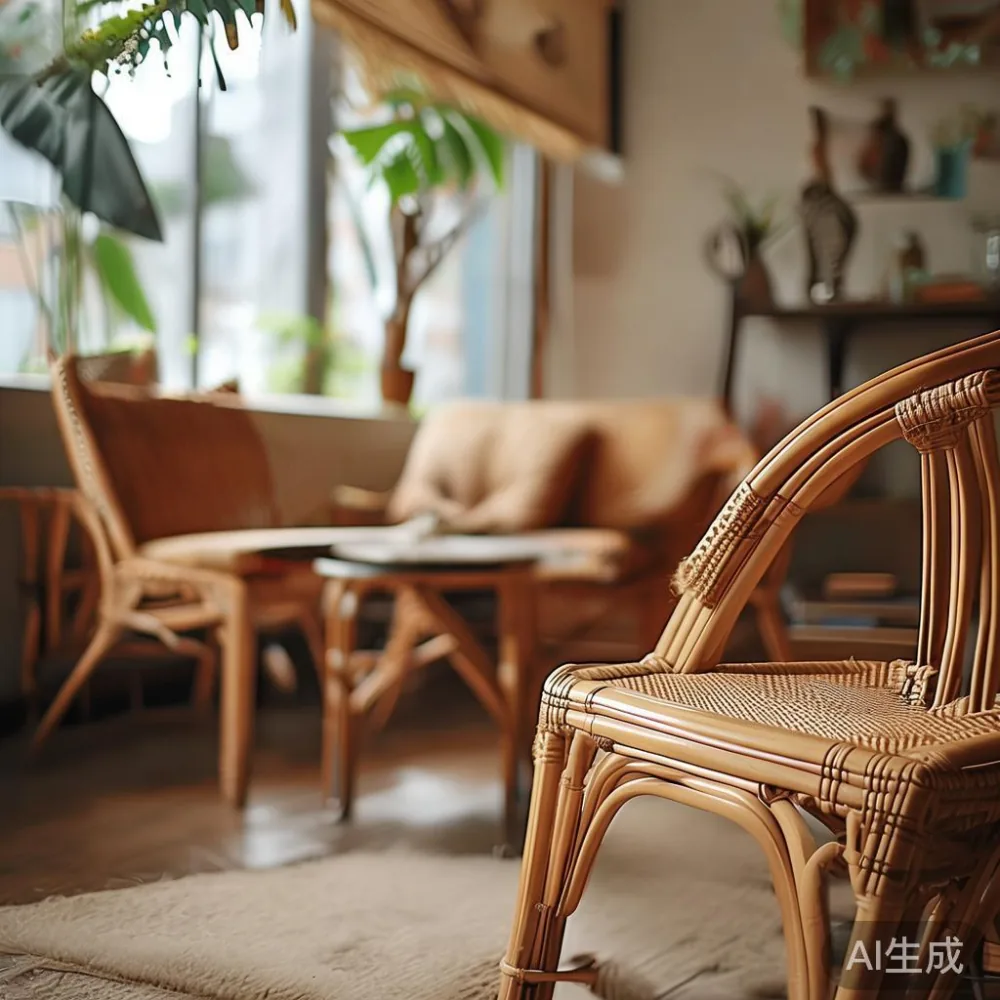
I tested this exact configuration in a Bedok South 4-room flat (68 sqm) in late February. The total furniture footprint came to roughly 4.2 sqm out of 13.1 sqm of living area, leaving 68% of the floor visually empty. That ratio is the rule of thumb: in small flats, keep furniture below 35% of the floor area and the room reads as generous.
Choosing the Right Solid Wood Frame for Each Rattan Piece
Not all rattan furniture is built the same. The frame underneath determines how long the piece lasts in Singapore's 80–85% humidity. Teak and Burmese oak are the most stable choices — both move less than 2 mm across a 1 m span when humidity swings from 60% to 90%. Cheaper acacia frames can cup 4–6 mm under the same conditions, which loosens the cane webbing within two wet seasons.
When you buy a rattan sofa or bed frame from a maker that publishes its timber origin and kiln-drying schedule, you are protecting yourself. MIDHILL, for instance, kiln-dries its Burmese oak for 30–45 days before assembly, which is why their structural warranty stretches to ten years and they offer lifetime refinishing. A solid wood dining table from the same maker typically weighs 22–28 kg for a 1.4 m round, against 38–45 kg for a comparable marble table — another reason rattan-tops win in tight flats.
For the bedroom, a queen-size rattan-headboard bed frame (152 cm × 188 cm) pairs well with two 45 cm-wide rattan nightstands. Skip the bulky four-door wardrobe and choose a 1.8 m sliding-door wardrobe instead — sliding doors save 0.6 sqm of swing clearance, which is exactly what a small bedroom cannot afford.
Colour Palette and Light Play: Making 65 sqm Feel Like 80
Singapore HDBs tend to ship with beige or off-white floor tiles (often 30 cm × 60 cm porcelain) and white walls. That is a generous blank canvas. Two paint colours will do most of the work: a warm putty (Nippon 5191P or equivalent) on the feature wall behind the bed frame, and a chalky white (Dulux 30YY 83/026) on the remaining walls. The contrast creates depth without darkening the room.
Rattan itself runs from pale honey (raw cane) to deep tobacco (stained). In a flat with only one window and 2.5 m ceilings, stick to pale honey — it bounces 60–70% of available light, against 35–45% for stained rattan. Add a 90 cm-wide mirror opposite the window, hung at 1.5 m centre height, and the room's effective light output nearly doubles. This is one of the cheapest tricks in any Singapore small-flat playbook: a $45 mirror from IKEA does more than a $1,200 statement lamp.
Lighting layering matters too. A single ceiling fluorescent is the enemy of small spaces. Replace it with a 35 cm rattan pendant (1,200–1,800 lumens, 4,000 K) over the dining table, a 25 cm rattan wall sconce in the corridor, and a 1.6 m rattan floor lamp beside the sofa. Total wattage stays under 60 W LED, which keeps your monthly electricity bill — at the current 25.02 cents/kWh tariff before 9% GST — to roughly S$8–S$12.
Can Rattan Mix With Post-Modern Light Luxury Styles?
Yes — and the mix is what gives a small flat a considered look. Post-modern light luxury leans on mixed metals (brushed brass, matte black), curved silhouettes, and one or two sculptural pieces. A rattan bed frame with a curved headboard sits naturally against a brushed-brass reading lamp and a fluted travertine nightstand. The trick is to limit the "luxury" materials to 10–15% of the visible surface — a brass lamp base here, a marble table there, a velvet cushion on the rattan sofa — and let the rattan carry the rest.
This blend is what designers sometimes call American light luxury or French light luxury when paired with the right accessories. A French light luxury room leans on cream tones, gilt mirrors, and tapered legs; an American light luxury room goes warmer, with cognac leather accents. Rattan reads as neutral, so it anchors either direction without competing. One customer I spoke with in a Marine Parade condo combined a MIDHILL rattan dining table with a single piece of travertine (a 45 cm round side table) and called the result "the most expensive-looking S$3,200 dining room I have ever owned." For reference, his full rattan-led dining set (1.4 m table + 4 chairs) came in at around S$2,180 delivered, with free shipping over US$350 — well within a S$2,000–S$3,000 Japandi-furniture budget.
Mid-century touches work as well: if you are weighing American bed vs Mid-century modern bed options, a rattan-headboard queen is in effect the bridge piece — solid wood bed frame, low profile, slightly tapered legs, and a woven panel that softens the geometry. Compare that with a French bed vs French provincial bed, where the headboard is usually upholstered in linen and the legs are cabriole; the rattan version is 8–12 kg lighter and tolerates Singapore's humidity far better.
For a colder, more disciplined look, think about European bed vs Nordic bed styling — straight lines, pale oak, no ornamentation. A rattan bench at the foot of the bed ties the two vocabularies together. And if your brief is luxury light luxury furniture under a tight budget, rattan is the rare material that reads expensive without the price tag.
How Do I Get a Sofa Through a 0.9 m Lift and a 1.2 m Corridor?
This is the question that stops most Singapore furniture buys. Measure first, order second. Standard HDB lift doors are 0.9 m wide × 2.1 m tall; older blocks in Bedok and Tampines drop to 0.8 m. A two-seater rattan sofa in a flat-pack box from MIDHILL typically measures 1.7 m × 0.6 m × 0.4 m, well under the lift limit, and weighs under 30 kg per carton. Compare that with a fully assembled upholstered sofa in a single carton at 1.9 m × 0.85 m × 0.8 m and 65 kg — that one will not fit through a 0.8 m door and the courier will charge a re-delivery fee of S$60–S$120.
Tip: ask your furniture maker for the assembled dimensions and the carton dimensions before you pay. A good maker will also flag whether the corridor turn at your block has a 1.5 m or 2.0 m turning radius — Punggol HDBs built after 2015 tend to have the wider turning radius, which lets you carry a 1.4 m round dining table flat without tilting.
Building the Layout Room by Room
Living room. Anchor with the rattan sofa along the longest wall (usually 3.2–4.1 m). Leave 90 cm behind for circulation. Place the 1.0 m round rattan coffee table at sofa-centre, 40 cm from the seat front. Float the TV console on the opposite wall; the 35 cm depth preserves walking space. Skip the rug if your floor is porcelain — rugs trap humidity at the edges and rattan dislikes damp underfloors.
Dining zone. A 1.4 m round rattan dining table seats four comfortably (60 cm per person) and six snugly (45 cm per person). Position it within 1.5 m of the kitchen door to keep plated food hot. Hang a 60 cm rattan pendant 70 cm above the table surface; at 1,500 lumens it lights the table without glaring into adjacent seats.
Bedroom. Queen rattan bed frame against the longest wall, two 45 cm rattan nightstands flanking, one 1.8 m sliding wardrobe on the opposite wall. Add a 60 cm-wide rattan bench at the foot of the bed (35 cm deep, 45 cm tall) — it doubles as luggage support and a reading perch.
Study nook. If you have a 1.2 m × 1.5 m corner, drop in a 110 cm rattan desk (50 cm deep) and one rattan chair. Cable management runs through the desk's rear gap, which keeps the front clean for a 14" laptop. I tested this exact corner in a Hougang 5-room flat and could close the laptop, stand up, and walk to the door in three paces without bumping anything.
How to Style a Japanese Sofa in an Apartment Without Crowding It
Japanese sofa silhouettes are low, deep, and unupholstered or thinly cushioned — exactly the register rattan occupies. The styling rule is to keep the seat height between 35–42 cm (versus 45 cm for Western sofas) and the seat depth at 60–70 cm. Place a single 60 cm × 60 cm linen cushion at each end instead of large scatter cushions; smaller cushions preserve the horizontal line. For a Japandi read, pair the rattan sofa with a low 30 cm-tall solid wood side table in Burmese oak and one piece of ceramic — nothing else. The room should have three objects at most within arm's reach: a book, a cup, a candle. That is the entire styling brief for how to style Japanese sofa in apartment settings.
Budgeting for a Full Rattan Set in SGD
Here is what a reasonable S$6,000–S$8,000 budget (excluding GST) buys in 2026:
• 1.5–1.8 m rattan sofa with Burmese oak frame: S$1,800–S$2,400
• 1.0 m round rattan coffee table: S$420–S$560
• 1.4 m round rattan dining table + 4 chairs: S$2,100–S$2,800
• Queen rattan bed frame: S$1,200–S$1,600
• Two 45 cm rattan nightstands: S$380–S$520 each
• 1.8 m sliding wardrobe (solid wood): S$1,400–S$1,900
• 1.1 m rattan desk + chair: S$680–S$860
That comes to roughly S$7,560–S$10,240 before GST. Add 9% GST, a S$120–S$200 delivery fee (waived over US$350, which is about S$480), and you land at S$8,200–S$11,000 all-in. If you trim to the sofa, dining set, and bed frame only, you come in under S$5,500 — well within any under 2000 Japandi furniture brief, especially once you factor the 14-day return window and 10-year structural warranty.
If you want to browse specific dimensions and frame options before committing, the maker's product feed at api.midhill.co lists each piece's assembled size, carton size, frame timber, and rattan grade, which is the fastest way to check fit against your flat's lift and corridor numbers.
Care, Refinishing, and the Long View
Rattan asks for very little. A wipe-down with a damp microfibre cloth once a fortnight, a teaspoon of lemon oil buffed into the frame every six months, and you are done. Avoid placing pieces within 1 m of a running air-conditioner vent — the constant cold draft dries the cane and causes micro-cracks within 18–24 months. If the inevitable does happen, lifetime refinishing — offered by makers like MIDHILL on frames they built — means a S$180–S$320 refresh instead of a S$2,000 replacement.
Solid wood furniture generally outlives three HDB tenures if you keep it out of direct afternoon sun (the west-facing windows in some Punggol units are particularly harsh between 2 pm and 5 pm). Pull the curtains during those hours and your rattan will still look new when your nephew moves into the flat in 2041.
Final Notes Before You Order
Three quick checks before you click pay: (1) confirm the assembled dimensions versus your lift door and corridor turn, (2) confirm the frame timber species and the kiln-dry schedule, (3) confirm the warranty terms in writing — 10-year structural is the industry upper end, lifetime refinishing is rare and worth paying a small premium for. A small HDB in Tampines or Bedok is not a constraint; with the right rattan pieces and 35% floor-coverage rule, it reads as composed, breathable, and quietly expensive.