Humidity-Proof Furniture for Singapore Homes: Rattan, Solid Wood and Careful Care
Singapore’s climate changes furniture faster than many buyers expect. Humidity can swell solid wood, loosen joints, encourage mould around vulnerable surfaces and leave rattan furniture feeling rough or limp. In a compact HDB flat or condo, those effects matter because furniture must also fit through a narrow lift, turn along a corridor and look composed in a room of perhaps 35 sq m.
Last month I visited a family in Tampines who had placed a solid wood dining table beside an air-conditioning vent. The table was less than 2 years old, but one end had lifted by about 4 mm after repeated damp evenings. Their air conditioner lowered the room to 24°C during the day, yet the relative humidity still climbed above 80% at night. That visit confirmed that air movement, ventilation and careful placement matter alongside the usual advice about wiping furniture dry.
This guide explains how Southeast Asian humidity affects wood and rattan furniture, how to select pieces for Singapore conditions and how to maintain them without turning care into a full-time job. It also considers the measurements, delivery logistics and design decisions that matter in places such as Bedok, Punggol and newer private condominiums.
Why Does Humidity Affect Wood Furniture in Singapore?
Singapore has an average annual rainfall of roughly 2,340 mm, high humidity throughout much of the year and frequent tropical downpours. Exterior doors and windows can admit damp air, while a bathroom or kitchen introduces additional moisture. Even with air conditioning, a closed flat may experience 12–16 hours each day when the room temperature falls from around 25°C to 24°C and moisture gradually settles into materials.
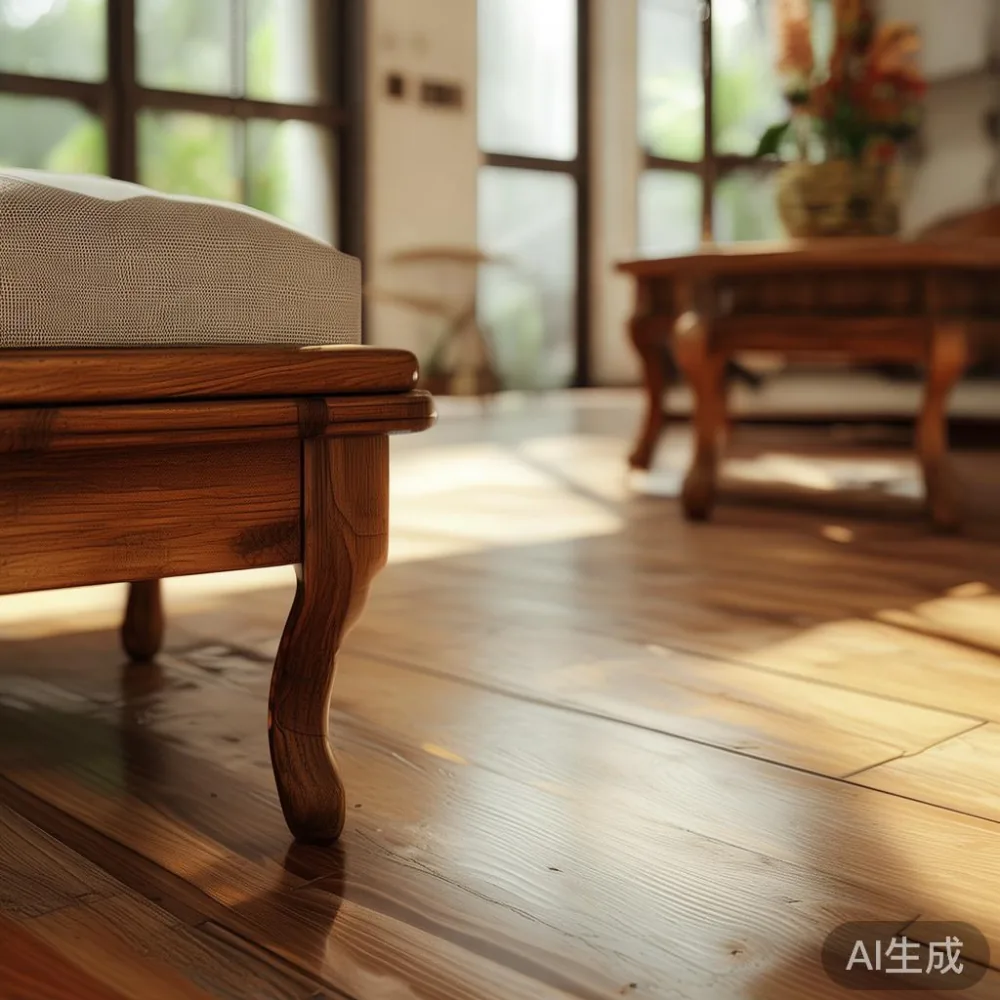
Solid wood is hygroscopic: it absorbs moisture when the surrounding air is humid and releases it when conditions become drier. A oak board might expand across its grain by approximately 1–3% between noticeably damp and dry conditions. Oak is common, but walnut, ash, teak and rubberwood also react, with the amount varying by species, panel construction and finish.
The visible result may be a bowed tabletop, a drawer that catches, or gaps of 2–5 mm at a joint. Veneered panels can move less because their thin layers are bonded to a stabilizing substrate, though exposed edges and particleboard components still need attention. Solid wood sofa frames, bed frames, wardrobes and nightstands should be built to tolerate normal seasonal movement rather than being sealed as though they were completely moisture-proof.
Humidity also affects adhesives and finishing coatings. A water-based lacquer may resist a damp fingertip, but prolonged exposure can still cause haze, blistering or peeling. Marble is less absorbent than wood, yet its porous structure can stain if acidic liquids remain. Marble table care therefore differs from solid wood care: dry the top promptly and use a pH-neutral cleaner rather than assuming one product suits every surface.
How Does Tropical Humidity Change Rattan Furniture?
Rattan furniture suits the region visually because its woven texture feels relaxed, breathable and connected to Southeast Asian craft traditions. It also works well beside solid wood pieces, creating contrast without making an apartment look oversized. Yet rattan is a natural fibre and can absorb moisture just as wood does.
For good reason, quality rattan furniture is dried and finished before weaving. Expect frame members to use rattan cores around 18–25 mm in diameter, with a peel of roughly 1–3 mm used for weaving. In a living room, indoor rattan furniture should be kept away from direct rain, kitchen steam and bathroom splashes. Wipe it with a slightly damp cloth, then dry it within 30 minutes.
Humidity may cause loose strands to lift by 1–2 mm or make tightly woven seats feel less comfortable. A gentle mist is sometimes recommended for genuine rattan because it can relax fibres during reweaving, but excessive moisture can cause swelling, staining and mildew. For painted rattan, use a soft dry cloth first and avoid flooding the weave.
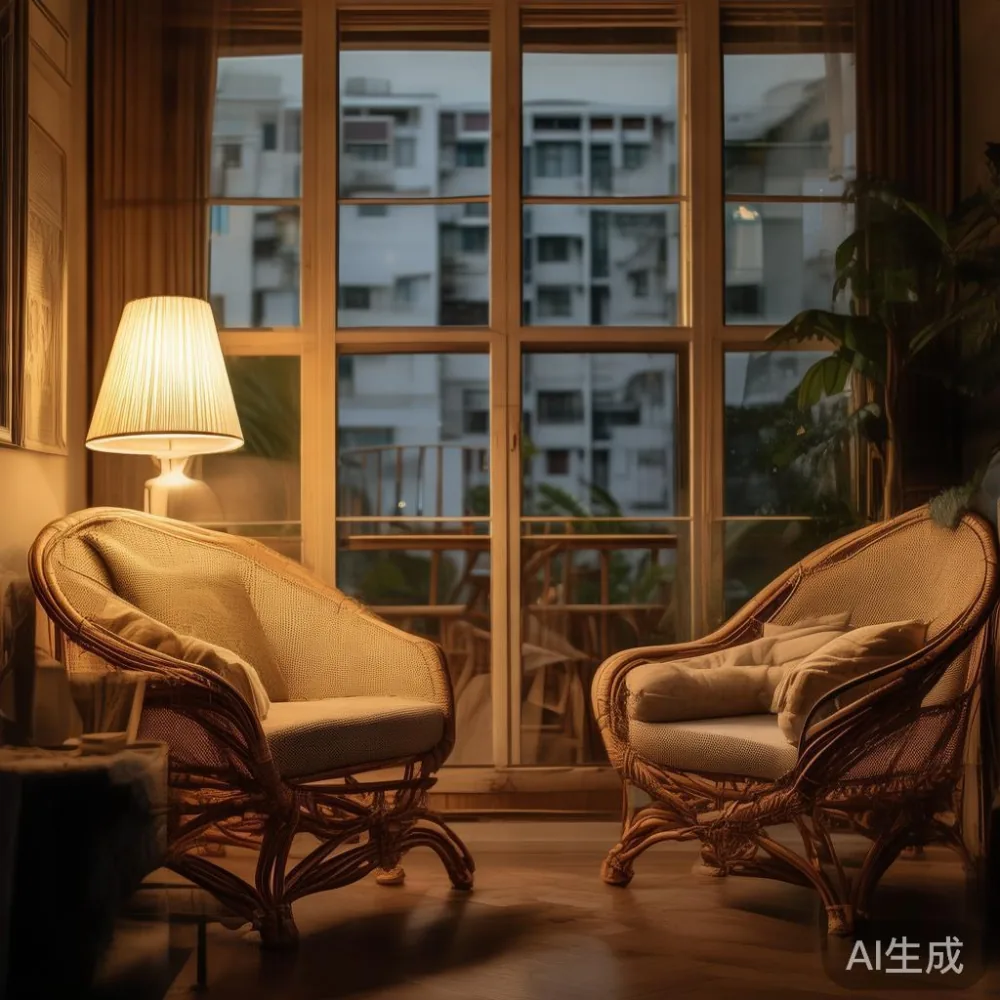
Placement is especially important in a condo with a west-facing balcony. A rattan chair should sit at least 60 cm away from an open balcony door during heavy rain and 30 cm from a wall exposed to condensation. Air circulation around the back and underside matters. A small 30 W fan running for 1–2 hours can help dry furniture after a storm, provided it is positioned safely and does not merely move humid air from one corner to another.
Rattan furniture and solid wood should not be forced into an identical care routine. Rattan needs controlled moisture and airflow; sealed wood needs gentle cleaning and periodic finish inspection. Their shared requirement is restraint: less water, more drying time and regular observation of the joints and fibres.
What Furniture Measurements Fit HDB Flats and Condos?
Choosing a large piece in Singapore is a matter of dimensions as much as style. Older HDB lifts may have internal widths around 900–1,100 mm and door widths near 800–900 mm, while newer blocks and private condos vary considerably. A dining table may fit the lift but still fail to clear a corridor turn or the flat’s front door.
Measure the full route before ordering: lift door, lift interior, corridor, staircase turns, main door and the intended dining position. Add a clearance of at least 50 mm on each side of the largest removable component. A table top that cannot be separated should have dimensions checked diagonally, not only across its width.
For a typical Tampines or Bedok flat, a dining table measuring 140 × 80 cm can seat 4 people, while a 160 × 90 cm table suits 6 people. Allow 90 cm of circulation behind each chair and 75–90 cm between the table edge and a wall. In a compact dining zone, an extendable model that closes to 120 × 75 cm may be more practical than a permanently large table.
Bed frames need a different calculation. A queen mattress measures approximately 152 × 203 cm in Singapore, and a queen bed frame may be 165 × 215 cm externally. Allow 5 cm each side for wall clearance and another 5–10 cm for electrical sockets or a nightstand. Lift access may require the headboard and side rails to detach. Ask for component dimensions and assembly instructions rather than assuming a boxed bed frame will pass every corridor.
Wardrobes should be planned around sliding or folding doors. A flat-pack wardrobe may arrive in cartons no larger than 1,200 × 600 × 250 mm, but check whether the lift can take the carton diagonally. For slim rooms, 45 cm is a practical minimum depth for hanging clothes, while 55–60 cm permits better drawer movement and fuller door operation. A nightstand measuring 40 × 35 cm is enough for a 30 cm cup, a book and a charging cable, but the handle and drawer projection still need 5–10 cm of clearance.
Delivery in Singapore commonly takes 3–7 working days after stock is confirmed, while made-to-order pieces may require 30–60 days. Lift or doorstep delivery should be agreed in writing. If a stair carry is required, ask whether it is included and whether the crew can deliver to the flat door. Never assume a ground-floor pickup point is free; a small delivery charge may apply.
How Do You Keep Solid Wood Furniture Stable in Damp Weather?
Start by controlling the room rather than repeatedly treating the furniture. Keep relative humidity around 45–65% where practical, with indoor temperatures near 23–26°C. A calibrated hygrometer costs about SGD 20–45 and is more informative than guessing from the feel of a floor. In Bedok and Punggol homes, place a hygrometer near the living area, then compare readings with the balcony and bedroom.
Cleaning should use a microfibre cloth lightly dampened with water or a pH-neutral wood cleaner. Wring the cloth until it is almost dry, and never allow liquid to pool around a joint, plinth or foot. Dry the surface immediately. Clean a dining table every 1–2 weeks during dusty periods and immediately after spills. Avoid silicone-based sprays, ammonia and general-purpose bathroom cleaners unless the manufacturer confirms compatibility.
Pay attention to edges, undersides and hardware. A soft brush with 10–15 mm bristles can remove dust from carved profiles and drawer runners. Tighten screws when seasonal movement loosens them, but do not overtighten wood screws into swollen timber. Apply a manufacturer-approved maintenance finish when the existing coating looks thin. Depending on the finish and use, renewal may be needed every 12–24 months in a humid home.
For a solid wood sofa or bed frame, vacuum upholstery and inspect under cushions. Lift cushions every week rather than every month so trapped moisture does not remain hidden. A removable cover that can be washed at 30°C is useful, subject to its care label. For a marble table, wipe acidic coffee, wine and citrus within 10 minutes. Use coasters and trivets, and avoid placing hot cookware directly on the stone.
MIDHILL offers a 10-year structural warranty and lifetime refinishing, which can make long-term maintenance more manageable. These commitments do not mean tropical humidity has no effect; they indicate support for structural repairs and refinishing over the furniture’s service life. Always retain the care instructions and proof of purchase.
Is Japanese Bed Worth It for a Humid Singapore Bedroom?
Japanese beds can suit a Singapore bedroom when their dimensions, ventilation and material construction suit the room. Low-profile frames often create visual space in an HDB flat and leave more useful floor area than a bulky upholstered frame. However, a platform frame with a solid timber slatted base should allow air to circulate beneath the mattress, and the slats should be spaced at roughly 5–10 cm intervals.
Search results often ask is Japanese bed worth it, and the answer depends on sleeping habits and climate control. A Japanese-style bed that uses solid wood slats, has no enclosed box and permits moisture to escape is generally practical in a well-ventilated room. Avoid an airtight storage base if the room regularly exceeds 70% relative humidity. In a room of 10–12 sq m, a queen bed measuring 152 × 203 cm may already consume most of the floor area, so full extension of a futon requires 35–45 cm of extra space.
The phrase Japanese bed vs Japandi bed is useful when comparing design intent, not necessarily construction. A Japanese bed prioritizes a low, simple silhouette, while a Japandi bed may combine Scandinavian proportions with Japanese-inspired joinery or a warmer finish. Both can work in a condo, but a humid-room buyer should examine the underside, fasteners and ventilation rather than relying on style labels alone.
For guest rooms, Post-modern for guest room planning can mix clean-lined storage with one sculptural feature. An upholstered guest chair in ochre, rust or sage may be less demanding than a large sofa in a rarely aired room. A 120 cm daybed or a compact bed frame with a 40 cm nightstand could provide flexibility without overfilling the space.
How Do You Style Light-Luxury Furniture Without Overloading a Small Flat?
Light luxury works in Singapore when it comes from proportion, texture and material quality rather than excess. French light luxury might use a cream solid wood sofa with curved arms and refined stitching. American light luxury often leans toward deep upholstery, clean profiles and substantial side tables. Post-modern light luxury can use warmer woods, mixed materials and restrained geometric forms. In an HDB interior, one language is usually more convincing than all three at once.
For a 30–40 sq m living room, begin with a sofa around 180–220 cm wide. Leave 35–45 cm between the sofa and coffee table, and about 75–90 cm from the coffee table to the television wall. If there is a balcony doorway, avoid placing the longest dimension directly across the circulation route.
Searching for how to style American sofa in apartment layouts usually leads to layered cushions, a rug and balanced side lighting. In a humid climate, choose removable cushion covers and washable textiles, and keep the sofa at least 15 cm from a wall where feasible. A 160 × 230 cm rug under the front legs can visually anchor the arrangement, provided the lift and corridor allow the rolled rug to pass through.
Those asking how to style Japanese sofa in room schemes can keep the palette to 2–3 colours and use low furniture to preserve sightlines. For how to style European light luxury sofa in bedroom arrangements, a slim 180–200 cm sofa may work only in a larger room; a loveseat or compact armchair is often more sensible. Bedrooms also need clearances of 60 cm on at least one side of the bed and 40 cm near a nightstand.
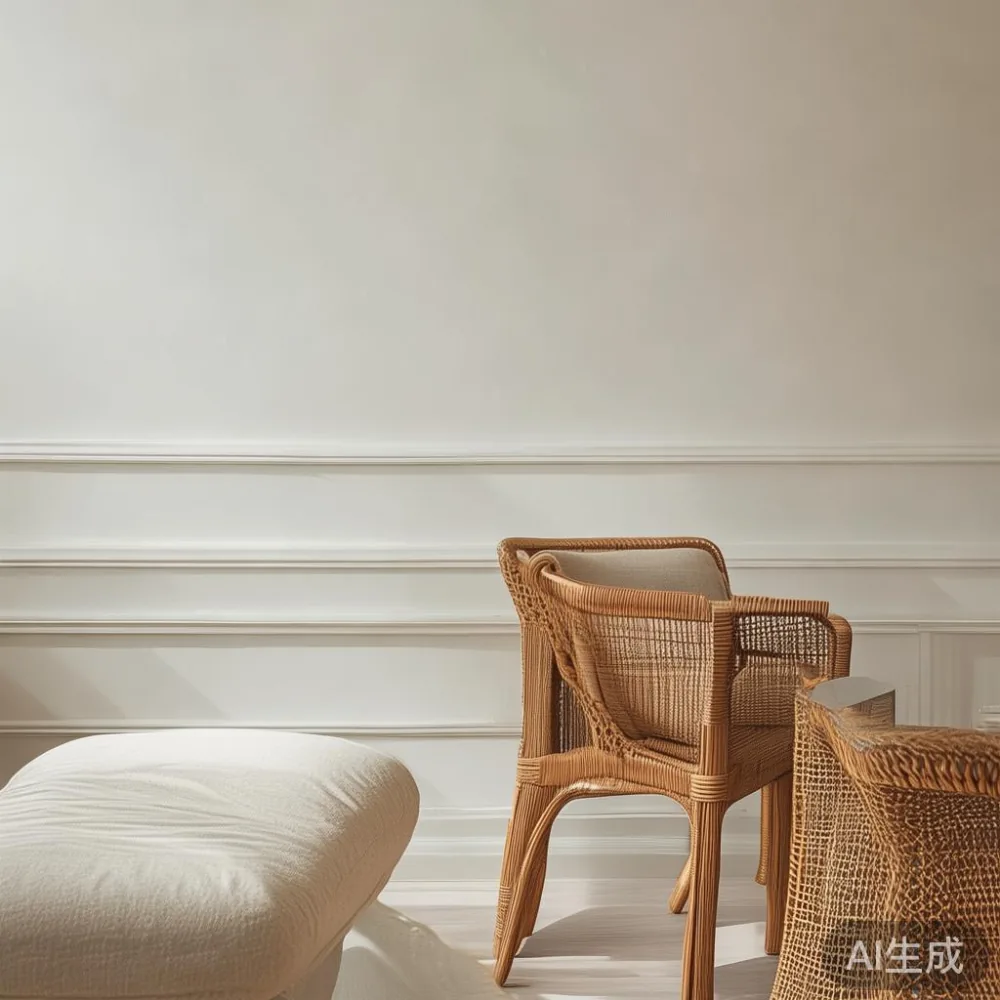
Pairing rattan furniture with solid wood can make a compact room feel lighter. Place a rattan chair beside a solid wood dining table, then use a marble table or marble-topped console to introduce a cool surface. Keep the combination visually quiet: one woven item, 2 wood tones and 1 stone accent may be enough. Allow 20–30 cm between a rattan chair and a wall if ventilation is limited.
What Should You Ask Before Ordering?
Ask the seller for clear information about moisture movement, finishes, component sizes and delivery access. A responsible supplier should distinguish indoor rattan furniture from pieces intended for covered outdoor use. The latter may tolerate occasional damp conditions but should not be placed under awnings where rain blows sideways.
Request photographs of the underside, joints and storage areas. Check that drawers and doors have sensible clearances, and that a bed frame can be carried in separate sections. For a dining table, ask how the top is joined and whether the supplier will accommodate a split top if the lift is narrow. For a wardrobe, obtain the packed carton dimensions and the number of installers required.
Confirm the total price in SGD, including GST, delivery, lift carry and installation. Singapore’s standard GST is 9%, and the final amount should be shown clearly on the invoice. MIDHILL provides free shipping for qualifying orders above US$350, but international thresholds should not replace a clear quotation for the Singapore address, lift service and any optional installation.
Check the returns process and the meaning of the structural warranty. A 14-day return period offers time to inspect the furniture in its final room, especially when colour and proportion cannot be judged from a showroom photograph. For any damage, photograph the carton, pallet and item before assembly, then report it within the stated period.
Humidity does not make furniture unusable in Southeast Asia. It makes disciplined selection more important. Choose solid wood with stable joinery, select well-dried rattan furniture, give pieces room to breathe and maintain a steady indoor environment. Measure every access point, confirm delivery in SGD, and choose finishes that can be maintained over 10 years rather than treated as permanent barriers against tropical moisture.