How to Match Rattan Furniture to a Warm Minimal Interior
A warm minimal interior does not need to feel sparse. In a Singapore HDB flat or condo, rattan furniture can introduce texture, softness, and a measured sense of calm without filling every corner. The balance comes from choosing light pieces with clear outlines, keeping the palette close together, and allowing one material to carry the room’s character. For a 90 sqm Tampines flat or a compact Bedok condo, those decisions become especially practical because doors, lifts, corridors, and storage all influence what furniture can realistically enter the home.
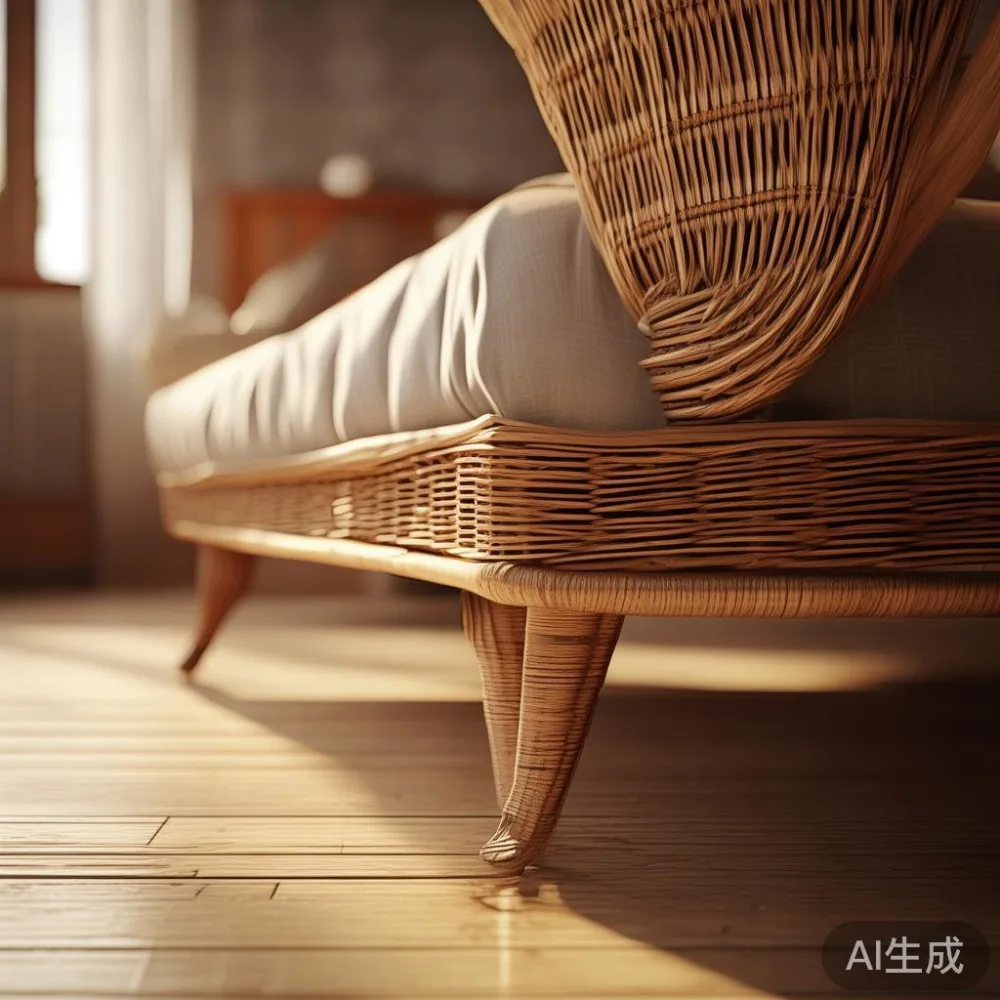
At MIDHILL, we work with solid wood and natural rattan to create pieces that suit both restrained and expressive interiors. Rattan furniture works particularly well in warm minimal rooms because its woven surface catches light while the underlying structure remains visually light. A well-proportioned dining table, sofa, or nightstand can make a room feel furnished rather than crowded. The aim is not to match every object; it is to create a few dependable relationships between proportion, material, colour, and light.
What makes warm minimalism different from an empty room?
Warm minimalism is built around controlled comfort. A plain white room can feel cold when it has only hard surfaces, but timber, woven fibres, linen, and warm white lighting soften the same architecture. Rattan furniture gives a room tactile depth without requiring many decorative objects. Its open weave reflects daylight, making a compact space appear slightly more breathable.
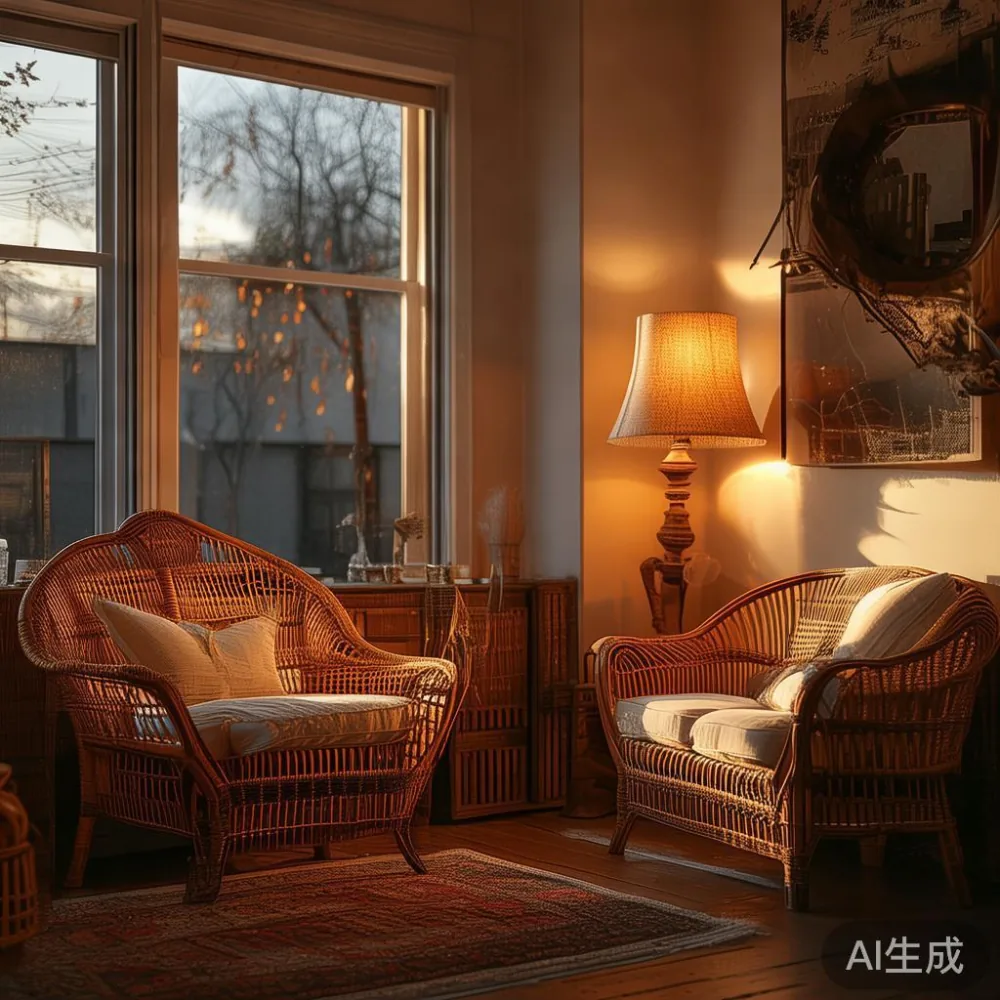
For local planning, begin with the dimensions of the actual room and the route into it. A standard HDB lift may measure roughly 90 cm by 140 cm, although older and newer blocks vary. A large package may fit the lift opening but still be difficult to turn through the corridor or staircase. Measure the narrowest point, the door width, and the turning space near the entrance before ordering anything wider than 70 cm. If you are comparing supplier information, a search for MIDHILL coffee table wholesale can be a useful way to understand packing formats, but a coffee table still needs to be checked against your own lift and doorway dimensions.
Warm minimal rooms also benefit from a limited palette. Choose 3 main colours: a pale neutral, a medium timber tone, and a darker accent. Add 2 material families, such as solid wood and rattan, rather than 6 competing finishes. In this approach, furniture becomes part of the interior’s rhythm. A 160 cm solid wood sofa, a 140 cm dining table, and 2 slim nightstands may be enough to establish a complete visual language.
How should rattan furniture fit a small Singapore living room?
Measure the usable floor area before choosing the largest piece. Leave at least 75 cm of walking space between a sofa and dining chairs where people pass frequently. A sofa around 180–200 cm can suit a rectangular living room, but an oversized model may interrupt the route from the entrance to the balcony. In a compact Punggol unit, a 150–170 cm solid wood sofa with a seat depth of 55–60 cm often feels easier to manage.
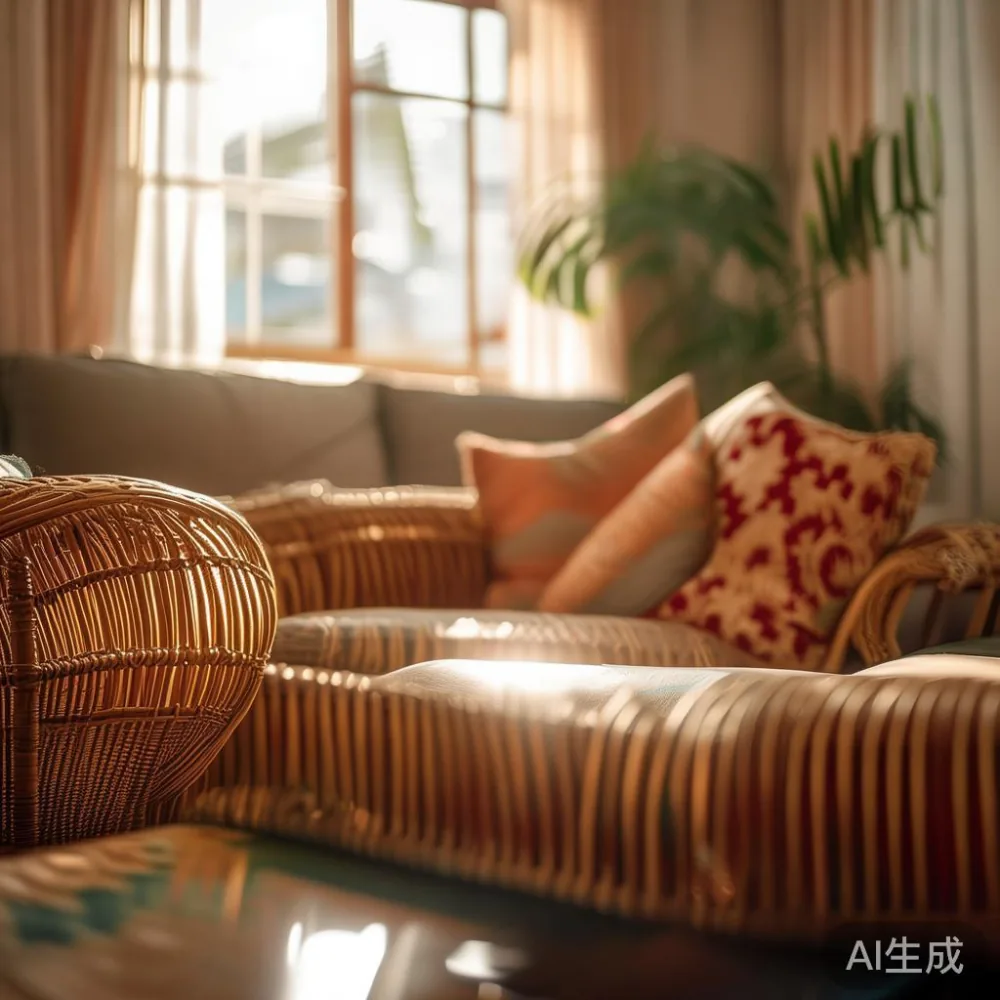
Light luxury for small living room does not mean adding ornate decoration. It means proportion, finish, and comfort. A low solid wood sofa in a pale oak or honey tone can provide a calm base. A rattan lounge chair, placed near a window, adds airiness while remaining connected to the wood. Keep the chair 10–15 cm away from a heavy side table if the floor area is tight; this small gap prevents the seating group from looking crowded.
Rattan furniture should be scaled to the room, not treated as a decorative afterthought. A 120 cm rattan dining table can work in a 3 by 3.5 m dining zone, but allow 90 cm behind each chair for movement. In a smaller area, consider a 100–110 cm round or oval table. The curved edge gives knees more space and helps the route around the table. For a home with children or frequent visitors, select tightly woven rattan rather than an open frame that can collect dust.
Lighting matters just as much as footprint. A warm 2700K lamp creates a gentler atmosphere than a cool ceiling light. Place one lamp at approximately 120–150 cm above a side surface, and use curtains that stop just above the floor. The combination of woven texture and warm light makes solid wood feel more tactile while keeping the room visually quiet.
Which rattan pieces work best in a warm minimal bedroom?
Begin with the bed frame, because it determines the room’s centre of gravity. A 150 cm queen bed frame suits many HDB bedrooms, while a 180 cm king frame needs more circulation on both sides. Aim for at least 60 cm between the bed and a wardrobe door when drawers open. A low oak or walnut-toned frame with a simple headboard creates a calm backdrop; avoid combining several carved patterns with woven furniture.
Use 1 nightstand beside the bed, or 2 matching pieces if the room is wide enough. A nightstand between 40 and 50 cm wide provides space for a lamp, a glass of water, and a phone without taking over the bedside area. A rattan-front nightstand can echo a rattan wardrobe door or a woven screen, but it should not be so open that small objects disappear visually.
Wardrobes should be treated as part of the composition, not as a separate bulky object. A 180 cm wardrobe may suit a bedroom with a 300 cm wall, while a 150 cm sliding-door model can work on a narrower wall. Sliding doors reduce the clearance required for opening and are useful in rooms where a hinged door would meet a bed or corridor. A light timber exterior with matte handles complements warm minimalism better than glossy black hardware, provided the handles are strong enough for daily use.
For guests, Modern light luxury for guest room can be achieved with a compact daybed, a small wall shelf, and a single warm lamp. Keep the colour range to cream, sand, light brown, and muted green. A marble table can be used in a guest room, but choose a narrow rectangular or round form rather than a thick statement slab. A 50 cm diameter marble table beside a chair can provide a surface without competing with the bed.
How can solid wood and rattan share the same room?
Use one material as the visual anchor and the other as a supporting texture. If the dining table is solid wood, choose a rattan chair with a similar honey or amber undertone. If the sofa is upholstered in oatmeal fabric, introduce rattan through a lamp base, a screen, or a coffee table frame. This creates variety without making the room feel assembled from unrelated products.
Proportion is the practical control. Pair a substantial solid wood dining table with chairs that have enough room to slide underneath it. A 140 by 80 cm dining table can seat 4 comfortably, while a 160 by 90 cm version can accommodate 6 with more elbow space. Keep the chair backs about 30–45 cm below the tabletop edge when you want a visually open arrangement. Rattan chairs should have a seat height around 45–48 cm, matching typical dining tables at 74–76 cm.
Texture should also be varied at different scales. The broad grain of a solid wood table, the fine weave of a rattan chair, and the smooth surface of a small marble table create a balanced mix. Avoid placing every hard, glossy, and woven surface together in one corner. A single marble table is enough for contrast; the rest can remain matte and tactile.
For shoppers researching storage or occasional purchases, the best Minimalist wardrobe for 2026 and the best Vintage wardrobe for 2026 are useful search ideas, but the final decision should follow room measurements. A vintage-look wardrobe with framed doors may suit a larger bedroom, while a minimalist flat-front design generally works better in a narrow space. MIDHILL offers a 10-year structural warranty, which can provide useful confidence for solid wood construction, while the finish should still be selected according to the room’s light and maintenance habits.
What should you consider before buying a large dining or wardrobe piece?
Check the complete delivery path, not only the room dimensions. Record the lift door, lift interior, corridor turns, entrance door, and any stairs. A wardrobe 60 cm deep can be difficult to manoeuvre through a 70 cm doorway, even if the individual panels fit. Ask the supplier whether the item is delivered flat-packed or assembled, and request clear measurements for every removable component.
Weight matters for safety and handling. A large solid wood dining table may weigh 45–70 kg, while a 150 cm wardrobe might weigh 80–130 kg depending on the material and internal fittings. Heavy items are not automatically unsuitable, but they should be carried by enough people and positioned on a flat, stable floor. A small trolley can protect the floor, though it should not be used if the route includes narrow stairs.
For local budgeting, prices in Singapore are normally shown in SGD and include GST when sold by a registered retailer. A rattan side table might range from SGD 180 to SGD 450, a solid wood dining table from SGD 1,200 to SGD 3,500, and a larger wardrobe from SGD 1,800 to SGD 4,500. These ranges depend on size, timber, finish, and construction rather than on a fixed catalogue. Allow approximately 14 days for many made-to-order pieces and confirm the delivery estimate before payment.
Returns can protect against size mistakes. MIDHILL provides a 14-day returns policy, and free shipping is available above US$350 for qualifying international orders. For a Singapore purchase, confirm the local delivery terms, packaging disposal, and whether the item has been used before arranging a return. Photograph the furniture and packaging on arrival if you need to document its condition.
How do French, American, and post-modern light luxury styles differ?
French light luxury usually leans towards soft upholstery, refined curves, and a gentle contrast between cream fabric and warm timber. A European light luxury sofa may have a low profile, rounded arms, and a pale linen-like covering. It works in a warm minimal living room if the base is not too bulky and the colour stays close to the walls.
American light luxury often feels more architectural. Clean lines, generous seating, and strong timber frames suit a condo with open planning. A solid wood sofa or bed frame with simple joinery can reflect this direction. The pieces should still feel comfortable rather than rigid; a seat depth near 58–60 cm gives a relaxed posture without consuming unnecessary floor space.
Post-modern light luxury is less about one fixed look and more about controlled contrast. It might pair a sculptural rattan chair with a simple solid wood table, or place a marble table beside matte wood storage. The room remains minimal, but the shapes are not entirely uniform. This approach suits a home that wants a few memorable objects rather than a tightly matched set.
For a guest room, Modern light luxury for guest room can borrow from all 3 styles: a clean solid wood bed frame, one curved rattan chair, and a modest marble table. Keep the composition to 3 main forms. In a warm minimal interior, restraint is what makes the different materials feel intentional.
What did I notice when testing these proportions in a local home?
Last month, I visited a 3-room Bedok HDB flat with a compact living and dining area. I tested a 160 cm solid wood sofa, a 120 cm rattan dining table, and a 45 cm nightstand rather than relying only on catalogue dimensions. The sofa left a comfortable 78 cm route from the entrance to the balcony. The dining table, with 4 chairs, still allowed the lift-side corridor to remain clear.
The most useful change was not a large furniture replacement. It was moving a bulky side table into a 50 cm corner and replacing it with a slim rattan stool. The woven seat introduced warmth, but the open silhouette kept the floor visible. A small marble table looked attractive against the solid wood dining table, although the matte finish blended more easily with the room than a high-polish surface.
That visit also confirmed that measurements must be taken at the point of use. A chair may fit in the dining zone but become awkward beside a bed, and a wardrobe may fit its wall yet block a corridor when opened. My practical test is simple: tape the planned footprint on the floor, walk around it 5 times, and check whether doors and drawers can open. If a route narrows below 60 cm, reconsider the arrangement before ordering.
Which colour palette keeps rattan furniture warm rather than heavy?
Choose colours with a small amount of warmth in both light and dark areas. Pale beige walls work with honey rattan and natural oak. Warm white walls allow a darker rattan frame to stand out without feeling severe. Muted olive, clay, and sand can add depth while remaining suitable for Singapore homes with strong daylight.
Avoid pairing very dark rattan with very dark wood unless the room has ample light and clear spacing. The two textures can merge into one heavy block. A light solid wood bed frame beside a medium rattan nightstand, for example, creates enough contrast to keep each piece legible.
For hardware and accessories, use small matte accents rather than many shiny ones. Black, brushed brass, and warm bronze can each work, but choose 1 finish and repeat it in 2 or 3 places. A 20 cm ceramic lamp, a 30 cm framed print, and 1 textured basket can complete a corner without making it feel over-accessorised.
Finally, maintain the balance with scale. A large sofa needs a simple coffee table, while a compact sofa can support a slightly more sculptural object. A rattan furniture arrangement feels successful when the eye moves easily between 3 anchors: seating, dining, and storage. Keep each anchor visually related through wood tone, woven texture, or muted upholstery, and the room will retain the calm that makes warm minimalism comfortable.