Caring for Lacquered Rattan and Solid Wood Furniture in a Tropical Climate
I spent last March walking through a 9th-floor HDB flat in Tampines with a client who had just unboxed a new lacquered rattan cabinet. The piece had travelled roughly 4,200 km from the Foshan workshop, and by the time it cleared Singapore Customs it had already experienced a temperature swing from a 12°C loading bay into a 31°C container yard. Within ten days the owner noticed a faint haze blooming across the top panel. That haze was not a defect. It was moisture interacting with a thin film finish in a 32°C, 80-percent humidity corridor — exactly the conditions that define most Singapore bedrooms and most Punggol condo balconies for at least nine months a year.
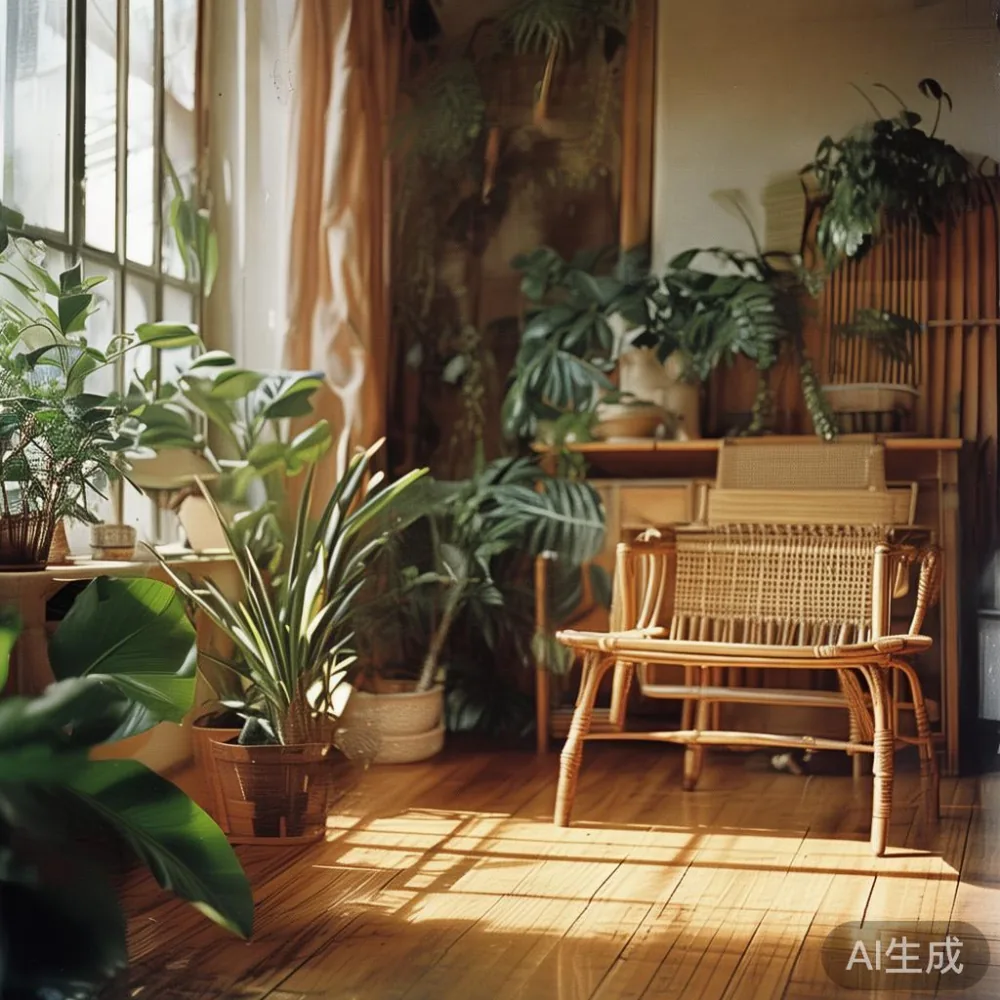
Why tropical humidity is harsh on lacquer
Lacquer is a finish, not a forcefield. The coats used on quality rattan furniture, solid wood dining tables, bed frames, wardrobes, and nightstands are typically nitrocellulose or modified polyurethane, applied in 4 to 8 layers and polished between each. Each layer measures around 0.03 mm, so the total film on a finished dining table top is roughly 0.25 mm. In Singapore, indoor relative humidity sits between 65 and 85 percent for most of the year, and afternoon temperatures inside a west-facing Bedok living room can climb to 34°C even with the air-con set to 25°C. Under those conditions, wood absorbs and releases moisture through every exposed face, and the lacquer flexes with it. A 1.8 m solid wood dining table can move 2 to 4 mm across its width between January's drier days and August's monsoon weeks. Hairline stress marks appear first along the joinery, then across the broad panels.
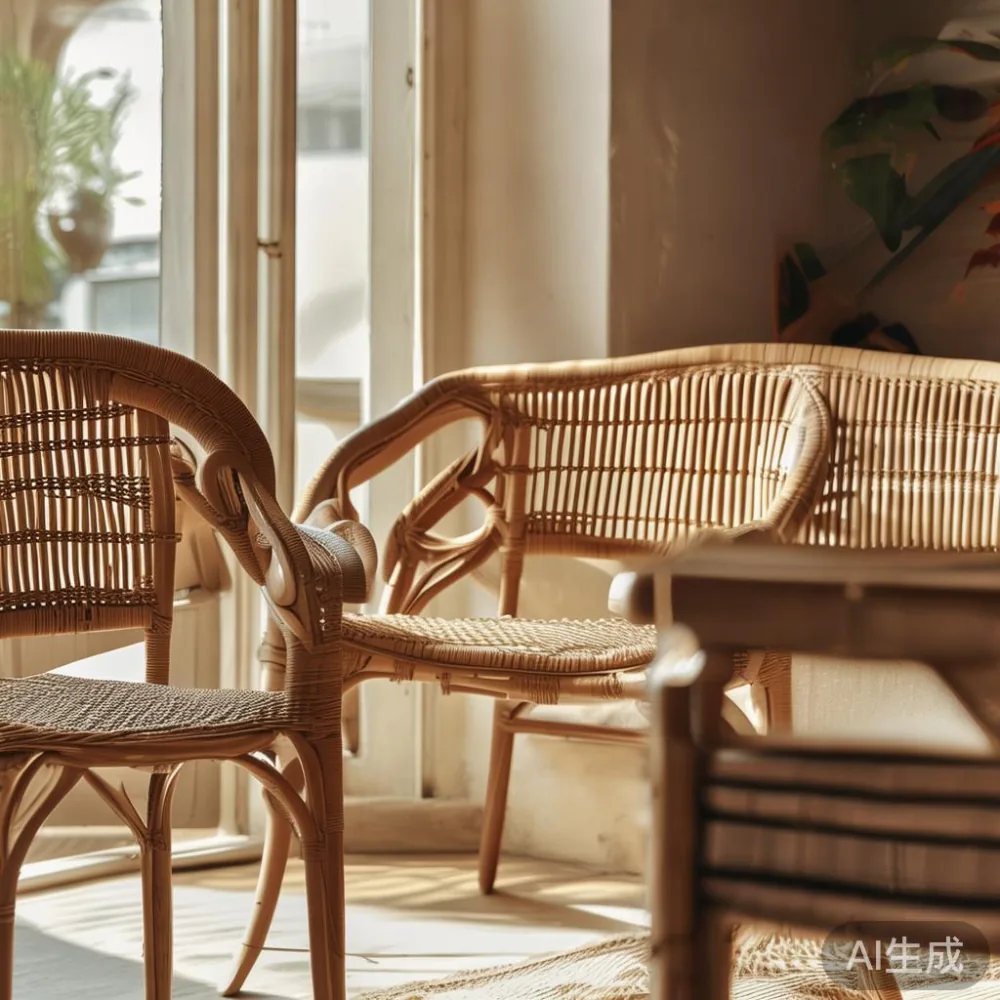
The same physics hits rattan, just faster. Rattan fibres are hygroscopic — they soak up ambient moisture like a sponge. A lacquered rattan headboard left in a 90-percent humidity bathroom for a week will swell, then dry unevenly when the air-con cuts in, and the clear coat will craze. I keep a small hygrometer in every showroom I visit; if the reading passes 75 percent, I know to expect complaints within a season.
What does a proper care routine look like in a HDB or condo?
Three habits do 80 percent of the work. Wipe, regulate, and rotate. Wipe means a soft microfibre cloth, lightly dampened with distilled water, once a week. Distilled matters because Singapore tap water carries 30 to 60 ppm of dissolved minerals, and those minerals cloud a lacquered surface within months. A 5-litre bottle of distilled water costs about SGD 3.80 at Cold Storage and lasts a typical three-room HDB household roughly six weeks. Regulate means holding the room between 22°C and 27°C with relative humidity between 45 and 60 percent. A mid-range dehumidifier such as a 12 L/day unit (around SGD 280 to SGD 340) will pull a 90 sqm condo's bedroom down to 55 percent during the afternoon storms. Rotate means shifting small items — a lamp, a tray, a book stack — on a dining table or nightstand every two weeks, so the lacquer ages evenly and no ghost ring forms.
For lift access, most Singapore blocks allow a cargo of 1.5 m × 0.7 m × 1.8 m before the freight lift booking is needed. A king-size solid wood bed frame in three flat-packed cartons typically clears a standard passenger lift at 1.2 m × 0.9 m × 2.0 m. Measure first; re-delivery fees in a Punggol tower run SGD 60 to SGD 90 per failed attempt.
Which products are safe to use on lacquered rattan?
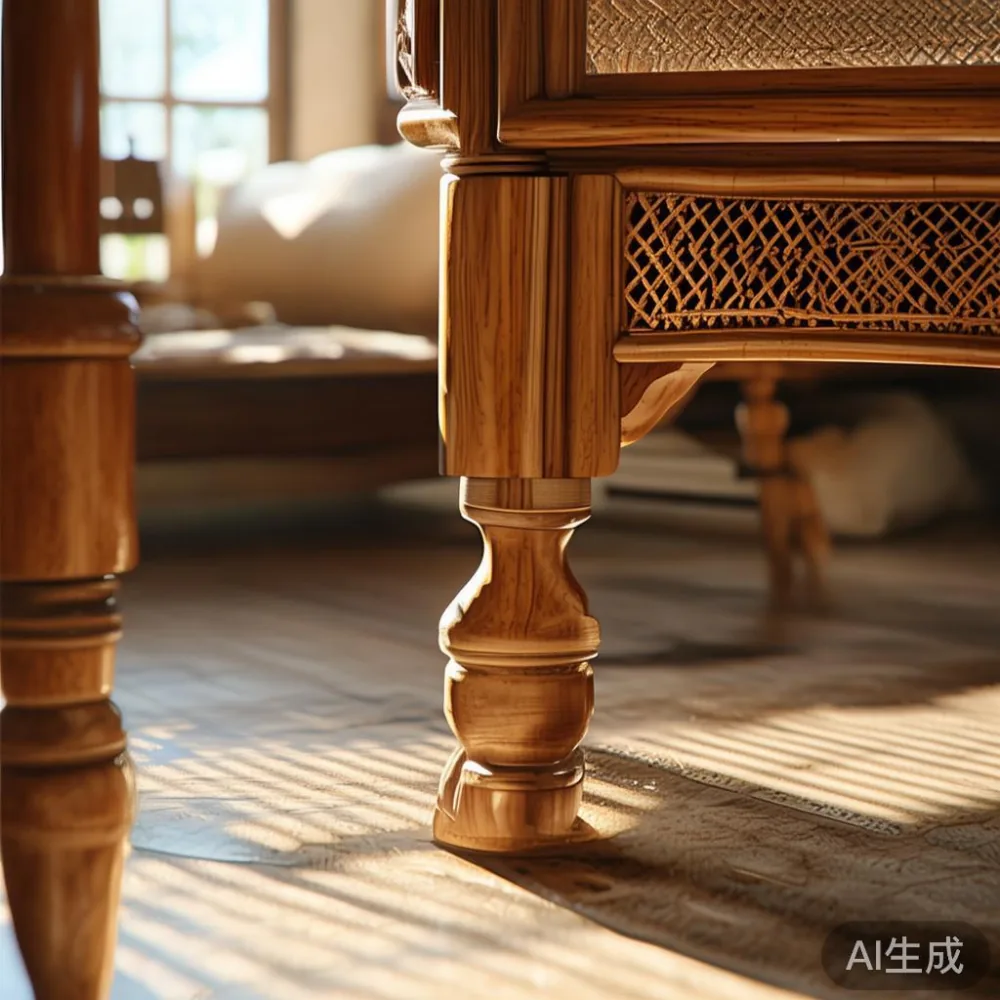
Skip the polishes marketed as "restorers" — most contain silicones that soften the film and attract dust in a tropical climate. Use instead a paste wax formulated for fine furniture: a 250 g tin of neutral Carnauba wax runs about SGD 24 and covers a four-seater solid wood dining table for roughly 18 months. Apply it twice a year, in early February and again in late September, just before the monsoon shift. Use a soft cotton cloth, work in 40 cm circles, and buff within 8 minutes before the wax hazes over.
Avoid silicone sprays, lemon oil, and any product that promises to "feed" the wood. Lacquered surfaces do not need feeding; they need a stable microclimate. For rattan pieces — the woven back of a lounge chair, the cane panel on a wardrobe door — use a soft boar-bristle brush (SGD 6 to SGD 12) once a month to lift dust from the weave before you wipe. Compressed air cans sold at Challenger work for tight corners but hold the nozzle 20 cm back to avoid chill marks on warm surfaces.
Can lacquered furniture last 10 years in Singapore?
Yes, with the right care. MIDHILL offers a 10-year structural warranty on its solid wood sofa frames, bed frames, dining tables, wardrobes, and nightstands, and a lifetime refinishing service that strips the old lacquer and re-sprays 6 to 8 fresh coats at the Foshan workshop. Shipping a dining table back for refinishing in a 0.7 m crate typically costs between SGD 380 and SGD 560 by sea freight from Singapore, plus a 9-percent GST on the service fee, and takes 45 to 60 days door-to-door. Compared with replacing a S$1,600 dining table every 8 years, refinishing once a decade is the cheaper path and keeps the timber out of the landfill.
The numbers help. A lacquered rattan side chair in a well-ventilated living room keeps its sheen for 6 to 8 years before the first visible dulling. A marble table — say a 1.2 m Carrara-style top on a solid wood base — needs a different care rhythm, but its lacquered base follows the same rules. A wardrobe placed against an exterior HDB wall will age twice as fast as the same wardrobe on an interior partition, so spacing it 5 cm out from the wall is not a styling trick — it is airflow engineering.
What about new arrivals from overseas — how should I condition the room before they arrive?
Run the dehumidifier for 48 hours before delivery day, target 55 percent humidity and 25°C. Unbox in the living room, not at the corridor — a Tampines corridor is 1.2 m wide and the lift is 1.1 m deep, so the cartons will fit, but the cardboard itself will wick humidity and leave a tide mark on the furniture if you open it there. Let each piece acclimatise for 24 hours before pushing it against the wall. For rattan furniture especially, the woven fibres need that window to settle to your home's microclimate. If you have bought a piece inspired by modern French provincial furniture, the curves and turned legs are kiln-dried to 8 to 10 percent moisture content at the workshop, and Singapore's ambient 12 to 14 percent will pull it into equilibrium within 36 hours.
Free shipping typically kicks in above US$350 (about SGD 480 at the current rate), and 14-day returns are standard if a piece arrives with transit damage. Keep the original foam corner protectors for the first month — they are not waste, they are a free buffer against the next wet spell.
How does light luxury style affect how I should treat lacquer?
Light luxury design — French light luxury, American light luxury, and the post-modern light luxury direction — leans on visible wood grain, soft curves, and matte or low-sheen lacquers rather than thick gloss. A matte lacquer is, by chemistry, a thinner film with more flattening agents added. It shows fingerprints, water rings, and oil patches sooner than a high-gloss piano finish. Blot, never wipe, when something spills on a matte dining table. Use a 20 cm circular motion, and resist the urge to scrub. If your home nods to the French provincial silhouette — shaped headboards, cabriole legs on nightstands, a marble-top console — the same care rules apply, but consider whether your reading lamp is 30 cm above the surface; closer than 25 cm and the heat will dull a matte film within a season.
Those same shapes travel well into a Singapore condo. If you are working out how to style French provincial bed in room without overwhelming a 12 sqm master bedroom, scale matters more than finish. A 1.5 m bed frame in a 3.2 m × 3.8 m room leaves 70 cm of walkway on each side, which is the minimum for a fitted sheet change without bumping the lacquered side rails. If the room is smaller, drop to a 1.35 m frame and gain a 30-year-old side table instead of a 50-year-old one.
What if my lacquered piece lives on the balcony or near the kitchen?
Relocate it. Lacquered rattan and solid wood pieces should not live within 3 m of an open balcony, a kitchen hob, or a bathroom door. The combination of UV, cooking steam, and shower humidity breaks down the film finish within 12 to 18 months. If you want a rattan armchair on the balcony, choose an unfinished or teak-oiled version and accept that it will silver-grey within a year — that is part of its charm. Bring it indoors every second month for a 48-hour rest under stable humidity.
A dining table placed within 1.5 m of a kitchen pass-through still copes, provided you run the range hood at speed 3 or higher during stir-frying. The hood should move 600 m³/h for an open-plan HDB kitchen; anything below 400 m³/h is theatre, not ventilation.
Where do room service and hotel-grade care meet the home?
Hotel housekeeping teams treat lacquered furniture with a discipline most owners skip. They wipe in one direction, not circles, because linear strokes reveal less dust under raking light. They use four cloths per suite per day, and each cloth is used on no more than three surfaces before being rotated to laundry. You can borrow the logic at home: keep four microfibre cloths in a labelled drawer — one for the dining table, one for the nightstand, one for the wardrobe top, one for the rattan — and launder them weekly without fabric softener, because softener residue is the single most common cause of the streaks owners blame on the finish. Those same standards inform Italian light luxury for hotel suites, where the lacquered consoles and headboards in a five-star room are buffed every afternoon and inspected weekly under 4,500 K LED light to catch the first dull patches before guests do.
Are American-style bed frames easier to live with in a tropical flat?
Often, yes. American bed design tends to favour lower profiles, simpler shaker or mission-style rails, and lower lacquer coverage on the slats, which means the timber can breathe and the finish has fewer stress points. If you are weighing is American bed worth it in a Singapore apartment, the practical answer is that the lower silhouette lets ceiling fans at the standard 2.7 m HDB height clear the headboard by 60 to 80 cm — which keeps the air moving and reduces the still-air pocket that traps humidity around the wood. For a 1.8 m American-style king in a Punggol Build-To-Order flat, the slatted base should be at least 12 solid beech slats, each 8 cm wide, with 3 cm gaps, so the mattress underneath can vent.
When you are planning how to style American bed in apartment, leave 25 cm between the bed skirt and the floor for air circulation. Skirts that sweep the floor in 80-percent humidity will wick moisture up the side rails within two monsoon seasons.
What about offices and study rooms — do the same rules apply?
Yes, with one addition. A solid wood desk under a window in a 12 sqm home office will face a daily 2°C temperature swing between morning shade and afternoon glare. Use a sheer linen curtain to cut 60 percent of the UV without darkening the room. If you are specifying light luxury for office settings — a small writing desk, a console behind a sofa, a partner's desk in a studio — pick pieces with closed-grain timbers such as ash or beech over open-grain oak, because the smoother surface holds a lacquer film more evenly under constant 8-hour use.
Where can I read more or see examples I can compare in person?
I keep a running photo folder of Singapore installs and cross-reference them with the pieces I see in the Foshan workshop when I visit twice a year. If you would like to see specific care guides, finish samples, or delivery timelines for Tampines, Bedok, and Punggol, the catalog and contact details are at m.midhill.co. For pieces with a 10-year structural warranty, lifetime refinishing, and shipping over US$350 at no extra cost, the math usually comes out ahead of replacing the same item once across the same decade.
Final care checklist before the next wet spell rolls in
- Run the dehumidifier to 55 percent RH before delivery day.
- Unbox in the room, not the corridor, and let pieces rest 24 hours.
- Wipe weekly with distilled water on a microfibre cloth.
- Wax twice a year with neutral Carnauba, in February and late September.
- Keep lacquered pieces 3 m clear of open balconies, kitchen hobs, and bathroom doors.
- Rotate tabletop accessories every fortnight to age the finish evenly.
- Book the lift if cartons exceed 1.5 m × 0.7 m × 1.8 m.
- Keep four labelled cloths; launder weekly, no softener.
A 1.8 m solid wood dining table, a lacquered rattan cabinet, a marble-top console, and a properly styled bed frame can all sit comfortably in a Singapore home for 12 to 15 years with these habits. The climate is unforgiving, but it is also predictable — and a predictable enemy is the easiest one to plan around.