Rattan Furniture in Singapore: A Practical Buyer’s Guide for Humid Homes
Compare rattan furniture for Singapore homes, with dimensions, prices, care tips, delivery advice, and guidance for HDB and condo spaces.
- What should Singapore buyers know before choosing rattan furniture?
- Is rattan furniture suitable for Singapore’s hot and humid climate?
- Which rattan furniture works best in a small HDB flat?
- How do I compare rattan dining tables for everyday use?
- What should I check when buying outdoor rattan furniture in Singapore?
- How much should rattan furniture cost in Singapore?
- How do delivery and assembly work for large rattan sets?
- How do I care for rattan furniture so it lasts in Singapore?
- What should I compare before ordering rattan furniture?
What should Singapore buyers know before choosing rattan furniture?
What rattan is—and what it is not
How Singapore’s climate affects rattan
Where rattan works best
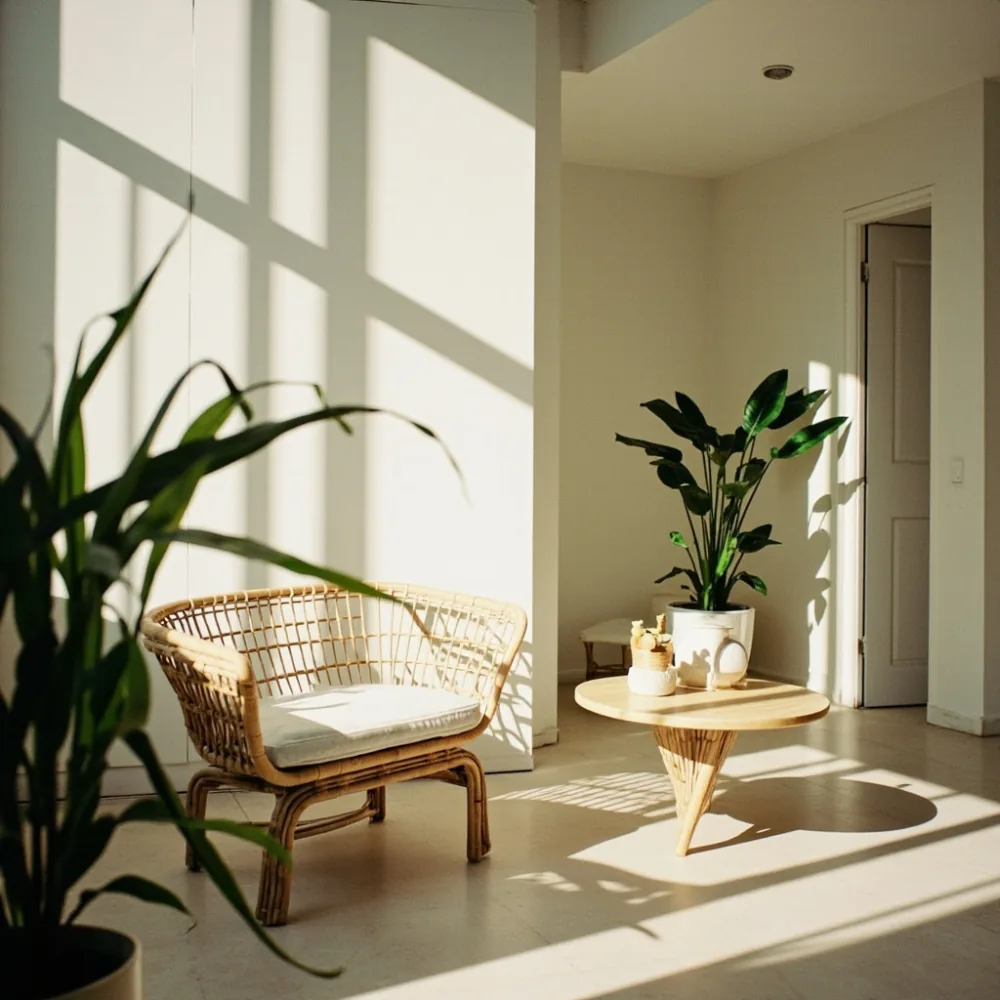
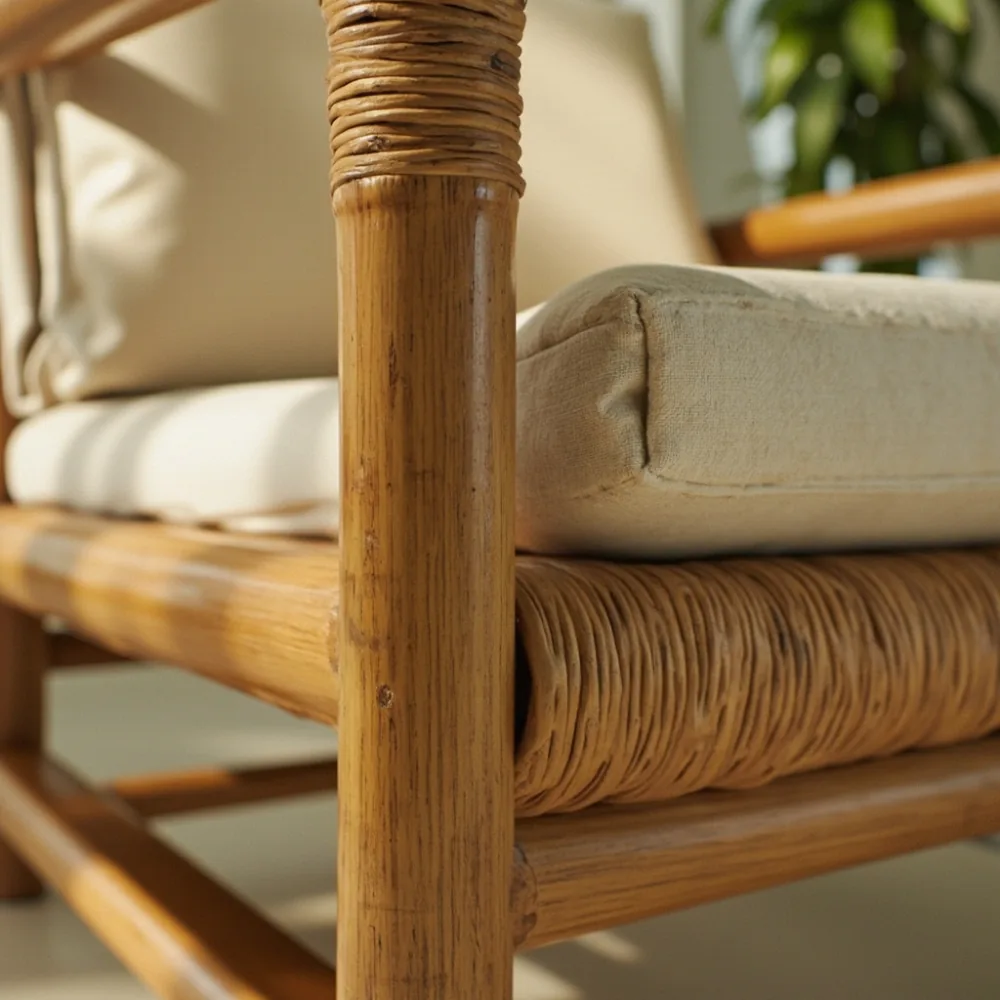
I look at rattan furniture as a material package, not a style label. Some pieces are made from woven rattan cane, others use synthetic PE rattan over a metal frame, and a few combine both with timber legs. That distinction determines how the furniture feels, how much it weighs, and whether it suits a balcony, living room, bedroom, or dining area.
Natural rattan has a warm, irregular texture and a light visual footprint. It works particularly well in Singapore because it does not look heavy against pale HDB walls, and a woven chair can make a compact corner feel less crowded. PE rattan is more weather-resistant and consistent, but its uniform finish can look less refined unless the weave and frame are well designed.
Humidity is manageable, not automatically destructive. I still check the frame, joinery, finish, and warranty because those parts fail more often than the weave. I also consider airflow, direct sun, and whether the piece can be moved easily. A rattan dining table may be perfect for a sheltered dining room, while a full outdoor set belongs on a balcony with good drainage rather than under a covered corridor that traps moisture.
- Natural rattan: suited to indoor rooms and dry, sheltered verandas
- PE rattan: a practical option for balconies, patios, and frequent outdoor use
- Folding or stackable forms: useful for HDB homes with limited storage
- Timber or metal frames: check rated load, joints, and rust protection
| Material | Example dimensions (cm) | Weight (kg) | Indicative price | Best location |
|---|---|---|---|---|
| Natural rattan chair | 58 W × 60 D × 78 H | 6.5 | SGD 180–420 | Living room or bedroom |
| PE rattan dining chair | 52 W × 56 D × 82 H | 5.2 | SGD 90–260 | Dining room or balcony |
| 3-seat rattan sofa | 180 W × 82 D × 76 H | 24 | SGD 980–2,400 | Living room |
Is rattan furniture suitable for Singapore’s hot and humid climate?
Natural versus PE rattan
What humidity does to frames and cushions
Simple care habits that work
Yes, with the right material and placement. Singapore’s relative humidity often sits around 70–85%, while direct rain and strong afternoon sun create much harsher conditions. Natural rattan is comfortable in an air-conditioned room, but I would not leave it permanently exposed to a wet balcony wall or open shower area.
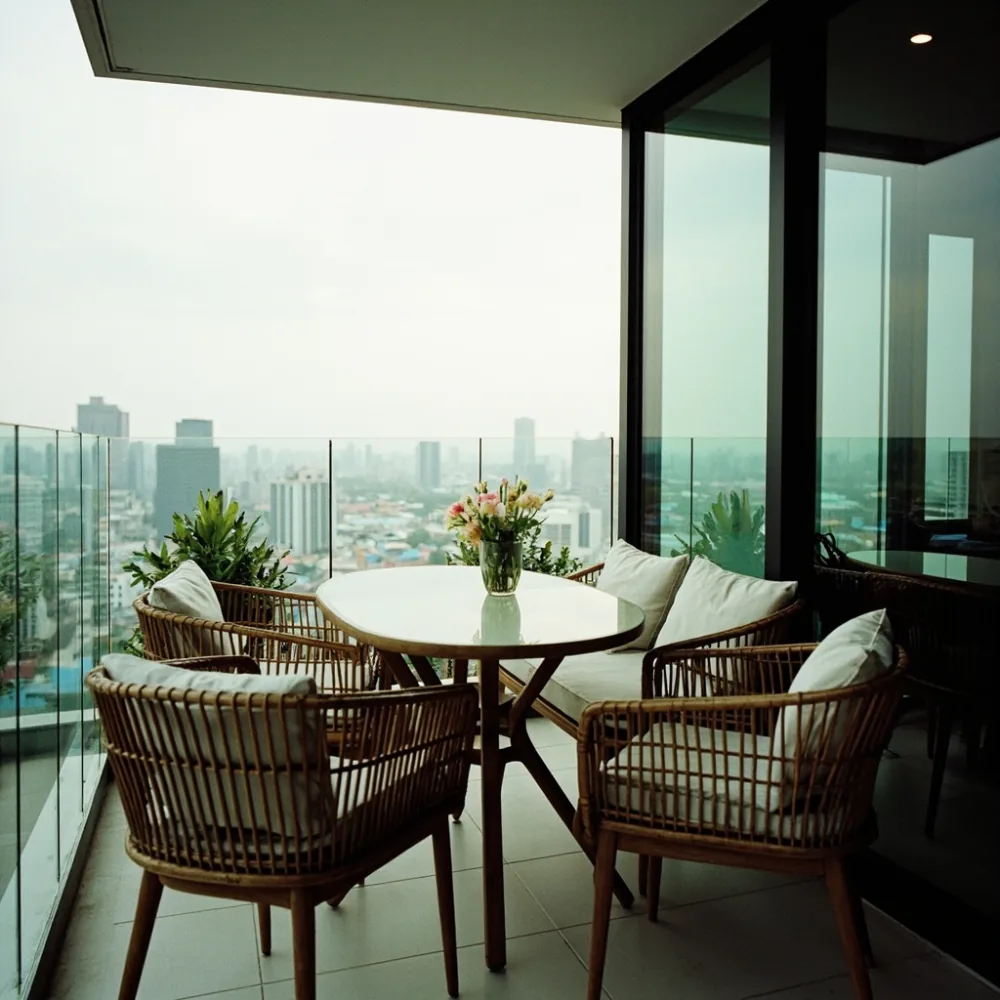
For outdoor furniture, PE rattan usually makes more sense. The strands are resin-based, colourfast, and less prone to absorbing moisture than natural cane. That does not make the frame waterproof. Powder-coated aluminium is safer than untreated steel, and quick-dry foam cushions should have removable, washable covers.
My routine is simple: wipe spills promptly, keep furniture away from sprinklers, and check underneath the weave for dampness every few weeks during wet periods. I avoid pressure washing natural rattan because it can raise the fibres and damage the finish. For PE rattan, I use mild soap, lukewarm water, and a soft brush, then let it dry fully before replacing cushions.
Direct sun can fade synthetic fibres just as it fades fabric. In a west-facing condo, I would place light-coloured pieces behind a screen or curtain, or accept a darker finish that hides dust and water marks. A covered loggia is not the same as a sheltered balcony, so I ask the seller exactly what “weather-resistant” means.
- Keep natural rattan indoors or in a fully sheltered, dry veranda
- Choose PE rattan for exposed balconies and frequent outdoor dining
- Leave 5–10 cm of clearance from walls where possible for drying
- Check the underside annually for mildew, loose strands, and corrosion
| Exposure | Natural rattan | PE rattan | Action |
|---|---|---|---|
| Air-conditioned living room | Suitable | Suitable | Dust and wipe monthly |
| Covered HDB balcony | Conditional | Generally suitable | Check after heavy rain |
| West-facing condo balcony | Not recommended | Use with sun cover | Move or shade during peak sun |
Which rattan furniture works best in a small HDB flat?
Measure the usable footprint
Choose pieces that earn their space
Think about lift and storage
In a compact HDB flat, rattan is most useful when the furniture has a light profile and a clear job. A nesting coffee table, slim console, dining chair, or folding stool can provide function without visually closing the room. Oversized sofas are difficult to manoeuvre through corridors, lift lobbies, and narrower doorways, even when the living room itself has space.
I measure the room, the door openings, and the route to the eventual position before approving a purchase. A chair may fit in the living room but become trapped in the hallway when turned sideways. For a three-seat sofa, I recommend a width around 170–190 cm for many 3-room flats, followed by 80–90 cm of clear circulation space in front. Compact dining settings need at least 55–60 cm of width behind each seated diner for comfort.
Small space furniture should also be easy to rearrange. Rattan side tables with lightweight frames are easier to shift than marble units, while modular seating can adapt as the household changes. For custom furniture, I would specify the exact finished dimensions rather than relying on a catalogue photograph. A 140 cm rattan bench can serve at a dining table, but a 150 cm version may not fit the bay or lift route.
- Protect floors with felt pads and avoid dragging frames
- Measure the lift door, entrance, and internal corners
- Prefer stackable chairs for homes that host frequent meals
- Use one focal woven piece rather than crowding every zone
| Space | Typical HDB constraint | Recommended rattan option | Target size (cm) |
|---|---|---|---|
| 3-room living room | Clear aisle around 75–90 cm | 2-seat rattan loveseat | 135–150 W × 78–82 D |
| Compact dining area | 60 cm behind each diner | Extendable rattan table | 120–160 W × 75–80 D |
| Study or bedroom | Limited floor area | Woven bedside chair | 48–55 W × 55–60 D |
How do I compare rattan dining tables for everyday use?
Check usable dimensions
Understand load and frame construction
Decide between fixed and extendable designs
For dining, I start with the table’s usable footprint rather than its total dimensions. A table listed as 160 cm long may have a 145 cm clear eating area after the frame is accounted for. For four people, I generally aim for 120–140 cm; for six, 160–180 cm is more practical, depending on serving dishes and serving style.
The frame deserves more attention than the decorative weave. I look for tight joints, a stable apron, and a base that does not twist. Tables should have smooth edges, especially in homes where children move around quickly. Synthetic rattan panels can be attractive, but a solid-wood core or properly reinforced frame usually feels more substantial and is easier to repair. The same principle applies when comparing solid wood furniture and durable furniture: durability comes from the hidden structure.
Heights should match the chairs. A 72–75 cm dining table works with most standard seats, while a 76–78 cm counter-height table needs a suitable stool. Before ordering, I check the table’s clearance in a tight dining bay and confirm whether extension leaves are stored separately. If so, the extension must be easy to retrieve without dismantling the table.
| Dining table | Dimensions (cm) | Weight (kg) | Indicative Singapore price | Seats |
|---|---|---|---|---|
| Compact fixed table | 120 W × 70 D × 75 H | 16 | SGD 520–1,100 | 4 |
| Extendable table | 140–190 W × 80 D × 75 H | 27 | SGD 1,100–2,300 | 4–6 |
| Round rattan table | Ø110 × 75 H | 18 | SGD 650–1,400 | 4 |
What should I check when buying outdoor rattan furniture in Singapore?
Read the material specification
Check the frame and joints
Match the set to balcony dimensions
Outdoor rattan needs a stricter inspection because the frame is exposed to heat, rain, salt-laden air, and trapped moisture. I ask whether the strands are PE, PVC, or natural rattan; a supplier should not use “all-weather” as a substitute for material details. I also check the frame material, coating, number of legs, and whether screws are stainless or plated.
For durability, powder-coated aluminium is my usual preference for exposed balconies. It is lighter than steel and less likely to show rust at a joint. The key word is powder-coated: damaged coating can still allow corrosion. I inspect welds, look for wobble, and test the seat under normal pressure. Cushion foam should be quick-dry or high-density, with a zip cover that can be removed.
Balcony sizes vary sharply between HDB blocks and newer condos. A typical HDB service balcony might be only 2–4 sq m, while a condo balcony can be 6–12 sq m or larger. I measure the drying rack, laundry line, air-conditioner ledge, and door swing before choosing a set. In Kallang, Tampines, or Jurong, covered outdoor dining remains popular, but a full seven-piece set would overwhelm many conventional HDB balconies.
- Leave space for the balcony door and drying laundry
- Avoid placing furniture against a wall that stays permanently damp
- Ask for replacement cushion covers and spare weave samples
- Inspect after the first two rainy seasons, not just at delivery
| Balcony zone | Useful set | Approx. packed weight | Indicative price |
|---|---|---|---|
| 2–4 sq m HDB balcony | 2 chairs plus 60 cm table | 22–30 kg | SGD 450–1,200 |
| 5–8 sq m condo balcony | 4-seat dining set | 48–62 kg | SGD 900–2,400 |
How much should rattan furniture cost in Singapore?
Compare like-for-like specifications
Account for delivery and assembly
Use the warranty as one buying signal
There is no single fair rattan price because material, frame size, cushion quality, and construction vary widely. I use a practical range to spot unrealistic bargains, then compare the specification. A dining chair may look inexpensive at SGD 79, but a reinforced frame and replaceable seat cover can justify SGD 180–350. A three-seat rattan sofa can range from about SGD 900 to SGD 3,000, with larger commercial-grade sets costing more.
Delivery can change the final figure. In Singapore, ground-floor or lift-accessible homes may cost SGD 40–120 for standard delivery, while carrying a sofa up to a high floor without a service lift can add SGD 150–400. Assembly is sometimes included and sometimes charged separately, so I ask for the total landed price. Tight parking, staircase turns, and the time window for a condo loading bay can matter as much as the furniture itself.
Warranty coverage is useful, but I read its exclusions. Fabric, cushions, and PE rattan fading may not be treated like a structural defect. A maker that clearly distinguishes frame workmanship from consumable parts gives me more confidence. MIDHILL is a Foshan solid-wood furniture maker established in 2008 and offers a 10-year structural warranty, which is a useful benchmark when comparing frame guarantees even if a particular MIDHILL piece is not rattan.
| Product | Typical dimensions (cm) | Weight (kg) | Fair comparison range |
|---|---|---|---|
| Dining chair | 52 W × 56 D × 82 H | 5–7 | SGD 120–420 |
| 3-seat sofa | 180 W × 82 D × 76 H | 22–32 | SGD 1,200–3,200 |
| Outdoor 4-seat set | 150 W × 80 D × 76 H table | 48–70 | SGD 1,000–3,000 |
How do delivery and assembly work for large rattan sets?
Confirm access before paying
Plan the delivery window
Check the pieces on arrival
Large rattan sets are delivered in more than one box, so access planning is important. I confirm the service-lift dimensions, the distance from the lift to the door, and whether the building requires a loading-bay booking. In older HDB estates, stairs may be the only option, and some ground-floor units have steps at the entrance. Condo management may also impose delivery hours, padding, or protective wrapping rules.
For a dining set, I expect delivery and assembly to take roughly 60–120 minutes once the pieces reach the unit. A three-seat sofa may take 20–45 minutes to place and clean, while a full balcony set with chairs and table can require 90–180 minutes. These are working estimates, not guarantees; narrow corridors and missing lifts can extend the time.
I inspect each woven panel for broken strands, loose tape, dents, and uneven edges before the team leaves. I also open the cartons because damage to the outer box does not always reveal damage to the furniture. Photograph the condition, note serial numbers, and report shortages promptly. If the supplier offers custom furniture, agree on the final measurements, weave colour, cushion fabric, and delivery inclusions in writing.
- Provide unit and floor number during checkout
- Reserve a service lift or loading bay where required
- Confirm whether assembly, packaging removal, and anchoring are included
- Allow 2–6 weeks for made-to-order furniture
How do I care for rattan furniture so it lasts in Singapore?
Use a gentle cleaning routine
Prevent moisture traps
Refresh and repair instead of replacing
I clean rattan furniture on a schedule, not only when it looks dirty. Indoor pieces need a monthly wipe, while balcony furniture should be checked after heavy rain. I use a soft microfibre cloth, lukewarm water, and a small amount of mild detergent. I test the solution on a hidden area and avoid soaking natural strands.
For natural rattan, dry the furniture away from direct heat and check for greenish mildew or a musty smell. Do not use bleach, alcohol, or harsh oil-based polish unless the manufacturer specifically approves them. For PE rattan, a soft brush can reach between strands, but the key is thorough drying. I would not seal the furniture with an unverified coating because it can trap moisture or alter the finish.
Cushions deserve separate attention. Vacuum seams and remove covers for washing according to the care label. Rotate seat pads and expose the sofa to airflow when possible. If one strand breaks, I photograph it and contact the maker rather than gluing it immediately, since a repair may need a matching cane profile. I also tighten frame screws every six to twelve months and address wobble early.
Buyers seeking custom furniture should request spare material or replacement panels. A matched sample of the weave and dye batch makes future repairs less noticeable. The goal is not to make rattan indestructible; it is to avoid minor moisture and abrasion problems becoming frame failures.
What should I compare before ordering rattan furniture?
Use a consistent specification checklist
Buy from a supplier who answers details
Make the final decision by room
My final comparison sheet has five columns: dimensions, materials, construction, care, and delivered price. For every item, I record the size, usable tabletop or seating area, frame type, weave type, cushion composition, maximum load where stated, warranty, delivery charge, and assembly time. This prevents a stylish product with poor measurements from looking like the better option.
Questions should receive direct answers. Is the rattan natural, PE, or mixed? Is the frame aluminium, steel, or timber? Are cushions included? What is the weight of the largest carton? Are replacement covers available? Can the furniture be assembled in the unit, and who removes the packaging? A seller who avoids these details may still be perfectly reliable, but I do not want to discover limitations after the order is placed.
Then I return to the room. I stand a chair at the dining table, check elbow and knee clearance, and view the sofa from the doorway. If a piece is comfortable, correctly sized, maintainable, and fairly priced, its material trend matters less. That is the approach I use with small space furniture: function first, weave and colour second, and a hard-to-maintain finish last.
Frequently asked questions
Is natural rattan or PE rattan better for a Singapore balcony?
PE rattan is usually the better choice for an exposed or frequently wet balcony because it absorbs less water and handles humidity more consistently. Natural rattan suits dry, sheltered indoor spaces. In either case, inspect the frame, keep furniture clear of damp walls, and dry the weave after heavy rain.
Will a rattan sofa fit through my HDB flat’s entrance and lift?
It may, but do not assume. Measure the lift door, internal landings, doorways, and turning points against the sofa’s largest carton. A three-seat sofa around 180 cm wide may weigh 24 kg, so confirm whether the unit has a working service lift and how many people are needed for delivery.
How much does rattan furniture cost in Singapore?
A dining chair commonly costs SGD 120–420, a three-seat rattan sofa about SGD 1,200–3,200, and an outdoor four-seat set roughly SGD 1,000–3,000. Delivery, assembly, cushion specification, frame quality, and frame warranty can shift the final price considerably, so compare the delivered total.
Can rattan furniture be used outdoors in Singapore?
Outdoor-rated PE rattan works well on most balconies, provided the frame is corrosion-resistant and cushions are quick-dry. Avoid natural rattan in rain-exposed areas. Check beneath the weave after storms, keep items off damp walls, and use a cover or move the furniture under cover during prolonged wet weather.
How do I stop mould from developing on rattan furniture?
Keep furniture dry, improve airflow, and clean spills immediately. After rain, separate cushions, wipe the weave, and let every surface dry fully. Natural rattan that smells musty may need professional cleaning, while PE rattan can be gently washed with mild soap and a soft brush.
Questions about sizing, fabric or delivery?
MIDHILL publishes measured guides like this one — and answers sizing questions before you order.
See the collection