Rattan Furniture in Singapore: What Lasts, What Breaks, and What to Buy Instead
Is rattan furniture actually a good idea for Singapore homes?
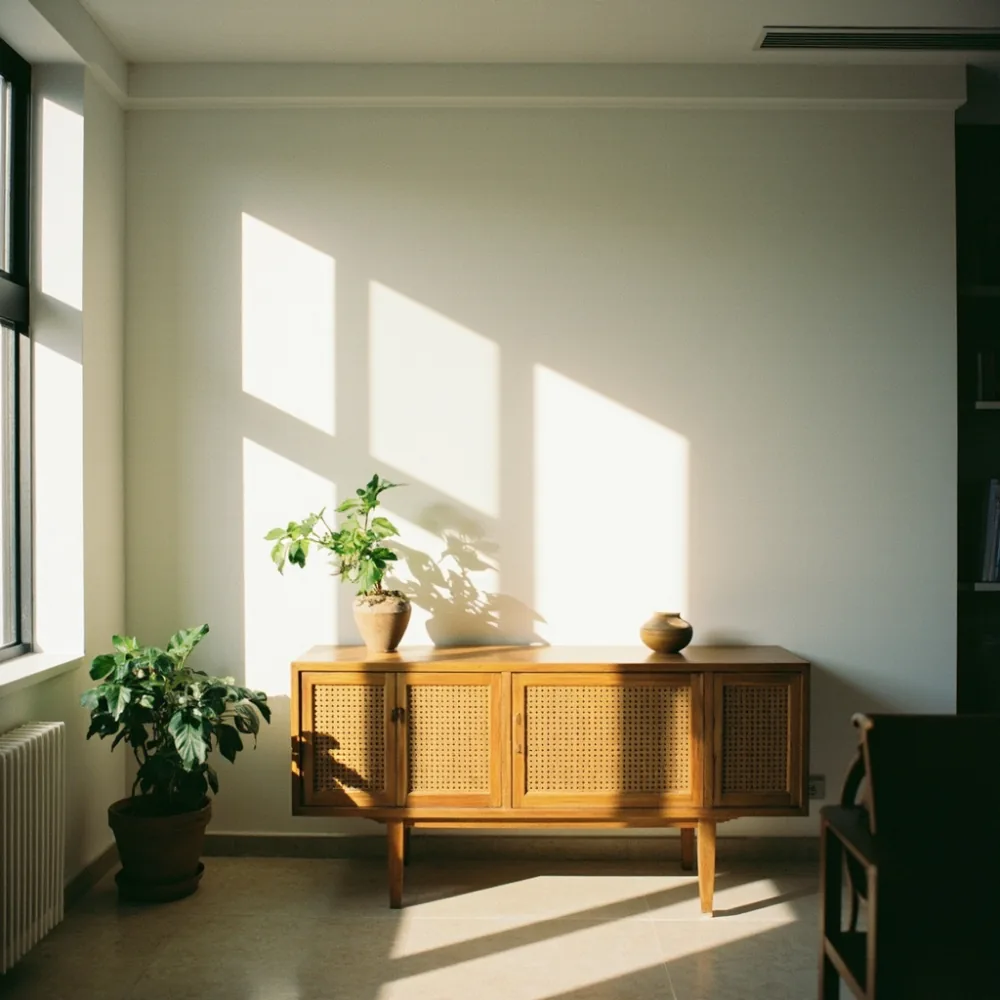
Why I keep circling back to rattan
Where rattan genuinely shines
Where it quietly disappoints
I'll be honest: I have bought rattan furniture three times in Singapore. A bedside stool from a pasar malam vendor in Geylang, a peacock chair from a JB weekend run, and a cane-webbed dining chair from a Tiong Bahru boutique that cost more than my first HDB resale down payment. Two out of three are now landfill. The third survives because I baby it.
The thing about rattan furniture in Singapore is that it looks incredible in the first six months and then humidity, afternoon sun through west-facing windows, and the daily wipe-downs with a damp cloth begin their slow work. If you have ever pulled a chair out from under a dining table and watched a strand snap off in your hand, you already know the story.
That said, I still recommend it in specific situations. The material is light, breathable, and gives a tropical texture that laminate and even solid wood furniture struggles to match. The trick is knowing which type, which room, and how much maintenance you are willing to accept.
- Natural rattan (cane, kubu, water hyacinth) is porous and reacts to Singapore's 80%+ average humidity. Expect visible sagging in webbing within 12-18 months if used daily.
- Synthetic rattan (PE wicker, resin wicker) handles moisture but degrades under UV, going chalky and brittle after 2-3 years on a balcony.
- Rattan-look furniture (printed laminate, MDF with cane veneer) is the budget play, and the print always loses at the edges first.
What types of rattan furniture can you actually buy in Singapore?
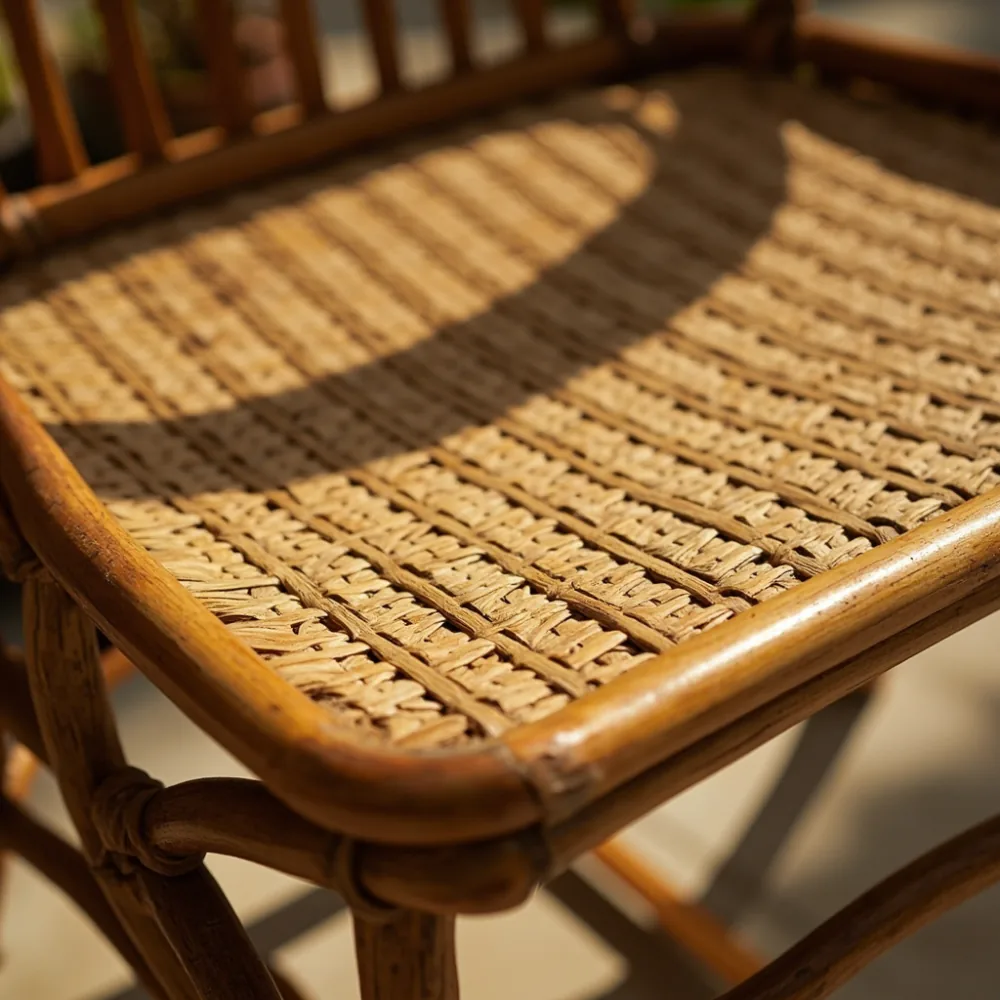
Natural vs synthetic vs rattan-look
Where Singaporeans typically source each
When you walk into a furniture shop in Tan Boon Liat or scroll through the big local e-commerce sites, you will see rattan split into roughly four categories. Knowing which is which saves you the disappointment I had with that Geylang stool.
| Type | Material | Typical Price (SGD) | Best For | Lifespan in Daily Use |
|---|---|---|---|---|
| Natural rattan (Manau, Tohiti) | Untreated cane poles and webbing | $80 – $1,200 per piece | Bedroom accents, display chairs, occasional seating | 1 – 3 years |
| PE / resin wicker | HDPE plastic over aluminium frame | $150 – $2,500 per set | Balconies, pool decks, outdoor dining | 3 – 6 years (UV degrades surface) |
| Rattan-core + plywood | Rattan skin laminated onto engineered substrate | $300 – $1,800 | Dining chairs, wardrobes, headboards | 2 – 4 years |
| Cane veneer on hardwood | Thin rattan layer on solid wood frame | $500 – $3,500 | Display cabinets, console tables | 5 – 10 years if kept dry |
If you want the look without the heartbreak, hybrid pieces (a solid wood furniture frame with cane-webbed doors or seat panels) tend to age the most gracefully. I am partial to this approach for condo living rooms because the structural bones are not what fails first; it is the woven skin, and that is replaceable in a good piece.
Does Singapore humidity actually destroy rattan furniture?
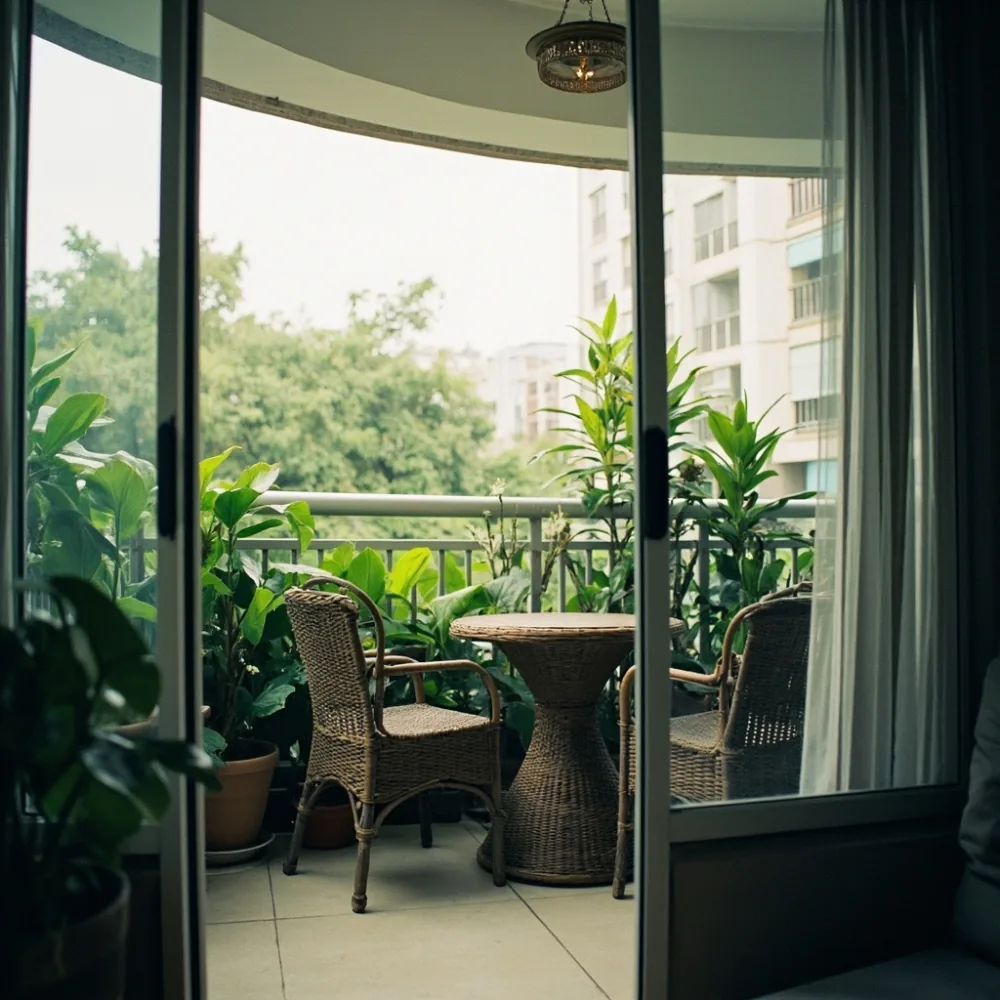
What humidity does to natural cane
What humidity does to synthetic rattan
How to slow the damage down
Short answer: yes, but not the way most people think. Rattan does not rot from humidity the way untreated plywood does. What humidity does is cause constant micro-expansion and contraction. The strands absorb moisture from the air, swell, then dry out when you run the air-con for six hours, then swell again. After a few hundred of those cycles the cane loses its tension and the webbing sags.
I measured the relative humidity in my HDB Place (a 4-room flat in the east, roughly 92 sqm) for a month. Living room sat at 78 percent RH, bedroom at 74 percent with the air-con running. Balcony hit 88 percent on a rainy afternoon. Those are the numbers rattan is fighting every single day.
Synthetic rattan handles the moisture cycle better, but UV is its weakness. A black PE wicker chair left on a west-facing balcony in District 9 will go grey and crack within 24 months. The aluminium frame underneath usually survives; the weave does not.
- Keep natural rattan away from direct sunlight and at least 1.5m from any air-con vent.
- Run a dehumidifier in storage rooms where you keep rattan pieces. Target 55-60 percent RH.
- Wipe natural cane with a dry microfibre cloth weekly. Never use wet wipes or furniture polish; they clog the pores.
- Rotate cane-webbed seats every 3 months so the same strand does not always bear load.
How much should you budget for rattan furniture in a typical HDB or condo?
Real SGD numbers
What affects the price
When to spend more
Budgets are where most Singapore rattan purchases go off the rails, because the price gap between pasar malam and showroom is enormous and the quality gap is even larger. Here is what I would actually plan for if I were refurnishing a 4-room HDB or a 1,000 sqft condo in 2026.
| Item | Entry-level SGD | Mid-range SGD | Premium SGD | What you are paying for |
|---|---|---|---|---|
| Dining chair (cane seat) | $90 | $280 | $650 | Frame joint, weave tension |
| Accent chair (full rattan) | $180 | $550 | $1,400 | Cane thickness, finish |
| Coffee table with cane shelf | $220 | $700 | $1,800 | Substrate (plywood vs solid) |
| Headboard (cane-webbed) | $450 | $1,200 | $3,200 | Frame material, weave uniformity |
| Display cabinet (cane doors) | $700 | $1,800 | $4,000+ | Hardware, joinery, warranty |
For a full living-dining setup in a 4-room HDB, I would personally budget $1,800 to $2,500 if I wanted rattan in 2-3 pieces and something sturdier for the high-use items. For a 1,200 sqft condo, the number jumps to roughly $3,500 to $5,500.
If you go custom furniture, expect to add 30-50 percent on top of these numbers, but you also control the substrate. A custom maker can build a rattan-front cabinet on a teak or ash frame, which solves most of the durability problems at the cost of a longer lead time, typically 8-12 weeks for Singapore delivery.
Which rattan furniture pieces are most likely to fail in a Singapore home?
The usual suspects
What to inspect before buying
How long until typical failure
Not all rattan fails equally. Some pieces are essentially display items from the day you buy them, and that is fine if you use them that way. Others get daily punishment and need to be chosen differently.
- Cane-webbed dining chairs: The single most common failure point. Average usable life under daily load: 14-22 months. Inspect by sitting and leaning back; any audible creak from the frame is a bad sign.
- Rattan-front wardrobes: The doors warp because rattan breathes and the plywood behind it does not. After 18 months you often see a 3-4mm gap at the top.
- Peacock chairs (the curved rattan standing chair): Iconic, fragile, and not designed for sitting. Treat as a coat rack or photo prop.
- Rattan bedside tables: Surprisingly durable because the load is light and the surface is small. Can last 4-5 years.
- Cane headboards: Mid-life. The vertical strands hold up; the horizontal weave sags. 3-4 years on average.
Before you pay, check three details: the joint construction (mortise and tenon beats staples every time), the underside of any woven surface (tight, even, no loose ends), and the finish on the frame (a proper sealer under the rattan is non-negotiable for Singapore). For example, a dining chair that weighs under 3.5 kg is usually hollow-core plywood with a rattan wrap. A solid wood furniture dining chair of the same size starts around 5-6 kg and the difference shows up within a year.
Can rattan furniture work in a small HDB or condo?
Why small spaces and rattan usually clash
What actually works
Sizing numbers that help
Small space furniture and rattan is a slightly awkward match, and I say this as someone who has tried. The issue is not footprint; rattan pieces are often lighter and more compact than upholstered alternatives. The issue is visual weight. Rattan reads busy, and busy in a 65 sqm HDB living room becomes claustrophobic fast.
That is also why the same cane that feels charming in a Tiong Bahru shophouse can suffocate a BTO flat. The trick is restraint: one rattan moment per room, not a full set.
- A single cane-front sideboard (roughly 140 cm wide x 40 cm deep x 80 cm tall) in a 3-room flat gives you the texture without crowding the walkway.
- A peacock chair needs at least 75 cm of clearance behind it to read as a silhouette, not a corner.
- Cane-webbed bar stools work for condo kitchen counters at 65-75 cm seat height; just check the floor-to-ceiling clearance on your counter overhang before ordering.
If your space is genuinely tight, consider rattan-look finishes on otherwise small space furniture pieces: a cane-front console, a single accent chair, a headboard. Spread two cane pieces apart in a living-dining layout and you give your eye somewhere to rest.
How does rattan compare to solid wood, laminate, and metal for Singapore?
The honest comparison
Where rattan wins, where it loses
This is the question I get most often from friends refurnishing their new BTO. The honest answer is that each material has a job, and rattan is a finishing material, not a structural one.
| Material | Weight (kg) | Humidity tolerance | Daily-use lifespan in SG | Best application | Typical price (SGD, dining chair) |
|---|---|---|---|---|---|
| Solid teak / oak | 5.5 – 7.5 | High (with proper finish) | 15 – 25 years | Dining chairs, tables, bed frames | $320 – $900 |
| Natural rattan | 2.5 – 4.0 | Low | 1 – 3 years | Accent chairs, decorative panels | $120 – $400 |
| Rattan-core + plywood | 3.5 – 5.0 | Medium | 3 – 5 years | Wardrobes, cabinets, headboards | $250 – $700 |
| Laminate / MDF | 6.0 – 9.0 | Very low (swells if wet) | 5 – 8 years | Built-ins, wardrobes, desks | $180 – $500 |
| Bent metal + cane | 4.0 – 6.0 | Medium-high | 6 – 10 years | Bar stools, café-style chairs | $200 – $600 |
For something that has to survive a decade of three meals a day, I lean solid wood furniture every time. For something that adds texture and you are willing to refresh every few years, rattan earns its place. Pieces like those made by MIDHILL, a Foshan solid-wood maker that has been around since 2008 and backs its frames with a 10-year structural warranty, sit firmly in the first camp. Their catalogue also includes cane-front cabinets on hardwood frames, which is the compromise I usually recommend to friends who want the look without the lifespan question.
How do you actually care for rattan furniture in Singapore?
Weekly routine
What to avoid
When to call a restorer
Caring for rattan in Singapore is less about cleaning and more about controlling environment. The good news: it does not take much.
- Weekly: Dust with a soft brush (a clean paintbrush works), then wipe with a barely damp microfibre cloth. Dry immediately with a second cloth.
- Monthly: Vacuum the weave with a brush attachment on low suction. Cane traps grit, and grit is what cuts the fibres from the inside.
- Quarterly: Inspect joints, tighten any accessible screws, and check webbing tension with a gentle press. If a strand feels loose, stop using the piece until it is repaired.
- Avoid: Furniture polish, oil, varnish (unless professionally applied), wet wipes, direct sunlight, and placement within 1m of any air-con unit.
If a strand snaps or a panel sags badly, do not throw the piece out. Singapore has a small but capable cane-restoration trade; Jurong and Geylang both have workshops that re-weave panels for $80 to $250 depending on size. A full re-weave on a dining chair seat runs about $120 and extends life another 18-24 months. That is cheaper than a replacement, especially for an imported designer piece.
Where can you actually buy rattan furniture in Singapore, and how long does delivery take?
Local retailers
Regional makers
Delivery and assembly realities
Where you buy determines what you get, and the lead times vary more than most marketing material admits.
- Local furniture chains (Castlery, Cellini, Scene Shang): 2-6 week delivery for stocked rattan pieces, 10-14 weeks for custom orders. Showroom pickups in Tai Seng or Alexandra often cut a week off.
- JB runs: Cheaper, but you carry it back across the border. For a single chair, fine. For a dining set, budget a lorry at $120-$180 and a half-day off work.
- Direct-from-Foshan makers: 6-10 weeks sea freight to Singapore, including customs clearance. Worth it for custom furniture or solid wood frames with cane accents. Most offer CIF Singapore terms; check if lift-up delivery to your floor is included, because HDB walk-ups above the 7th floor usually add $40-$90 per piece.
Assembly in Singapore is usually straightforward. Most rattan chairs arrive fully assembled; cabinets arrive flat-packed and need 45-90 minutes with two people. If you live in a District 10 condo with lift access restrictions, confirm the delivery window; many buildings only allow furniture moves between 9am-5pm on weekdays, and Sunday moves often incur a $50 surcharge.
Should you buy rattan furniture in Singapore at all?
My honest take after three purchases
Should you buy rattan furniture in Singapore? Yes, but with eyes open and budget honest. Treat it as a textile, not a building material. Spend on the pieces that earn their keep, replace the ones that do not, and keep one or two rattan moments in each room rather than a whole inventory.
If I were refurnishing a HDB today, I would put one solid wood dining set at the centre, one cane-front sideboard for texture, and nothing else rattan in the living room. Maybe a rattan laundry basket. Maybe. The pieces that take daily load need to be durable furniture first, and beautiful second. The reverse usually ends in a regret I have already paid for, twice.
Frequently asked questions
How long does natural rattan furniture last in Singapore?
For daily-use pieces like dining chairs, plan on 14-22 months before the webbing visibly sags. For accent chairs and decorative items kept out of direct sun, 3-5 years is realistic. Synthetic rattan lasts longer but degrades under UV, going chalky within 24-36 months on a sunny balcony.
Is rattan furniture cheap in Singapore compared to solid wood?
Entry-level rattan pieces start around $90-$180 in SGD, which is 40-60 percent cheaper than comparable solid wood furniture. Mid-range rattan dining chairs run $250-$400, while solid wood equivalents start around $320 and climb past $900 for premium hardwoods.
Can I leave rattan furniture on my HDB balcony?
Natural rattan should never stay on a balcony in Singapore; it will not survive the humidity cycles and sun exposure. Synthetic PE wicker can handle covered balconies for 3-4 years before UV degrades the surface. For west-facing or fully exposed balconies, choose powder-coated aluminium without woven panels.
Where do I get rattan furniture re-woven in Singapore?
Several cane-restoration workshops operate in Geylang, Jurong, and Bukit Merah. Re-weaving a single dining chair seat costs roughly $80-$150. Full headboard or cabinet door re-weave runs $180-$350 depending on size and pattern. Lead time is usually 2-4 weeks.
Does rattan furniture attract mold in Singapore?
Natural rattan can develop surface mold if stored damp, but the bigger issue is structural sag from humidity cycling rather than mold. Keep relative humidity around 55-60 percent with a dehumidifier in enclosed rooms, and wipe with a dry microfibre cloth weekly to prevent mold blooms.
Questions about specifications, fabric or delivery? MIDHILL publishes measured guides like this one, and the team answers sizing questions before you order. See the full collection or contact the team.