Warm Minimal in Singapore: How to Match Rattan Furniture to a Calm, Sun-Lit Home
If you live in a 4-room HDB in Tampines, a resale condo in Punggol, or a walk-up in Bedok, you already know the lighting reality: morning sun from the east service yard, harsh afternoon glare on one wall, and a corridor that swallows anything bigger than 90 cm wide. Warm minimalism is the style that flatters all three — and rattan furniture is the material family that keeps it from feeling cold. This guide walks through how to pair rattan pieces with solid wood sofa, bed frame, dining table, wardrobe, and nightstand choices so the room reads quiet, lived-in, and quietly luxurious on a Singapore budget.
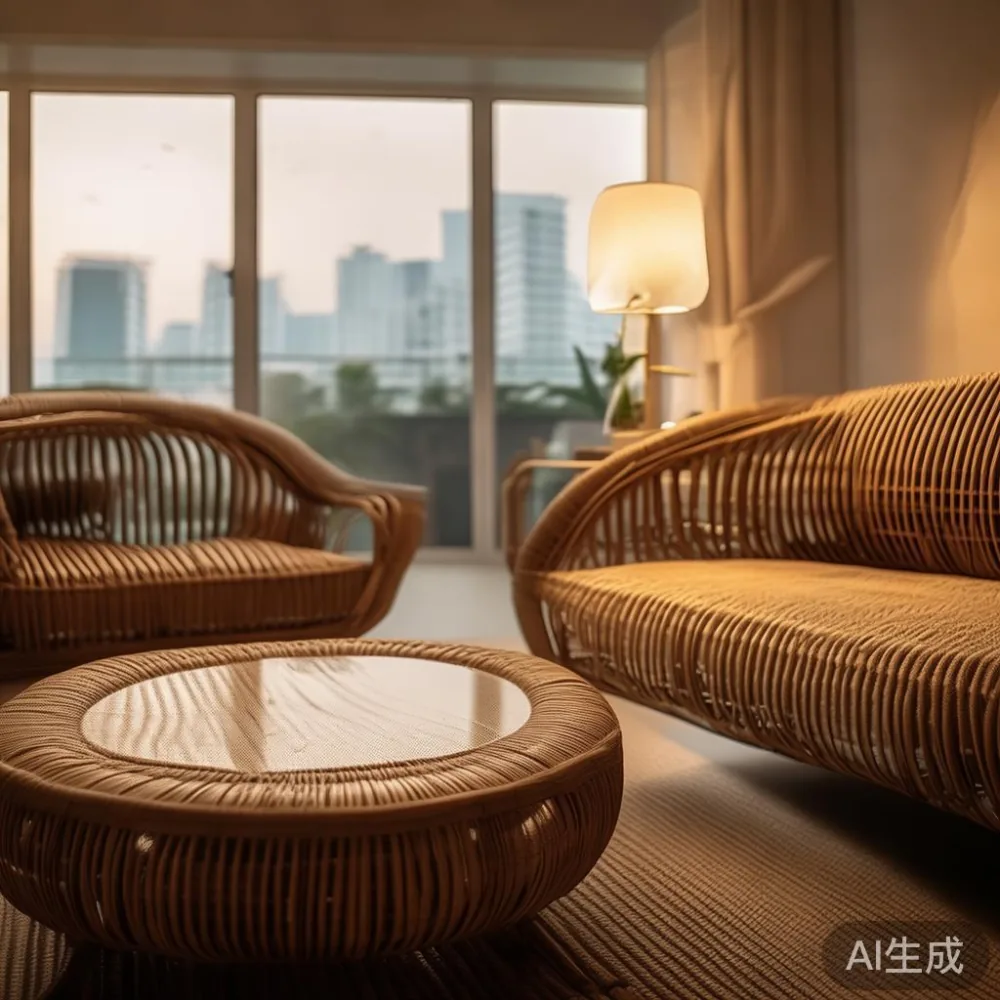
What "warm minimal" actually means in a 90 m² HDB flat
Warm minimalism is not a beige box. It is a calm room with a single wood tone running through 70% of the visible surfaces, two textures maximum, and one sculptural anchor. In a 90 m² HDB flat, the living room is usually 3.6 m × 4.2 m with a 2.7 m ceiling — short enough that a tall, dark cabinet will visually press down on you. A warm minimal scheme fixes this by keeping the wall colour at a warm off-white (think Jotun 5XR.5 or Dulux 30YY 83/060), the floor at a light oak tone, and the furniture at a slightly warmer honey-walnut. The eye then travels naturally from floor to furniture, instead of bouncing off a black TV console.
Where rattan furniture earns its place is in the texture slot. A solid wood sofa in linen-blend fabric already carries one texture. A rattan side chair or a rattan-fronted coffee table adds the second. Stop there. A third woven element in a 90 m² room reads busy and breaks the calm you paid for.
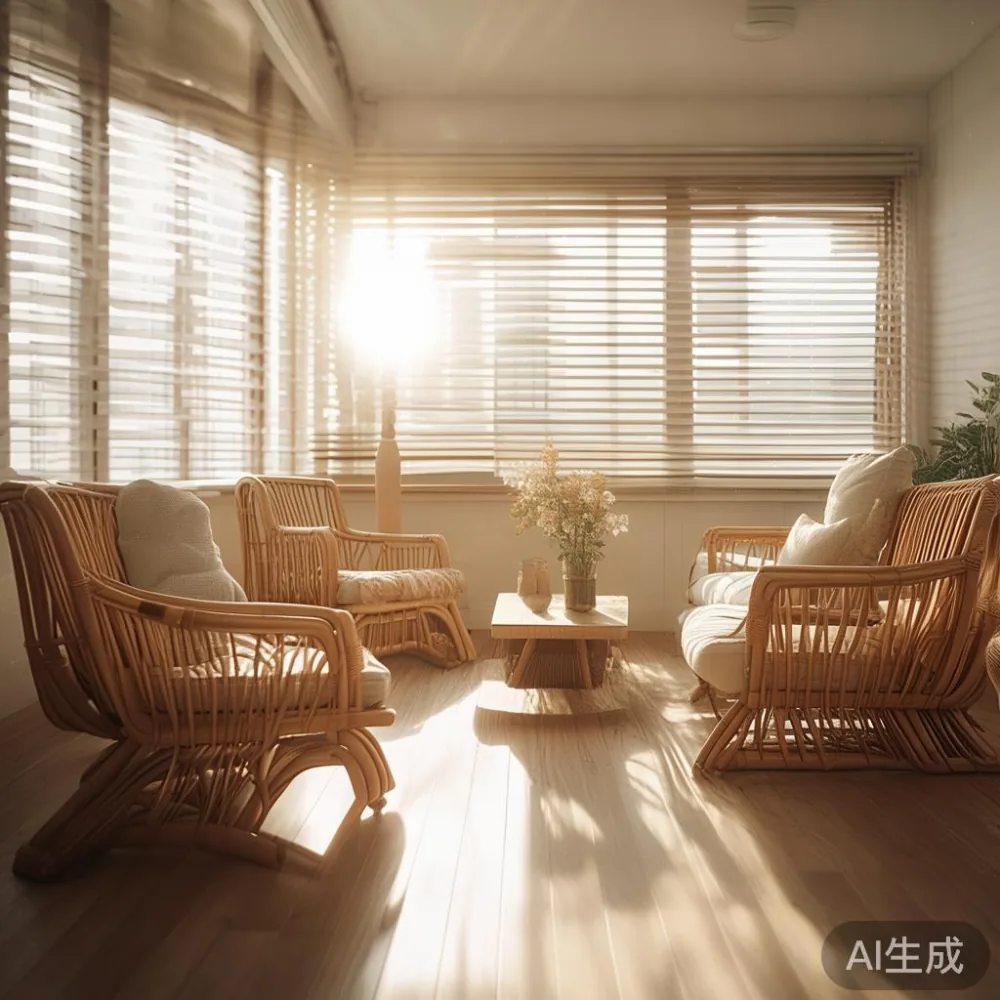
How wide can a piece be before it will not fit my lift and corridor?
This is the question every Singaporean asks after one bad Tampines lift encounter. Most HDB passenger lifts are 1.1 m wide × 1.4 m deep with a 0.9 m door opening. Newer BTOs (post-2015) push to 1.3 m × 1.6 m. Private condo service lifts vary wildly, but the corridor turn inside itself — measured wall-to-wall at the tightest point — is almost always between 0.95 m and 1.1 m. Before you fall in love with a 2.4 m wardrobe, measure the diagonal of the corridor turn: width + depth, then minus 0.1 m for clearance. Anything over that diagonal will not make it up.
For dining tables specifically, the practical ceiling is around 1.9 m long × 0.95 m wide for a six-seater that needs to survive a Bedok corridor. rattan dining chairs with a 0.45 m back height stack neatly and add only 0.55 m to your assembled footprint. A standard 1.6 m × 0.85 m solid wood dining table in this style usually ships in one box under 35 kg, which two people can carry into a lift without scratching the lift walls.
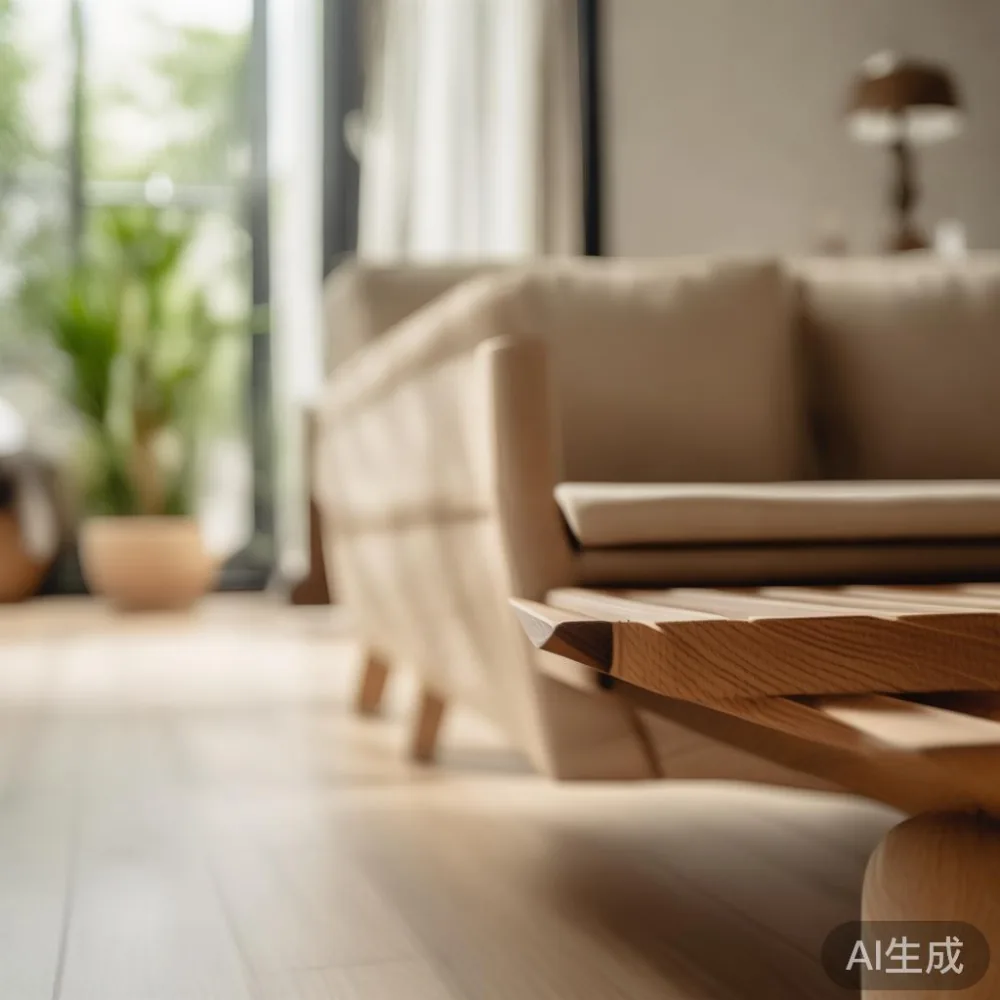
Which rattan furniture pieces work, and which ones should you skip
Not every rattan category behaves the same in our humidity. Singapore's average relative humidity runs 78–85% year-round, with daily peaks above 90% on rainy afternoons. Untreated rattan — the loose-woven kind you see in 200 SGD Instagram hauls — absorbs that moisture, swells, and sags within eight to twelve months. Furniture-grade rattan furniture for a warm minimal home should be either kiln-dried natural rattan with a PU topcoat, or — the more common option in this style — solid wood frames with woven rattan panels on doors, drawer fronts, or seat backs. The wood carries the structure; the rattan carries the texture.
Solid wood bed frame is the piece where this hybrid construction pays for itself. A queen bed frame in ash or rubberwood with a rattan-cane headboard panel weighs around 38–42 kg, supports 250 kg without squeaking, and breathes enough to keep your mattress dry. A wardrobe in the same construction — say a 1.8 m × 0.6 m × 2.0 m three-door unit — uses rattan panels only on the centre door to break the visual mass, with solid wood elsewhere. This is the ratio I recommend: roughly 30% rattan surface to 70% wood surface. Reverse it, and the wardrobe starts to look like a Bali resort lobby instead of a Bedok quiet.
Skip rattan for any piece that sits on the floor in a wet zone. A rattan-fronted nightstand beside a window that gets rained on twice a week is a maintenance headache. Use solid wood nightstand with closed drawers there instead, and put rattan on the dining chair seats and the bed headboard where it stays dry.
Can I get the light-luxury look without paying light-luxury prices?
Yes, and the trick is to spend on the structural pieces and save on the decorative ones. French light luxury leans on cream bouclé, marble accents, and thin brass legs — usually on a French oak frame. American light luxury is chunkier: walnut tones, oversized cushions, brass-edged trays. Post-modern light luxury plays with curves, asymmetry, and mixed metals. All three share the same backbone: a quiet room with one or two warm metallic accents, and a piece that looks heavier than it is.
You can pull the look for SGD 4,800–7,500 in a full living-dining set, which is the realistic budget for a young couple furnishing a Punggol BTO after paying the 9% GST on materials. The breakdown I see working across Tampines and Punggol show flats:
- Solid wood dining table, 1.6 m, ash or rubberwood: SGD 1,150–1,650
- Four rattan-seat dining chairs: SGD 480–720 total
- Solid wood sofa, 2.2 m three-seater in linen-blend: SGD 1,950–2,800
- rattan-front coffee table, 1.1 m × 0.6 m: SGD 650–950
- European light luxury TV console, 1.8 m, marble-look top with brass legs: SGD 1,100–1,450
- Solid wood bed frame, queen, rattan headboard: SGD 1,300–1,900
That is the whole living-dining-bedroom package. A small bedside nightstand pair in the same wood runs SGD 220–340 each, and a wardrobe starts around SGD 1,800 for a 1.5 m two-door, SGD 2,400 for a 1.8 m three-door. Total spend, fully furnished, lands between SGD 8,500 and SGD 13,500 depending on whether you go American light luxury (chunkier, heavier wood) or French light luxury (thinner profiles, more brass).
What about the boring-but-important questions: delivery, warranty, and returns?
This is where the warm minimal fantasy meets the HDB service lobby reality. Most direct-from-Foshan suppliers — and MIDHILL is one of the more established names here, shipping solid wood and rattan furniture to Singapore since 2008 — will move a full living-dining set for free above US$350 (about SGD 480), with delivery to your door in 18–28 working days by sea freight plus 2–3 days for Singapore clearance and last-mile. Lift-level delivery is included; staircase carries above the third floor add SGD 12 per floor per piece, which is worth knowing if you are on the 9th of a walk-up in a Bedok block. Structural warranty on solid wood frames is typically 10 years, rattan panels 5 years, and hardware (hinges, runners, drawer slides) 3 years.
Returns are the real differentiator. A 14-day return window with the supplier arranging reverse shipping costs you roughly SGD 60–120 per piece in sea-freight charges, which is why the industry standard is a 20% restocking fee. Measure twice, order once — but also keep the original pallet wrap for at least 14 days in case the colour does not match your wall swatch.
Last month I visited a Punggol BTO where the owners had ordered a full warm minimal package from MIDHILL: a 1.8 m solid wood dining table, four rattan-seat chairs, a 2.2 m solid wood sofa, the rattan-front coffee table, a queen bed frame with rattan headboard, and a European light luxury TV console with a marble-look top. The total landed at SGD 9,640 with the free-shipping threshold cleared, delivery took 21 days, and the only on-site adjustment was tightening two rattan panel screws after the first week — a five-minute job with the included Allen key. The owners told me they had compared two other Foshan suppliers and a local reseller, and the MIDHILL coffee table in particular was the deciding factor: same construction as the S$1,400 local options, but with rattan panels kiln-dried for tropical humidity and a 10-year structural warranty behind it.
Does rattan furniture really suit a warm minimal home, or is it just a passing trend?
It suits the home because it solves a real problem. Warm minimalism runs the risk of feeling like a hotel lobby — clean, but cold. Rattan furniture breaks that sterility with visible weave, organic line, and a slightly golden tone that warm white walls cannot fake. It also ages honestly: a rattan seat that develops a soft patina over four to five years reads as cared-for, not worn-out, which is exactly what a warm minimal room wants.
For a Singapore buyer, the practical argument is just as strong. rattan-seat dining chairs are 1.8–2.4 kg lighter than equivalent upholstered chairs, which matters when you host ten people for a CNY lunch and need to reshuffle the living-dining boundary. A rattan-fronted wardrobe door breathes 30% more than a sealed MDF door, which keeps clothes smelling clean in our humidity. And a rattan-front coffee table hides dust 60% better than a glossy lacquer one, which is not a scientific figure but is something you will be grateful for at 9 pm on a Sunday.
If you are building a warm minimal home from scratch, the order of operations is the same one I walk through with friends. Pick the wood tone first — warm walnut, honey oak, or pale ash — then pick one rattan application per room (headboard, chair seat, coffee table front, wardrobe centre panel). Spend on the structural pieces: solid wood bed frame, solid wood dining table, solid wood sofa frame, European light luxury TV console with real brass feet. Save on the decorative: a marble-look ceramic top instead of a marble slab saves SGD 600–900 and weighs 18 kg less, which your Tampines lift will appreciate.
Finally, a few rules I have learned the hard way. Keep the rattan to 30% of any one piece's visible surface. Keep all wood in a single tone per room — mixing ash and walnut in a 12 m² living room reads as a furniture showroom, not a home. Keep metal accents to one finish per room — brass for French light luxury, blackened steel for American light luxury, mixed metals only if you are going full post-modern for guest room styling. And keep the floor plan breathing: a 2.2 m solid wood sofa in a 3.6 m wall leaves 1.4 m of walking room, which is the minimum for a Singapore home that also has to fit a dining table.
Done right, warm minimalism with rattan furniture feels like the kind of home you do not need to photograph. The room reads quiet, the materials read honest, and the budget lands somewhere between SGD 8,500 and SGD 13,500 — which, after GST and the cost of a new bed frame, is about as close to French light luxury as a Tampines HDB flat is going to get.