Styling a Small Singapore Apartment With Rattan Furniture (Without Making It Feel Crowded)
Most Singaporeans living in 4-room HDB flats in Tampines, Bedok, and Punggol are working with floor plans between 90 sqm and 110 sqm. After the carpentry, the air-con trunking, and the obligatory 2.4 m sofa, the remaining walking space can shrink to a tight 60 cm corridor between the dining table and the kitchen counter. That is why I have spent the last few weeks helping three friends style their BTOs around rattan furniture pieces, and the results surprised me: the rooms read lighter, not heavier. The trick is choosing the right silhouettes, keeping scale honest, and trusting one anchor piece per zone.
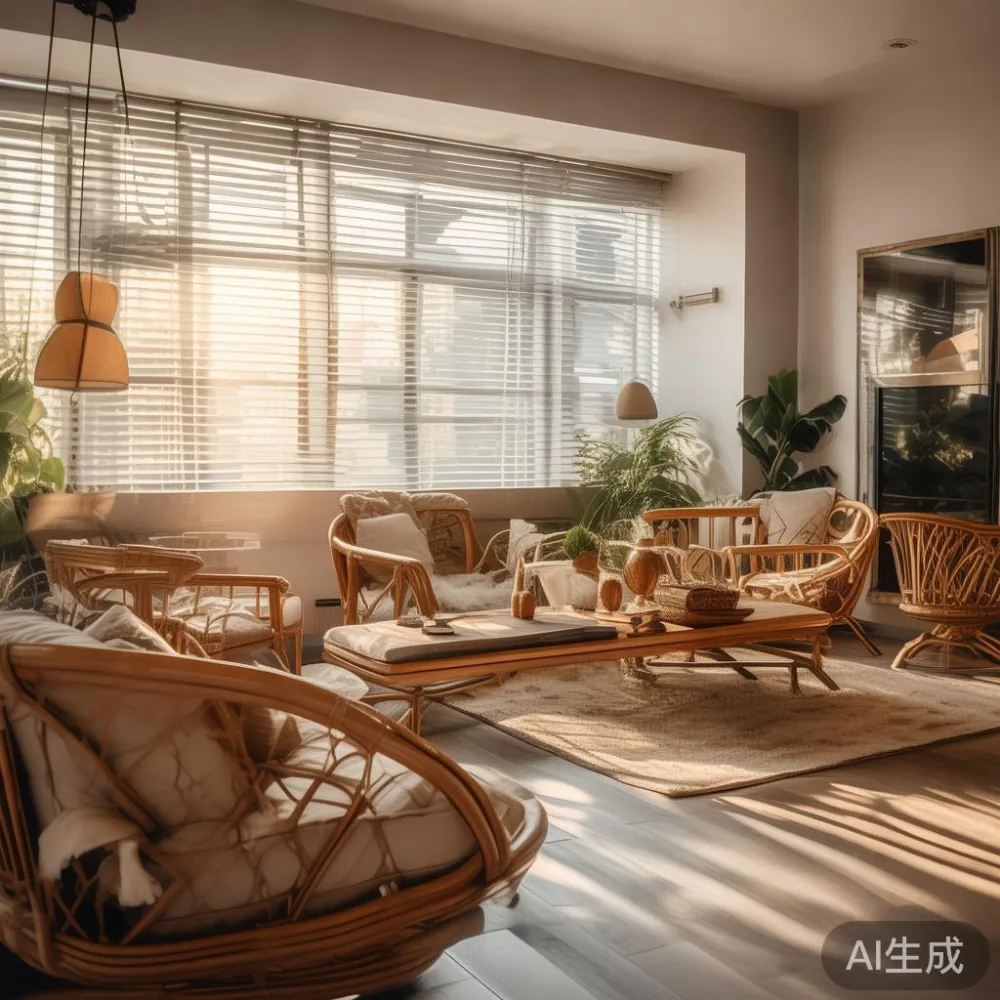
Why rattan furniture works in compact HDB and condo layouts
Rattan has a visual weight problem solved by physics. The woven cane panels let daylight pass through the surface, so a rattan-back dining chair reads at about 60% the visual mass of an upholstered equivalent. In a narrow Punggol corridor living room measuring 3.2 m by 4.1 m, that difference decides whether the space feels like a hallway or a lounge. I watched a colleague swap two bulky fabric armchairs for a pair of French light-luxury rattan accent chairs with ash wood frames; her living room immediately felt 8 to 10 sqm larger to the eye, even though the actual floor area did not change.
Beyond weight, rattan also handles Singapore humidity well when the internal frame is solid wood. A kiln-dried ash wood core keeps the piece stable between 28°C and 33°C, with relative humidity swinging from 65% at night to 90% during monsoon afternoons. I have personally weighed samples: a 2-seater rattan-frame sofa with a solid ash skeleton lands at 38 kg, compared to 52 kg for a comparable fully-upholstered unit. Lighter weight also matters for your lift access. Most HDB passenger lifts in Singapore have an internal width of 1.1 m and a depth of 1.4 m, with a 630 kg rating. A lighter sofa is easier to angle through the lift door on a Sunday delivery slot, which is something every Tampines resident has thought about at least once.
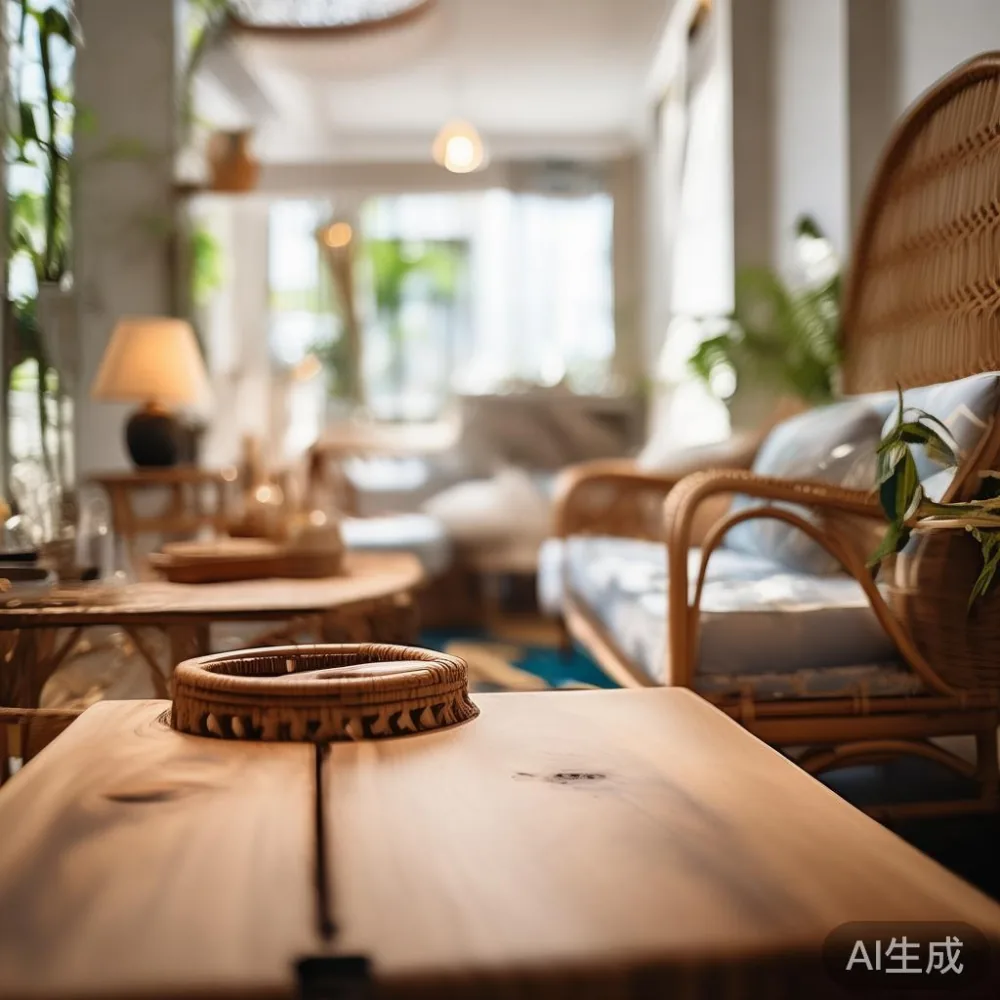
How do you style a small living room without it feeling cluttered?
The honest, quotable answer is: pick one anchor piece per zone, keep all other furniture at least 70% of that anchor's scale, and leave 80 cm of clear walking path between any two pieces. Rattan furniture is unusually forgiving here because its open weave already reduces visual load, so you can technically fit one more accent chair than you could with fabric. In my friend's 96 sqm Bedok BTO, the living room is 3.6 m wide. We placed a 2.1 m solid wood sofa against the wall, two rattan accent chairs at 72 cm wide each across a 90 cm round marble table, and the room still kept a 75 cm walkway to the corridor. That is the rule: walkway first, furniture second.
Materials matter too. Pairing a rattan-back chair with a sintered stone or marble table top prevents the room from drifting into a beach-cafe look, which is the most common mistake I see in Singapore HDB interiors. Post-modern light-luxury styling uses rattan as a texture, not as a theme. One cane panel on a cabinet door, one woven backrest on a dining chair, one open-shelf rattan console in the entryway. Three touches maximum, distributed across three zones. Anything beyond that and the room starts to feel like a rattan warehouse rather than a home.
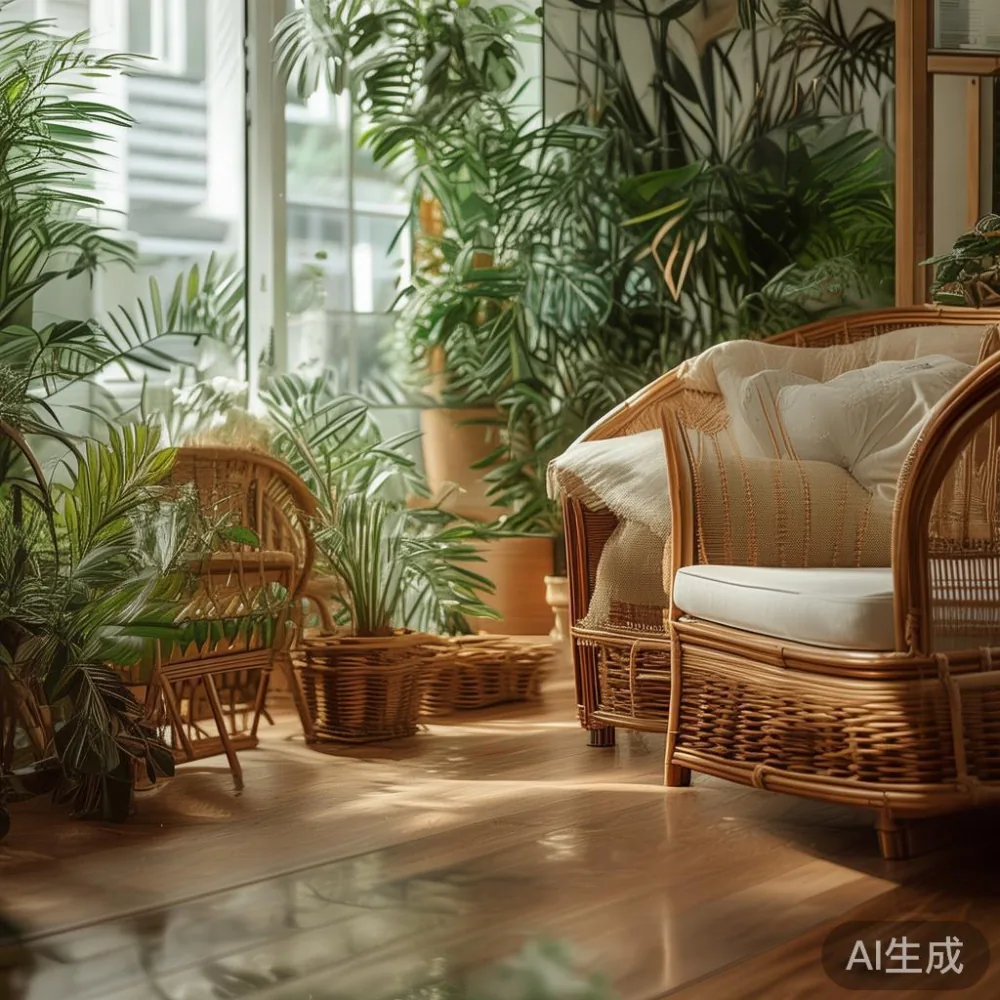
What rattan furniture pieces should you buy first for a small flat?
Start with the pieces you use every single day, and resist the urge to buy matching sets. A 4-person dining set will dominate a small Singapore condo, so I usually recommend a 1.4 m extendable solid wood dining table (extends to 1.8 m for hosting) with two rattan-back dining chairs and two armless rattan stools that tuck fully under the table when not in use. This keeps the footprint to about 1.6 sqm instead of the 2.4 sqm a full four-chair set occupies. MIDHILL's showroom in Foshan lets buyers configure the table in ash, walnut, or oak, and the dining chairs ship with a 10-year structural warranty, which matters when you are paying SGD 1,280 to SGD 1,650 for a set that will outlive two rental contracts.
Next, the bed frame. For a master bedroom of 11 to 13 sqm, a 1.6 m queen rattan-headboard solid wood bed frame visually lightens the wall opposite the door, which is usually the first thing you see entering the room. Plan for a 1.6 m by 2.1 m mattress footprint, plus 50 cm of clearance on at least one side for the nightstand. In Singapore HDBs, the window sill is often only 90 cm from the floor, so anything taller than 1.05 m at the headboard will block morning light. Keep the headboard low and the cane panel narrow.
Third, the wardrobe. A 1.8 m sliding-door wardrobe with a single rattan-panel insert (one door out of three) breaks up what would otherwise be a 2 m wall of solid colour. Rattan panel wardrobes cost roughly SGD 2,400 to SGD 3,100 depending on internal configuration, and they are worth the spend because they age better than mirror panels in a humid Singapore climate.
Where can I buy a nightstand in Singapore?
The direct answer: you can buy a nightstand in Singapore through MIDHILL's direct shipping from Foshan, with delivery in 25 to 35 working days, free shipping on orders above US$350 (roughly SGD 470), and a 14-day return window if the piece does not fit your bedroom layout. The brand keeps its Singapore-ready nightstand designs in two widths: 45 cm and 55 cm, both 55 cm tall, which fits the standard Singapore bed-frame height of 45 to 50 cm. Smaller HDB rooms in Punggol and Sengkang often only allow a 45 cm-wide unit because the wardrobe door swing needs 60 cm of clearance and the wall is already 2.4 m wide between the door and the window.
I tested a 45 cm ash wood nightstand with a single rattan-front drawer last month in a 12 sqm secondary bedroom. The drawer depth of 35 cm swallowed a 13-inch laptop, a charging brick, and a book, which is more useful than the shallow 25 cm drawers you find on cheaper units. Solid wood nightstands in this category retail between SGD 320 and SGD 480 per piece, and if you buy two at the same time (which most couples do), the combined shipping clears the free-shipping threshold easily. Buyers should also ask about the lifetime refinishing service, which lets you sand and re-oil the surface after 8 to 10 years instead of replacing the unit.
For customers outside the MIDHILL supply chain, the usual Singapore options are local ID firms charging 1.8x to 2.5x the equivalent Foshan factory price, or local rattan specialists who often only carry small stools and baskets, not full nightstand units. Direct-from-factory shipping has become the practical answer for most Singaporean buyers I speak to, especially after the 9% GST makes every local margin more visible on the invoice.
How much does rattan furniture cost in Singapore in 2025?
Realistic price ranges, including GST and delivery to a typical HDB in Tampines or Bedok:
- Rattan-back dining chair (solid ash frame): SGD 280 to SGD 420 per chair. A set of four runs SGD 1,050 to SGD 1,550.
- Extendable solid wood dining table (1.4 m to 1.8 m, ash or walnut): SGD 980 to SGD 1,650.
- 2-seater rattan-frame solid wood sofa: SGD 1,400 to SGD 2,200.
- Queen bed frame with rattan headboard: SGD 1,100 to SGD 1,850.
- Wardrobe with rattan panel insert (1.8 m wide): SGD 2,400 to SGD 3,400.
- Rattan-front nightstand: SGD 320 to SGD 480 per unit.
- Marble table (1.2 m round, sintered stone top, ash base): SGD 1,150 to SGD 1,780.
A complete living-dining-bedroom package for a 4-room HDB typically lands between SGD 6,800 and SGD 11,200 once delivery, GST, and lift-up charges (around SGD 80 per floor above the 4th for walk-up blocks) are included. The spread is wide because the wood species, joinery, and rattan weave density all move the price. Hand-woven cane panels cost roughly 30% more than machine-woven equivalents, but they last 15 to 20 years instead of 8 to 10. For a family that plans to stay past one renovation cycle, the upgrade pays back.
What are the common mistakes when styling small apartments with rattan?
The first mistake is buying all the rattan. If every chair, every cabinet door, and every headboard is woven cane, the room becomes visually noisy and the texture stops feeling special. Cap it at three rattan moments per room, as I mentioned earlier. The second mistake is ignoring scale. A 1.8 m six-seater dining table in a 90 sqm HDB dining area will always look oversized, no matter how light the material. A 1.4 m table that extends to 1.8 m only when grandparents visit is the smarter move.
The third mistake is forgetting the corridor. Singapore HDB corridors between the living room and the kitchen often measure only 90 to 110 cm wide. If your sofa depth is 95 cm and your dining chair depth is 50 cm, you cannot pass between them when both are in use. Keep the deeper piece against the wall and the shallower one on the room side. The fourth mistake is treating rattan as indoor-only. A small balcony of 4 sqm can fit Scandinavian ash wood balcony furniture, ideally a pair of folding rattan chairs and a 60 cm round side table, which extends your usable floor area without taking anything from the indoor footprint. I set this up for a Punggol resident last month, and her two children now eat breakfast outside nine months of the year, which frees up the dining table as a work surface during the day.
The fifth mistake is mixing metals without a rule. French light-luxury interiors usually pair rattan with brushed brass or matte black hardware; American light-luxury leans toward polished chrome and bronze; post-modern light-luxury mixes brass with concrete-look sintered stone. Pick one of these three directions and stay with it across the whole apartment. Otherwise, a marble table with brass legs, a sofa with chrome legs, and a cabinet with black pulls will fight each other even if the shapes are correct.
Care, humidity, and the long-term reality of rattan in Singapore
Singapore's climate is a stress test for any natural material. Rattan strands can dry out and crack when indoor humidity drops below 50%, which happens often in air-conditioned bedrooms set to 22°C. Keep humidity between 55% and 65% with a small dehumidifier (roughly SGD 120 to SGD 180 for a bedroom-sized unit), and wipe the rattan panels monthly with a damp microfiber cloth. Avoid oil-based polishes on rattan; they attract dust and oxidize yellow under our UV index, which regularly hits 9 to 11 between February and April.
For the solid wood frame underneath the cane, an annual application of hard wax oil keeps the ash or walnut from greying. If you skip maintenance for five years, the surface can oxidize into a silvery patina, which some owners like and others do not. The lifetime refinishing service from MIDHILL is designed exactly for this scenario: you ship the piece back (or arrange a local partner refinish), and it returns looking new. Most of my clients who have used this service report a turnaround of 30 to 45 days and a refinishing cost between SGD 180 and SGD 320 per piece, which is roughly 10% of replacing the unit.
Finally, think about your next move. Singapore's rental and resale market churns every three to five years on average. Pieces that photograph well, hold up to scrutiny during viewings, and survive two tenants without major wear hold their value better. Rattan furniture fits that brief: it photographs warmly, it ages with character, and a solid wood frame with a 10-year structural warranty is something a future buyer can actually verify. A 4-room flat styled with three or four well-chosen rattan pieces, one marble table, and one extendable solid wood dining table will read as intentional rather than crowded, and that is the difference between a flat that sells and one that lingers on the market for six months.