Integrating Rattan Furniture into Warm Minimal Interiors
Warm minimalism works best when a room feels calm without looking clinical. Rattan furniture brings in a tactile layer that painted walls and pale timber cannot provide on their own: woven texture, softly rounded edges, and a natural warmth that suits Singapore’s light-filled HDB flats and compact condos. The aim is not to fill every corner or create a showroom-perfect arrangement. It is to choose a few well-proportioned pieces, keep the pathways clear, and allow the grain of rattan to sit comfortably beside white walls, warm oak, linen, ceramic, and brushed metal.

For Singapore homes, scale is determined as much by the route from the lift to the front door as by the room itself. A model sofa with a 220 cm width may look restrained in a 35 m² living-dining area, yet it can obstruct a common HDB corridor measuring 120 cm. By contrast, a 150–170 cm rattan lounge chair or a 90 cm round dining table can preserve movement while still giving the room a deliberate focal point. Measurements, delivery timing, GST, and clearances should be considered before the finish is chosen.
What makes a warm minimal interior feel inviting rather than empty?
Warm minimalism is built around balance. A room needs enough open surface area to feel breathable, but furniture should still provide visual weight. Rattan furniture is particularly useful here because its open weave reflects light and creates depth without the density of a fully upholstered piece. A woven chair in a light honey tone can make a pale room feel warmer, while a darker rattan accent can establish contrast without requiring a dramatic colour palette.
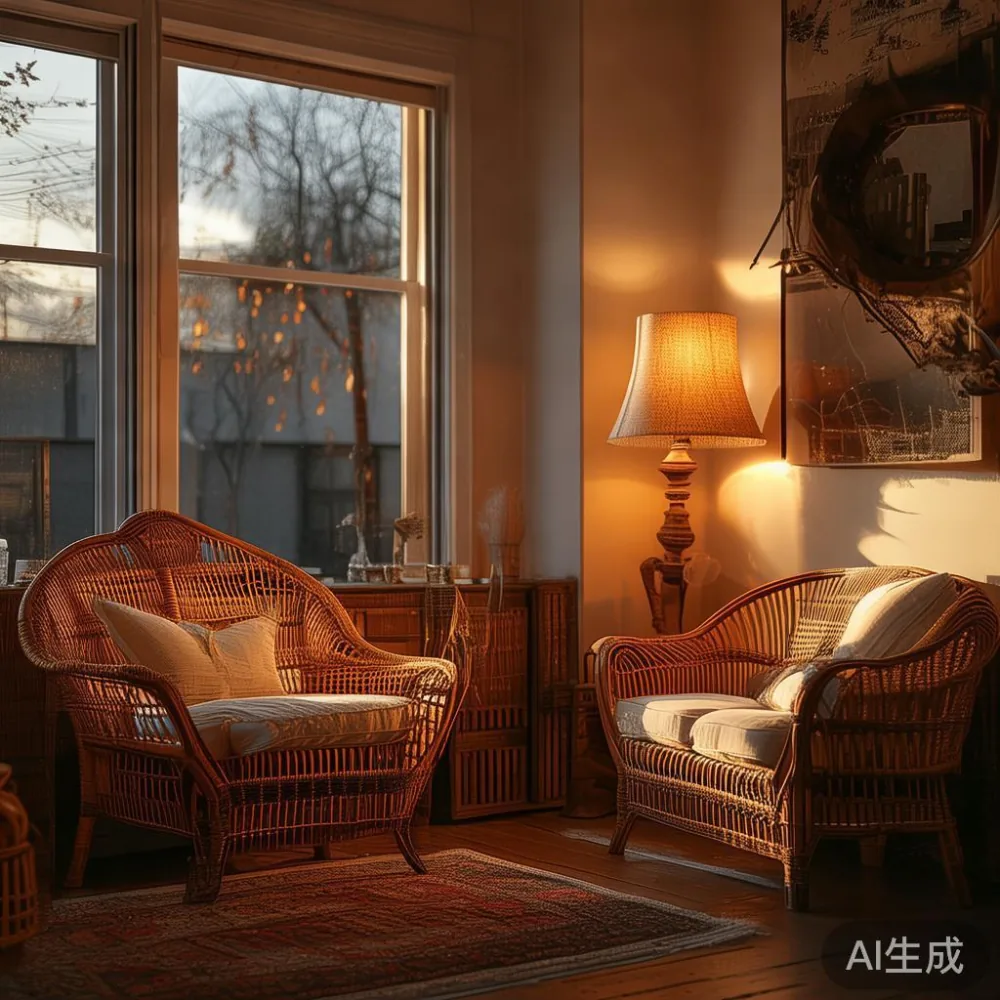
Begin with the room’s largest permanent surface. In many Tampines, Bedok, and Punggol homes, that surface is a light wall, a pale tiled floor, or both. Warm the setting with materials rather than excessive decoration: beige upholstery, oatmeal textiles, light oak shelving, matte black hardware, and a ceramic lamp in chalk or sand. Keep the floor mostly visible. One medium-sized rug beneath the front legs of a seating group can define a 220–260 cm conversation zone, but a rug wider than the room itself will make the space feel compressed.
Light also matters. Warm white lighting around 2700–3000K is gentler on rattan’s natural variation than cool white light around 4000–5000K. A single floor lamp with a linen shade can bridge two zones, and a table lamp on a nightstand can soften the bedroom. Where a condo window faces a neighbouring block, sheer curtains rather than heavy drapes will preserve daylight. The texture of rattan will read more clearly when the light arrives at an angle, revealing the woven pattern rather than flattening it.
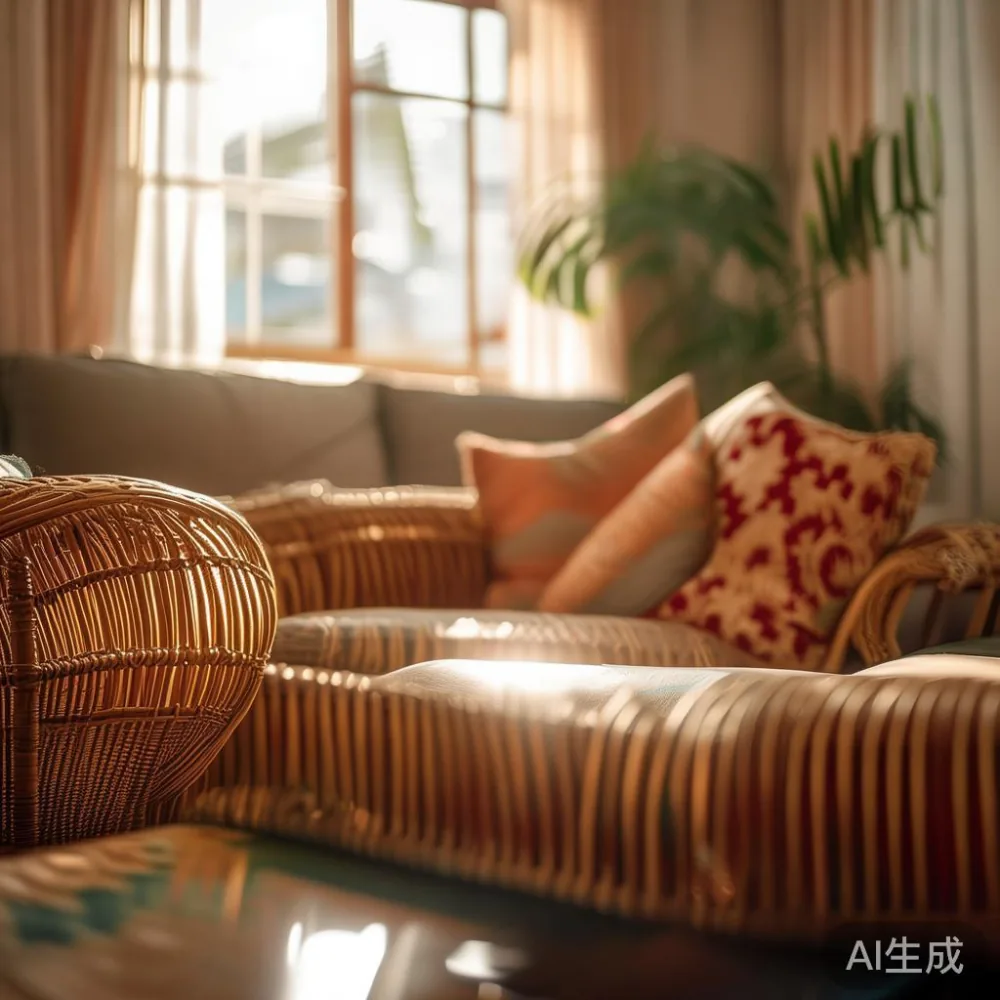
For a polished result, work between two main tones and one restrained accent. For example, pair a cream sofa with honey-toned rattan, warm oak sideboards, and a muted olive cushion. Add no more than 2–3 colours beyond the base neutrals. This approach borrows from French light luxury, where tactile natural materials and quiet details matter more than visual excess, while remaining practical for an apartment that also stores books, work bags, and household items.
How do I measure a room before choosing rattan furniture?
Measure in four directions: length, width, ceiling height, and the space occupied by doors, windows, and circulation routes. Record the width of the main corridor as well. A residential lift lobby or common corridor can be only 90–140 cm wide, so a large dining table should be disassembled for transport if necessary. Confirm the packed dimensions of every piece, including the longest component. In a compact Singapore home, the difference between a 120 cm model and a 180 cm model can determine whether the corridor remains comfortable.
For a living room, allow at least 75–90 cm between the front edge of a sofa and the dining zone. A walkway behind a dining chair should ideally retain 75 cm, or at least 60 cm in a less demanding route. Between a dining table and a wall, 90 cm permits chairs to be pulled back without touching the wall. In a narrow bedroom, leave 55–70 cm beside a bed where possible; a bedside gap of 45 cm is acceptable only if it is not the primary circulation route.
Ceiling height also affects proportion. Rattan’s open structure can lighten a low ceiling, but tall floor-standing pieces can still crowd a 240–250 cm-high room. A low console at 70–80 cm high and a dining table at 73–76 cm high will preserve more visual space than a bulky cabinet. Measure radiators, air-conditioning outlets, electrical sockets, and window sills before placing tall rattan shelving. Those small checks prevent a well-proportioned design from becoming awkward in daily use.
Delivery is equally important. MIDHILL can quote a delivery period in working days, and furniture may arrive in protective cartons rather than fully assembled. Ask whether assembly is included, whether stairs and lift access require a larger service, and how many people should be present. Singapore’s 9% GST should be shown clearly on the final quotation, along with delivery charges. For orders above US$350, the stated free-shipping offer can reduce the landed cost, although local GST and any access-related charges should still be confirmed.
Which rattan furniture works in an HDB living-dining room?
A living-dining room in an HDB flat often has to perform several jobs: host guests, provide a work surface, hold shoes, and maintain a route to bedrooms or the kitchen. Rattan furniture suits multi-purpose layouts because its visual texture adds character without demanding much floor area. A 140–160 cm rattan bench can work as a perch near a dining area, provided it has at least 60 cm behind it. A 150–170 cm rattan lounge chair creates a reading corner without the footprint of a three-seat sofa. A 90–110 cm round dining table also improves movement because no fixed corner projects into the walkway.
Anchor the arrangement with one substantial item. A solid wood sofa in oatmeal or warm beige can offer a calm centre, while a solid wood dining table with rounded corners carries visual continuity. If the dining table has an exposed rattan or cane-style panel, keep the sofa upholstery plain. If the sofa is patterned, select simpler rattan pieces in a natural finish. This avoids a crowded composition and gives each item enough room to be noticed.
Storage should be visually quiet. A solid wood wardrobe or low sideboard in a pale finish can conceal the visual clutter common to urban homes. Rattan baskets or a small rattan tray can organise remotes, coasters, and charging cables. Use closed storage for daily clutter and open shelving for only a few objects: perhaps 3–5 books, one ceramic vessel, and a plant under 40 cm tall. That restraint keeps a warm minimal interior practical rather than staged.
In a compact unit, the dining table may need to be the room’s principal focal point. Place it under a pendant rather than a large ceiling fixture, keeping the shade at least 65–75 cm above the tabletop. The circular glow can extend beyond the table edges and visually enlarge a 300–350 cm-wide dining zone. Avoid placing the pendant directly in line with a TV if its reflection will cause glare during the evening.
How can rattan furniture make a small bedroom feel warmer?
Begin by identifying the bed position and the unavoidable paths around it. A queen bed frame usually measures 150 × 200 cm, while a king frame can reach 180 × 200 cm. In an HDB bedroom measuring approximately 280 × 330 cm, a queen bed leaves more flexibility than a king. A 40–50 cm rattan nightstand on each side is enough for a phone, a 150 ml water glass, and a small lamp. If only one side has space, use a narrow 25–35 cm table or a wall-mounted shelf instead of squeezing an oversized unit into the walkway.
Warm minimal bedrooms benefit from one woven element near the bed: a rattan headboard, a slim bedside stool, or a low rattan bench placed at the foot. Avoid using all three. Each should have a clear purpose and enough separation to avoid a crowded feeling. A light linen curtain, a wool or cotton-blend throw measuring roughly 130 × 180 cm, and a 30–40 cm ceramic lamp introduce softness without heavy visual weight.
For a more considered scheme, look up how to style light luxury bed in bedroom. The approach here is restraint: use a solid wood bed frame with a simple upholstered or cane-inspired headboard, dress it with 2–3 pillows, and add texture rather than elaborate decoration. French light luxury might suggest ivory linen and a traditional lamp shape; American light luxury might favour clean lines, pale upholstery, and brushed nickel. Post-modern light luxury offers another route through asymmetry, pairing a traditional rattan chair with a simpler bed profile while keeping colours closely related.
Check the wardrobe before selecting the bed. A 180 cm wardrobe already projecting from one wall can make a 330 cm-wide room feel tight, especially if it requires a 90 cm door-opening arc. A sliding-door or open-rail solution may preserve movement, although open rails should be limited to clothes used frequently. For anyone asking whether is Japandi wardrobe worth it, the answer depends on storage needs and clearances, not on a style label. Japandi’s low visual noise can suit a compact room, but a 55–60 cm-deep unit with drawers may be more practical than an open design that exposes hanging clothes.
How do I combine rattan with a marble table without making the room look cold?
A marble table can provide a luminous focal point, but it needs warmer partners. Select rattan in honey, caramel, or light beige rather than a very dark finish. Warm oak or walnut-toned solid wood creates continuity with the veining, while linen or cotton textiles soften the stone’s cool surface. Keep the styling sparse: one sculptural object, a short branch of greenery, and perhaps a small stack of 2 books. Height variation is more useful than a crowded arrangement.
A low rattan chair beside a marble coffee table can work in a living room, but the dimensions must remain sensible. A round marble table of 75–90 cm diameter pairs easily with a single 65–75 cm-wide chair. A rectangular marble dining table of 160–180 cm may need 2–4 chairs and around 90 cm of clearance on the main sides. Rattan dining chairs should be checked for seat height, normally about 43–47 cm, because a deeper seat can make dining feel less comfortable.
Use veining as a design guide rather than trying to conceal it. Soft grey marble suits pale rattan and warm white walls; warmer cream stone pairs well with honey rattan and brushed brass; dark marble can be balanced by oatmeal fabric and lighter wood. Avoid adding several reflective metal finishes to one small room. Mixing marble, rattan, and a single metal finish is usually more coherent than marble, rattan, chrome, brass, and black steel together.
It is also worth comparing material longevity. Marble is heavy and may require 2 people and careful handling. Rattan furniture may be lighter, but its woven sections can still be damaged by impacts or prolonged moisture. Wipe with a soft, slightly damp cloth and dry promptly. Keep rattan away from air-conditioning condensation, kitchen steam, and direct afternoon sun where possible. These habits matter in Singapore’s humid climate and help preserve an even finish.
What should I check before ordering furniture for a condo?
Ask the supplier for packed dimensions, not only assembled dimensions. The longest component must fit into the lift, around corners, through the lobby, and along the corridor. Note the lift door width, common in many condo buildings at roughly 80–100 cm, and compare it with the package. For a large solid wood wardrobe, provide photographs and measurements during the quotation stage rather than assuming it will fit.
Check the product category against the room’s actual need. A solid wood sofa needs a clear 220–240 cm wall for a conventional three-seat arrangement, a dining table needs chair-pullout space, and a nightstand needs reachable power. A marble table needs an appropriate floor load and level placement. Rattan furniture should be assessed for frame stability, finish consistency, joint quality, and the amount of exposed weave.
For bedroom shopping, if you are comparing options and asking where to buy bed from MIDHILL, compare the exact dimensions, finish, frame construction, warranty, and delivery terms rather than relying on appearance alone. A 10-year structural warranty can provide useful confidence for a solid wood bed frame, while lifetime refinishing is relevant if the piece can be professionally restored. The company’s 14-day returns policy offers another layer of protection, subject to the stated return conditions.
Confirm the production and delivery estimate in days, especially for made-to-order sizes and finishes. MIDHILL has exported to more than 15 countries since establishing in 2008, and its international production history can be reassuring, but a Singapore delivery should still be scheduled with realistic dates. A quoted 14–21 delivery days is more useful than a vague promise because it allows time to clear a narrow corridor and assemble the furniture before a weekend.
Keep digital records of the order, measurements, finish sample, and delivery appointment. For a Mid-century modern dressing table, check whether the width suits the wall and whether a stool can be tucked beneath it. A 90–110 cm dressing table works in many bedrooms, but a stool with a 45–50 cm seat height needs to slide under a clearance of at least 25–30 cm. For anyone searching for how to style Japanese wardrobe in room, focus on the integration of storage, lighting, and a simple daily ritual rather than adding a collection of themed objects.
How can I test whether a warm minimal layout works before buying everything?
Use tape on the floor to mark the furniture footprint. Leave it for 2–3 days and walk the usual routes from the front door to the kitchen, bedroom, and bathroom. If you repeatedly step over a boundary, shorten the sofa, reduce the table diameter, or move the chair. This simple test costs nothing and reveals more than a floor plan viewed only from above.
Last month I visited my colleague in Bedok and helped her arrange a new seating corner in a 320 cm-wide living-dining area. We started with a 200 cm solid wood sofa, a 95 cm round table, and a 72 cm rattan lounge chair. The proportions looked convincing in a photograph, but the route to the balcony narrowed to about 58 cm. We replaced the round table with a 75 cm marble side table and shifted the chair 20 cm. That change restored a 78 cm passage and made the rattan weave more visible beside the window. The lesson was simple: keep circulation measurable, and let one material carry the warm character rather than making every object compete.
For a final check, switch off overhead lighting and use only 2–3 warm lamps. The room should feel soft, not dim. Look from the main doorway to the furthest wall and identify the first object that attracts attention. If it is a visually heavy storage piece rather than a woven texture, warm minimalism has tipped toward clutter. Reposition the lamp, lighten the visible objects, and give the rattan a little breathing room.
A successful warm minimal interior does not depend on a large budget or a designer catalogue. It depends on accurate measurements, a close palette, durable natural textures, and furniture that supports the way a Singapore household actually moves. Rattan furniture supplies the warmth; solid wood gives structure; marble and metal provide measured contrast. When those roles are clearly assigned, the room can remain minimal without feeling bare, refined without becoming precious, and comfortable from the first day.