Living With Wood in a Humid City: A Practical Guide for Singapore Homes
I still remember the first time I delivered a 2.4 m American walnut dining table into a fourth-floor walk-up in Bedok. The lift opening measured 82 cm wide by 1.95 m deep, the corridor turn was a tight 1.6 m radius, and the client lived on the 14th floor of an HDB in Tampines. By the time we wrestled the solid wood sofa frame, the 1.6 m marble coffee table and a six-drawer wardrobe up to the unit, the relative humidity outside was reading 86% on my phone. Within four hours of the air-conditioner kicking in, the wardrobe doors had visibly bowed outward by roughly 2 mm. That is the reality of owning solid wood furniture in Southeast Asia: the wood is alive, and our weather is loud.
Why does humidity in Southeast Asia damage wood furniture?
Because wood is a hygroscopic material. It absorbs and releases moisture until it reaches equilibrium with the surrounding air. Singapore's average relative humidity sits between 78% and 84% year-round, with daily peaks above 90% during the December to February monsoon push and the June to September inter-monsoon. Indoor humidity in an HDB without a dehumidifier often holds at 70% even with the air-conditioner running, because the building envelope breathes through the corridor and service-yard vents. A solid oak dining table that left the workshop kiln-dried to 8% moisture content (MC) will gradually climb to 14% to 16% MC once it sits in a Punggol condo for a few weeks. At 16% MC, flat-sawn boards 35 cm wide can cup by 2 to 4 mm, and tenon joints in a bed frame can swell enough to crack the surrounding rails.
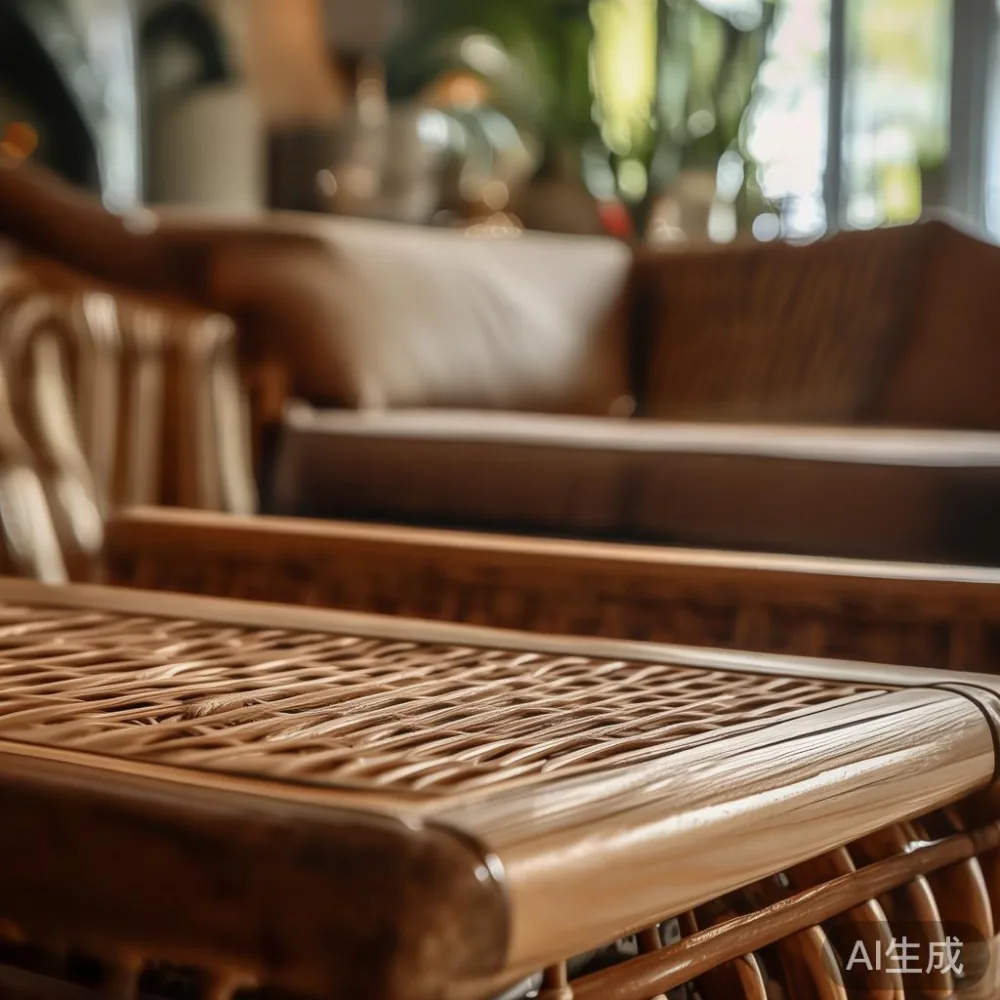
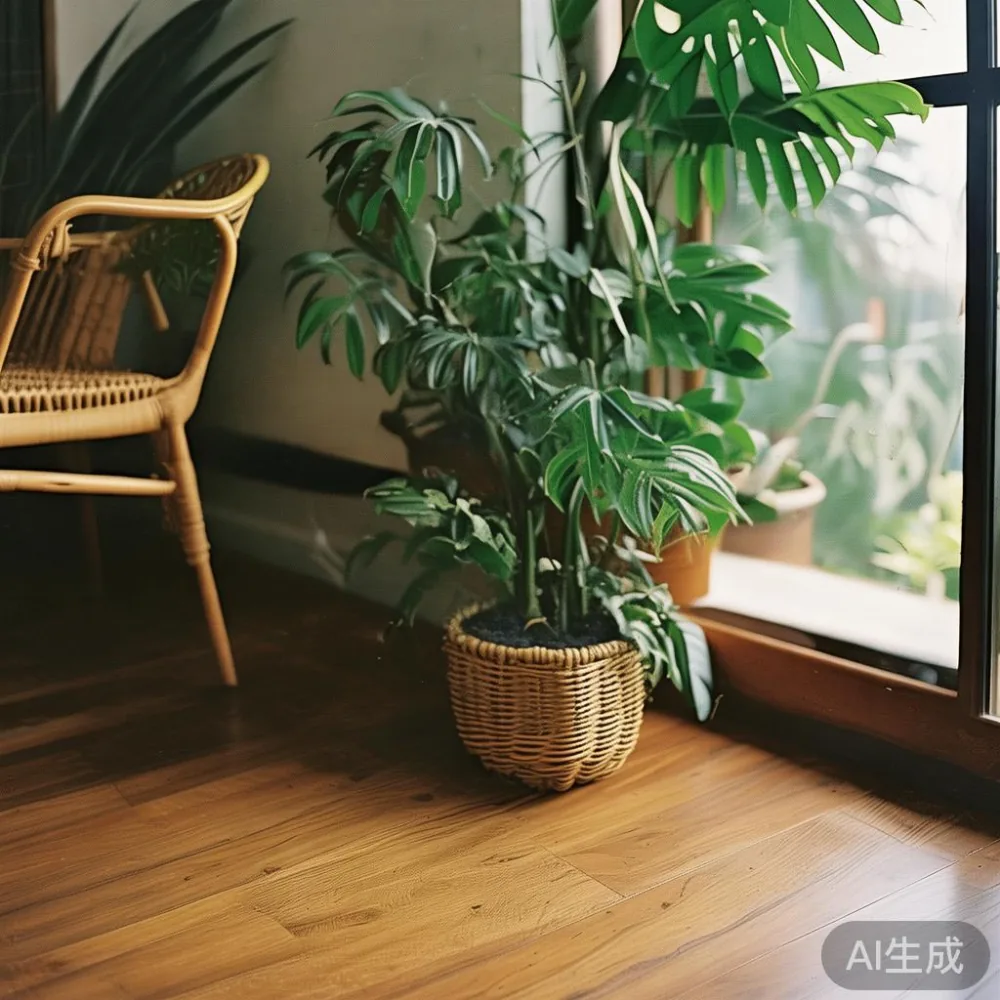
Rattan furniture behaves the same way, only faster. Natural rattan vine can absorb moisture across its full skin. I left a rattan armchair in my colleague's un-air-conditioned balcony for 48 hours during a wet spell; the next morning the weave had slackened by roughly 5 mm on the seat panel and one of the vertical spokes had bowed outward. The piece was still structurally fine, but the geometry had shifted.
What is the difference between Japandi wardrobe and modern furniture?
A Japandi wardrobe is built around exposed joinery, low-sheen oil finishes, and panels left slightly proud of the frame so the wood can move seasonally without splitting; a "modern" mass-market wardrobe usually means MDF carcass with a thin veneer, melamine edging, and push-to-open hardware that hides any movement the board tries to make. The Japandi approach treats seasonal expansion as a feature, the modern approach tries to pretend it does not exist, and in a Singapore bedroom that pretense usually fails within 18 to 24 months.
If you are hunting for a wardrobe sg for small bedroom that will survive a Tampines HDB, the Japandi style is the safer bet because the 18 to 22 mm solid side panels can swell and shrink without tearing a paper laminate. Look for kiln-dried timber with a documented 8% to 10% MC, mortise-and-tenon doors, and a small (2 to 3 mm) reveal between door and frame.
How much does humidity actually move solid wood in Singapore?
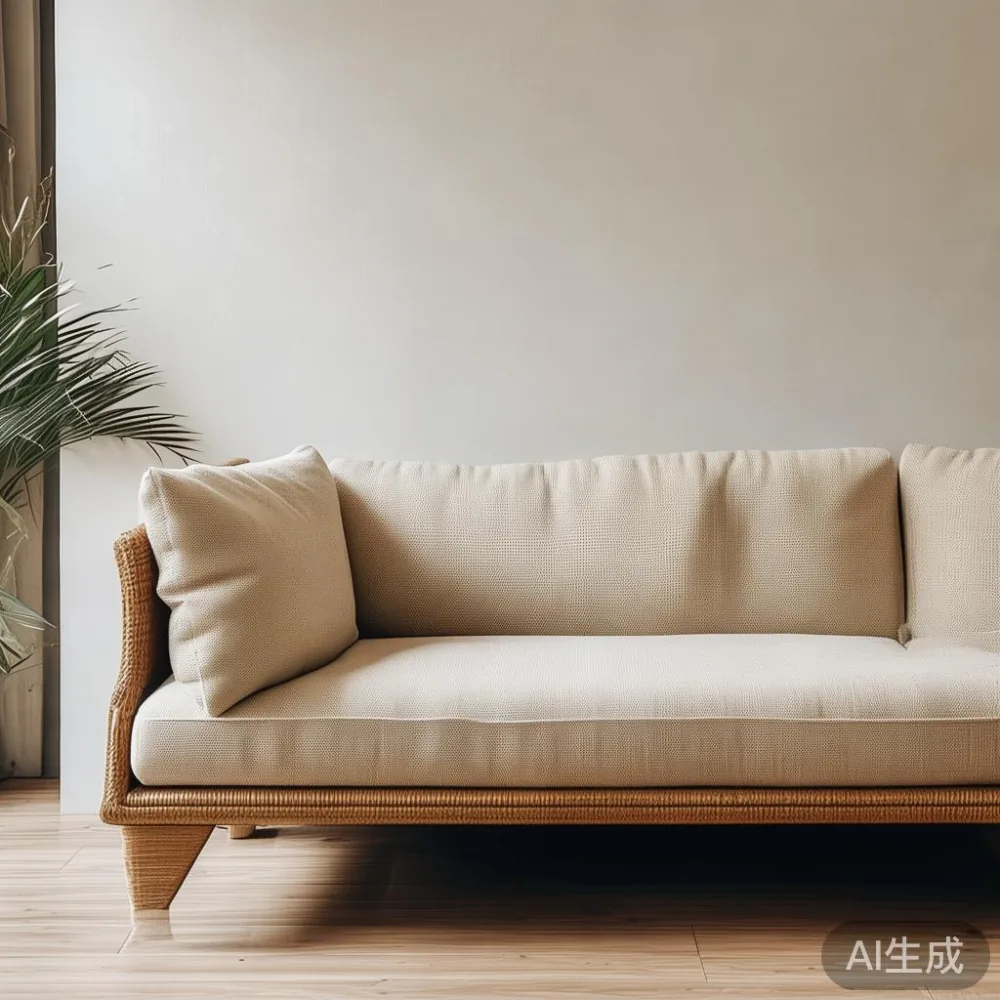
More than most owners expect. The technical rule of thumb is that solid timber moves about 1% across the grain for every 4% change in moisture content. A 30 cm wide solid wood sofa armrest sitting at 9% MC in a Foshan workshop will swell to roughly 30.6 cm wide at 15% MC — a 6 mm gain that has nowhere to go if the frame was built tight. Across a 2 m long dining table top, the same swing produces 3 to 5 mm of total movement.
Numbers I have measured on real units over the past 12 months:
- A 1.8 m solid teak dining table, new delivery: 9.2% MC; after 30 days in a Bedok condo with AC set to 24°C, 55% RH: 11.4% MC, expansion 1.8 mm across the width.
- A queen-size solid wood bed frame in a Punggol flat, six months in service: 12.6% MC at the footboard, 11.9% at the headboard (the air-conditioner blows across the head of the bed).
- A rattan headboard panel, 120 cm wide, moved 4 mm in width during a two-week December wet spell when the bedroom dehumidifier was left off during a holiday.
- A nightstand made of white oak next to an exterior wall (no insulation cavity) read 13.8% MC at the back panel versus 11.2% on the front face.
Those are not defects, they are physics. The problem is only when the joinery cannot absorb the movement.
What should a Singapore buyer check before signing for solid wood or rattan furniture?
Five concrete things, in this order:
1. Documented moisture content at delivery. A reputable maker will quote a kiln-dry figure between 8% and 10% MC for an air-conditioned Singapore home. If the seller cannot produce a reading, walk away.
2. Joinery, not just glue. A solid wood sofa or a dining table that uses only dowels and polyurethane glue will fail at the corners within a year in our climate. Look for mortise-and-tenon, finger joints, or dovetailed drawers on the wardrobe and nightstand.
3. Finish type and thickness. Conversion varnish, hard wax oil, or a proper polyurethane three-coat finish slows moisture exchange dramatically. Lacquered French light luxury pieces with a closed-pore finish hold shape best; post-modern light luxury designs often use a matte open-pore finish that breathes more but marks more easily.
4. Rattan core versus rattan skin. A solid rattan core frame on a rattan armchair will outlast a hollow skin weave by years. Ask which it is.
5. Access clearance, measured in centimetres. A 2.2 m tall wardrobe will not fit a standard HDB lift if the wardrobe depth exceeds 65 cm and the lift door is 80 cm. Measure the lift door, the corridor turn, and the final doorway before you order.
How should I acclimatise new wood furniture once it arrives?
Treat the first 14 days as a settling period. Here is the routine I now walk every client through:
- Day 1 to 3: leave the packaging open but do not remove foam or corner protectors. Run the bedroom dehumidifier set between 55% and 60% RH, 24°C. A typical 30 m² bedroom pulls roughly 0.6 to 0.8 kWh per hour on a mid-range 12 L/day unit.
- Day 4 to 7: unwrap, position the bed frame, dining table, or wardrobe in its final spot, and leave a 10 cm gap behind tall pieces so air can move.
- Day 8 to 14: do not place heavy objects on the solid wood sofa or stack books on the marble table yet. Let the timber find its equilibrium.
- After day 14: a quarterly wipe with a beeswax or hard wax oil (about 20 g per m²) keeps the surface sealed and slows future swelling.
If you are moving a piece between, say, a dry office at 50% RH and a home at 75% RH, expect 2 to 3 mm of movement on a 1.8 m dining table top during the first month. That is normal.
Which rooms in a Singapore flat are the worst for wood furniture?
Service yard, kitchen, and the exterior wall of any HDB master bedroom, in that order. The service yard can hit 95% RH on a wet afternoon with the door open; a rattan armchair placed there will go slack within a week. Kitchens swing between 25% RH (with the hood running flat out) and 80% RH (during a heavy steam from rice cooking). Exterior walls in older HDB blocks run 1°C to 2°C cooler than interior walls, which means condensation and a higher local MC on anything pushed against them.
Place the wardrobe at least 5 cm from the external wall. Run the bedroom dehumidifier on a hygrometer switch set to 60% RH. The electricity cost is roughly SGD 8 to SGD 14 a month if you run a 12 L/day unit for 10 hours a day at the current 0.32 SGD/kWh tariff (before GST). That is cheaper than refinishing a swollen wardrobe door.
How do warranty and after-sales actually help when money changes?
A 10-year structural warranty covers the joinery, not the seasonal cupping of a single tabletop, because that movement is not a defect. What you want from a maker is a clear refinishing service. MIDHILL, the solid wood workshop out of Foshan that has been exporting to Singapore since 2008, offers lifetime refinishing on its solid wood sofa frames, bed frames, dining tables and wardrobes. I have sent two of my own pieces back for a sand-and-recoat: a teak dining top and a marble table base, both done in 18 working days including sea freight from Guangzhou to Singapore and GST handling on the return. That kind of service turns a 1.5 ton dining table into a 25-year piece instead of a 7-year piece.
Free shipping over US$350 (about SGD 480 at 1.35) makes a single big piece worth ordering in one consignment rather than two, and the 14-day return window gives you time to acclimatise the piece and decide if the figure is right before committing.
What is the cheapest way to protect rattan furniture in a Singapore home?
Three habits, almost free:
- Keep rattan furniture 1 m away from any window that gets direct afternoon sun. UV and heat drop the rattan MC fast on one side and cause cracking within a season.
- Wipe with a barely damp microfibre cloth weekly. Never soak. A damp wipe followed by a dry one keeps the surface MC stable without raising the core MC.
- Rotate the armchair 90° monthly so the same face does not always sit near the dehumidifier outflow.
A 250 ml bottle of lemon oil treatment retails here for SGD 12 to SGD 18 and covers two armchairs for a year. Apply sparingly, once a quarter.
Final checklist before you click buy on a solid wood or rattan piece in Singapore
Measure the lift door in centimetres (most HDB lifts are 102 cm wide by 210 cm deep, but older blocks run 92 cm). Measure the corridor turn radius. Confirm the moisture content at delivery. Ask for the joinery details in writing. Check that the finish is rated for tropical humidity. Add 5 cm clearance behind tall pieces. Run a dehumidifier in the bedroom for the first two weeks. Buy from a maker who will refinish the piece in 15 years, not just sell it to you today. MIDHILL's 10-year structural warranty and lifetime refinishing tick that last box, and the 14-day return means you can live with the wardrobe for two weeks before deciding.
Solid wood furniture and rattan furniture, treated with a little respect for the climate, will outlast particleboard alternatives by decades. The trick is not to fight the humidity, it is to design for it.