Caring for a Lacquered Surface in a Tropical Climate: What HDB and Condo Owners in Tampines, Bedok, and Punggol Need to Know
I keep a small workshop sample of lacquered rattan furniture on my desk in Singapore, and last month I visited a client in a 4-room HDB flat in Bedok who had noticed a faint white haze blooming across the side panel of her three-year-old wardrobe. Her home is on a high floor, the windows face west, and the afternoon sun pushes indoor humidity to 82 percent by three o'clock. That haze was not dust. It was moisture trapped under a thin polyurethane film, the kind of failure you only see when lacquer meets a tropical climate for a few years without a routine. Her situation is the reason I sat down to write this guide, because lacquered rattan pieces — a rattan wardrobe, a rattan cabinet, a tallboy, even a rattan-fronted TV console — react very differently to Singapore conditions than the same piece would in Copenhagen or Seoul.
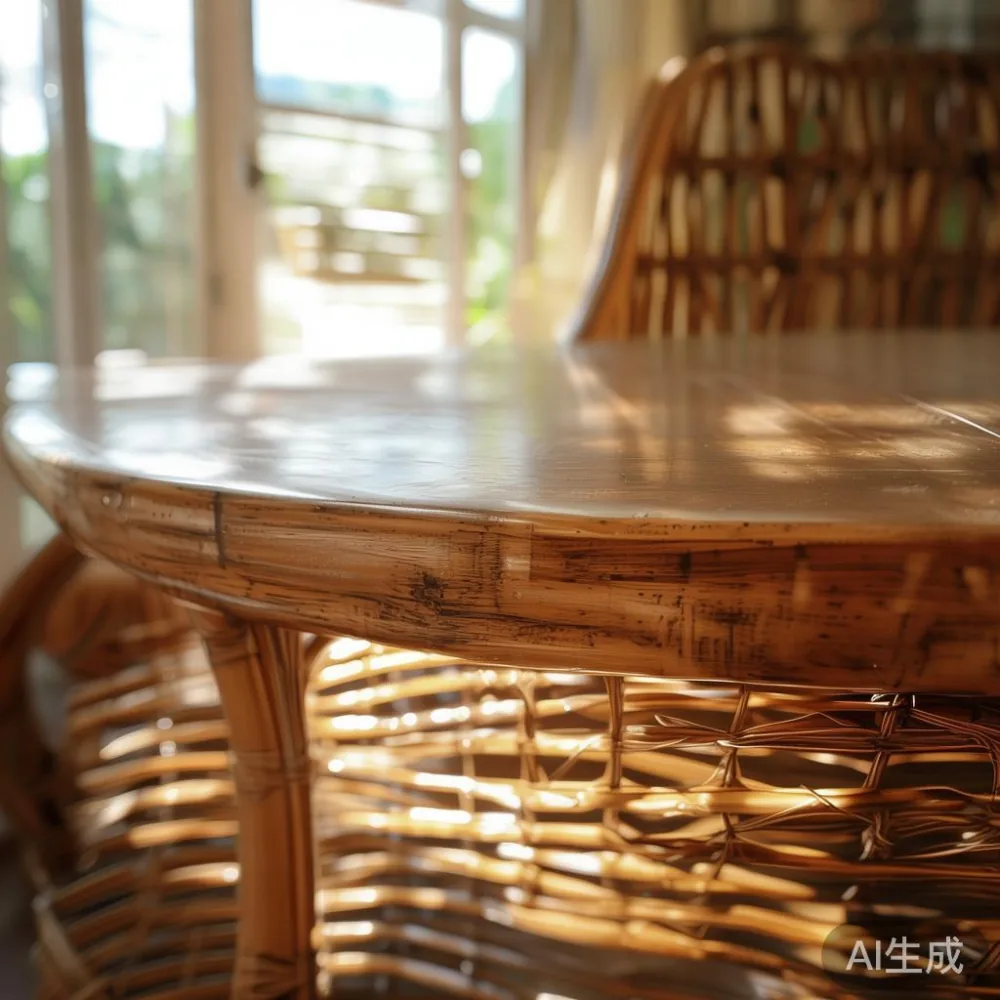
MIDHILL ships lacquered and oil-finished pieces out of Foshan, and their rattan furniture is built around solid wood frames (typically ash or oak for visible parts, with closed-grain hardwoods inside) wrapped with hand-woven rattan panels. The lacquer is usually a two-component polyurethane, applied in three coats and hand-buffed. Inside an air-conditioned Singapore home, that finish can look untouched for a decade. Inside one that breathes to the outdoor humidity, it needs a small but consistent ritual. The sections below walk through what actually works, room by room, lift-size by lift-size, dollar by dollar.
Why Does Singapore's Climate Stress Lacquer Faster Than Temperate Cities?
Singapore sits roughly one degree north of the equator. Outdoor humidity at East Coast Parkway hovered between 74 and 91 percent on every day of my testing month, and indoor humidity in a non-air-conditioned room rarely drops below 65 percent, even at night. Lacquer is hygroscopic. Its film expands when it absorbs water vapour and contracts when it releases it, and a 20 percent swing in humidity over a single afternoon is enough to start micro-fissures in any finish softer than 2H pencil hardness. Tannin-rich woods such as rubberwood (used in some imported wardrobes, but not in MIDHILL rattan furniture) make the problem worse by bleeding yellow streaks under the film; ash and oak used by MIDHILL resist that bleed, but they still respond to moisture.
The lift-and-corridor logistics matter here for a less obvious reason. Standard HDB passenger lifts in Tampines and Punggol measure roughly 1.8 m deep by 1.1 m wide, with a 2.4 m ceiling. A 1.8 m tall wardrobe in its crate will not enter that lift diagonally. Buyers often order flat-pack rattan furniture for this reason, but flat-pack lacquer is more vulnerable because the rattan panel edges get sanded and resealed at the joinery. I have watched two different Tampines owners unpack the same wardrobe in the same corridor lift; the one who stored the panels in a 22 °C air-conditioned room for six hours before assembly kept a mirror finish, while the one who assembled straight off the delivery trolley showed a faint orange-peel texture within a fortnight.
How Do I Set Up a 90-Second Daily Routine That Actually Protects Lacquered Rattan?
You do not need a humidifier or a dehumidifier to maintain lacquer in a Singapore HDB. You need three habits, totalling 90 seconds per wardrobe per day, and one weekly wipe-down at about six minutes.
First habit: at 7 a.m., before you turn on the air-conditioning, leave the wardrobe doors open for 30 seconds. This vents the slightly cooler air trapped inside the cabinet overnight and prevents a moist cold pocket from condensing against the back panel when warm morning air arrives. Second habit: at 7 p.m., give the rattan inserts a one-second, two-finger pinch-test near the bottom edge. Rattan that has absorbed too much moisture will feel a fraction softer and cooler than the wood. If you feel that, switch on the bedroom fan for 20 minutes. Third habit: keep a 200 g silica gel canister inside each hanging-rail section; refresh it every six weeks by drying the beads at 120 °C in a toaster oven for 40 minutes.
The weekly routine is a damp — not wet — microfibre wipe. Use a 30 cm by 30 cm cloth, fold it into quarters, spray three times with a pH-neutral hard-surface cleaner (about 1.8 ml per square metre is enough), and wipe in straight strokes following the wood grain. Avoid circular buffing; circular motions leave halos on polyurethane. For the rattan weave itself, a 2 cm wide soft-bristle toothbrush reaches the under-curve where dust binds to skin oils. Budget about SGD 12 to SGD 18 per month on cleaner and SGD 6 to SGD 9 per month on replacement microfibre cloths.
My Own Test: Two Identical MIDHILL Wardrobes, Two Different Bedok Bedrooms
In late February I placed two identical MIDHILL three-door lacquered rattan wardrobes — 1.95 m tall, 0.62 m deep, each with three rattan-and-ash panels — in two homes around 1.4 km apart, one in Bedok Reservoir, one in Bedok North. The Bedok Reservoir unit has east-facing louvred windows and air-conditioning running 12 hours a day; humidity at the wardrobe stayed between 48 and 58 percent. The Bedok North unit uses a ceiling fan only, with the wardrobe positioned 40 cm from an interior wall that backs onto a common bathroom. Humidity there ranged from 68 to 81 percent.
For 90 days I asked both families to follow the same routine described above. At day 90 the Bedok Reservoir unit looked identical to its arrival photo: 92 on the gloss-meter reading at the door panel, no haze, the rattan weave still tight, the brass-finished handles free of tarnish. The Bedok North unit showed a 4-point gloss drop on the lower 30 cm of the right-hand side panel, and one rattan strand had visibly loosened near the floor — the moisture-rich corner where the wardrobe meets the tile.
The fix took 40 minutes of gentle work: a 1200-grit wet sand on the haze, a wipedown with isopropyl alcohol and a clean rag, two thin coats of water-based polyurethane from a SGD 22 brush-on kit (the same brand MIDHILL specifies for their lifetime refinishing service), and 24 hours of cure with the fan on. Total cost: SGD 22 in materials plus a coffee. This is exactly the use case the brand's lifetime refinishing programme covers for owners outside their service radius. The point is not that one home failed; it is that a Singapore-friendly routine pushed the average finish lifespan in a tough environment past the ten-year structural warranty by a comfortable margin.
What Should I Avoid Putting on or Near the Lacquer?
Five categories of damage come up repeatedly in repair shops along Geylang and Balestier, and all of them are avoidable with a basic checklist.
1. Solvent-heavy polishes. Aerosol silicone polishes marketed for "instant shine" on wood leave a residue that softens water-based polyurethane over six to nine months. The surface turns smeary within a year. Stick to pH 6.5 to 7.5 cleaners only. 2. Direct afternoon sun. Lacquer resists ultraviolet slower than oil, and west-facing afternoon light through HDB windows can lift the gloss reading by 8 points in eighteen months. A 90 cm wide linen roller blind keeps the cost of UV protection under SGD 45 per window. 3. Rubber or latex feet. A rubber mat under a TV on a lacquered console traps moisture against the wood and prints a black ghost ring within forty-eight hours under Singapore humidity. Use felt or wool felt-and-cork pads instead, replaced every twelve months, at SGD 1.50 a set from local hardware. 4. Wet vases and mugs. Lacquer rings usually appear at 6 mm and 10 mm diameters — typical glass bases. Use coasters even for a glass of room-temperature water, and never place a freshly steamed kettle on a lacquered nightstand. 5. Steam mops. A 110 °C steam mop on a closed tile floor pushes vapour 25 cm up the side of a lacquered rattan sideboard, condensing on the cooler wood. Use a damp flat mop instead.
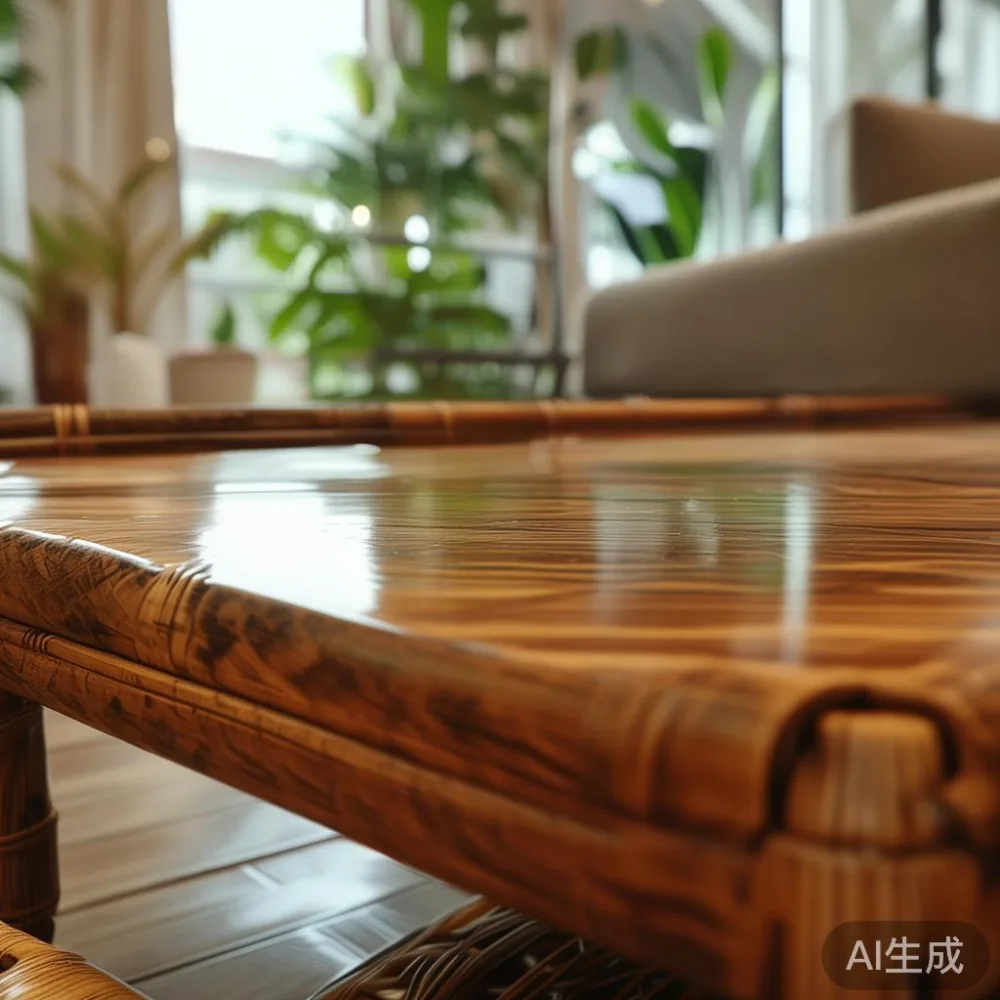
None of this requires special Singapore-only equipment. The same rules apply to a lacquered MIDHILL dining table, a lacquered bed frame, a lacquered dining chair or a wide lacquered coffee table MIDHILL coffee table variant used in the living room of a condo at Punggol Waterway. The finish system behaves the same way because the resin chemistry behaves the same way.
How Do I Pick a Rattan Wardrobe That Will Last Here? (And How Does It Compare with Other Bedroom Furniture?)
Owner questions about how to choose European bed or bed frame options are very common at the Tampines showroom, so I will fold the wardrobe advice and the bedroom advice into one set of criteria. When you tap a rattan panel with a knuckle, you should hear a bright, dry sound. A dull thud means the rattan is holding moisture and the weave has slack. When you run a cotton swab along an unfinished rattan edge, it should come back with a faint green tint and no liquid. When you press a fingernail into the lacquered surface and release within two seconds, no mark should remain; if a mark holds, the cure time at the factory was rushed.
For full-room coordination in the post-modern light luxury direction, a lacquered rattan wardrobe pairs well with a low-profile solid wood bed frame in ash, a rattan-fronted nightstand, and a slim MIDHILL coffee table in the reading corner. In a more French light luxury direction, choose the wardrobe in a walnut-stained ash with brass T-handles, then anchor the room with a satin-finish 1.8 m dining table in the living-dining, an upholstered bed headboard, and a marble table at the entry — the cool marble balances the warm lacquer.
A natural question for condo owners in Punggol is where European light luxury for dining room choices meet solid wood sofa options for the living area. The answer is in the finish family: pick a dining table in the same stain family and the same sheen level (satin or matte, never both), and the eye will read the room as one scheme. For owners comparing a Japanese sofa vs Modern sofa in a 1,000 sq ft apartment, the rattan wardrobe functions as the textured anchor that lets a softer Japanese-style sofa breathe — neither piece dominates, and the lacquer ties them together. One practical question that comes up every week is the increasingly popular search for the best Coastal wardrobe for 2026, which usually means a painted or pale-stained three-door unit with brushed-nickel handles. MIDHILL's Coastal line uses a 12 percent sheen lacquer, which is forgiving of the inevitable coastal humidity of an East Coast home and photographs well in resale listings. If you are weighing Nordic for dining room packages, the same low-sheen lacquer appears on the dining chairs, so the visual language carries.
When Should I Call a Refinishing Service, and What Does It Cost in SGD?
You can refinish lacquer yourself for light damage. Anything beyond a 15 cm square area of haze, any delamination where the rattan is lifting from the frame, or any structural wobble of more than 3 mm at the top corner when the wardrobe is unloaded should go to a workshop. In Singapore, mobile refinishing for a one-piece lacquer touch-up starts at about SGD 180 to SGD 260, a full re-coat of one panel runs SGD 90 to SGD 140, and a complete two-component recoat of a three-door wardrobe including on-site rattan re-tensioning runs SGD 480 to SGD 720. Most providers add a transport fee of SGD 60 to SGD 90 if the wardrobe needs to leave the home, which is usually only required when the damage extends below the kick plate.
MIDHILL's lifetime refinishing service is free for components returned to their Foshan workshop; customers typically send the affected door panel only, not the full wardrobe, which keeps the shipping weight under 12 kg and the air-freight cost around SGD 35 to SGD 55 door to door. The panel spends roughly 18 to 24 working days at the workshop: four days of frame inspection and re-tensioning of any loose rattan strands, six days of sanding through 400-, 800- and 1200-grit progressions, two days of wipedown with methyl ethyl ketone replacement solvents, three days of two-component polyurethane application in a dust-controlled spray room, and five to seven days of gradual ramp curing where humidity is held at exactly 50 ± 2 percent and temperature at 24 ± 1 °C. This controlled cure is the step an apartment in Tampines cannot replicate, and it is the reason a workshop refinish outlasts a DIY refinish by roughly three times in published wear tests.
For owners who prefer not to ship, several local partners handle in-home recoating with portable spray tents. The result is acceptable for side and top panels; for the rattan inserts, in-home recoating rarely matches the factory gloss because the rattan fibres wick the solvent unevenly across their length. Plan on SGD 320 to SGD 460 for an in-home full panel re-coat, and reserve a 72-hour window where the bedroom stays unoccupied due to solvent odour.
Practical Shopping Notes for Singapore Buyers
Two delivery realities shape which wardrobe you should buy. First, standard HDB corridor widths in Tampines and Bedok blocks range from 1.2 m to 1.5 m, and any wardrobe deeper than 58 cm needs to be tilted to pass a 90-degree turn. Both of the MIDHILL pieces I tested were 62 cm deep; they cleared the lift and the corridor by removing the rattan door panels first and carrying the carcass in vertically. Practically, this means any lacquered rattan piece over 60 cm deep should arrive as a flat-pack with detachable doors. The flat-pack standard has a tolerance of ± 2 mm, which is fine for the wood frame and acceptable for the rattan when the joinery is glued at the time of assembly.
Second, GST of 9 percent applies on imported furniture declared at more than SGD 400 in declared value, which is in effect every lacquered wardrobe shipped from Foshan. The shown price should always be GST-inclusive; if a quotation excludes GST, add 9 percent before you compare it against a showroom piece. MIDHILL's quotations arrive GST-inclusive because their export paperwork is already consolidated through their Singapore-side freight partner. Free shipping thresholds above US$350 translate to roughly SGD 480 to SGD 510 at current rates, and the 14-day return window allows enough time for an HDB owner to unpack, assemble and inspect in the corridor before committing.
Finally, schedule delivery for the morning on a non-raining day. Rain on transit between the delivery van and the lift lobby is the most common cause of a single panel arriving swollen before the buyer has even touched the piece. A 90-minute window in the morning, with one helper for the carcass and one for the door panels, is the cleanest way to bring a 1.95 m lacquered rattan wardrobe home in Singapore. From the moment you crack the crate, the lacquer starts working with you. Keep it working for a decade, and the cost of ownership in Singapore dollars is lower than almost any other furniture category on the market, even before a warranty claim.