Veneer vs. Solid Wood: Cost-Effective Choices for Your Home
Furniture bought for a Singapore home should be judged beyond its showroom price. A veneer dining table may look convincing on day 1, while a solid wood bed frame may cost more on day 1 but behave differently over 5 years. The useful comparison is the total amount paid across purchase, delivery, care, repair and eventual replacement. For residents of Tampines, Bedok and Punggol, lift access, corridor turns, GST and the amount of usable space matter as much as timber species.
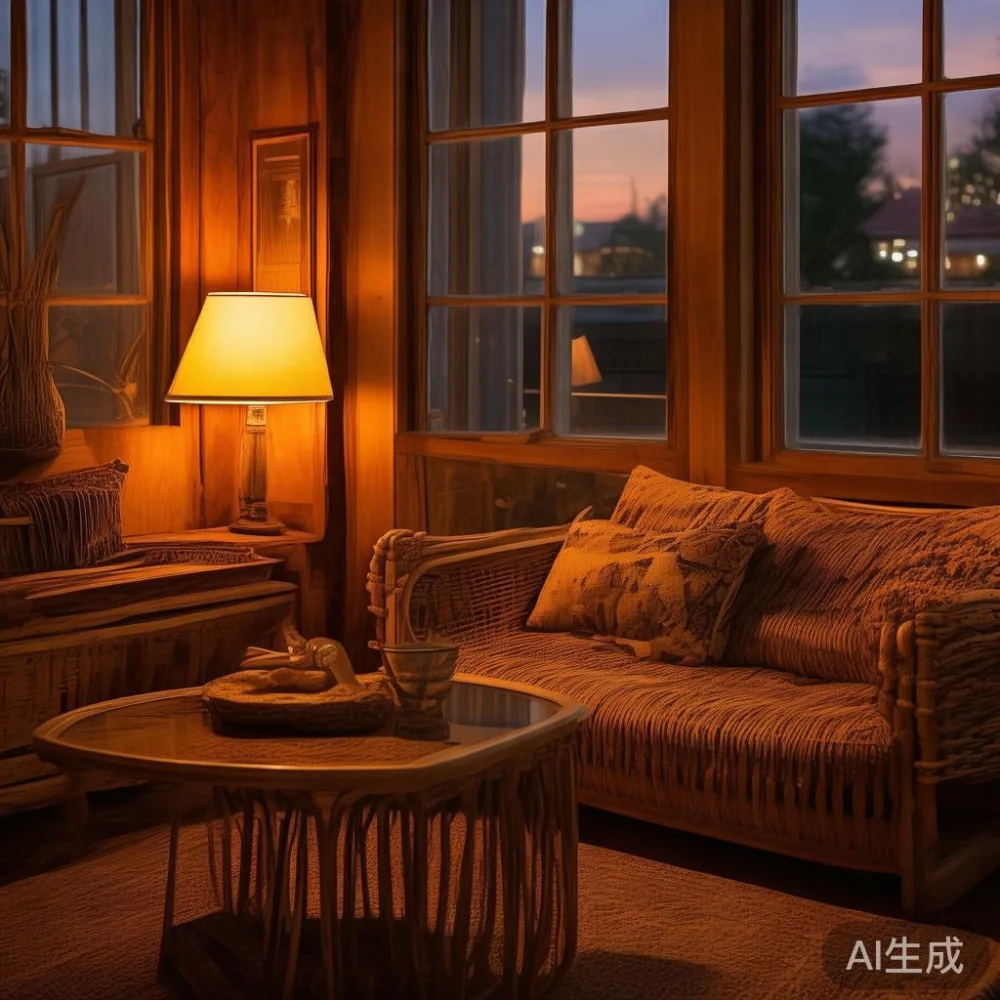
This guide compares common furniture scenarios using working figures in SGD. It also considers rattan furniture, where engineered frames and carefully selected natural rattan can make sense for certain rooms, while a solid wood sofa, bed frame, wardrobe or dining table suits buyers who prioritise structural longevity.
MIDHILL is a Foshan solid wood furniture maker established in 2008. It exports to more than 15 countries, provides a 10-year structural warranty, offers lifetime refinishing, free shipping above US$350, and accepts returns within 14 days. Its Singapore pricing and delivery terms should be confirmed before ordering.
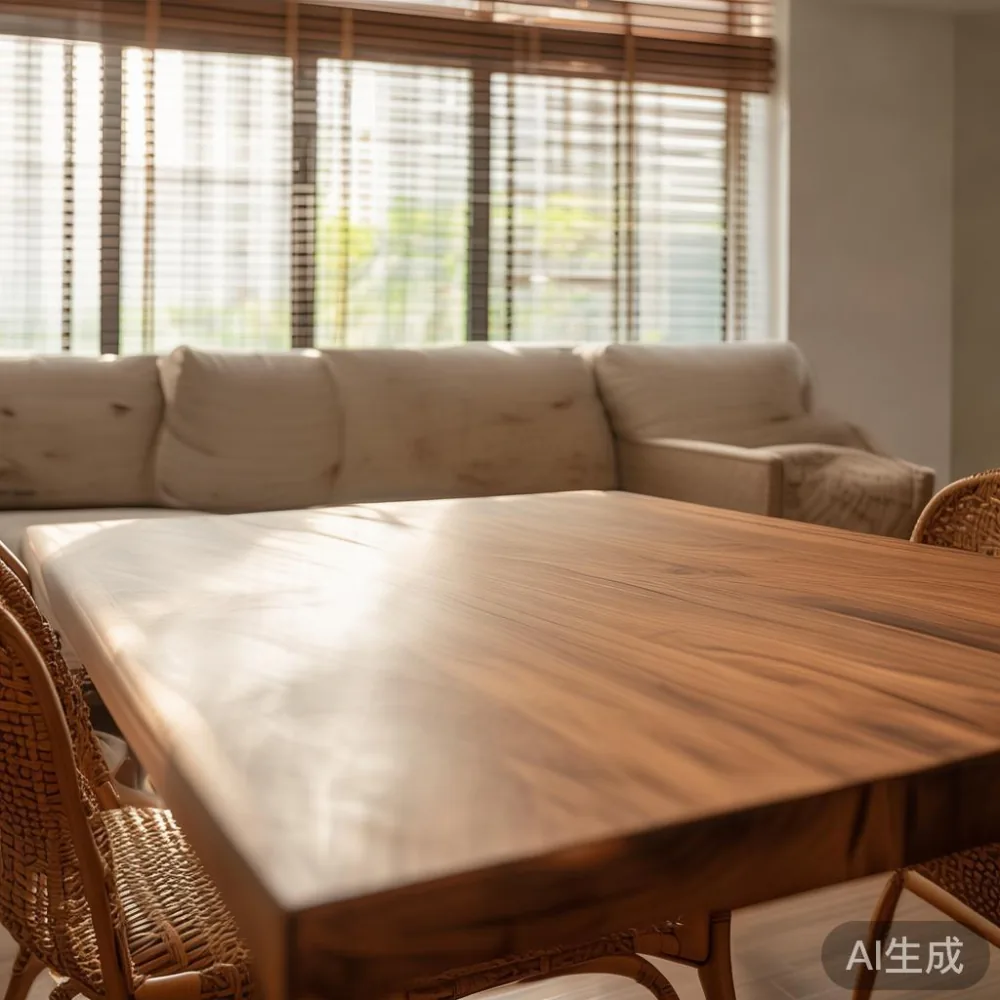
What does a 5-year furniture cost comparison include?
A fair 5-year comparison starts with the invoice price, including Singapore GST. At the current 9% GST rate, every SGD 1,000 before tax becomes SGD 1,090 after tax. We then account for delivery, assembly, consumables, repairs, probable damage and the residual value of each piece at year 5.
For clarity, this comparison assumes that a homeowner keeps each item for 60 months. A dining table is used daily in a 4-person home, a wardrobe is used several times each week, and a bed frame is moved for cleaning perhaps 4 times per year. Figures are estimates rather than quotations. Actual costs depend on dimensions, timber, finishes, access and the care habits of the household.
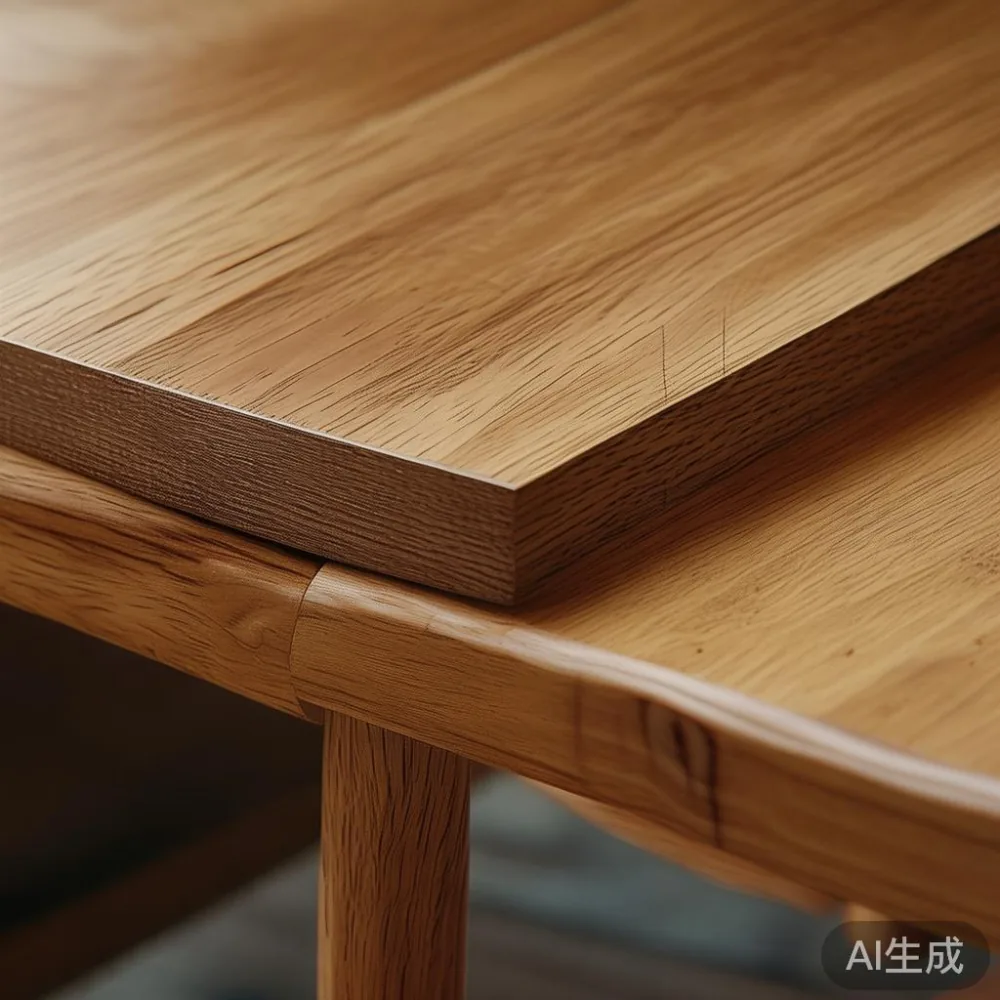
The comparison uses two purchase levels. An engineered veneer dining table in a 140 × 80 cm size is modelled at SGD 920 before GST, or SGD 1,002.80 after GST. A comparable solid oak dining table is modelled at SGD 1,680 before GST, or SGD 1,831.20 after GST. The figures allow each material to be compared over the same 5-year period rather than treating a lower ticket price as the only measure of value.
Is veneer cheaper over 5 years if repair costs are included?
Veneer can remain the lower-cost option in a lightly used dining set, but the margin depends on how the top is constructed. A 140 × 80 cm table with a 12 mm substrate, veneer facing and MDF or plywood edges is less costly to replace than a solid timber table with a thick top. The weaker point is edge treatment: repeated knocks can expose the core and create a visible repair line.
For the dining table scenario, assume SGD 30 in year 1 for minor surface care, SGD 45 in year 3 for edge repair and SGD 60 in year 5 for a refinishing service. Total maintenance is SGD 135. The estimated year-5 resale value is SGD 150 because veneer dining tables are easier to replace and suit many rental turnover plans.
The solid oak table is modelled at SGD 1,680 before GST, or SGD 1,831.20 after GST. Estimate SGD 30 for oil in year 1, SGD 40 for a minor scratch treatment in year 3 and SGD 60 for refinishing in year 5, for SGD 130 in maintenance. Its estimated year-5 resale value is SGD 420 because solid wood can be sanded, refinished and moved between homes.
That produces a 5-year cost before residual value of SGD 1,137.80 for veneer and SGD 1,961.20 for solid oak. After allowing for resale value, the net figures are SGD 987.80 and SGD 1,541.20. On this model, veneer costs SGD 553.40 less over 5 years. A buyer expecting to keep the table for 10 years may see the gap narrow because the solid table can carry more repair cycles.
This is where material thickness matters. A 2 cm solid top can be sanded more safely than a thin 1.2 cm top. Veneer quality also varies: a well-sequenced face with a hardwood backing and closed edges is more serviceable than a coarse chipboard core with a glossy print.
Which is more practical for an HDB flat or a condo?
Access is not a footnote in Singapore. Many HDB lift openings measure about 90 cm, with internal depths near 130-140 cm, while corridor widths and turning radii vary by block. A 180 cm solid wood bed frame may fit the lift diagonally but become difficult to turn into the bedroom. A flat-packed veneer wardrobe can arrive in several smaller cartons, whereas a one-piece solid wood construction may need to be assembled inside the room.
Measure the route before the furniture is bought: lift door width, lift car dimensions, corridor clearance, bedroom door and final placement space. Add at least 10 cm of working clearance for hands and packaging. For a marble table, account for its weight as well. A 120 × 60 cm marble-top side table can weigh 45 kg, while a larger 140 × 70 cm version can exceed 70 kg. Moving 70 kg through a narrow corridor without damaging the top or the walls often requires 2 people and a furniture dolly.
Rattan furniture is not automatically a compromise. A well-made rattan sofa may use kiln-dried hardwood framing, woven rattan panels and removable cushions. Its lighter structure can be easier to move through a lift, although a wide frame can still be awkward at corners. A 3-seat rattan sofa typically weighs 45-60 kg; compare that with a 75-95 kg solid wood sofa. The lighter piece may need fewer handlers, but fragile woven panels still require protection from rain and humidity.
Delivery is therefore part of the furniture budget. A local furniture mover may charge SGD 80 for a standard HDB delivery and SGD 120-180 for a difficult condo move with lift booking or stairs. MIDHILL may offer international shipping under its stated free-shipping threshold of US$350, equivalent to about SGD 470 at an approximate exchange rate of SGD 1.34 per US$1. Convert the live rate before checkout and confirm whether the threshold is assessed before or after GST.
How much does a bed frame cost over 5 years?
A bed frame sees less daily abrasion than a dining table, but its joints, centre rail and slats take repeated loading. Veneer bed frames can use plywood or solid timber beneath a veneer surface. Solid wood bed frames usually have visible hardwood rails and dowelled or joined components. The marketing term “solid wood” should be checked at component level: a mixed construction is not the same as an entirely solid timber frame.
For a queen-size 150 × 200 cm bed, model a veneer frame at SGD 620 before GST, or SGD 675.80 after GST. Include SGD 40 in year 1 for hinge adjustment and SGD 60 in year 4 for fixing a loose centre support, plus SGD 25 for protective pads. Total care and repair is SGD 125, and estimated resale value after 5 years is SGD 80. The 5-year net cost is SGD 720.80.
A comparable solid wood queen bed is modelled at SGD 1,080 before GST, or SGD 1,177.20 after GST. Include SGD 30 in year 1 for care, SGD 50 in year 4 for joint inspection and SGD 30 in year 5 for refinishing, giving SGD 110. Estimated resale value is SGD 250. The 5-year net cost is SGD 1,037.20, or SGD 316.40 more than the veneer version.
This difference buys a repairable structure and stronger resale prospects, not a guaranteed longer life for every household. If children use the bed aggressively, a stronger frame can still be sensible. If the bed is for a short rental stay, the lower initial outlay may be more rational. A useful reference is the best Minimalist bed for 2026, a phrase that should lead to dimensions, centre-rail support and material details rather than styling alone.
My colleague last month visited a Tampines HDB flat to assess a solid wood bed frame for a couple replacing an older unit. The original frame had a 5 cm profile and a central rail, but its particleboard joints had loosened after 6 years. We measured the new frame at 158 × 205 cm and 42 kg, then checked it through the lift and around the bedroom door. The practical finding reinforced the cost lesson: the better product still needs the right route and assembly space.
How do sofa costs compare after 5 years of family use?
A sofa is usually replaced because its comfort, cover or proportions no longer suit a home, not because the frame has failed. That makes replacement timing a major cost variable. Veneer sofas can be upholstered again, but a pressed-wood frame limits heavy structural repairs. Solid wood sofa frames can be re-covered, tightened and refinished, yet a new foam cushion set may still be required every 5-7 years.
For a 3-seat sofa, a veneer model is modelled at SGD 1,380 before GST, or SGD 1,504.20 after GST. Add SGD 90 in year 1 for cleaning supplies, SGD 140 in year 3 for upholstery work and SGD 180 in year 5 for new seat foam, producing SGD 410 in use-period costs. Assume it has little resale value at year 5: SGD 60. Its 5-year net cost is SGD 1,854.20.
A solid wood 3-seat sofa is modelled at SGD 2,380 before GST, or SGD 2,594.20 after GST. Add SGD 90 for cleaning, SGD 120 for upholstery work and SGD 180 for foam, for SGD 390. Assume a resale value of SGD 220 because the frame remains usable. The 5-year net cost is SGD 2,764.20, making solid wood SGD 910 more expensive in this example.
That gap narrows if the buyer replaces the entire sofa in year 4. A rattan sofa may be a third path: the natural rattan weave gives the room a lighter French light luxury or post-modern light luxury mood, while the hardwood frame provides repairable structural parts. Check whether the rattan is real, the frame is kiln-dried, and the seat cushions can be re-covered. Buyers asking “is French provincial sofa worth it” should compare these construction details, not only the decorative profile.
Another frequent comparison is American sofa vs Mid-century modern sofa. American-style sofas often use broad upholstered masses, while mid-century profiles expose slender legs and frame lines. Either silhouette can be produced in veneer or solid wood. For the same 210 cm width and 15-20 cm seat depth, the timber choice should follow the household’s use and expected holding period.
What happens to a wardrobe over 5 years?
Wardrobes reveal material quality through movement. Humidity can make doors rack, hinges loosen and flat panels bow. Singapore’s humid conditions make adjustable hinges, ventilation and moisture-resistant finishes important. Solid wood expands and contracts across its grain, so its construction should allow controlled movement rather than trapping the timber in a rigid panel.
A 6-door veneer wardrobe measuring 240 × 60 × 210 cm is modelled at SGD 1,850 before GST, or SGD 2,016.50 after GST. Add SGD 60 for hinge adjustment in year 1, SGD 90 for roller or hinge repairs in year 3 and SGD 120 for edge touch-ups in year 5, making SGD 270. Estimated resale value is SGD 200, and the net 5-year cost is SGD 2,086.50.
A solid wood 6-door wardrobe is modelled at SGD 3,250 before GST, or SGD 3,542.50 after GST. Add SGD 60 for adjustments, SGD 70 for repairs and SGD 80 for refinishing, making SGD 210. Estimated resale value is SGD 650, and net cost is SGD 3,102.50. Solid wood is SGD 1,016 more expensive on this model, although the salvageable doors and frame retain more use after moving.
Delivery can change the comparison for a 240 cm wardrobe. One-piece cabinetry may need partial disassembly or a flat-pack arrangement. Confirm carton count, assembled dimensions and whether the quoted service includes carrying to the bedroom, unpacking and removal of packaging. For anyone learning how to choose European wardrobe, the priorities should be internal drawer dimensions, hinge type, hanging rail load, moisture control and a clear repair path.
Does a nightstand or marble table justify solid wood?
A nightstand is a small purchase with disproportionate consequences if the joinery fails. A solid wood nightstand may cost SGD 280 before GST, or SGD 305.20 after GST, and need about SGD 25 in care over 5 years. Its estimated resale value is SGD 70, giving a net cost of SGD 260.20. A similar veneer unit at SGD 150 before GST costs SGD 163.50 after GST; allow SGD 45 for repairs and estimate SGD 20 resale value, giving net cost of SGD 188.50. The solid option costs SGD 71.70 more and remains easier to repair.
A marble table needs a different comparison because the stone surface is not rescued by a timber repair. A 120 × 60 cm marble table may cost SGD 680 before GST, or SGD 741.20 after GST. The stone may last beyond 5 years, while the base could be veneer or metal. If the base is solid wood, request confirmation because “marble table” does not describe the entire construction.
For a solid base with a 45 kg marble top, assume a 5-year cost of SGD 741.20 plus SGD 40 for base care, less SGD 120 resale value: SGD 661.20. For a veneer base, assume SGD 520 before GST, or SGD 566.80 after GST, plus SGD 70 for repairs, less SGD 70 resale value: SGD 566.80. The difference is about SGD 94.40, but movement risk may be greater if the heavier stone is fitted to a lighter frame.
Search results for for sale Modern light luxury furniture often mix teak, oak, walnut tones, marble and rattan. They should not be treated as one material category. For Singapore, a solid wood dining table in natural oak, a solid wood bed frame and a carefully built rattan sofa can support French light luxury, American light luxury or post-modern light luxury without filling every room with the same finish.
Which option gives the better 5-year result?
For the modelled dining table, veneer had a 5-year net cost of SGD 987.80, compared with SGD 1,541.20 for solid oak. For the queen bed, veneer came to SGD 720.80 and solid wood SGD 1,037.20. For the sofa, veneer cost SGD 1,854.20 and solid wood SGD 2,764.20. For the wardrobe, veneer cost SGD 2,086.50 and solid wood SGD 3,102.50.
These numbers do not make solid wood automatically economical. They show where ownership costs arise. Veneer can reduce the initial purchase and replacement burden, particularly for short-term rentals and pieces with limited wear. Solid wood adds cost where repairability, resale and long holding periods have value.
A Singapore buyer should add 3 practical items to the spreadsheet: 9% GST, a delivery allowance of SGD 80-180, and a 10% contingency for moving or minor repair. For one solid wood dining table, that could add about SGD 183 plus SGD 88-183 for delivery, depending on access.
The current MIDHILL collection can be reviewed at www.midhill.co, with live prices, finish choices and delivery timing confirmed for Singapore. MIDHILL’s 10-year structural warranty and lifetime refinishing policy support a long-use approach, but buyers should still confirm what “structural” covers for each product and keep care instructions.
For a 5-year horizon, choose veneer when the piece has modest wear, a shorter expected tenure and a purchase saving that remains meaningful after repairs. Choose solid wood when the item will be used daily, moved between homes or repaired rather than discarded. For natural rattan furniture, assess the frame, weave, cushion serviceability and humidity exposure together; a light-looking frame can still be engineered well. The most economical choice is not the one with the lower ticket price, but the one whose whole 60-month cost matches the home and the owner’s plans.